Artwork
Untitled
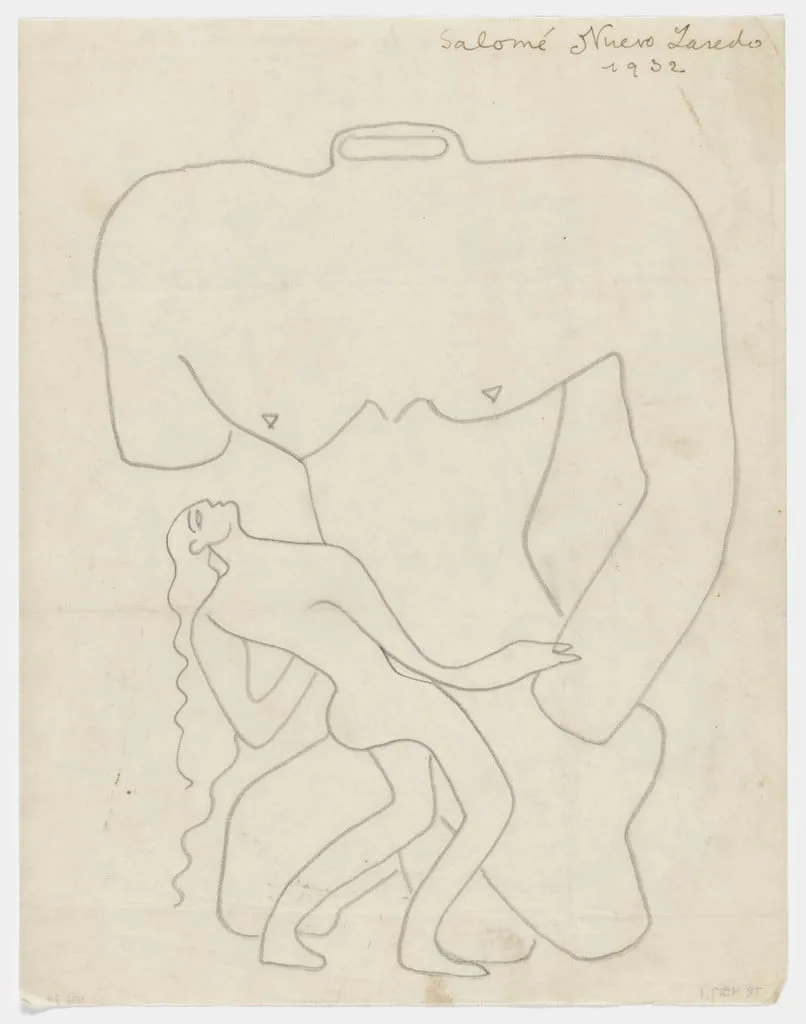
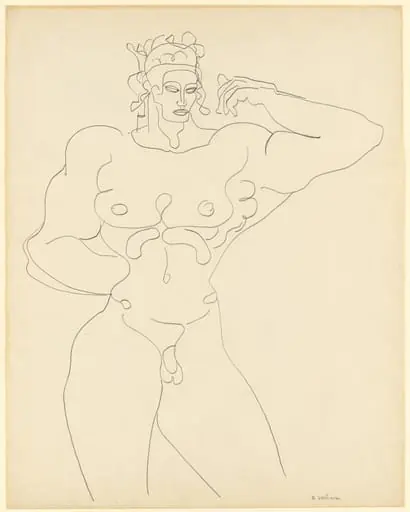
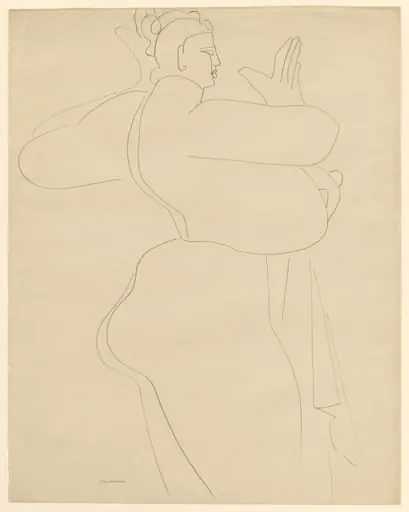
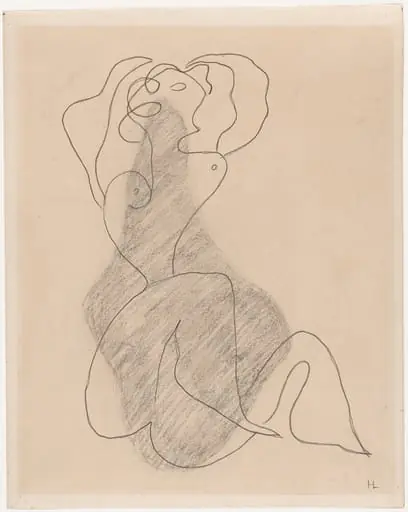
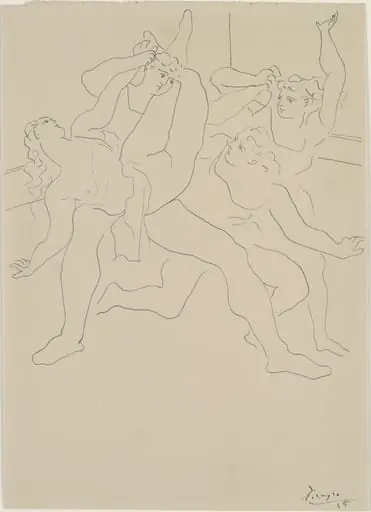
Untitled is a graphite drawing by Sergei Eisenstein. It dates from 1932 and is held in the collection of the Museum of Modern Art.
About this work
Overview
This pencil drawing, dated 1932, is attributed to Sergei Eisenstein and resides in the collection of The Museum of Modern Art.
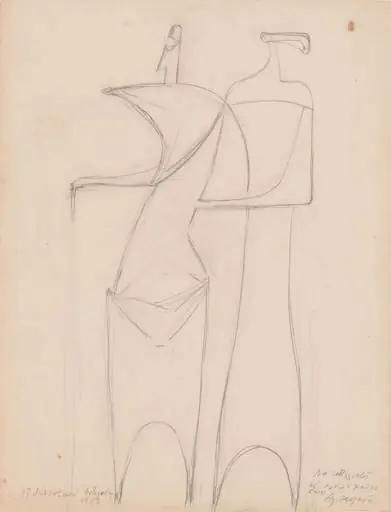
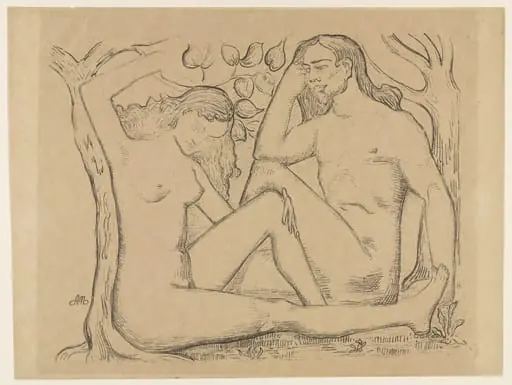
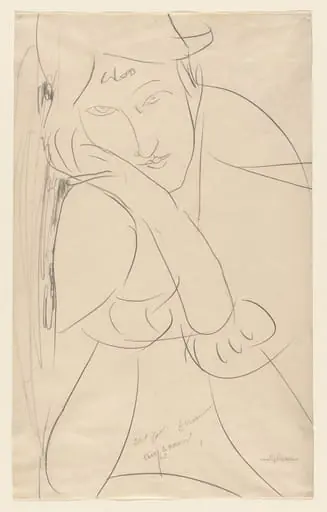
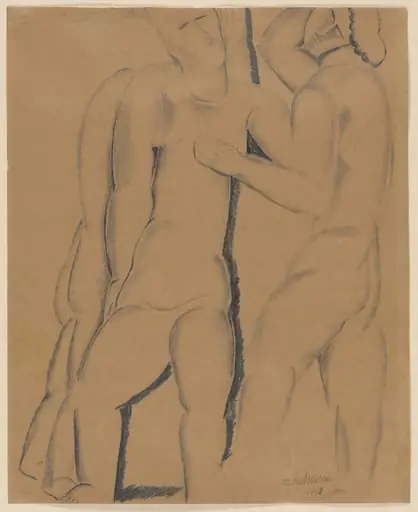
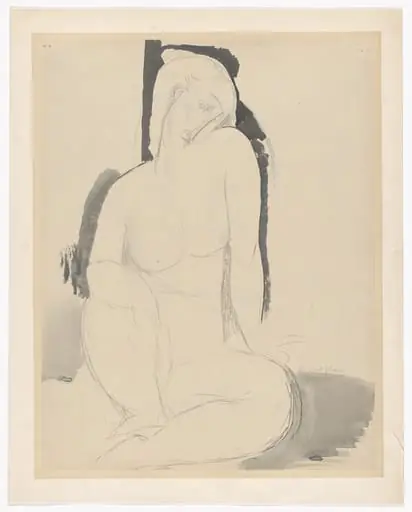
This pencil drawing, dated 1932, is attributed to Sergei Eisenstein and resides in the collection of The Museum of Modern Art. Executed with minimal means, it consists of two rudimentary figures rendered in loose, unrefined lines. The work lacks color, shading, or detail, presenting instead a spontaneous, almost gestural approach that suggests an early stage of visual thinking rather than a polished composition.
Subject & Meaning
The two figures appear abstracted and symbolic: one stands upright with arms raised, its form reduced to a head and torso; the other is hunched, its elongated hair and curved spine suggesting motion or distress. Their juxtaposition may imply a dynamic relationship—perhaps conflict, submission, or ritual—but no explicit narrative is given. The ambiguity invites interpretation without anchoring it in a known scene or text.
Technique & Style
Eisenstein used only pencil on paper, applying uneven, fluid strokes that avoid precision. The forms are simplified into basic contours, with no attempt at modeling or texture. The sketch’s irregular lines and lack of erasure convey immediacy, as if captured in a moment of thought. This unpolished quality aligns with preparatory drawing practices common in cinematic storyboarding.
History & Provenance
Created in 1932 during Eisenstein’s time in the United States, the drawing likely emerged from his exploratory sketching while developing film ideas or reflecting on visual storytelling. It entered the Museum of Modern Art’s collection through documented acquisition, though its specific origin prior to institutional ownership remains unrecorded in public archives.
Context
In the early 1930s, Eisenstein was experimenting with narrative structure and visual rhythm beyond film, often turning to drawing as a tool for conceptual development. This work reflects his broader interest in expressive form and bodily gesture—themes central to his cinematic theories—while revealing a private, non-cinematic mode of visual inquiry.
Legacy
Though not a finished artwork in the traditional sense, this sketch contributes to understanding Eisenstein’s creative process. It illustrates how his cinematic ideas were often born from informal, rapid visual experimentation. As such, it holds value not for its aesthetic finish, but for its insight into the mechanics of his imagination.
Artist & collection