Artwork
Birds and Flowers in a Landscape of the Four Seasons
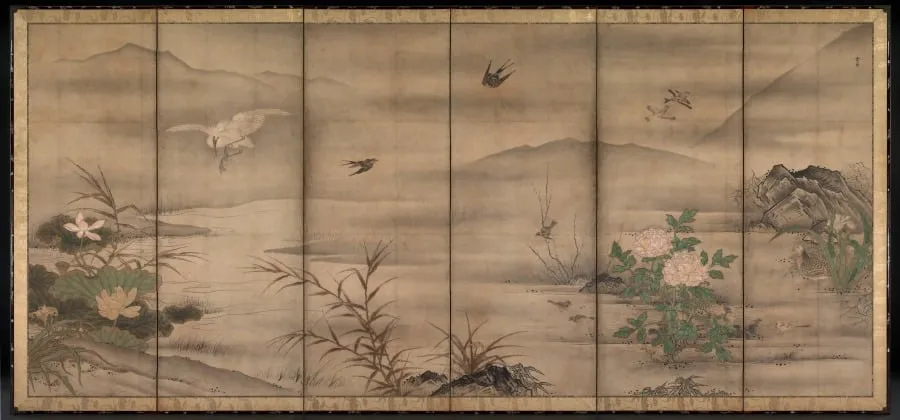
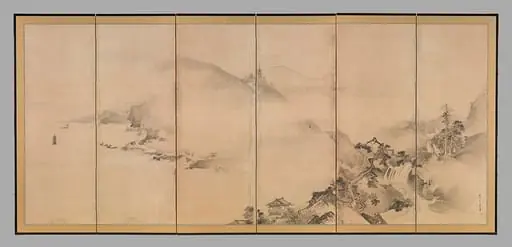
Birds and Flowers in a Landscape of the Four Seasons is an unspecified painting by the Renaissance artist Sesshū Tōyō. It dates from 1504 and is held in the collection of the Cleveland Museum of Art. This six-panel screen depicts birds and flowers set within a continuous landscape that suggests the passage of the four seasons.
About this work
Overview
This six-panel screen depicts birds and flowers set within a continuous landscape that suggests the passage of the four seasons.
This six-panel screen depicts birds and flowers set within a continuous landscape that suggests the passage of the four seasons. Though signed with the name of Sesshū Tōyō, the work is now attributed to an anonymous follower active in the mid-1500s. The attribution to Sesshū reflects his enduring reputation as a model for ink painting, even when the actual hand was that of a later artist working in his stylistic tradition.
Subject & Meaning
The composition integrates seasonal flora and fauna—cherry blossoms, autumn maples, winter pines, and spring birds—into a unified natural world. These elements symbolize cyclical time and harmony, themes central to Zen aesthetics. The inclusion of birds in flight and perched among branches suggests vitality within stillness, aligning with contemplative ideals valued in monastic culture.
Technique & Style
The painting employs ink wash and subtle color on gold-leafed paper, blending Chinese Ming dynasty conventions with Japanese compositional sensibilities. Brushwork varies from precise detailing of feathers and petals to loose, expressive strokes for rocks and distant hills. The layered depth and spatial recession reflect adaptations of Chinese landscape techniques, reinterpreted through a Japanese emphasis on atmospheric suggestion.
History & Provenance
Created in the mid-16th century, the screen likely adorned the interior of a temple or daimyo residence in western Japan. Its attribution to Sesshū, who died nearly a century earlier, indicates his posthumous status as a canonical figure. The use of his name on such works was a common practice to signal legitimacy and connection to a revered artistic lineage.
Context
During the Muromachi period, Japanese artists increasingly engaged with Chinese painting models, especially those from the Ming court and Chan Buddhist circles. Screens like this one moved bird-and-flower subjects from small hanging scrolls to large architectural formats, making them suitable for elite interiors and reinforcing their role in spiritual and cultural display.
Legacy
Though not by Sesshū’s hand, this screen exemplifies how his influence endured through emulation. Later generations adopted his synthesis of Chinese techniques and Japanese sensibility, embedding his name into the visual vocabulary of ink painting. The screen stands as evidence of how artistic authority was maintained through attribution, even as styles evolved beyond the original master’s lifetime.
Artist & collection

Artist
Sesshū Tōyō (雪舟 等楊; c. 1420 – August 26, 1506), also known simply as Sesshū (雪舟; Japanese pronunciation: ), was a Japanese Zen monk and painter who is considered a great master of Japanese ink painting. Initially…

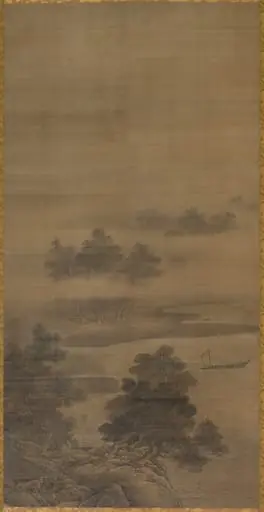
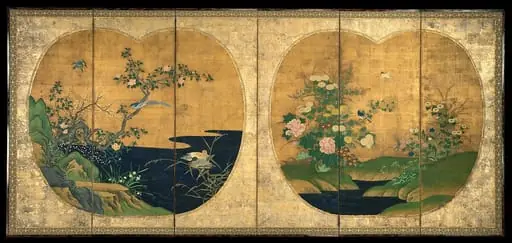 狩野周信筆 秋冬花鳥図屏風|Birds and Flowers of Autumn and Winter
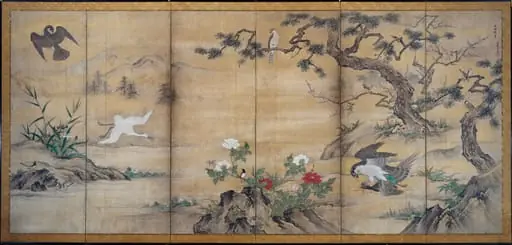 Birds and Flowers
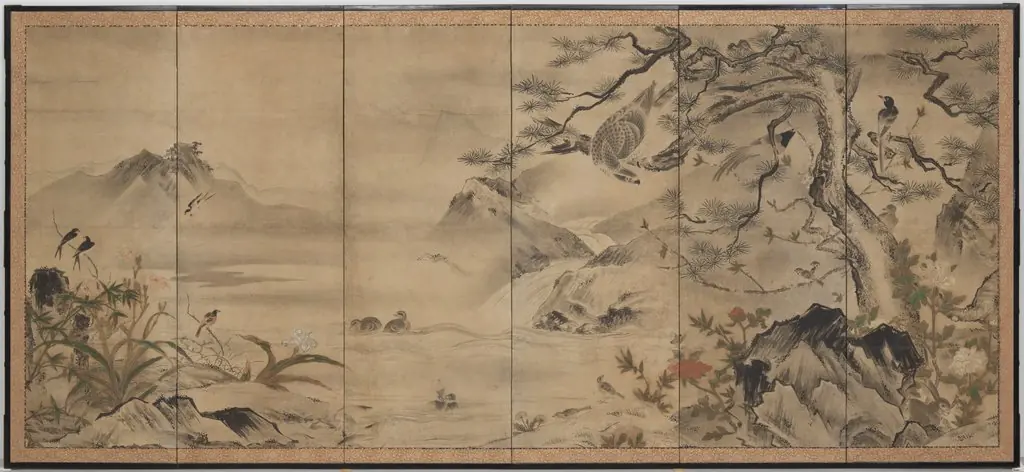 Flowers and Birds
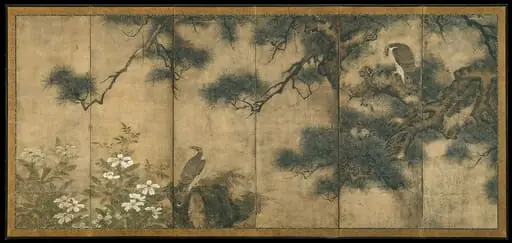 三谷等宿筆 伝三谷等宿筆 松と椿に鷹・柳と椿に小禽図屏風|Hawks with Pine Trees and Camellias; Small Birds with Willows and Camellias
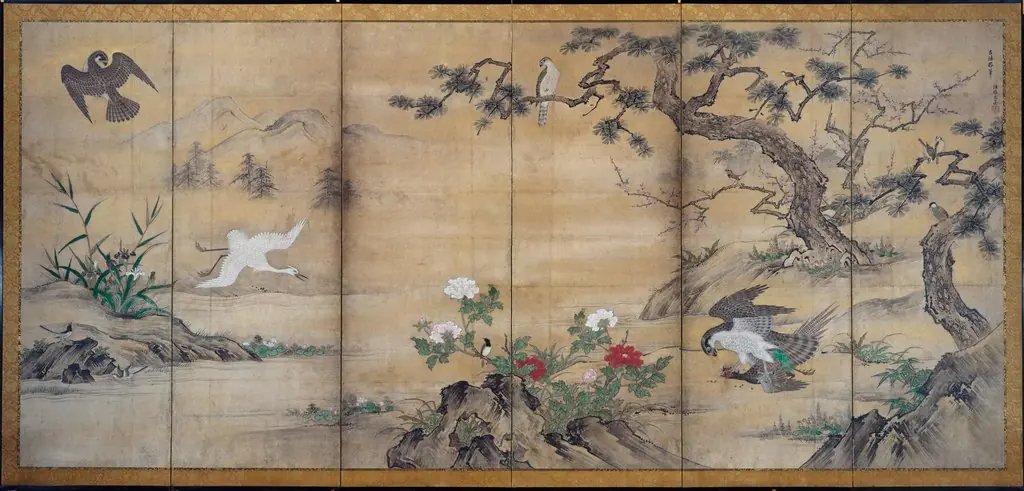 Birds and Flowers
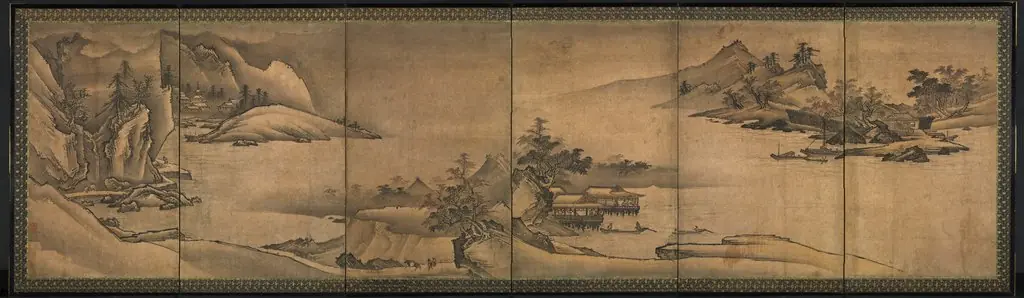 Landscape of the Four Seasons
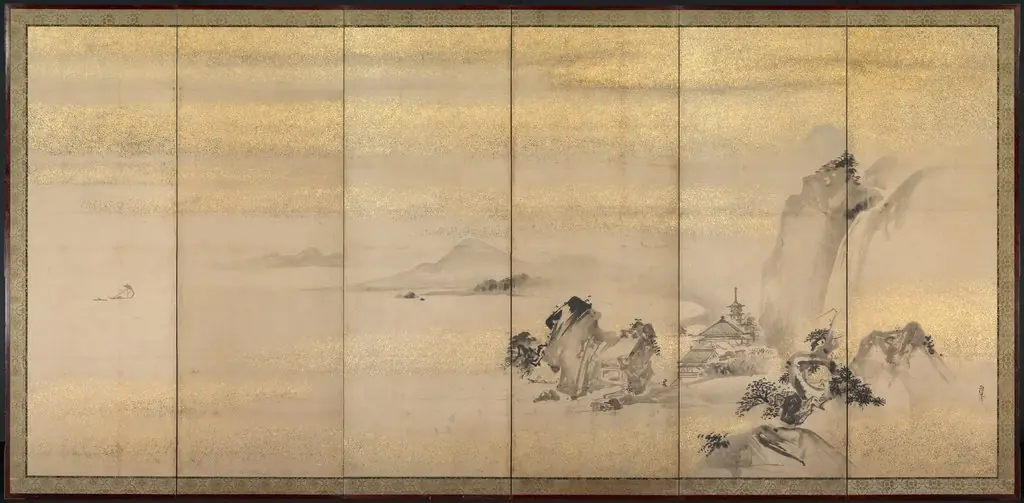 Summer and Winter Landscapes (one of a pair)
 四季山水図屏風|Landscapes of the Four Seasons