Artwork
三谷等宿筆 伝三谷等宿筆 松と椿に鷹・柳と椿に小禽図屏風|Hawks with Pine Trees and Camellias; Small Birds with Willows and Camellias
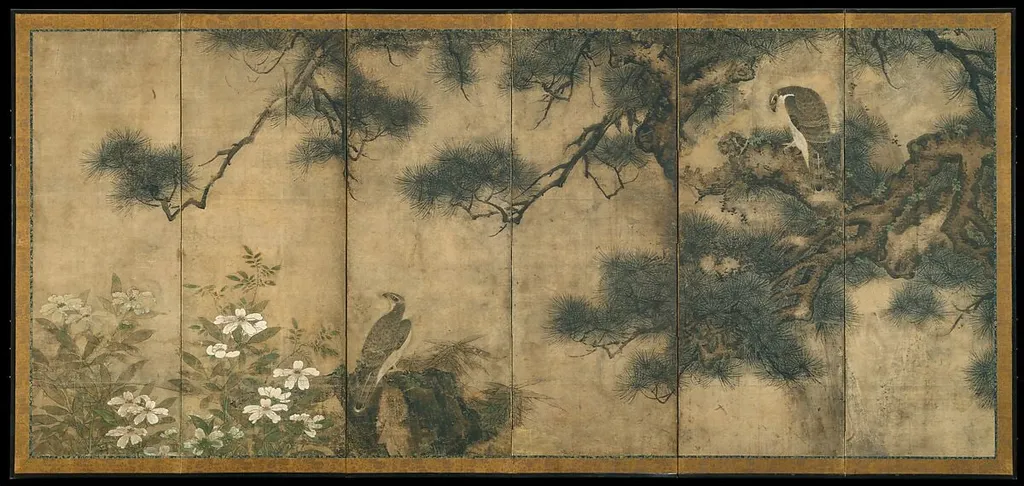
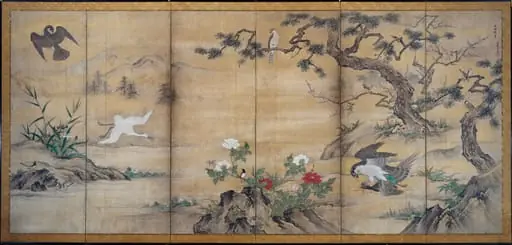
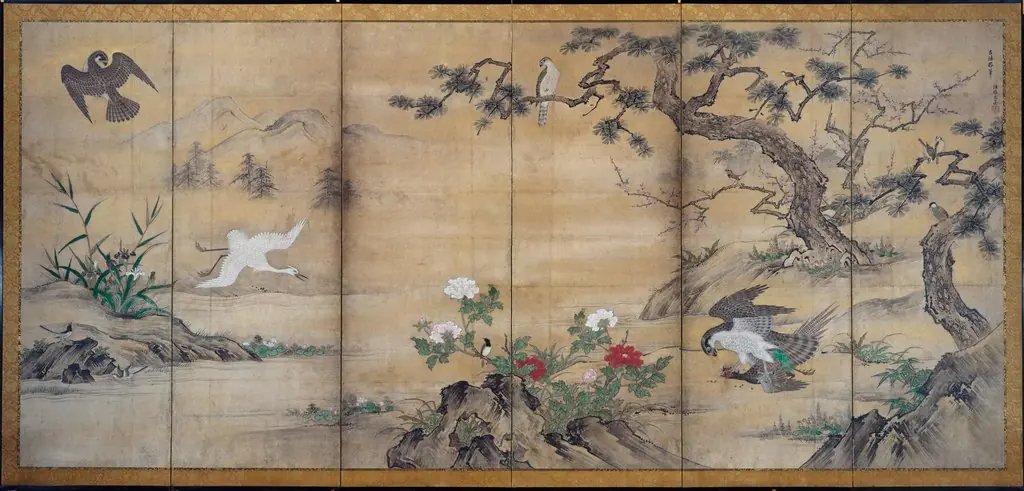
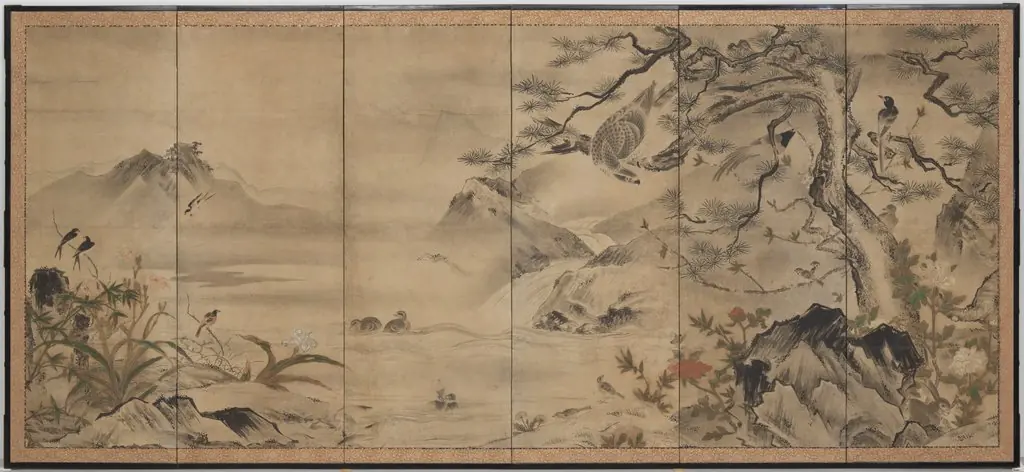
三谷等宿筆 伝三谷等宿筆 松と椿に鷹・柳と椿に小禽図屏風|Hawks with Pine Trees and Camellias; Small Birds with Willows and Camellias is an ink painting by the Baroque artist Mitani Tōshuku. It dates from 1616 and is held in the collection of the Metropolitan Museum of Art.
About this work
Overview
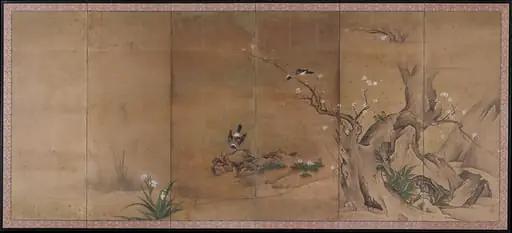
Created in 1616 by the Japanese painter Mitani Tōshuku, this work consists of two six‑panel folding screens painted with ink and color on paper.
Created in 1616 by the Japanese painter Mitani Tōshuku, this work consists of two six‑panel folding screens painted with ink and color on paper. The pair is divided into separate compositions: one scene centers on a hawk among pine trunks and camellias, while the other presents a smaller bird perched on a branch with similar botanical elements. The screens are part of the collection of the Metropolitan Museum of Art.
Subject & Meaning
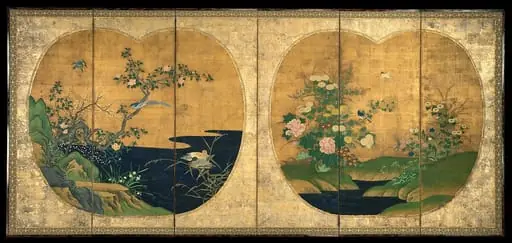
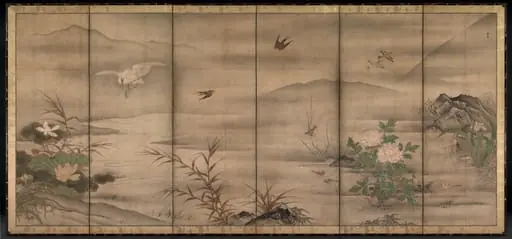
The left screen portrays a hawk settled on a tree stump, surrounded by stylized pine foliage and white camellia blossoms, suggesting a moment of poised vigilance in nature. The right screen offers a more intimate view, showing a diminutive bird on a branch with additional pine and camellia motifs, emphasizing delicacy and the fleeting presence of wildlife within a cultivated landscape.
Technique & Style
Executed with ink and subtle pigments, the artist employs a restrained palette of browns, greens, and whites. Fine, controlled brushwork renders the texture of bark, needle‑like pine needles, and the soft petals of camellias. The delicate line work and layered washes create depth while maintaining the flat decorative quality typical of early Edo screen painting.
History & Provenance
The screens were produced during the early Edo period, a time when folding screens served both functional and aesthetic purposes in aristocratic interiors. After remaining in private Japanese collections for several centuries, they entered the Metropolitan Museum of Art’s holdings in the 20th century, where they continue to be displayed as examples of Mitani Tōshuku’s oeuvre.
Context
Mitani Tōshuku belonged to a lineage of artists known for integrating Chinese-inspired brush techniques with native Japanese motifs. The juxtaposition of birds of prey and smaller avian species, set against pine and camellia, reflects contemporary interests in seasonal symbolism and the harmonious coexistence of strength and subtlety within the visual arts of the period.
Artist & collection