Artwork
Flower Still Life with Bird's Nest
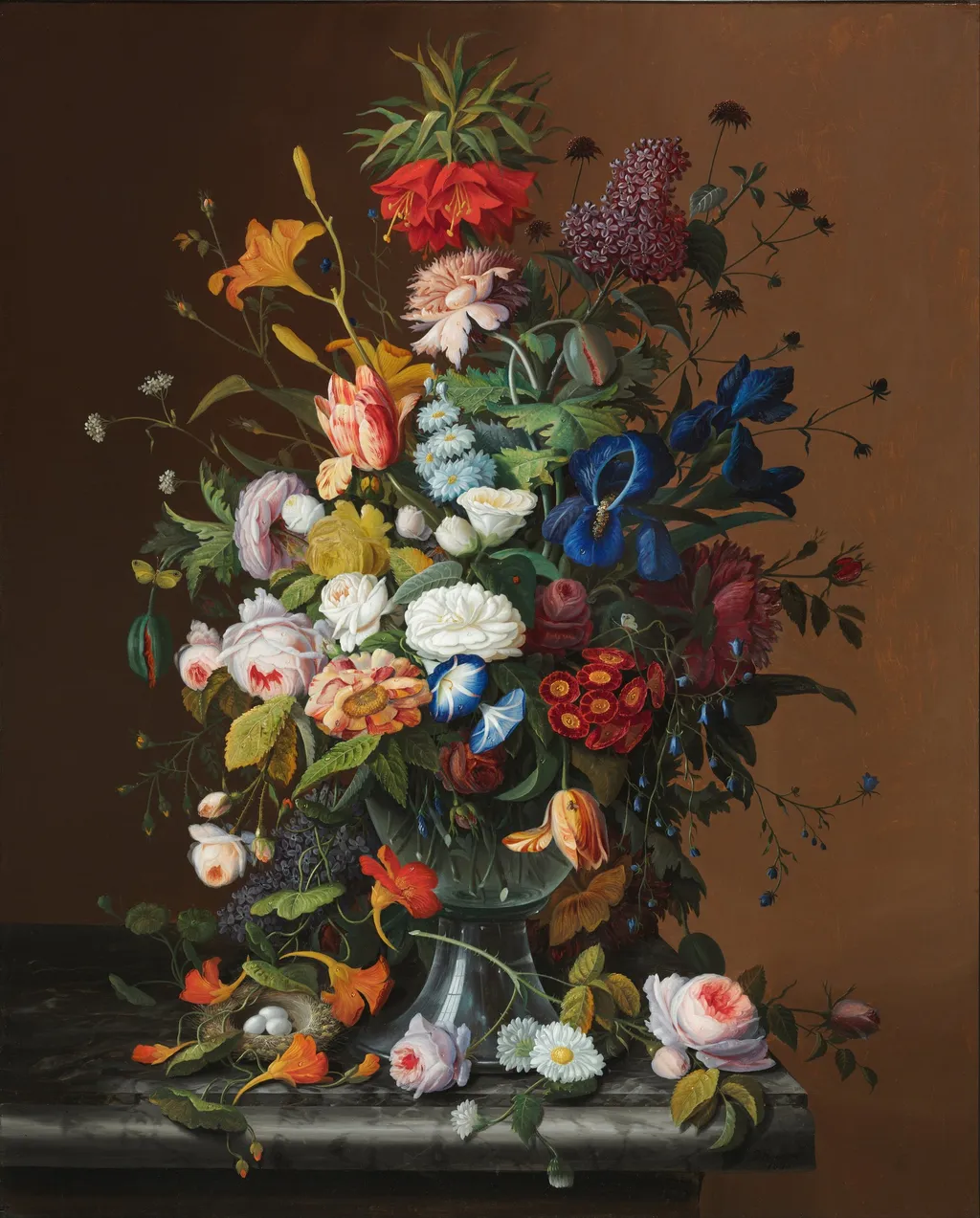
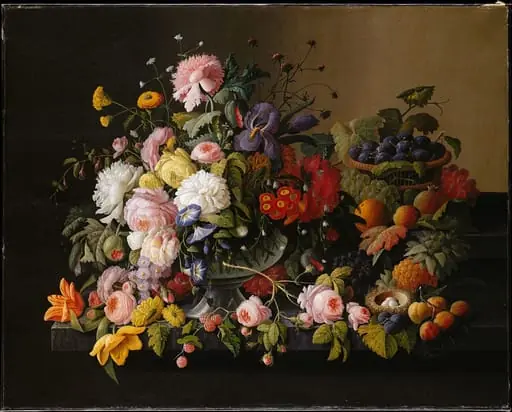
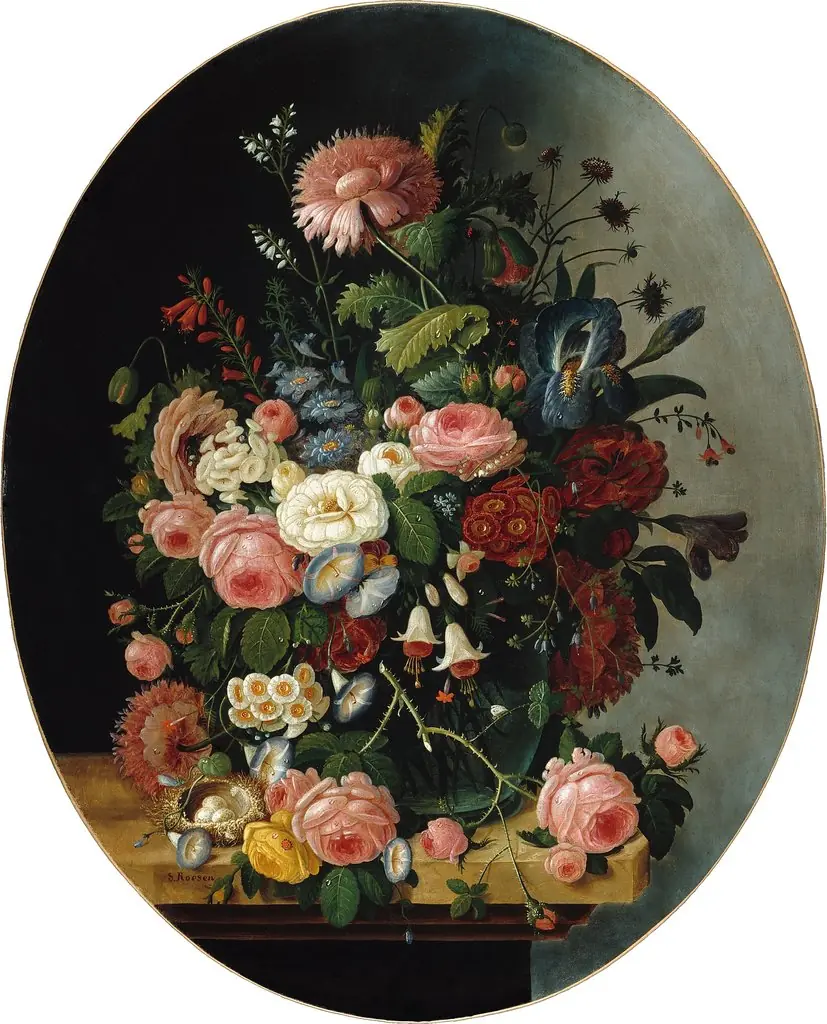
Flower Still Life with Bird's Nest is an oil painting by the Biedermeier artist Severin Roesen. It dates from 1853 and is held in the collection of the Philadelphia Museum of Art.
About this work
Overview
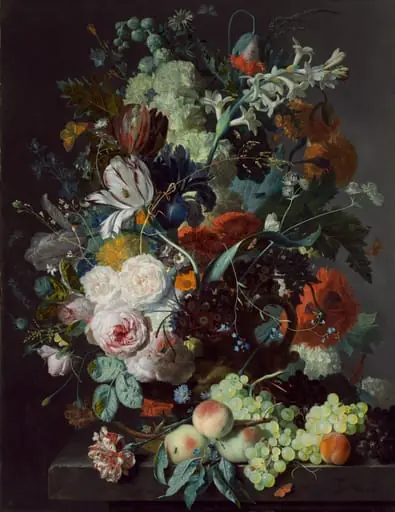
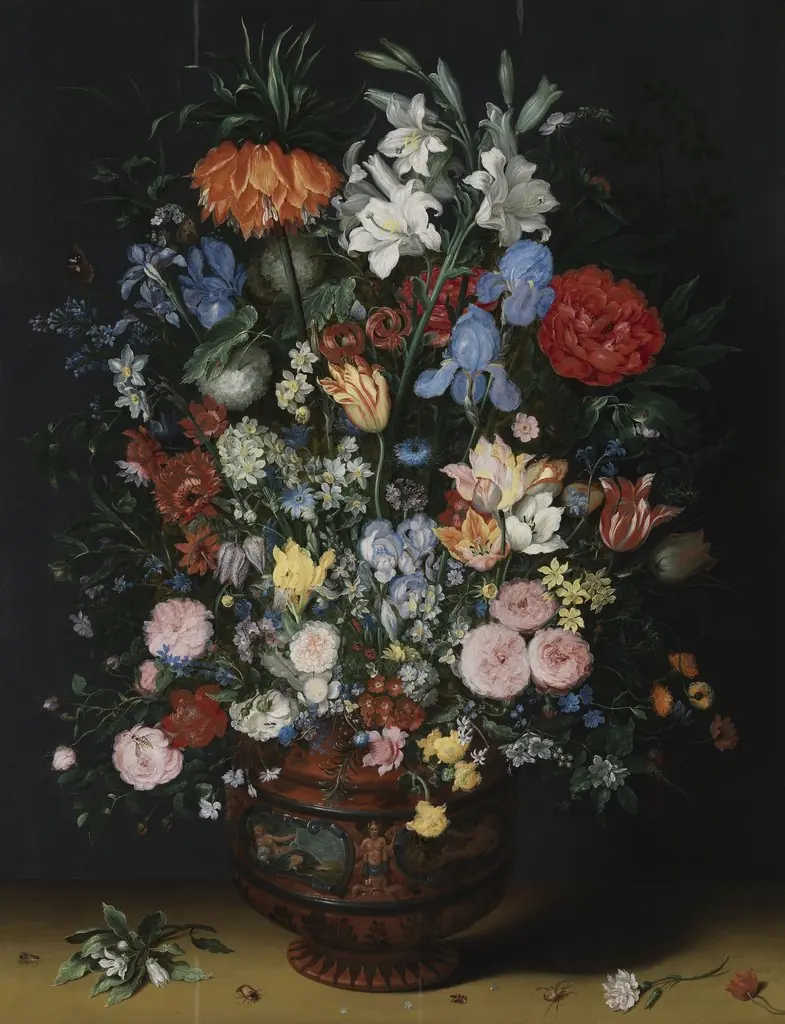
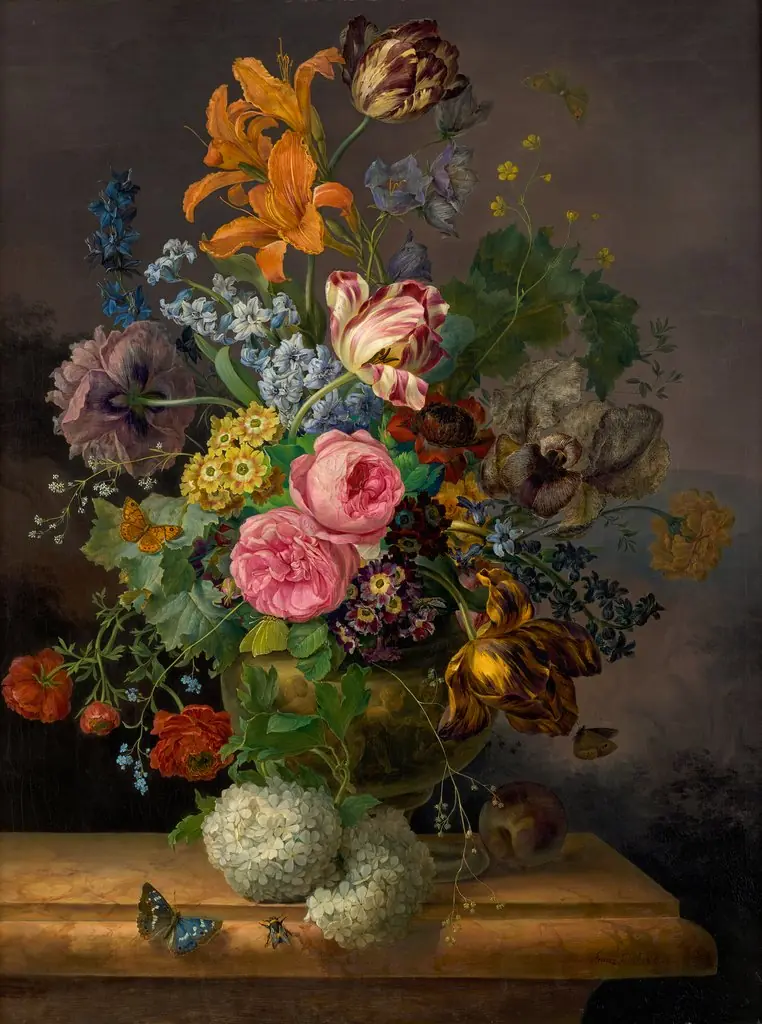
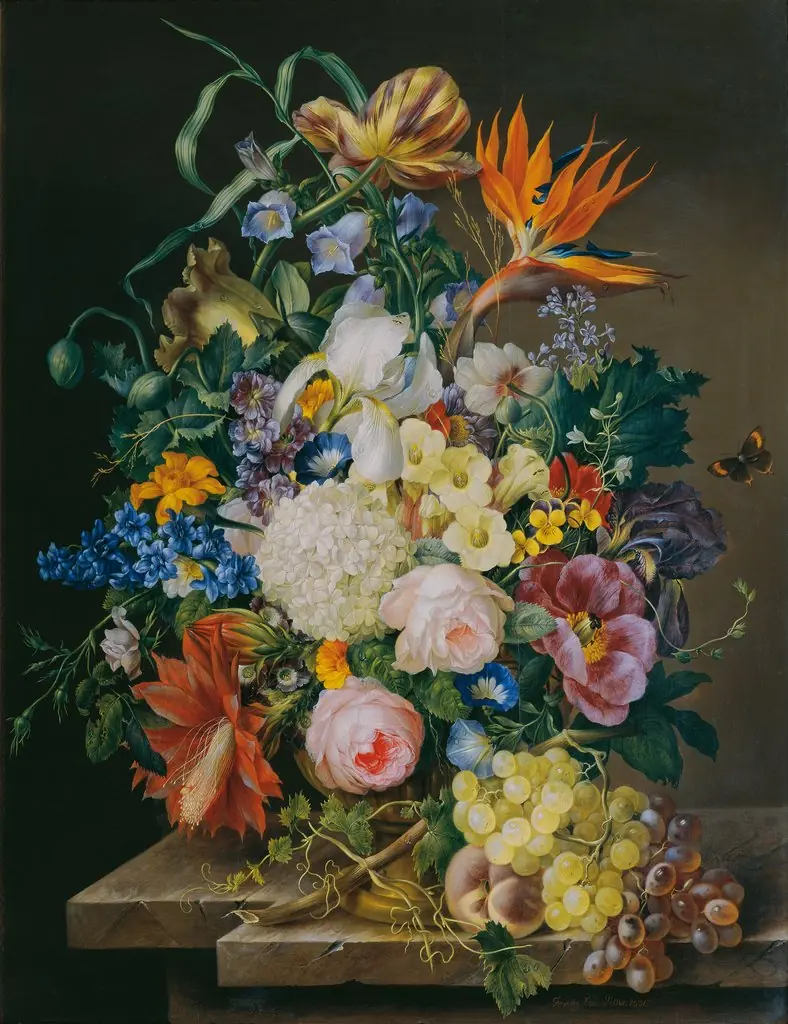
Painted in 1853 by Severin Roesen, this oil-on-canvas still life presents a lush arrangement of flowers in a glass vase alongside a bird's nest containing eggs.
Painted in 1853 by Severin Roesen, this oil-on-canvas still life presents a lush arrangement of flowers in a glass vase alongside a bird's nest containing eggs. Roesen, born in Prussia and active in the United States, specialized in detailed floral compositions that reflect both European traditions and American tastes of the mid-nineteenth century. The work exemplifies his signature approach: abundant, carefully observed botanical elements rendered with precision.
Subject & Meaning
The painting combines cultivated blooms with a naturally occurring bird's nest, suggesting a quiet harmony between human artifice and the wild. The presence of eggs implies renewal and fragility, while the overflowing bouquet evokes transience and seasonal change. These elements, common in Roesen’s work, invite contemplation without overt symbolism, grounding the scene in observable reality rather than allegory.
Technique & Style
Roesen employed fine brushwork to render each petal, leaf, and stem with meticulous clarity. The flowers, rendered in soft pastels accented by deeper reds and blues, emerge vividly against a dark, neutral background that enhances their luminosity. The glass vase is rendered with subtle reflections, and the nest’s woven texture is rendered with delicate precision, demonstrating a commitment to tactile realism rooted in Biedermeier aesthetics.
History & Provenance
Created during Roesen’s most productive period in the United States, the painting reflects his established reputation among collectors of still life. While specific ownership records prior to its museum acquisition are not fully documented, it aligns with a body of work that circulated in Northeastern American markets in the mid-1800s, where such detailed floral compositions were highly sought after.
Context
In mid-nineteenth-century America, still life painting gained popularity as a genre that celebrated domestic beauty and natural abundance. Roesen’s work, influenced by German Biedermeier traditions, resonated with audiences seeking order and refinement amid rapid industrialization. His paintings offered a serene counterpoint to the era’s social upheaval, emphasizing harmony and careful observation.
Legacy
Roesen’s still lifes, including this one, helped define the American floral painting tradition. His technical precision and compositional balance influenced later artists working in the genre. Though less widely known today than some contemporaries, his body of work remains a significant record of how European artistic conventions were adapted and sustained in the American context during the 1800s.
Own this work as a print
Artist & collection
Artist
Severin Roesen (c. 1815 in Boppard – c. 1872) was a Prussian-American painter known for his abundant fruit and flower still lifes, and is today recognized as one of the major American painters in that genre from the nineteenth century.