Artwork
Flower piece
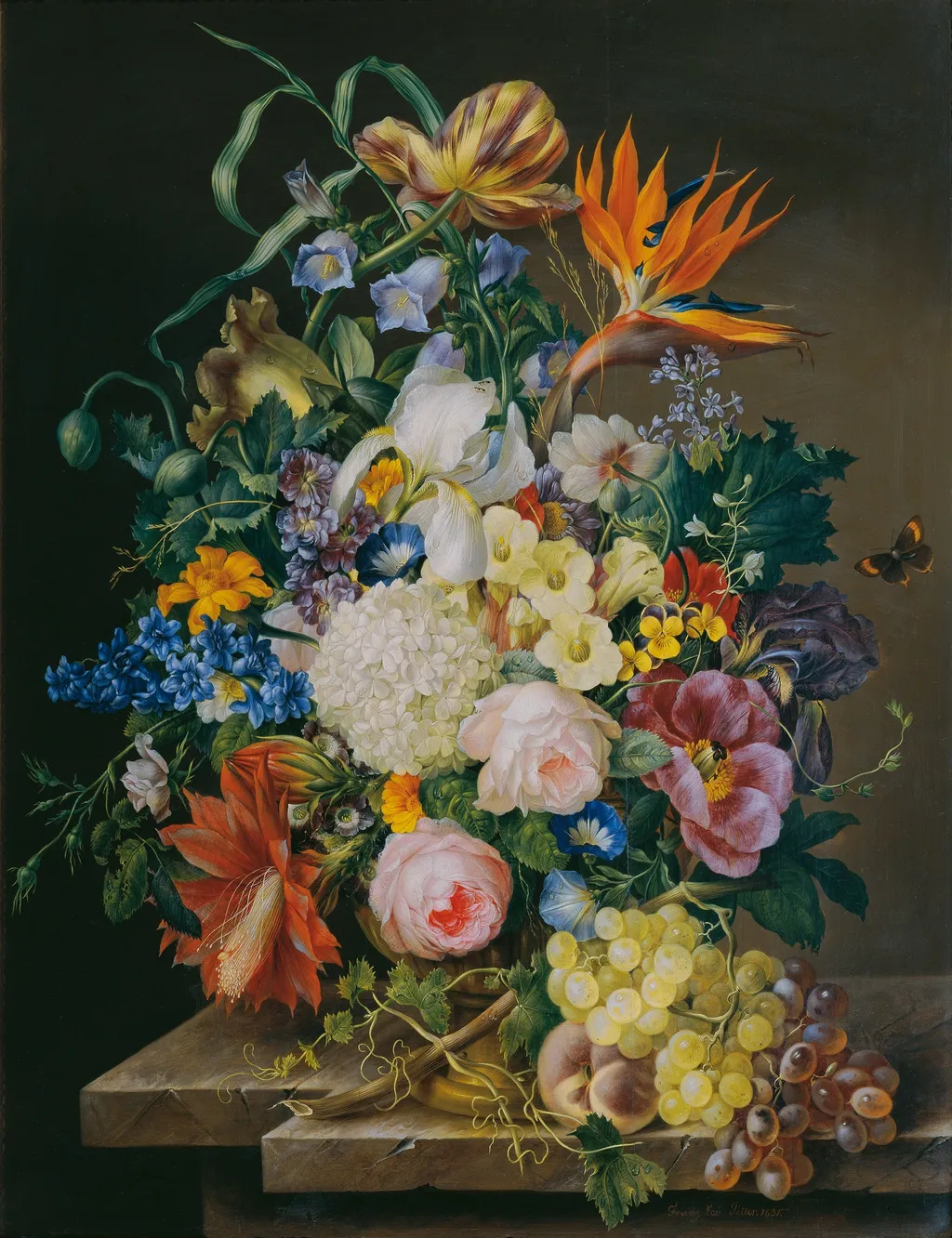
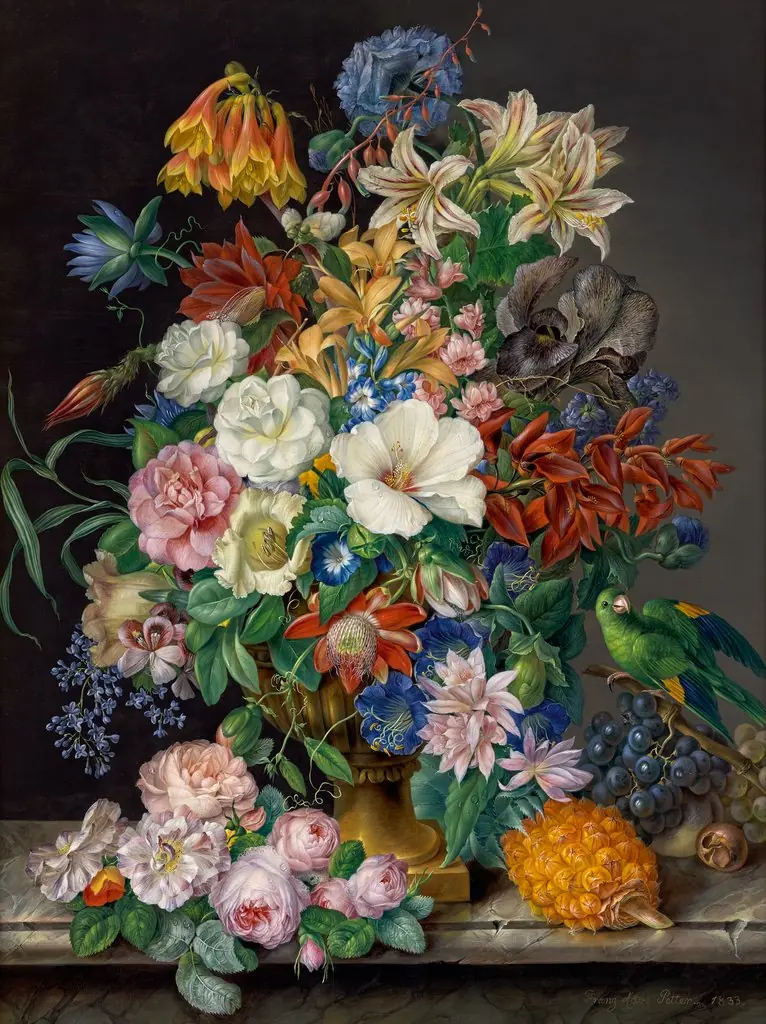
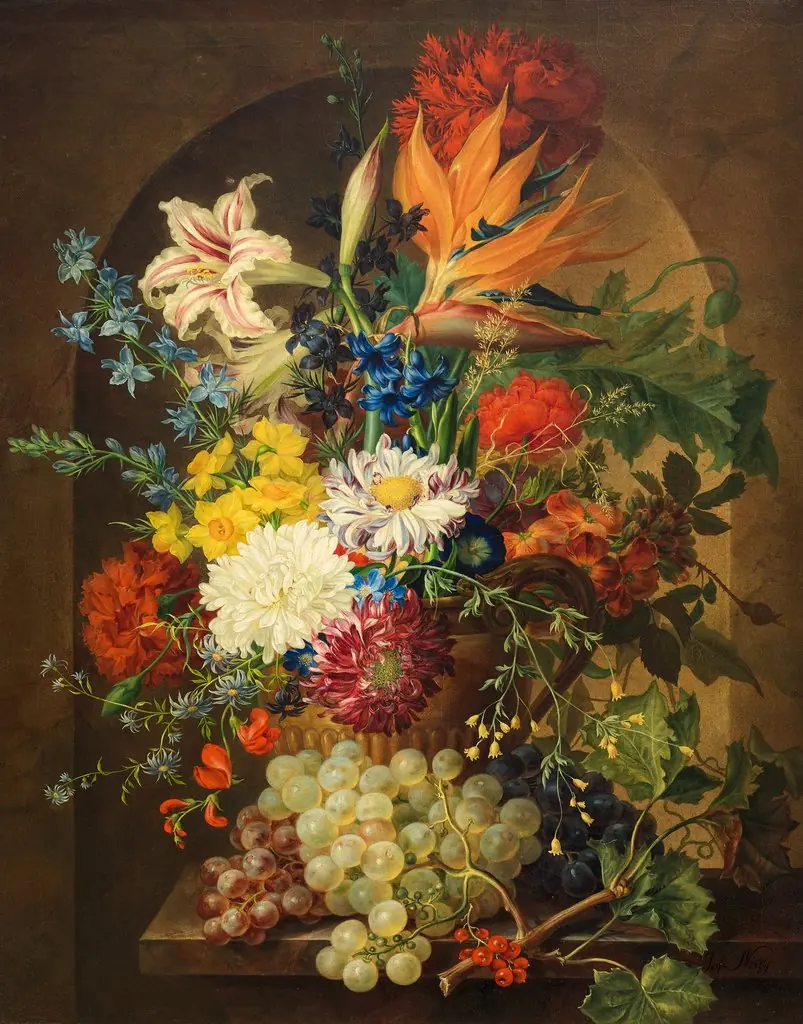
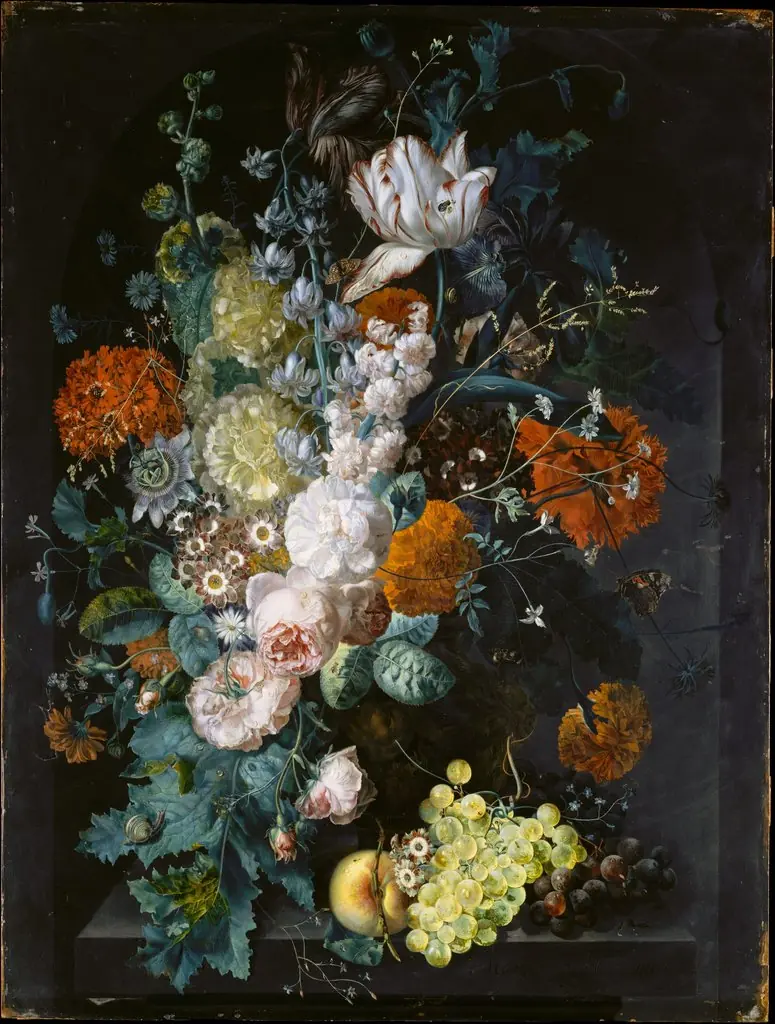
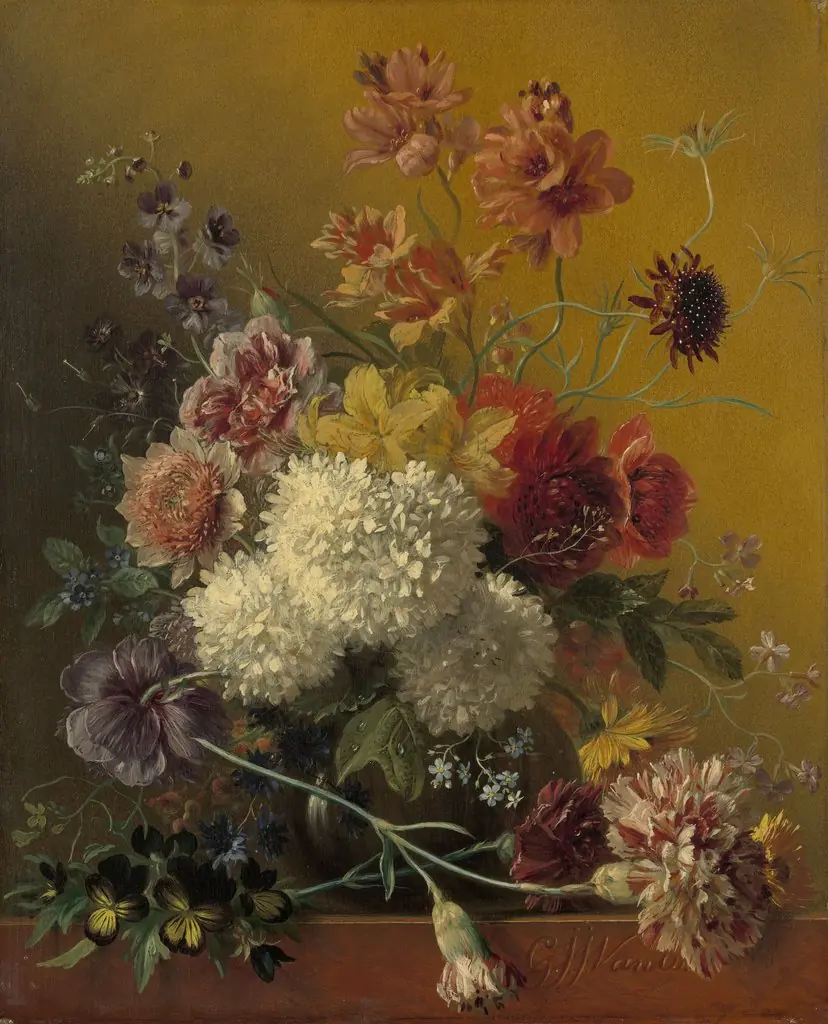
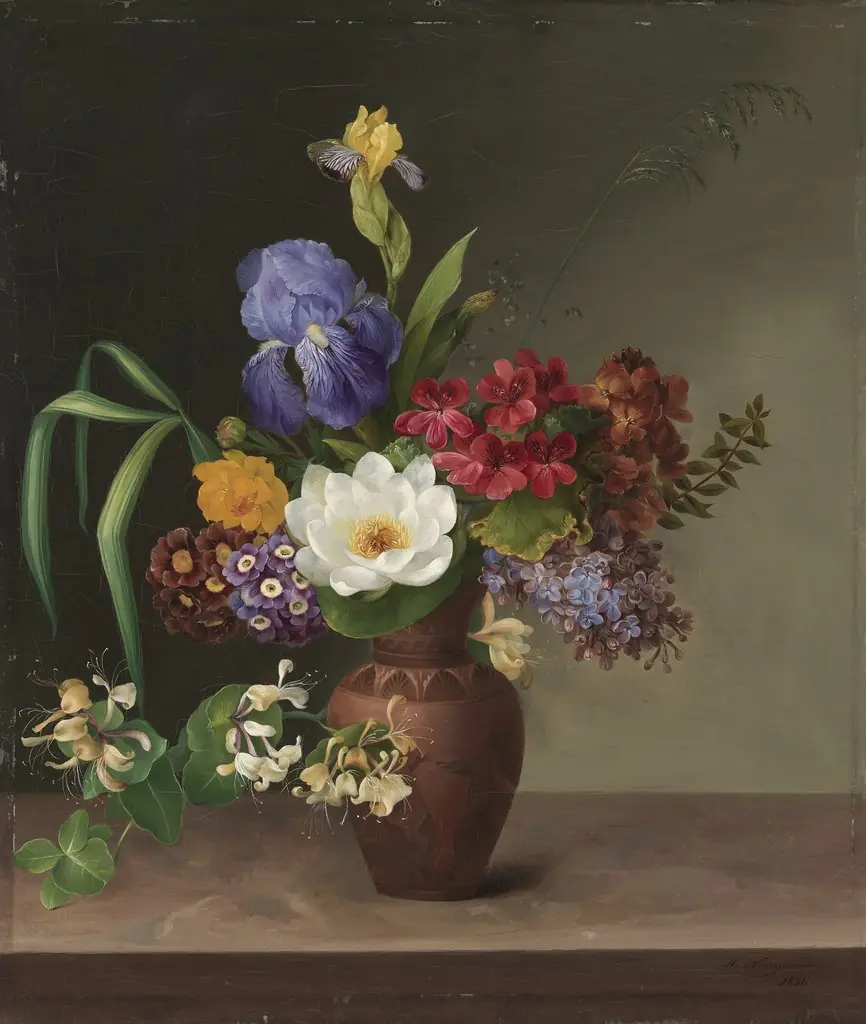
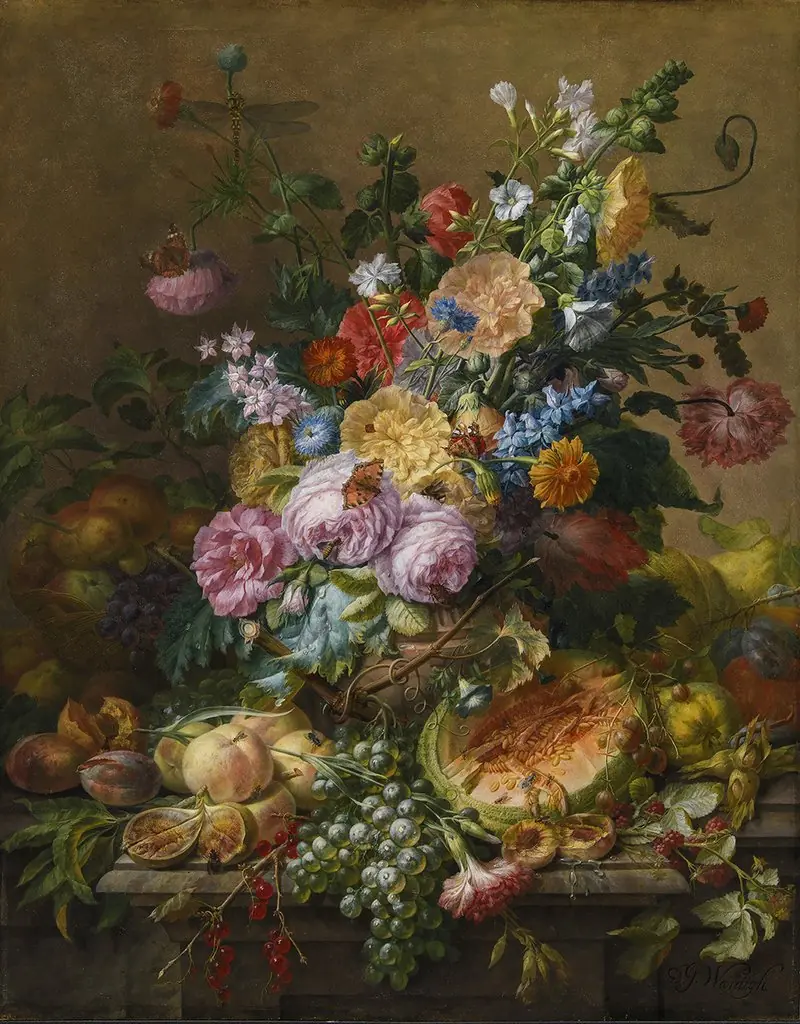
Flower piece is an oil painting by the Biedermeier artist Franz Xaver Petter. It dates from 1831 and is held in the collection of the Belvedere.
About this work
Overview
Franz Xaver Petter, an Austrian painter born in 1791, produced this oil-on-canvas still life in 1831. Trained at the Academy of Fine Arts Vienna under Johann Baptist Drechsler, he became known for his precise renderings of floral arrangements. The work belongs to the Kunsthistorisches Museum’s collection and exemplifies his dedication to the still-life genre during the Biedermeier era in Vienna.
Subject & Meaning
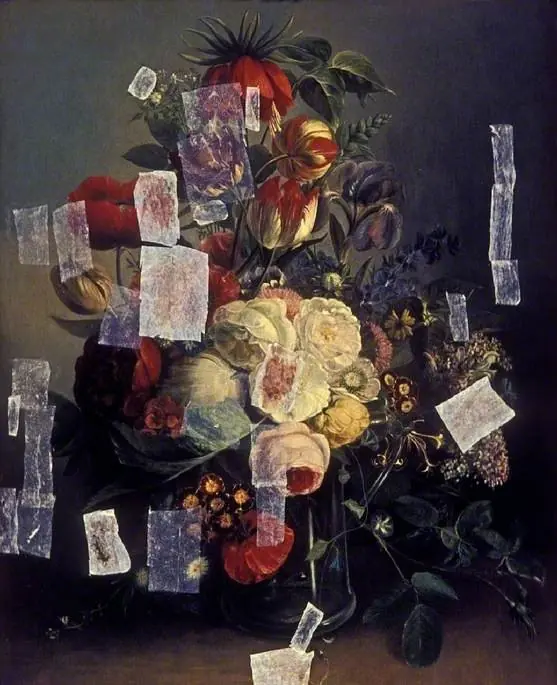
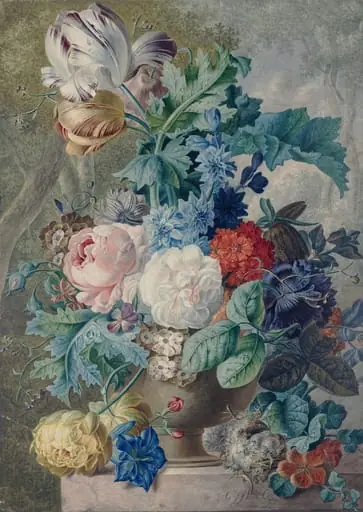
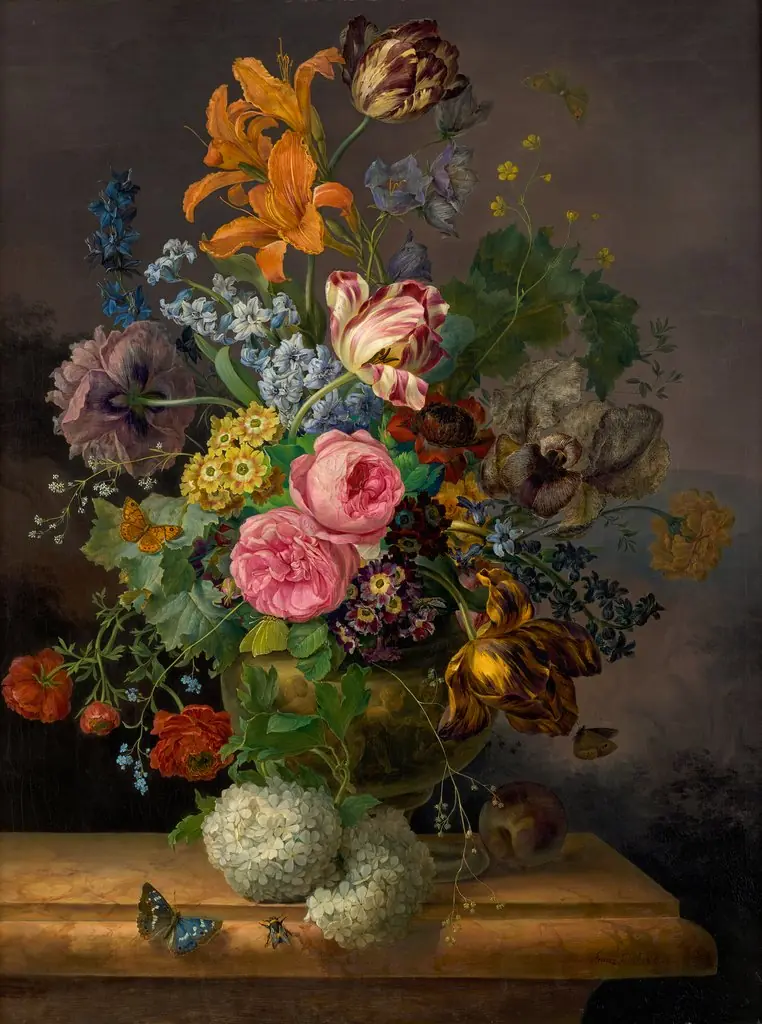
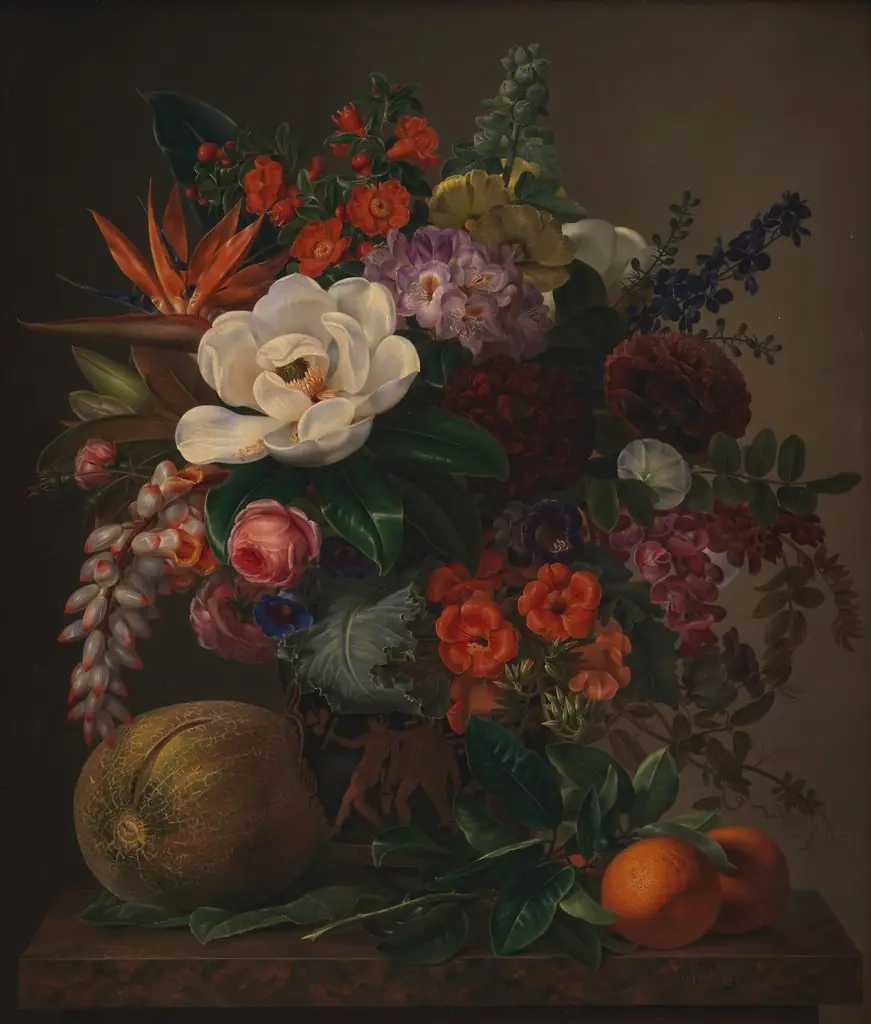
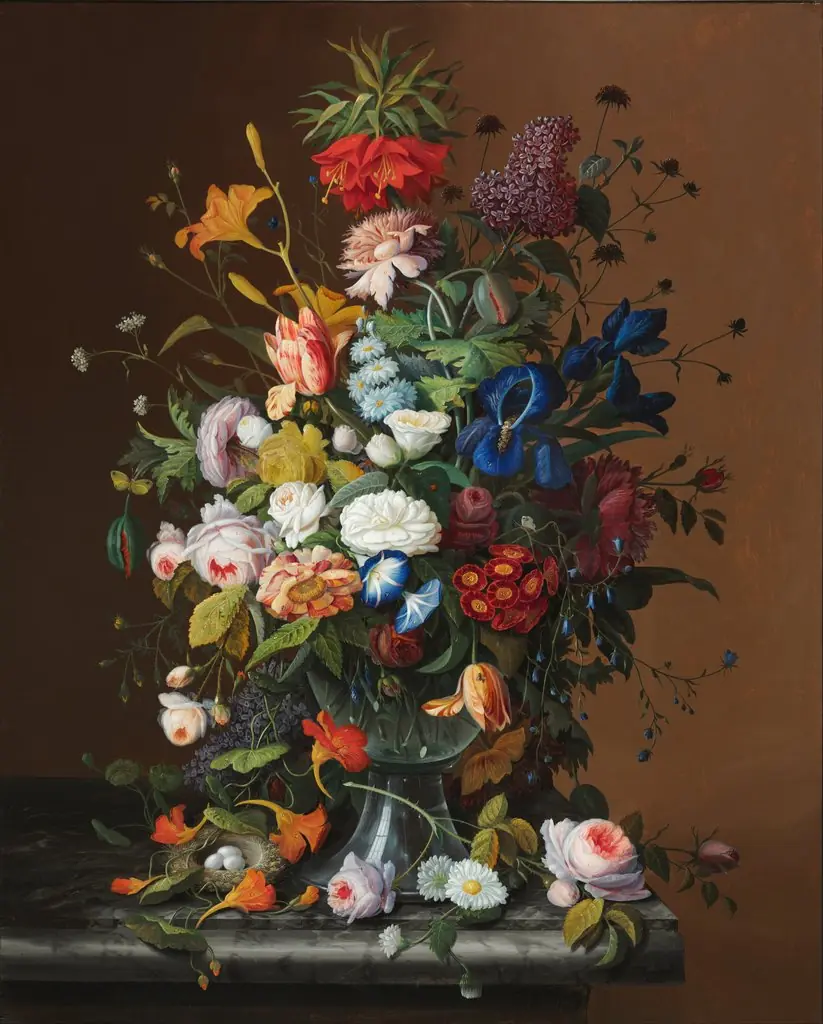
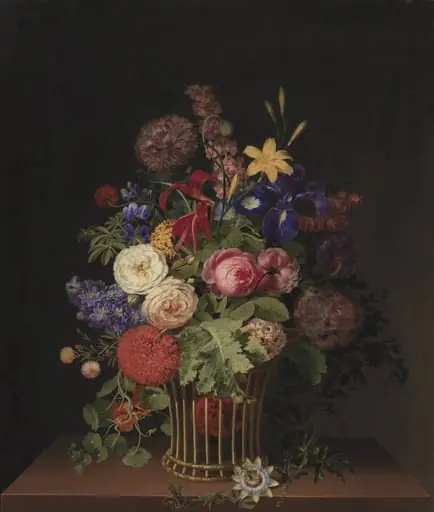
The painting presents a lush, overflowing bouquet composed of roses, tulips, and daisies, arranged as if placed on a wooden surface.
The painting presents a lush, overflowing bouquet composed of roses, tulips, and daisies, arranged as if placed on a wooden surface. No vase is visible, suggesting the flowers emerge directly from the plane of the table. The variety and density of blooms convey a sense of seasonal abundance, reflecting the Biedermeier ideal of domestic tranquility and the quiet appreciation of natural beauty in everyday life.
Technique & Style
Petter employed fine brushwork to capture the delicate textures of petals and the glossy sheen of leaves. Each bloom is rendered with observational accuracy, distinguishing individual forms through subtle shifts in color and light. The composition avoids theatricality, favoring naturalistic placement and muted background tones to emphasize the flowers’ organic forms without distraction.
History & Provenance
Created in 1831, the painting entered the collection of the Kunsthistorisches Museum in Vienna, where it remains today. Petter’s reputation as a leading floral still-life painter in mid-19th-century Austria ensured his works were sought after by collectors and institutions. This piece reflects the museum’s broader interest in documenting Viennese artistic production during the Biedermeier period.
Context
During the Biedermeier era, Austrian art turned inward, valuing domesticity and refined detail over grand narratives. Petter’s floral still lifes aligned with this cultural shift, offering viewers a contemplative encounter with nature’s transience and order. His work stood in contrast to more dramatic Romantic styles, instead celebrating quiet, observable beauty in the home environment.
Legacy
Petter’s precise, restrained approach to floral painting influenced subsequent generations of Austrian still-life artists. Though less widely known today than his contemporaries, his works remain important examples of Biedermeier aesthetics. The continued presence of this painting in a major public collection underscores its role in documenting the period’s visual culture and technical priorities.
Own this work as a print
Artist & collection
Artist
Franz Xaver Andreas Petter (23 October 1791 – 11 May 1866) was an Austrian artist.