Artwork
Victorian Bouquet
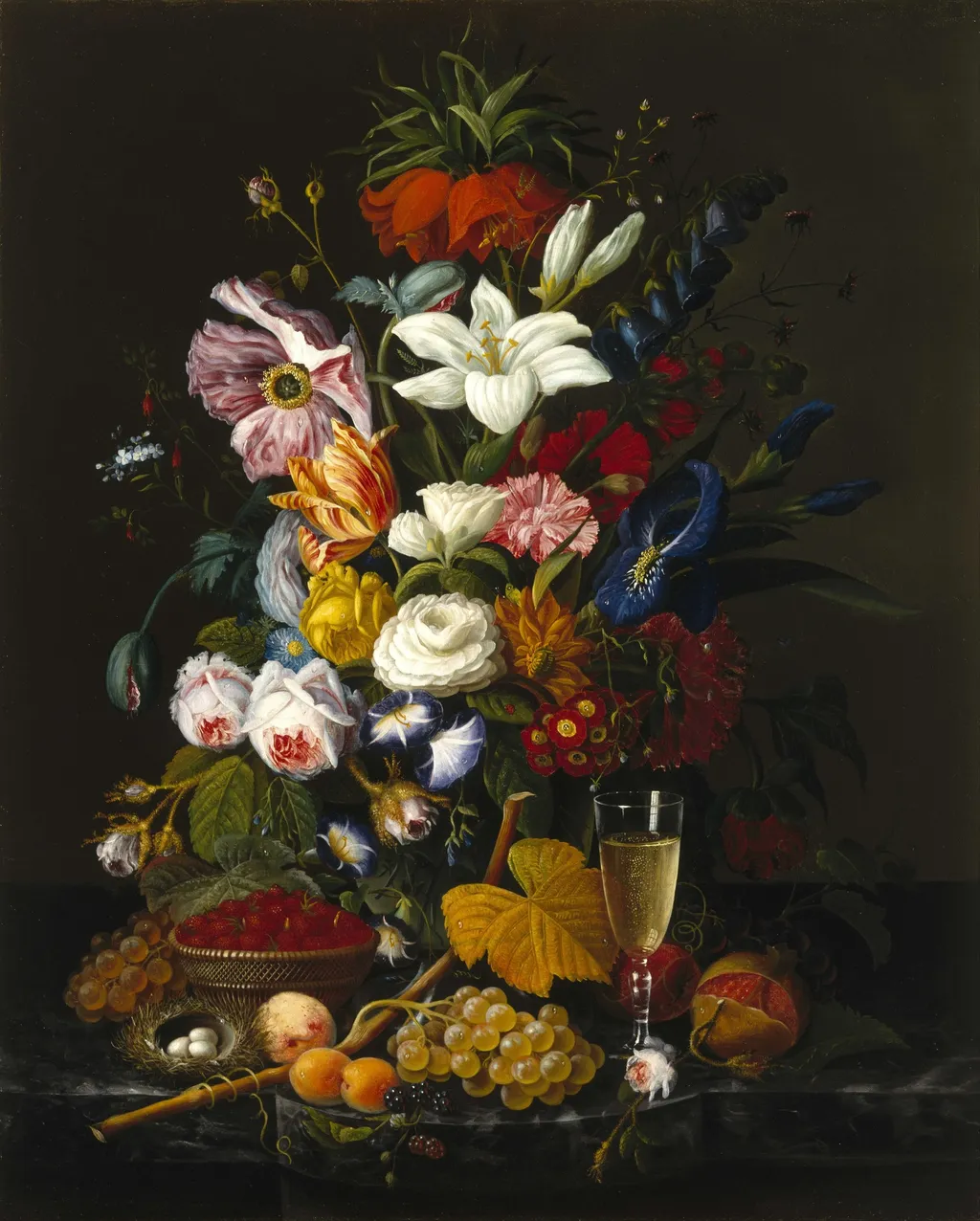
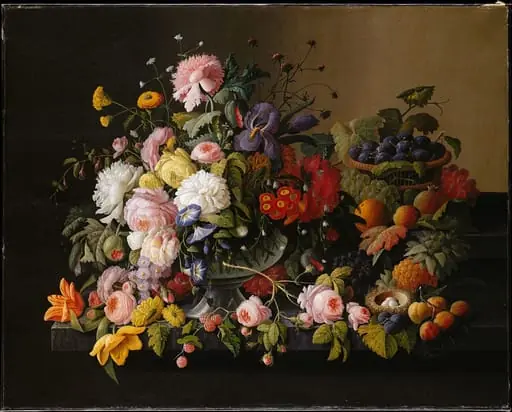
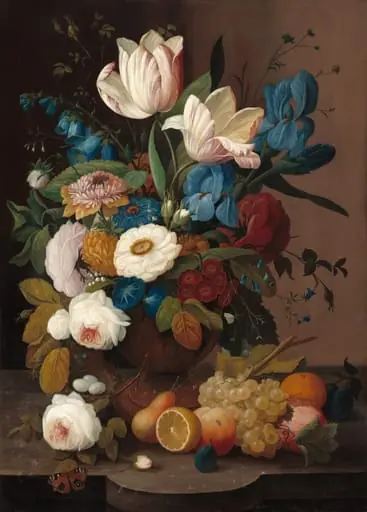
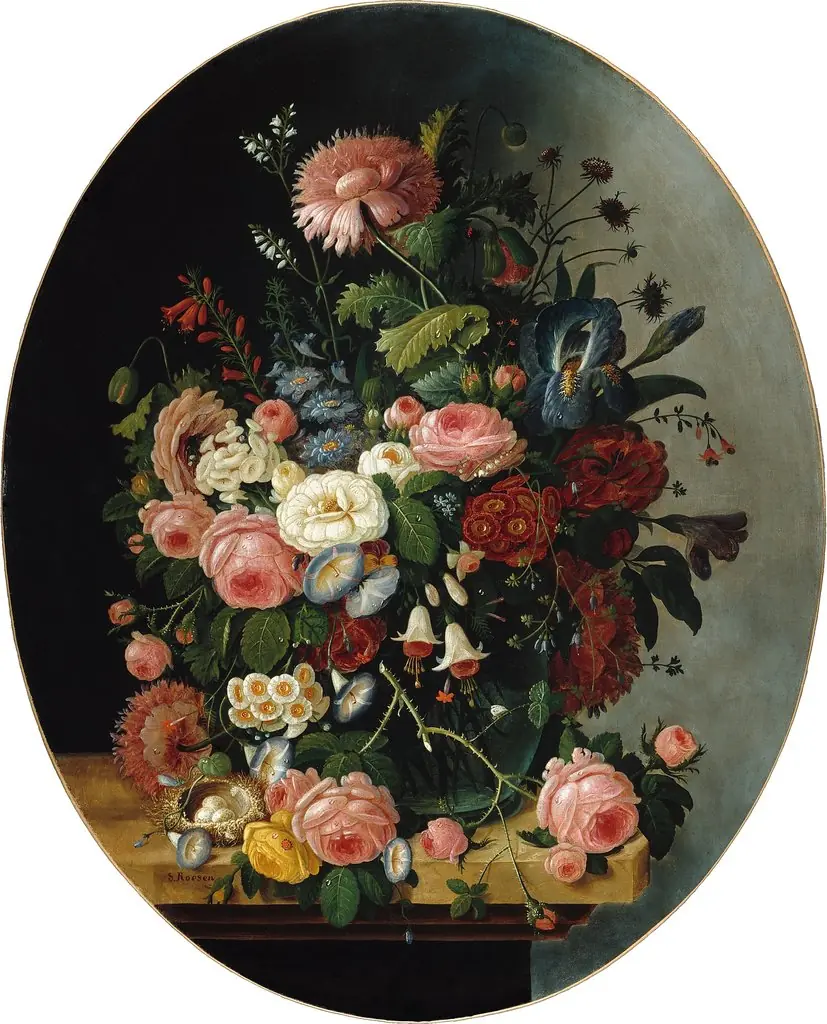
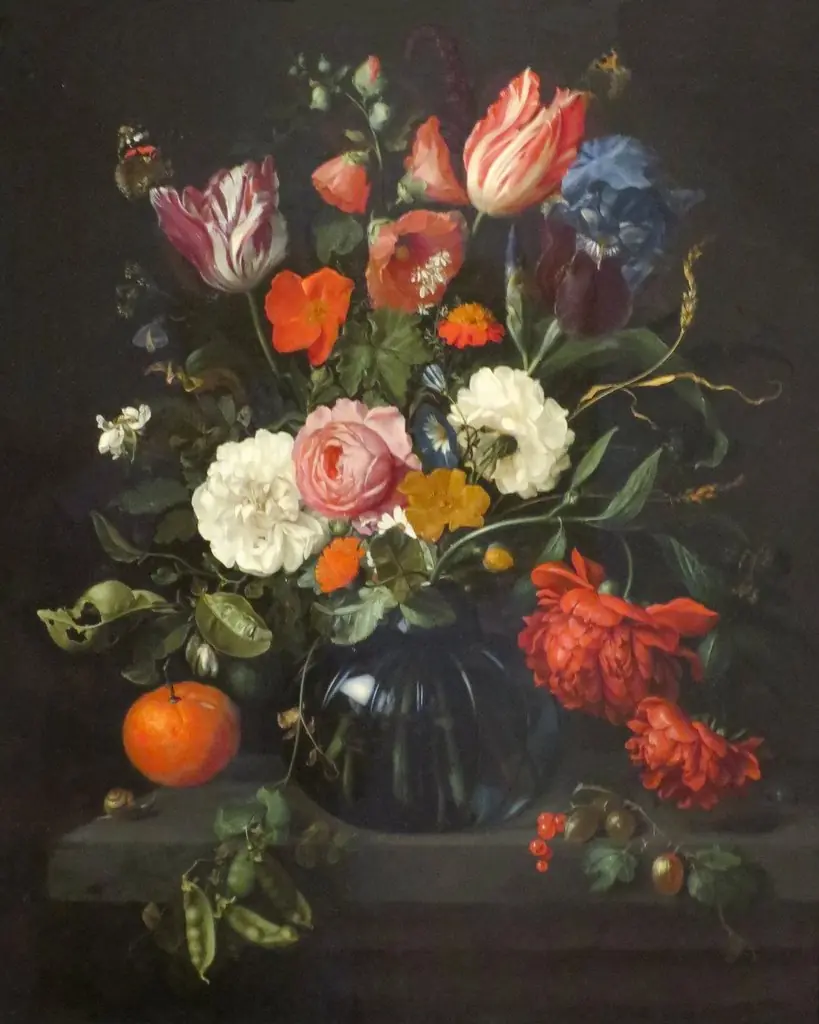
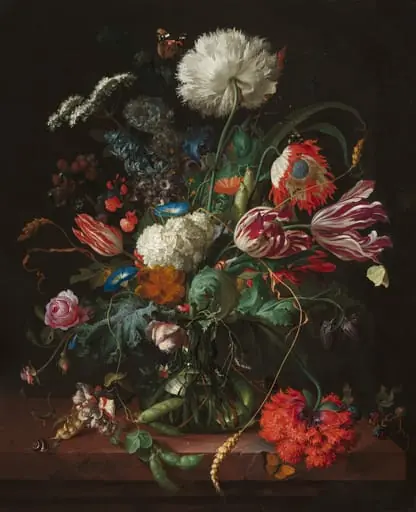
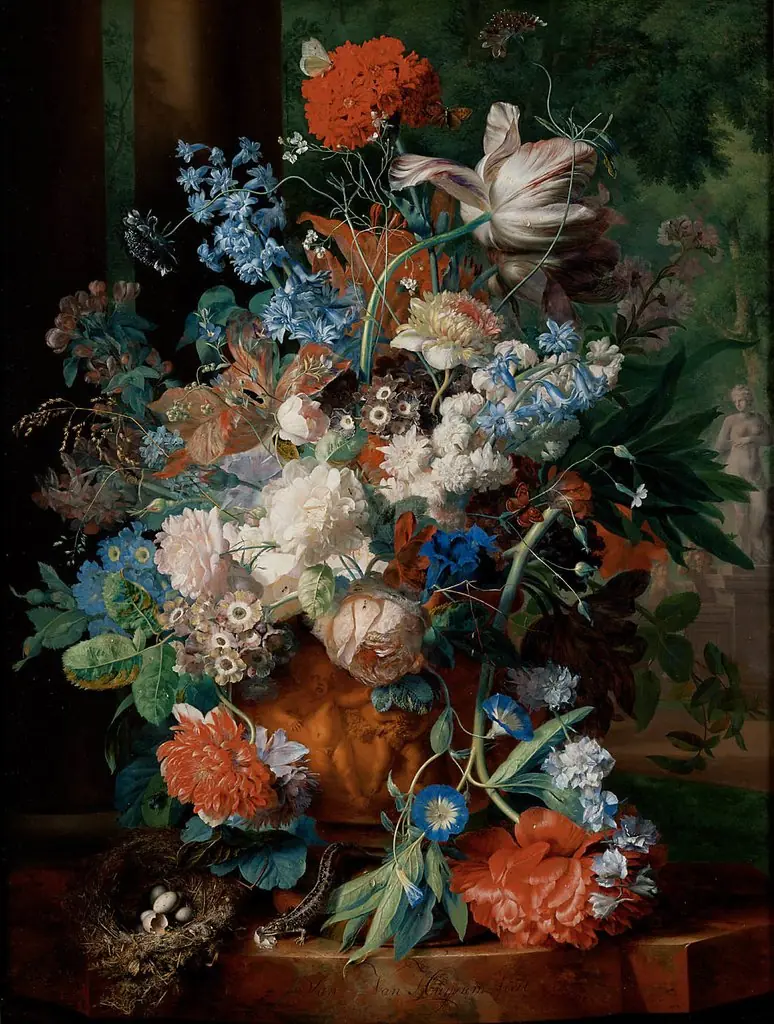
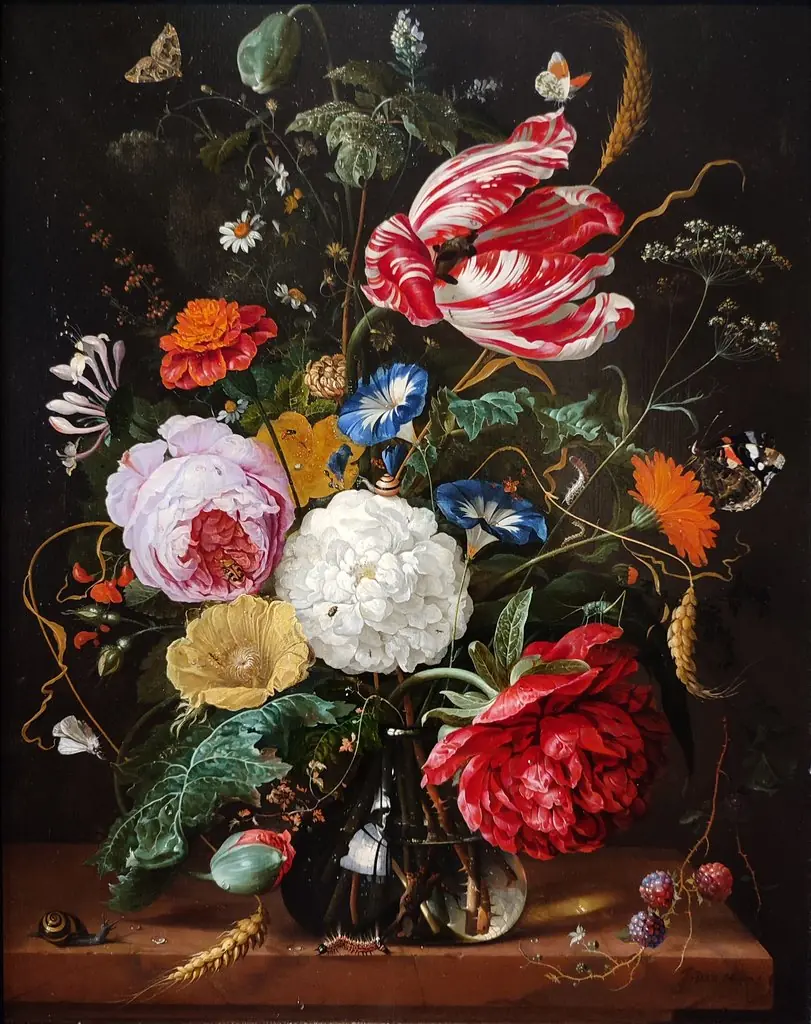
Victorian Bouquet is an oil painting by the American Folk Art artist Severin Roesen. It dates from 1850 and is held in the collection of the Museum of Fine Arts, Houston.
About this work
Overview
*Victorian Bouquet*, dated circa 1850, is an oil painting notable for its lush, tightly packed floral arrangement.
Severin Roesen, a German-born artist active in the United States during the mid-1800s, produced still lifes that reflected both European training and American tastes. *Victorian Bouquet*, dated circa 1850, is an oil painting notable for its lush, tightly packed floral arrangement. It belongs to a body of work that elevated everyday objects into formal compositions, appealing to middle-class collectors seeking signs of prosperity and refinement.
Subject & Meaning
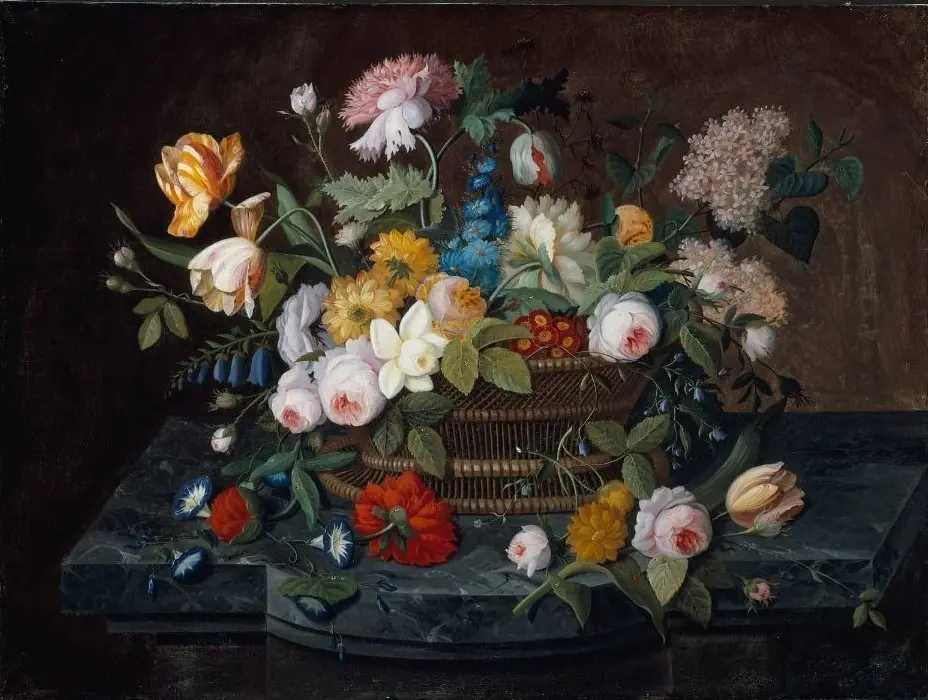
The painting presents a profusion of seasonal flowers—lilies, roses, and others—arranged with symbolic density. Accompanying elements like a glass of wine and a bowl of fruit suggest abundance and leisure. While not overtly religious or allegorical, the scene evokes themes of transience and cultivated beauty, aligning with Victorian ideals of domestic harmony and the moral value placed on nature’s order.
Technique & Style
Roesen rendered each petal and leaf with precise, observable detail, drawing from botanical illustration traditions. His brushwork is deliberate yet visible, building texture through layered glazes and careful highlights. The dark, neutral background isolates the bouquet, intensifying its chromatic richness. Objects in the foreground are rendered with equal care, creating a sense of tangible presence and spatial depth.
History & Provenance
Created during Roesen’s most productive period in New York and Pennsylvania, *Victorian Bouquet* reflects the growing market for still lifes among urban patrons. Though specific early ownership records are sparse, the painting’s style and subject align with works collected by affluent Americans seeking refined decorative art. It remains representative of Roesen’s consistent output in the genre throughout the 1840s and 1850s.
Context
In mid-19th-century America, still-life painting gained popularity as a genre that balanced aesthetic pleasure with moral undertones. Roesen’s work responded to a cultural moment where floral arrangements symbolized domestic virtue and economic success. His paintings, though rooted in European traditions, were adapted to suit American sensibilities, particularly in their emphasis on abundance and meticulous realism.
Legacy
Roesen’s still lifes, including *Victorian Bouquet*, helped define a distinct American approach to floral painting that merged European technique with local themes. His influence extended to later artists who adopted his compositional density and attention to detail. Though not widely celebrated in his lifetime, his body of work is now recognized as a significant contribution to 19th-century American art.
Own this work as a print
Artist & collection
Artist
Severin Roesen (c. 1815 in Boppard – c. 1872) was a Prussian-American painter known for his abundant fruit and flower still lifes, and is today recognized as one of the major American painters in that genre from the nineteenth century.