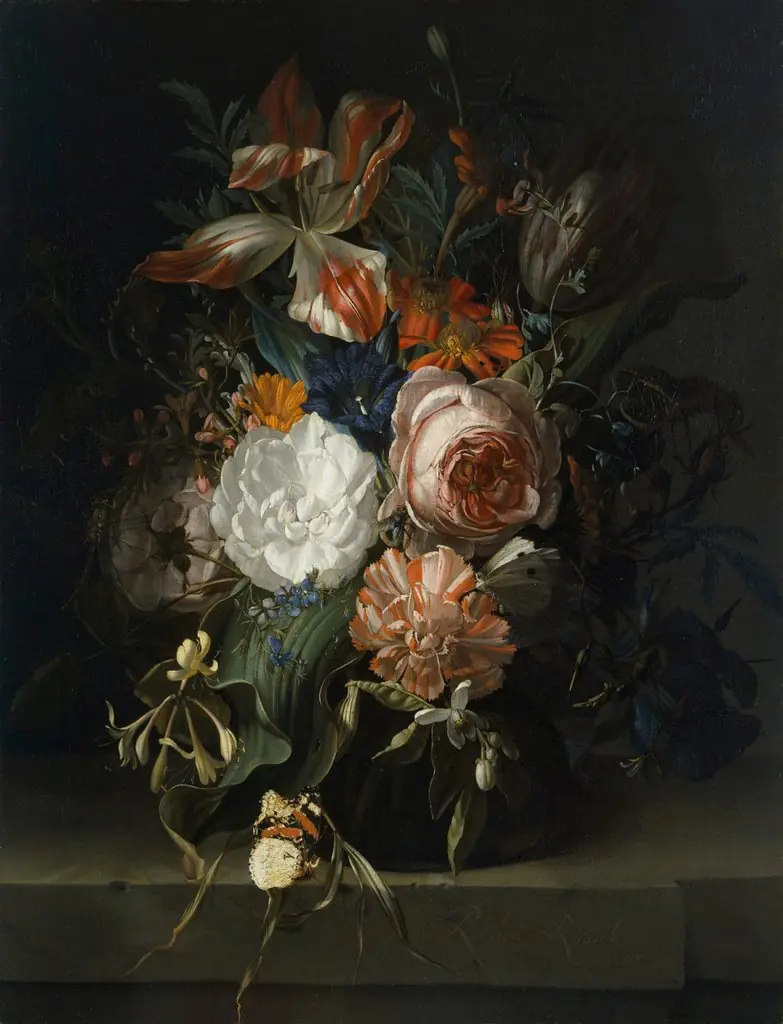
Artwork
Flowers in a Glass Vase
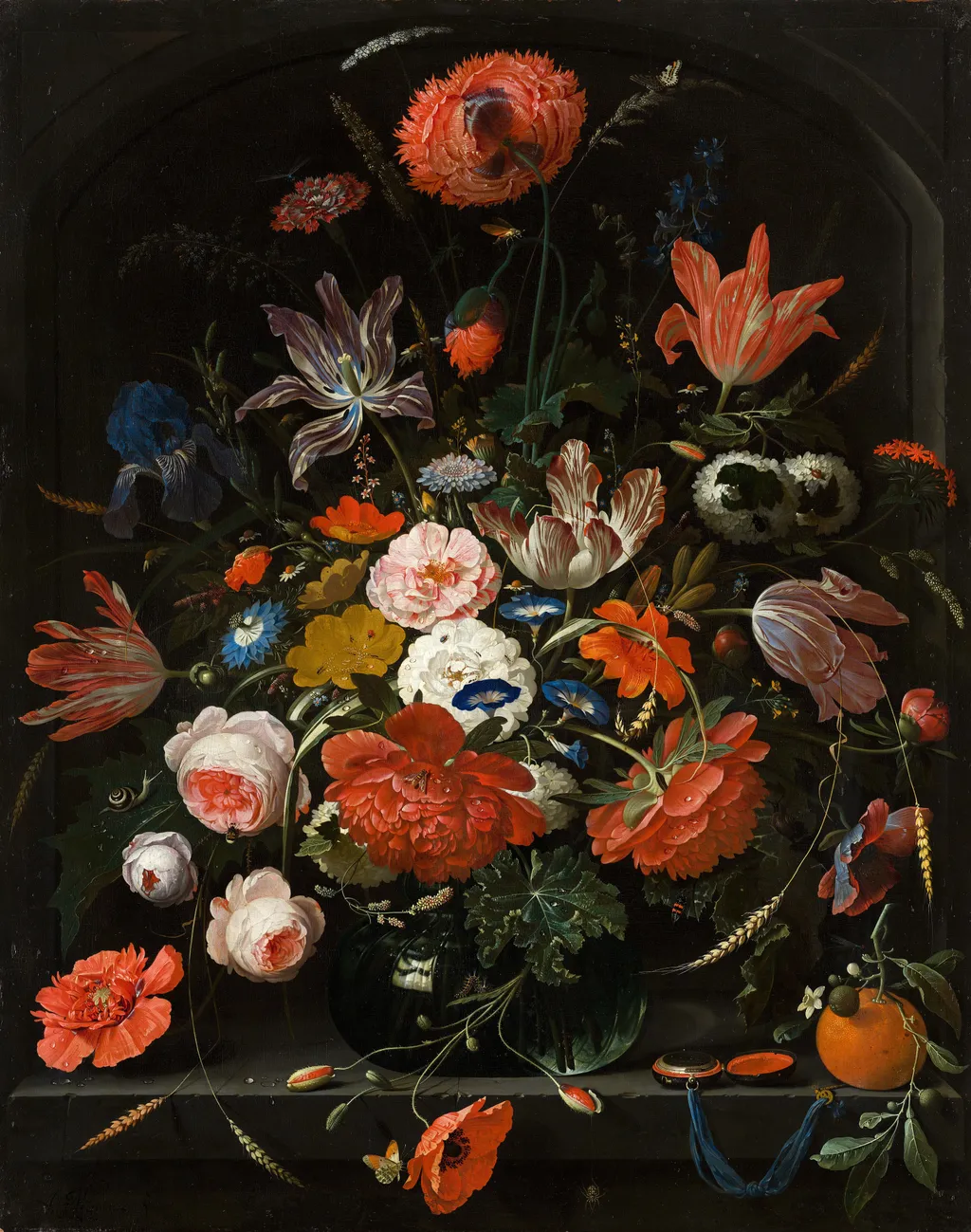
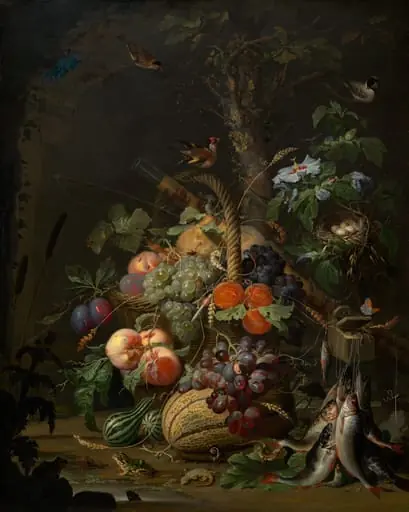
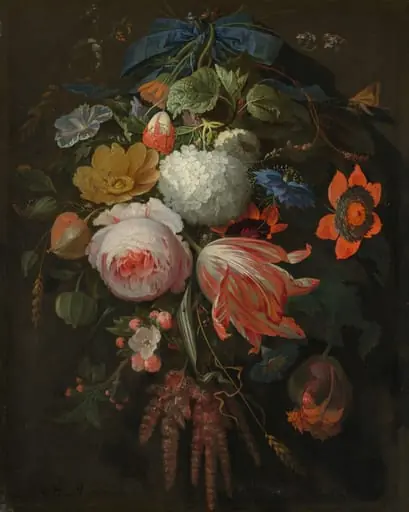
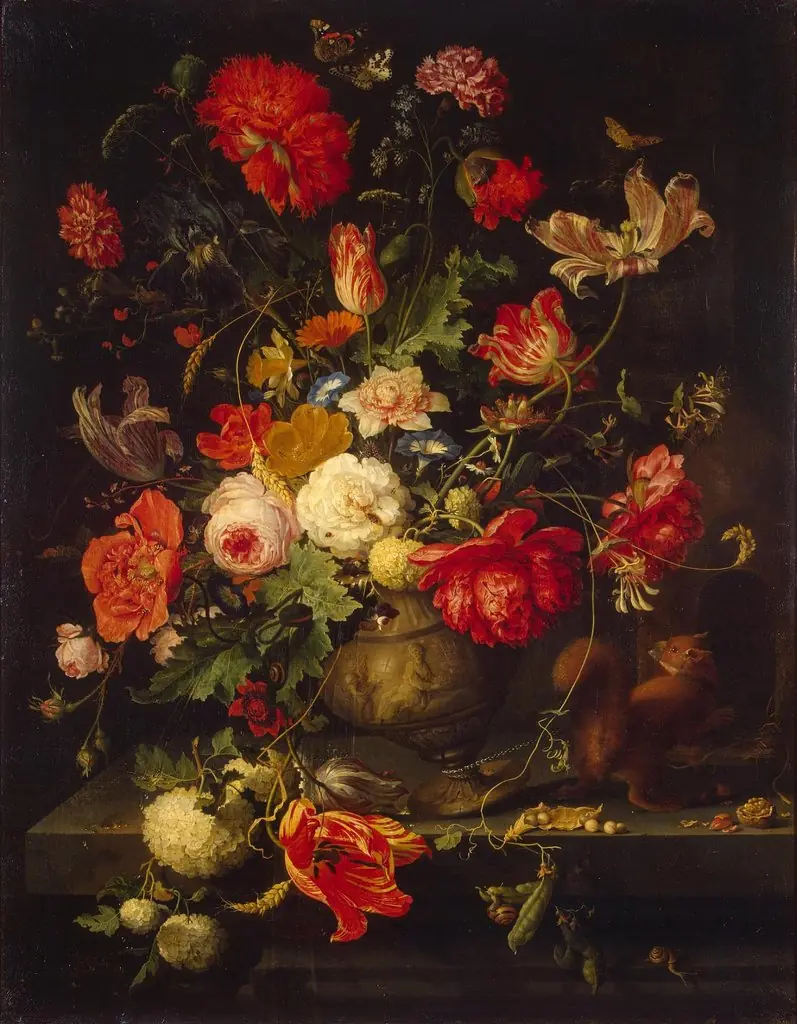
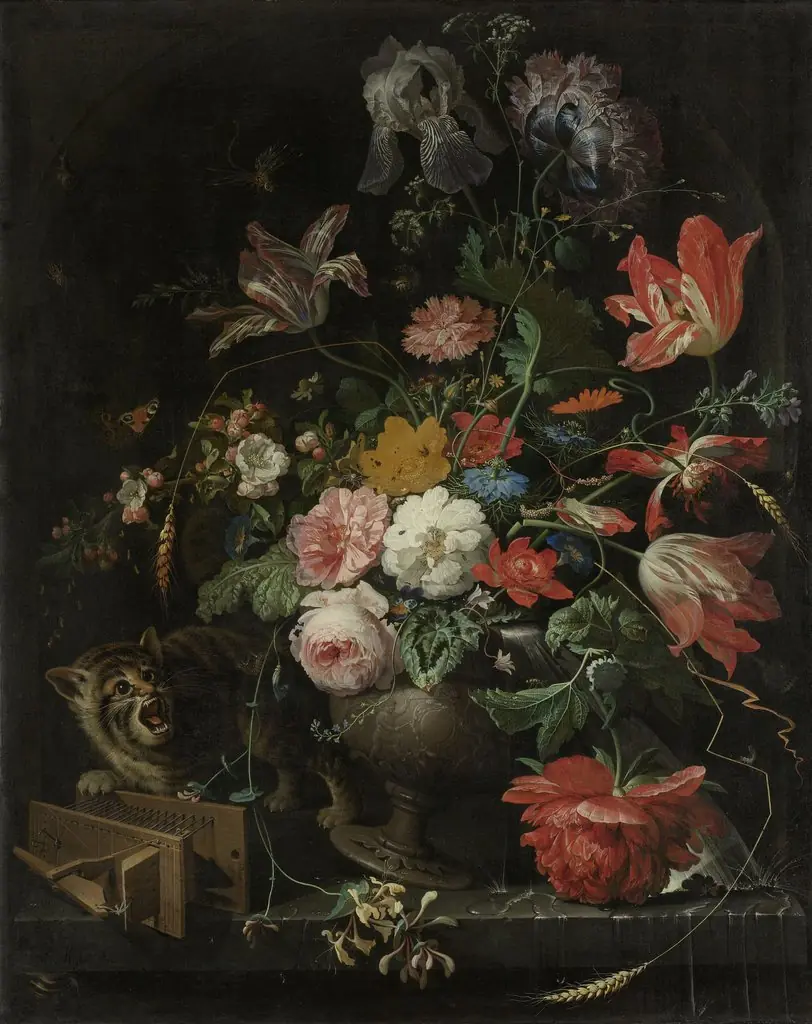
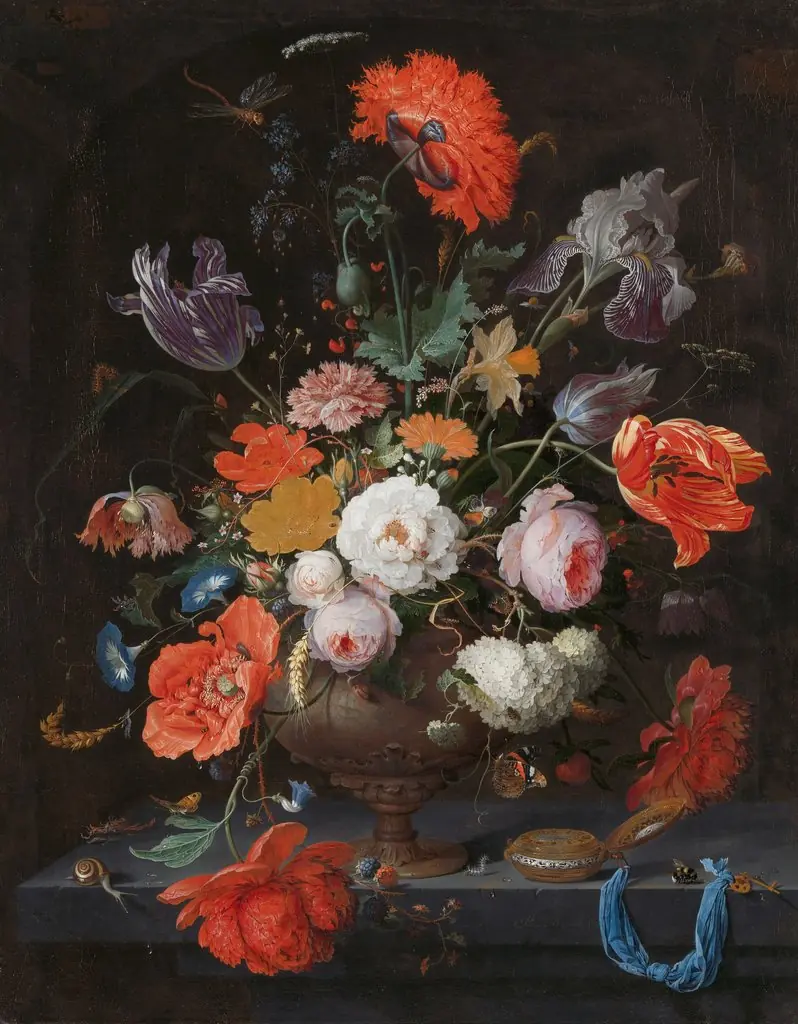
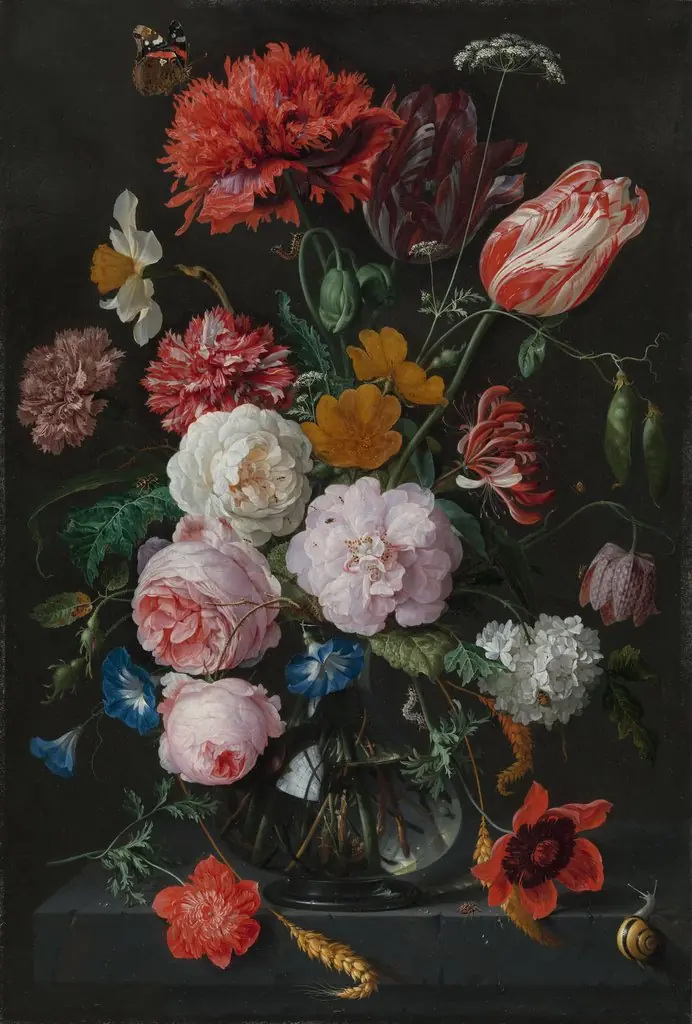
Flowers in a Glass Vase is an oil painting by the Dutch Golden Age artist Abraham Mignon. It dates from 1670 and is held in the collection of the Mauritshuis.
About this work
Overview
This work exemplifies his mastery of the flower painting tradition, where each bloom is rendered with careful attention to form and light.
Abraham Mignon painted *Flowers in a Glass Vase* circa 1670, during the height of the Dutch Golden Age. A native of Utrecht, he specialized in still lifes that combined botanical precision with quiet elegance. This work exemplifies his mastery of the flower painting tradition, where each bloom is rendered with careful attention to form and light. The painting resides today in the Mauritshuis, part of a broader collection of Dutch still lifes from the period.
Subject & Meaning
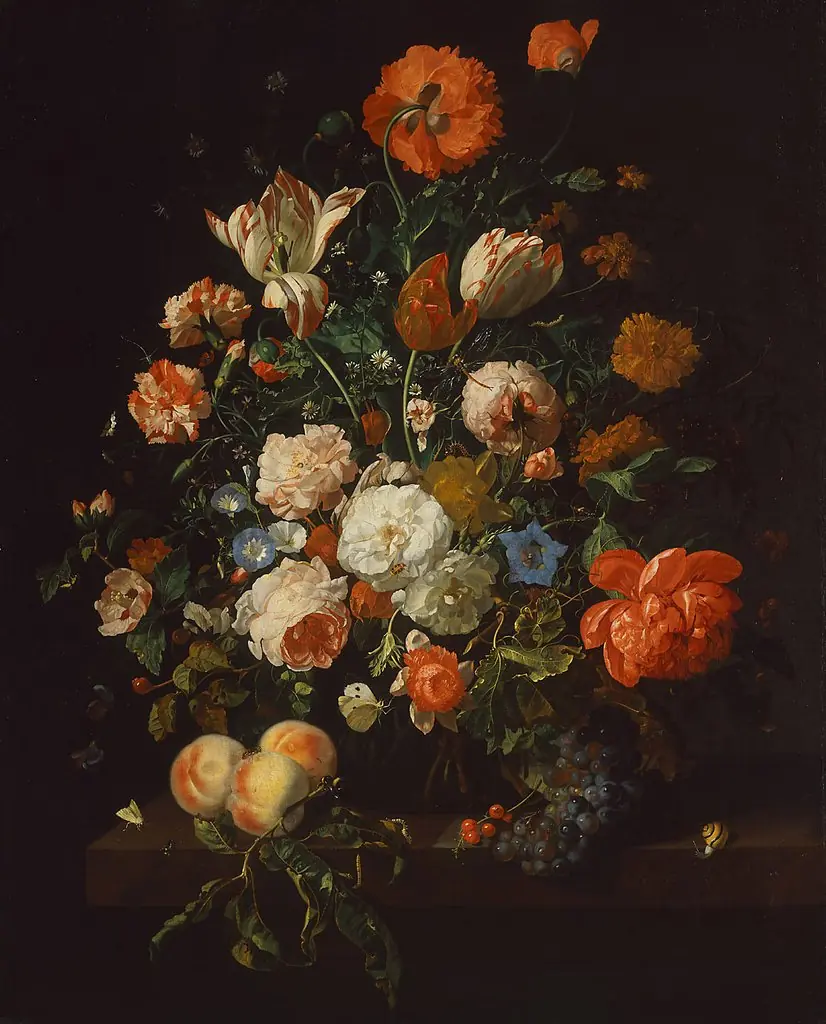
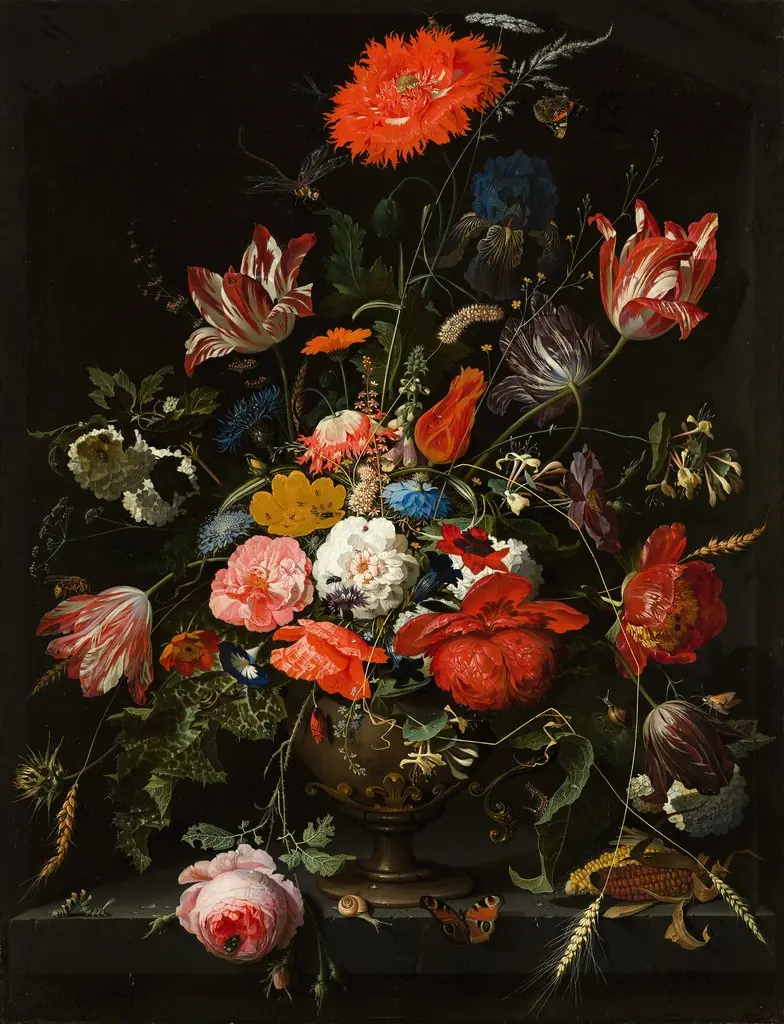
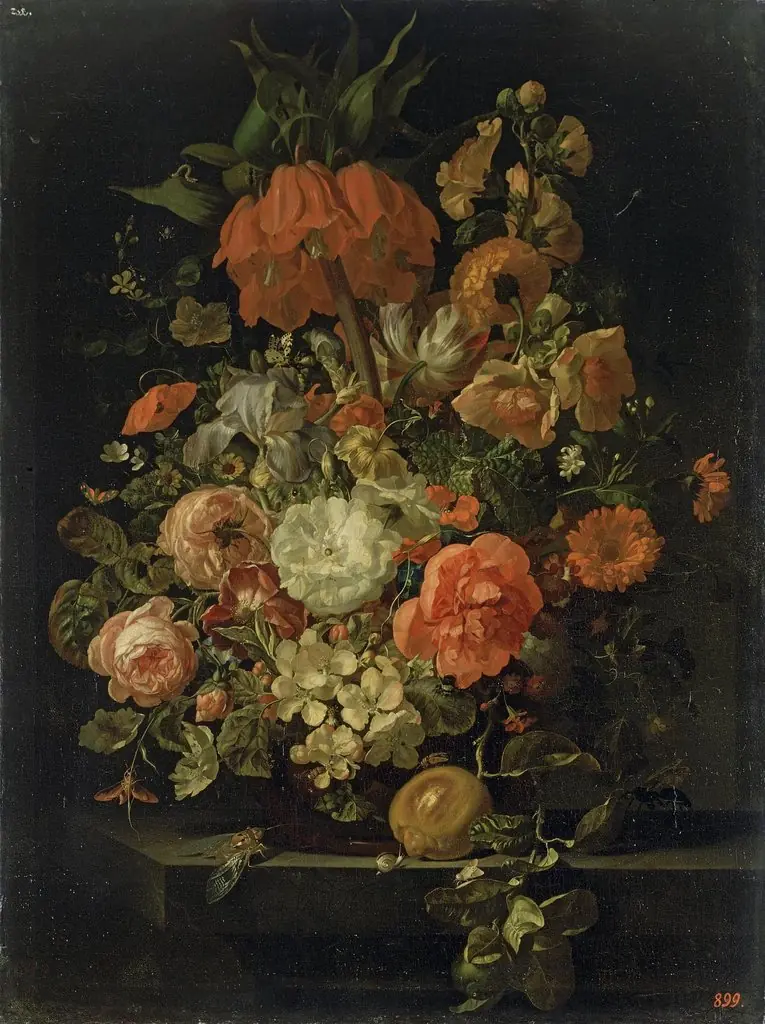
The composition centers on a loose arrangement of seasonal blooms—roses, tulips, and other varieties—in a transparent glass vessel. The variety of colors and wilting petals suggest the passage of time, a common theme in Dutch still lifes. While visually lush, the painting subtly evokes transience, aligning with the vanitas tradition that reminded viewers of life’s fleeting nature through natural decay.
Technique & Style
Mignon employed fine brushwork to capture the translucency of petals, the dewy sheen of leaves, and the refractive qualities of the glass vase. Dark, unmodulated backgrounds isolate the bouquet, heightening its luminosity. His technique reflects the influence of Jan Davidszoon de Heem, particularly in the layered rendering of textures and the delicate handling of light across fragile surfaces.
History & Provenance
The painting entered the Mauritshuis collection in the 19th century, having passed through private Dutch holdings since its creation. Mignon’s works were highly regarded in his lifetime and collected by patrons who valued their technical refinement. Its preservation in a major public institution underscores its significance within the canon of 17th-century Dutch still life painting.
Context
In late 17th-century Holland, still life painting flourished as a reflection of scientific curiosity and economic prosperity. Botanical studies and exotic flowers, often imported, became symbols of wealth and knowledge. Mignon’s works, like this one, catered to an audience fascinated by nature’s intricacies, blending artistic skill with emerging botanical classification efforts.
Legacy
Mignon’s detailed approach influenced later still life painters in the Netherlands and beyond. His ability to balance naturalism with compositional harmony set a standard for floral painting. While not as widely known today as some contemporaries, his works remain studied for their technical discipline and quiet poetic resonance within the genre.
Artist & collection

Artist
Abraham Mignon or Minjon (21 June 1640 – 27 March 1679) was a Dutch still life painter.