Artwork
Calais Harbour
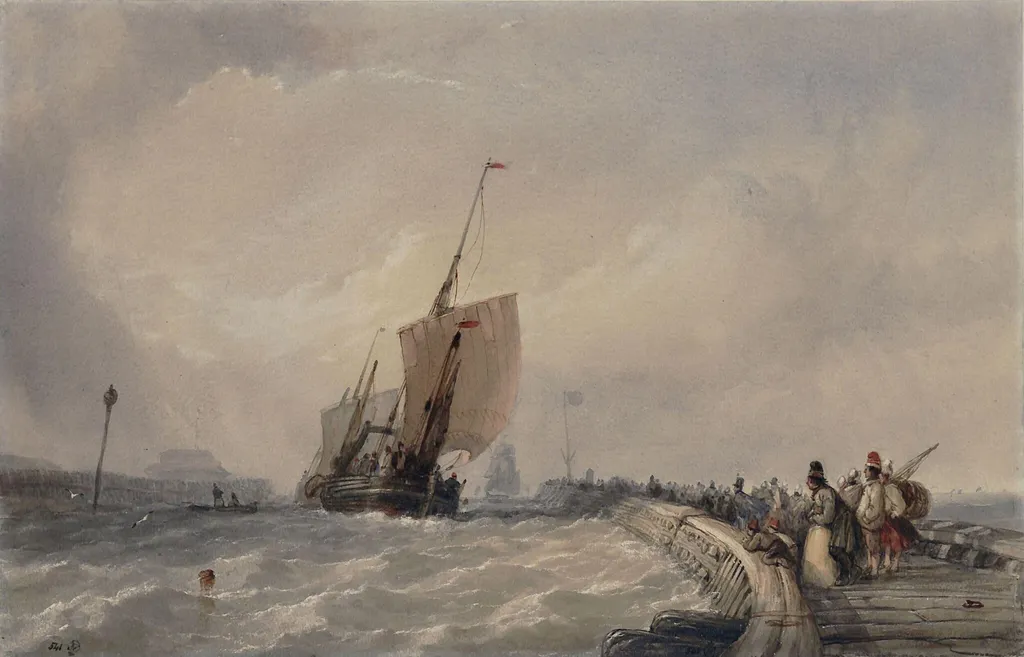
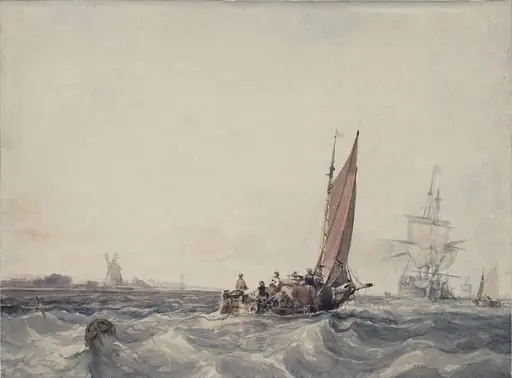
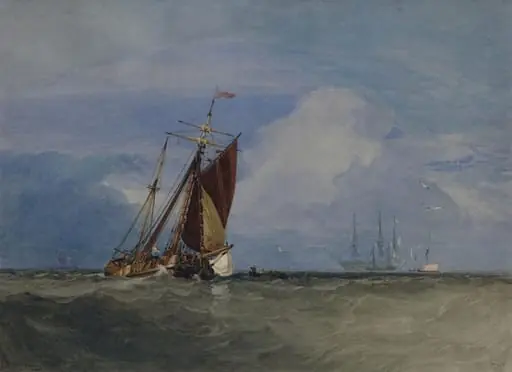
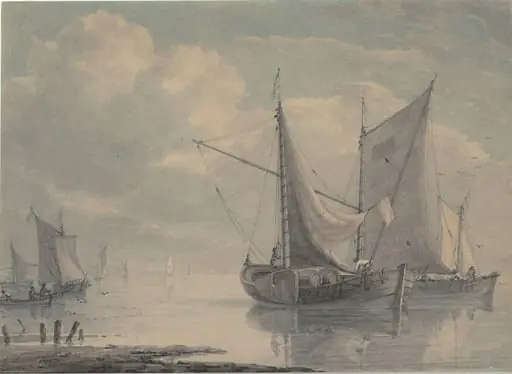
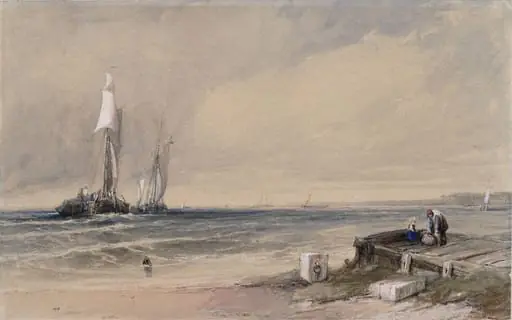
Calais Harbour is a watercolor work on paper by Thomas Sewell Robins. It dates from 1850 and is held in the collection of the Victoria and Albert Museum.
About this work
Overview
Its inclusion in the national holdings reflects its significance as an example of 19th-century British topographical watercolour painting.
Thomas Sewell Robins created this watercolour depicting Calais Harbour, capturing a quiet moment of maritime activity. The work is part of a larger bequest of one hundred British watercolours donated by the widow of Richard Ellison, intended to foster a national collection of the medium. Its inclusion in the national holdings reflects its significance as an example of 19th-century British topographical watercolour painting.
Subject & Meaning
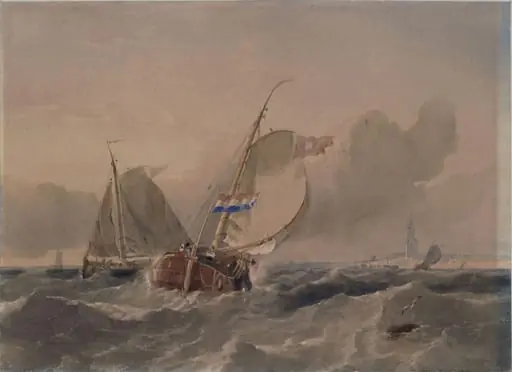
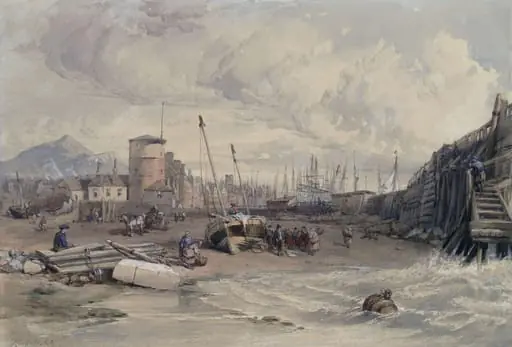
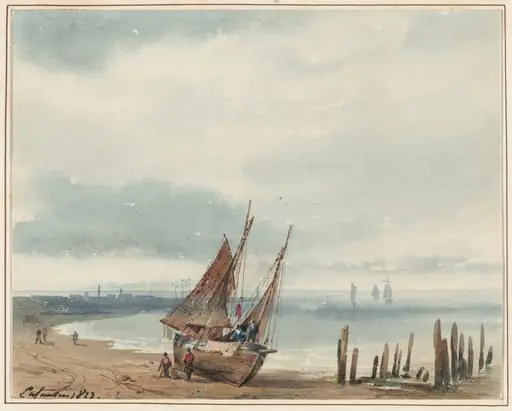
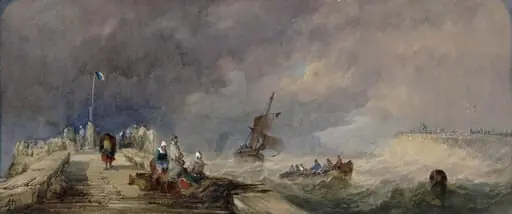
The scene portrays Calais Harbour in active but unhurried motion: a large vessel approaches the shore as figures on the dock observe its approach. Dressed in period attire, the people are engaged in everyday observation, suggesting the harbour’s role as a point of arrival and departure. The painting conveys no dramatic event, instead emphasizing the rhythm of coastal life and the quiet anticipation of arrival.
Technique & Style
Robins employed a restrained palette of soft, muted tones to evoke the fading light of late afternoon. The watercolour washes blend gently, creating a hazy atmosphere where sky, sea, and land merge. Delicate brushwork defines the figures and architecture without sharp detail, reinforcing the atmospheric quality. The choppy water is suggested through subtle texture rather than defined strokes, enhancing the sense of quiet movement.
History & Provenance
The painting entered the national collection following the 1870 bequest of Richard Ellison’s widow, who donated one hundred British watercolours to support the formation of a national repository for the medium. This act was part of a broader 19th-century effort to elevate watercolour from a private pursuit to a publicly valued art form. The work has remained in public custody since its acquisition.
Context
In the mid-19th century, British watercolour painting flourished as both a documentary and aesthetic practice. Artists like Robins documented ports and landscapes with precision and poetic restraint, appealing to a public increasingly interested in travel and national identity. Calais, as a key cross-Channel port, was a frequent subject, symbolizing connection between Britain and continental Europe.
Legacy
Robins’s work contributes to a documented tradition of British watercolour that emphasized observation over spectacle. Its inclusion in the national collection helped legitimize the medium as worthy of institutional preservation. While not widely known today, such works remain important for understanding the evolution of British landscape art and the role of public collections in shaping artistic value.
Own this work as a print
Artist & collection
Artist
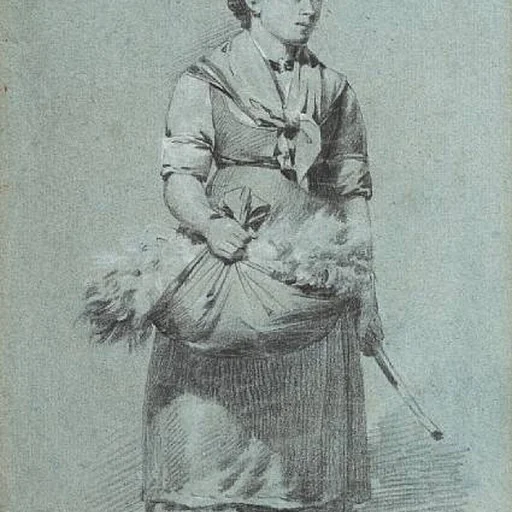
Thomas Sewell Robins (Devonport 8 May 1810 – 9 August 1880) was a British painter who specialised in maritime subjects.