Artwork
Dutch Fishing Boats in a Breeze
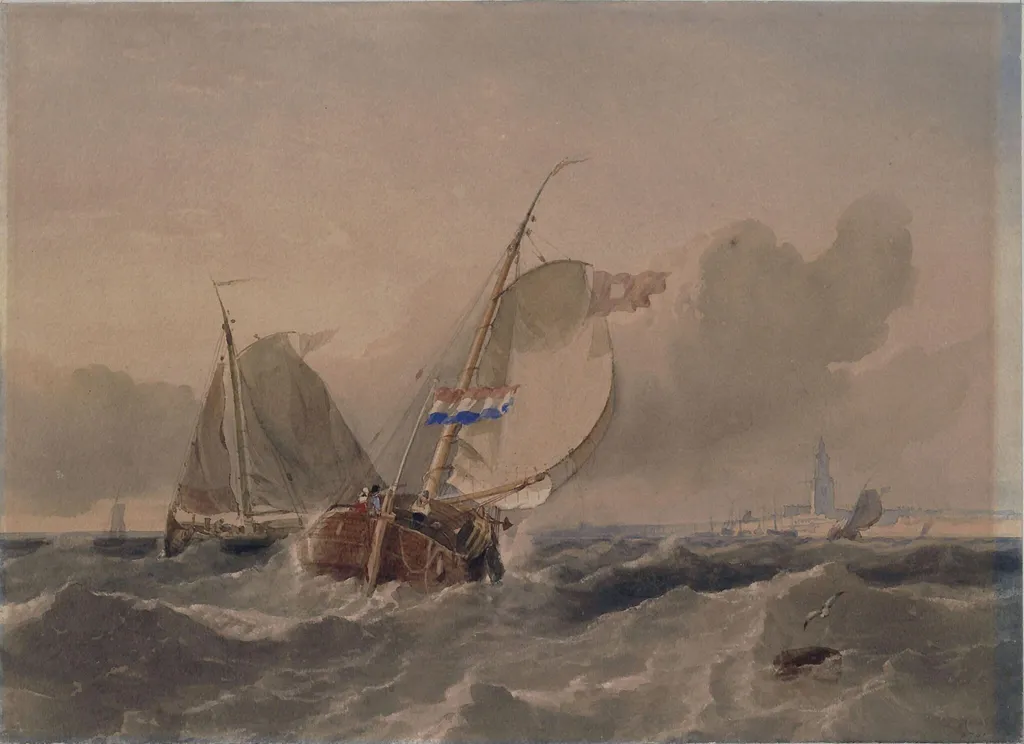
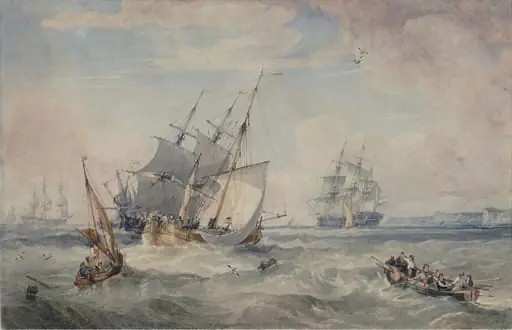
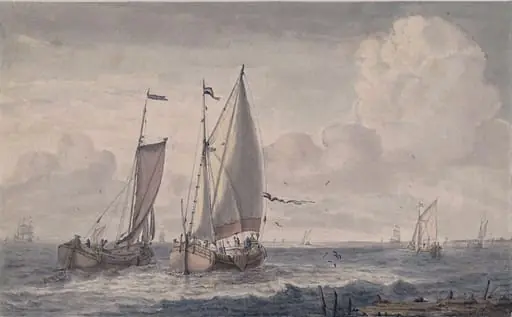
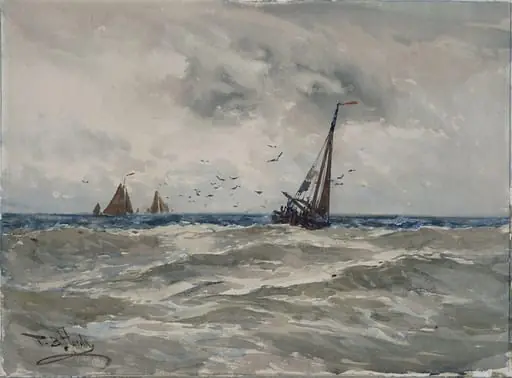
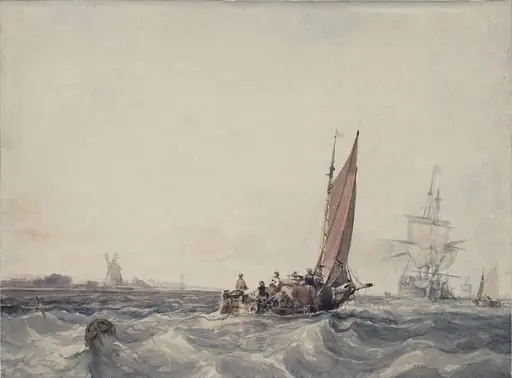
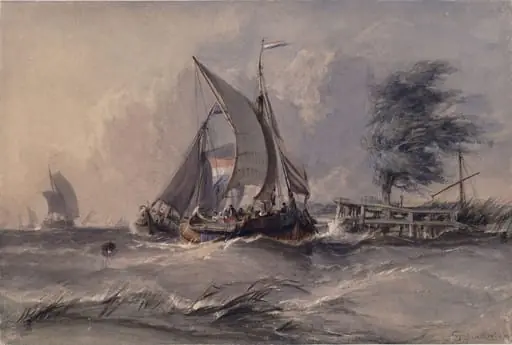
Dutch Fishing Boats in a Breeze is a watercolor work on paper by Thomas Sewell Robins. It dates from 1850 and is held in the collection of the Victoria and Albert Museum.
About this work
Overview
Robins, trained at the Royal Academy Schools, frequently exhibited in London institutions such as the Royal Academy and the New Watercolour Society.
Thomas Sewell Robins, a 19th-century British artist specializing in maritime scenes, produced this watercolour around 1850. The work captures Dutch fishing vessels caught in a light wind, rendered with delicate washes and fluid brushwork. Robins, trained at the Royal Academy Schools, frequently exhibited in London institutions such as the Royal Academy and the New Watercolour Society. The piece is now part of the Victoria and Albert Museum’s collection, reflecting its significance in British watercolour traditions.
Subject & Meaning
Two modest sailing boats, their sails taut and hulls tilted by the wind, navigate choppy seas under a muted sky. Crew members are faintly indicated on deck, emphasizing labor over drama. A distant lighthouse and scattered vessels along the horizon suggest a working coastal environment. The scene avoids romanticism, instead presenting the quiet persistence of maritime life, grounded in observation rather than narrative.
Technique & Style
Robins employed loose, transparent watercolour washes to convey movement and atmosphere. The waves are suggested through quick, irregular strokes, while the boats’ forms are defined with minimal detail. Muted blues and greys dominate, with subtle variations in tone creating depth and wind’s effect. The striped flag on one mast is one of the few sharp contrasts, drawing the eye without disrupting the overall softness of the composition.
History & Provenance
Created during Robins’s active period as a maritime painter, the work likely emerged from his engagement with coastal subjects across northern Europe. It entered the Victoria and Albert Museum’s collection in the 19th or early 20th century, possibly through acquisition or donation. The museum’s holdings include other watercolours by Robins, situating this piece within a broader body of work focused on British and Dutch maritime life.
Context
In mid-19th-century Britain, watercolour was increasingly valued for its ability to capture transient effects of light and weather. Robins’s focus on fishing vessels aligned with a broader interest in everyday seafaring, distinct from grand naval battles or heroic voyages. His work reflects the era’s growing appreciation for observational realism and the quiet dignity of coastal labor.
Legacy
Robins’s watercolours, including this one, contributed to the recognition of marine subjects as legitimate subjects for fine art in Britain. Though not widely known today, his technique influenced contemporaries and successors in the watercolour tradition. The piece remains a quiet example of how skilled draftsmanship and restrained palette could evoke atmosphere without embellishment.
Own this work as a print
Artist & collection
Artist
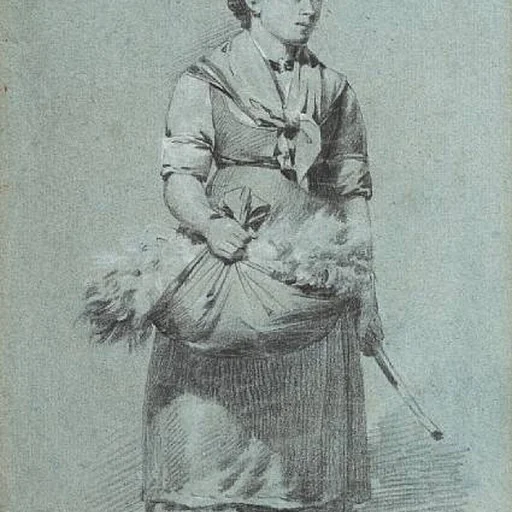
Thomas Sewell Robins (Devonport 8 May 1810 – 9 August 1880) was a British painter who specialised in maritime subjects.