Artwork
Untitled
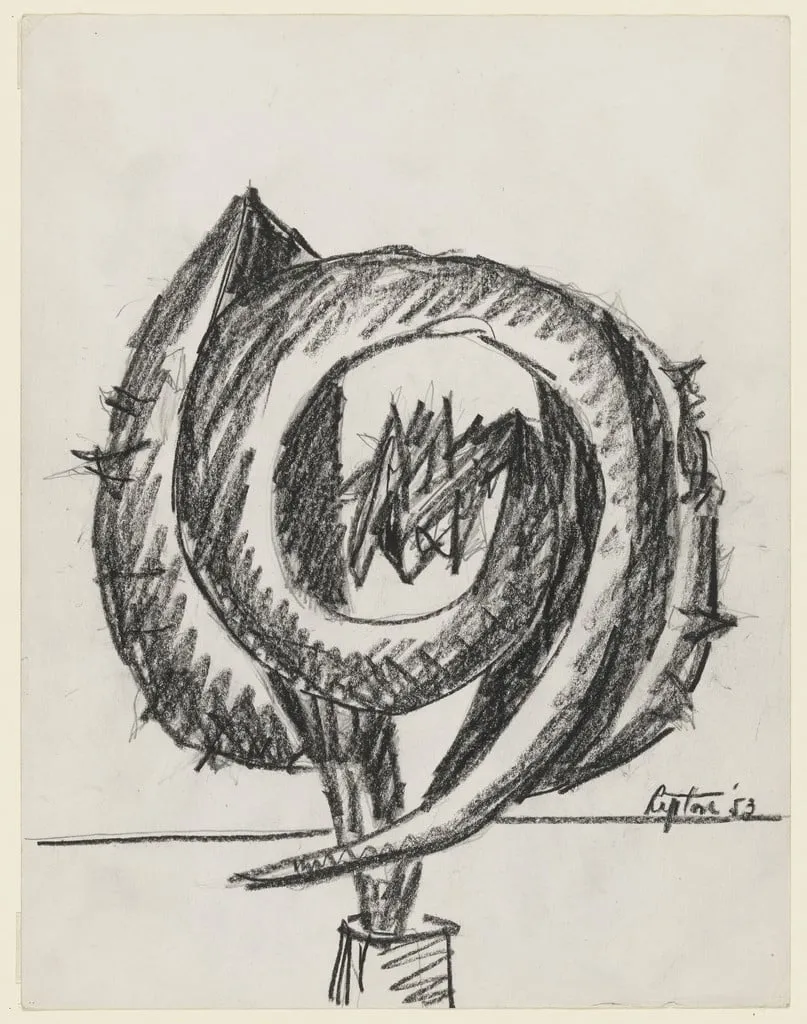
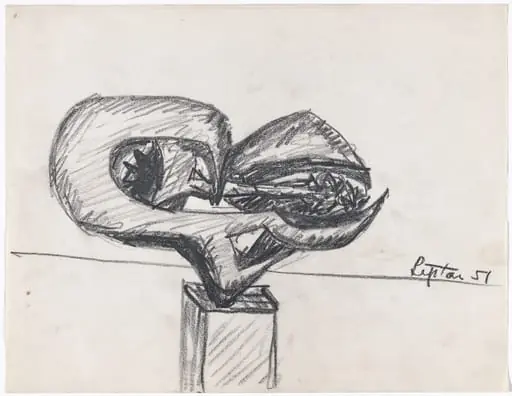
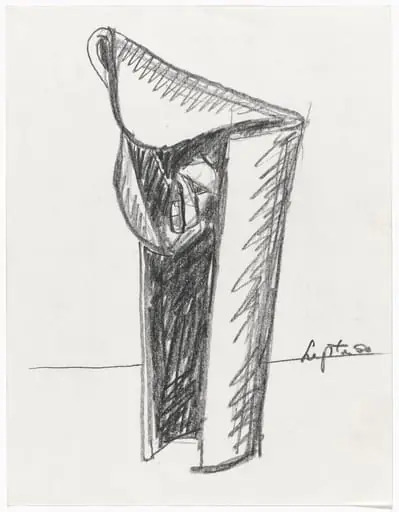
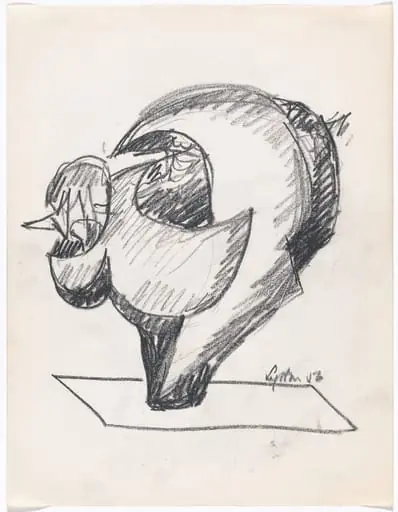
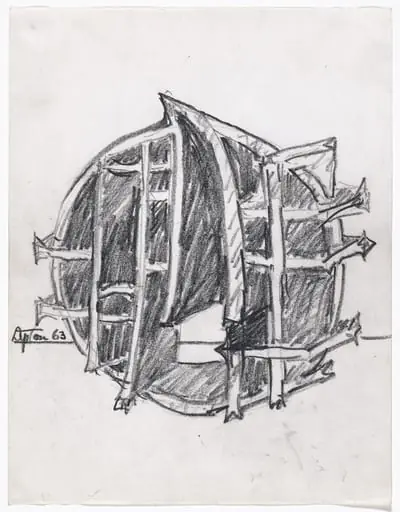
Untitled is a graphite drawing by Seymour Lipton. It dates from 1953 and is held in the collection of the Museum of Modern Art.
About this work
Overview
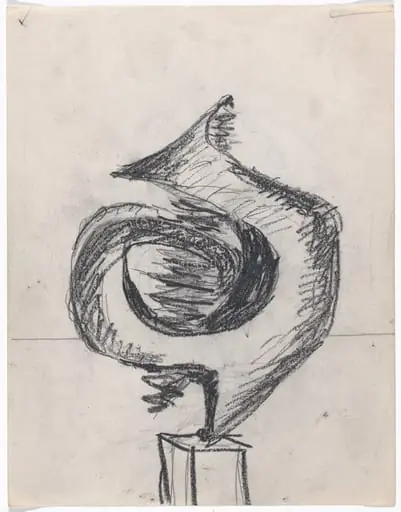
The work presents a single, spiraling form that dominates the composition, rendered with deliberate variations in line thickness and pressure.
Created in 1953, this untitled drawing by Seymour Lipton is executed in crayon and pencil on paper. It resides in the collection of The Museum of Modern Art. The work presents a single, spiraling form that dominates the composition, rendered with deliberate variations in line thickness and pressure. The light gray paper serves as a neutral ground, enhancing the visual tension of the dark, textured strokes.
Subject & Meaning
The drawing lacks representational elements, instead focusing on an abstract, spiraling motif that suggests motion and growth. Its pointed apex and outward radiating lines evoke a sense of centrifugal force, though no explicit narrative is intended. Lipton’s approach aligns with mid-century abstraction, where form itself becomes the subject—expressing energy rather than depicting it.
Technique & Style
Lipton employed pencil and crayon to build layered, uneven lines that vary in density and direction. The spiral’s surface is not smooth but textured, with overlapping strokes creating a tactile quality. The contrast between the dark, heavy lines and the pale paper enhances the drawing’s dynamism, emphasizing rhythm over precision. The artist’s signature, faintly visible in the lower right, remains indistinct.
History & Provenance
The work entered The Museum of Modern Art’s collection shortly after its creation, reflecting the institution’s interest in postwar American drawing. It was produced during a period when Lipton was transitioning from sculpture to two-dimensional studies, using drawing as a means to explore form and spatial tension. Its provenance remains unbroken since acquisition.
Context
Made in the early 1950s, this drawing emerged alongside Lipton’s sculptural investigations into organic abstraction. It shares affinities with contemporaneous works by artists like Arshile Gorky and Jackson Pollock, who also emphasized gesture and inner expression. While not part of a named movement, it reflects the broader American interest in non-objective art during the postwar era.
Legacy
Though less known than his sculptures, this drawing exemplifies Lipton’s commitment to exploring form through direct, physical mark-making. It contributes to the understanding of how sculptors extended their visual language into drawing, influencing later generations interested in the relationship between three-dimensional thinking and two-dimensional expression.
Artist & collection

Artist
Seymour Lipton was an American abstract expressionist sculptor. He was a member of the New York School who gained widespread recognition in the 1950s. He initially trained as a dentist but focused on sculpture from…