Artwork
Untitled
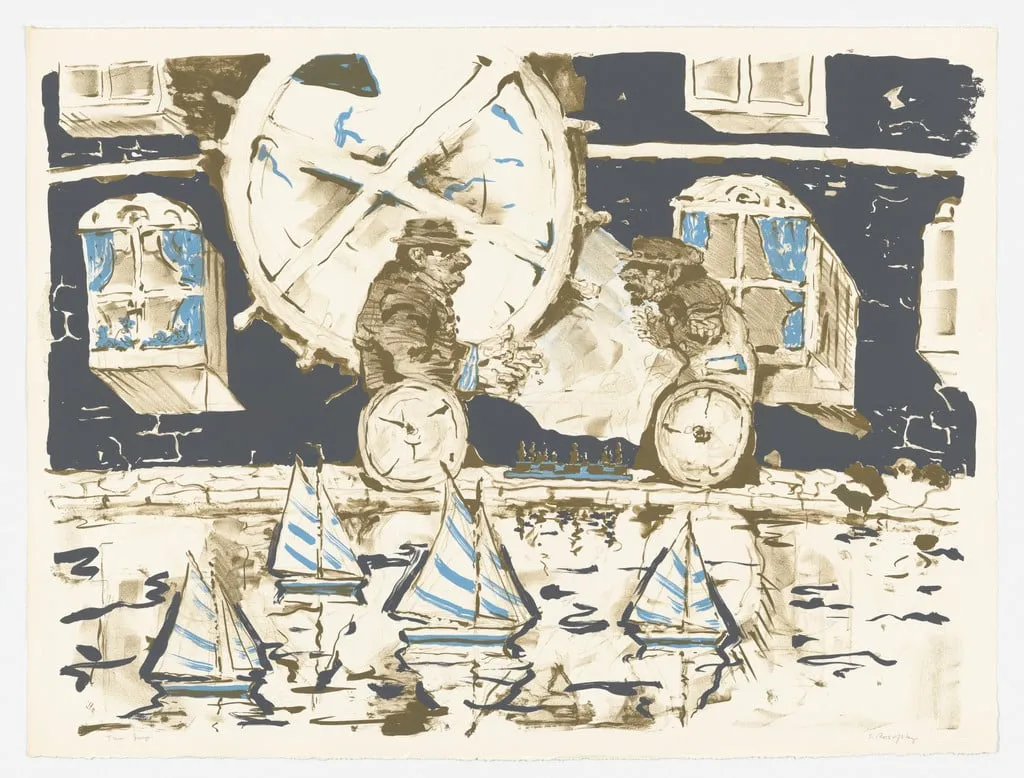
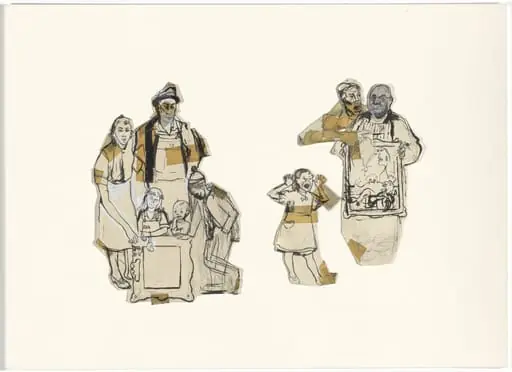
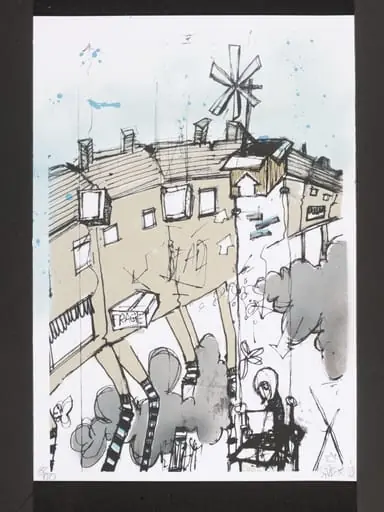
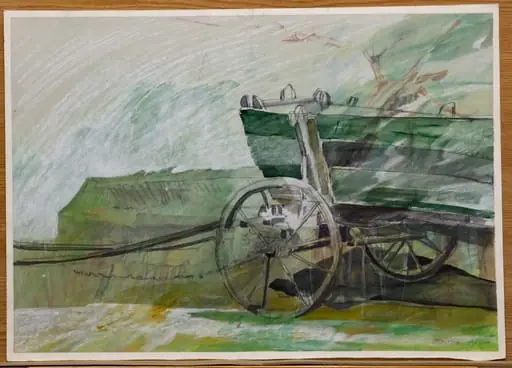
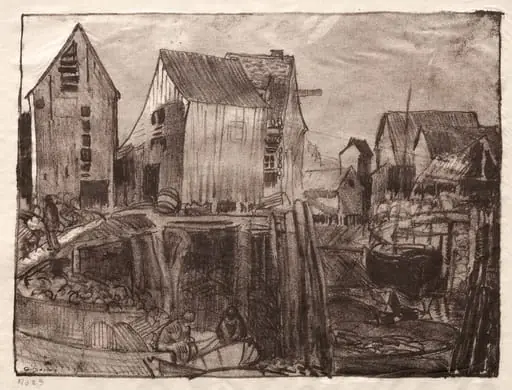
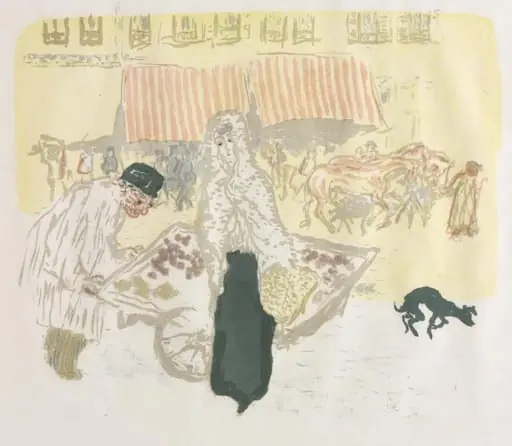
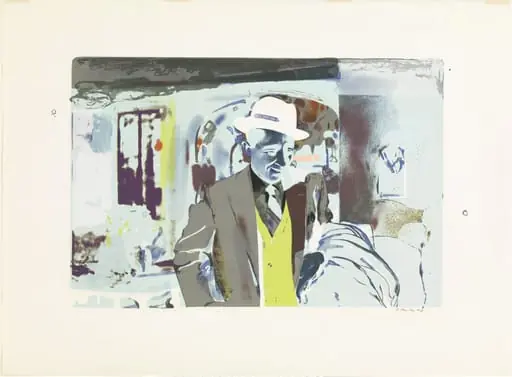
Untitled is an ink print by Seymour Rosofsky. It dates from 1968 and is held in the collection of the Museum of Modern Art.
About this work
Overview
Created in 1968, *Untitled* is one of seven lithographs by American artist Seymour Rosofsky, associated with Chicago’s mid-century art scene. The print depicts a serene scene of two men, possibly sailors, seated on a stone wall, with a large wheel, four sailboats, and a dark background with architectural elements.
Subject & Meaning
The subject of *Untitled* appears to be a moment of quiet interaction between two individuals, likely sailors, engaged in a contemplative exchange. The inclusion of sailboats and a wheel may allude to their profession or a shared experience, while the overall calm atmosphere suggests a sense of camaraderie or introspection.
Technique & Style
Rosofsky employed lithography to achieve a mix of bold and muted colors (notably blue, brown, and white), creating depth and perspective through composition. The dark background contrasts with the lighter tones of the figures and sailboats, guiding the viewer’s eye through the scene.
History & Provenance
*Untitled* is part of a series of seven lithographs from 1968. The work is held in the collection of The Museum of Modern Art (MoMA). Rosofsky was part of Chicago’s ‘Monster Roster,’ a group of artists emerging in the late 1940s, alongside notable figures like Leon Golub and H. C. Westermann.
Context
As a member of the ‘Monster Roster,’ Rosofsky’s work reflects the broader artistic movements of mid-20th-century Chicago, characterized by expressive and often figurative practices. *Untitled*’s themes of everyday life and calm interaction situate it within this context.
Legacy
While specific legacy details of *Untitled* are not highlighted, its presence in MoMA’s collection indicates its recognition within Rosofsky’s oeuvre and the broader landscape of American mid-century printmaking.
Artist & collection
Artist
Seymour Rosofsky (1924–1981) was an American artist, who has been described as one of the key figures in twentieth-century Chicago art.