Artwork
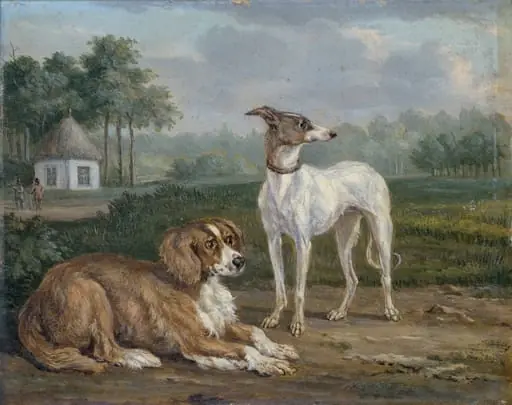
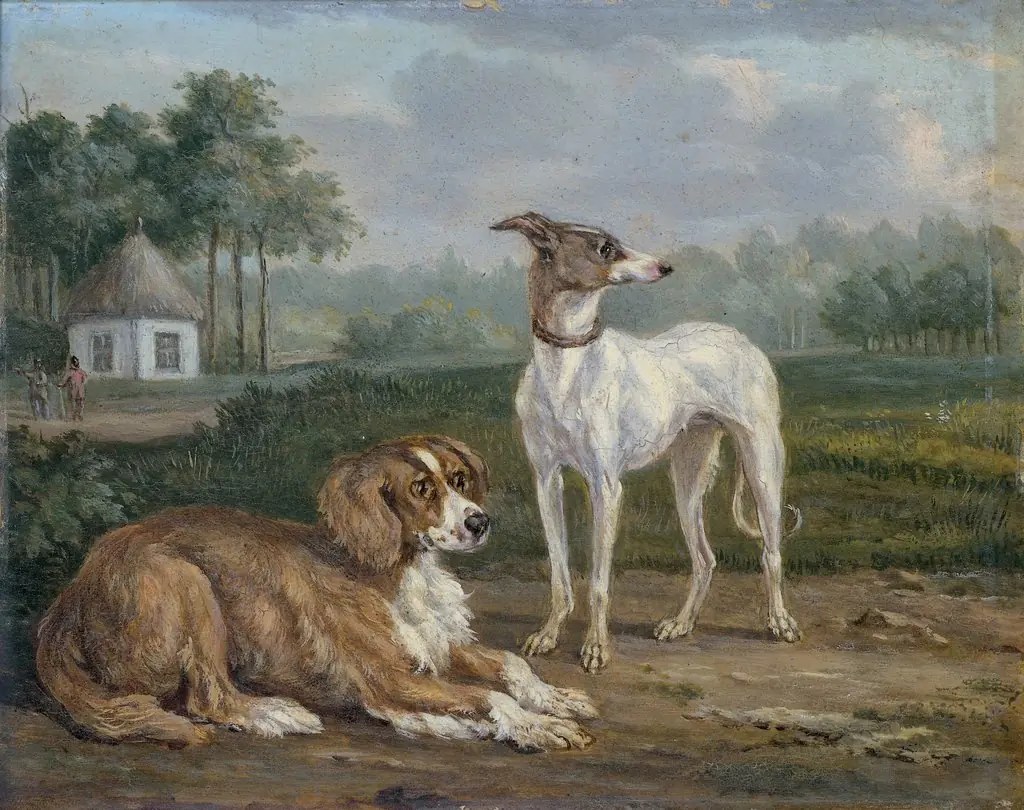
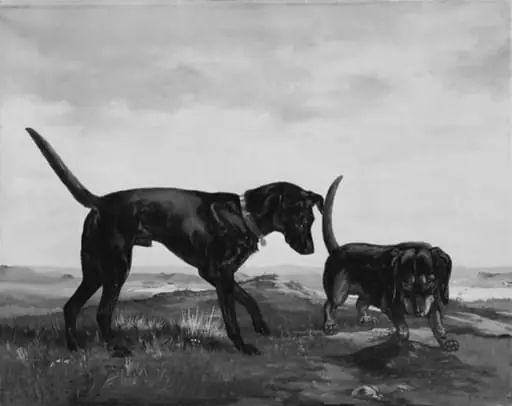
Two dogs in the compound of a Calcutta house
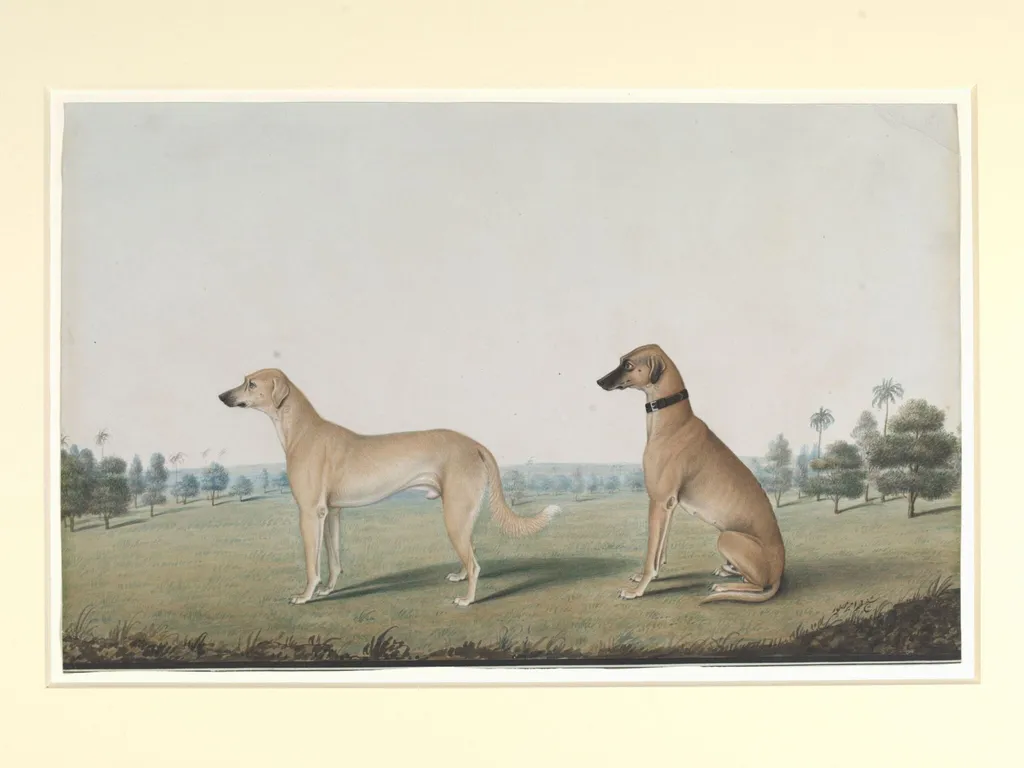
Two dogs in the compound of a Calcutta house is a paint painting by the Patna School of Painting artist Shaikh Muhammad Amir of Karraya. It dates from 1845 and is held in the collection of the Victoria and Albert Museum.
About this work
Overview
Such works emerged as British elites relocated to leafy outskirts, seeking artists to document their new lifestyles with precision and personal detail.
This painting belongs to a pair of works commissioned by a British resident in late 18th-century Calcutta, created by Shaikh Muhammad Amir, a local artist active in the Karraya suburb. It captures a quiet domestic scene: two dogs resting in the compound of a suburban villa. Such works emerged as British elites relocated to leafy outskirts, seeking artists to document their new lifestyles with precision and personal detail.
Subject & Meaning
The two dogs—General, a Feathered Saluki, and Aiyar, a Smooth Saluki—are portrayed with individualized attention, suggesting they were cherished pets. Their placement within the compound, framed by trees and a modest house, reflects the British colonial household’s ideal of orderly, cultivated leisure. The inclusion of specific names and breeds signals the owner’s pride in their pets, turning the image into a personal record rather than a generic scene.
Technique & Style
Amir employed a meticulous, linear style characteristic of Company painting, blending Indian miniature traditions with Western naturalism. Details like fur texture, plant forms, and architectural elements are rendered with careful observation. The composition is balanced and static, avoiding dramatic perspective in favor of clear, flat planes that emphasize clarity and recognition over emotional intensity.
History & Provenance
The painting was part of a small set commissioned around the 1790s for a British household in Calcutta’s emerging suburbs, such as Chowringhee and Garden Reach. These areas attracted artists like Amir, who catered to colonial tastes by documenting homes, servants, and pets. The survival of both paintings in the set suggests they were valued as personal mementos, likely kept within the family or passed down privately.
Context
As British residents moved away from the crowded city center, they sought visual records of their suburban lives. Local artists adapted their techniques to meet this demand, producing works that merged European subject matter with Indian artistic conventions. Amir’s output exemplifies this cultural intersection, where domestic tranquility became a subject worthy of artistic attention in colonial India.
Legacy
Amir’s work contributes to a broader corpus of Company paintings that document colonial life through the eyes of Indian artisans. These images offer insight into the quiet routines of British households and the professional opportunities available to local artists under colonial patronage. His focus on pets and architecture highlights how personal identity was expressed visually in a cross-cultural context.
Artist & collection
Artist
Shaikh Muhammad Amir of Karraya
Shaikh Muhammad Amir of Karraya (Bengali: শেখ মুহম্মদ আমির; fl. 1830s-40s) was a Bengali Muslim painter in the British Raj period from Karraya in Ballygunge, a suburb in Calcutta.