Artwork
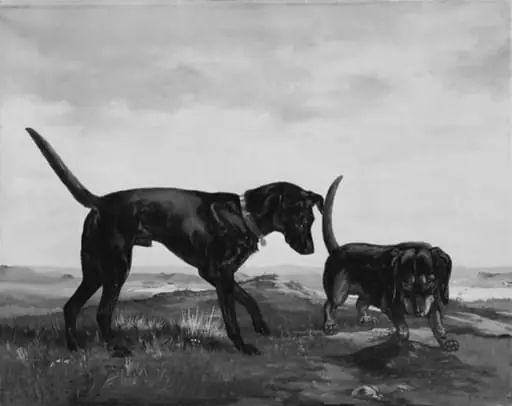
Et par hunde som opgraver et muldvarpeskud
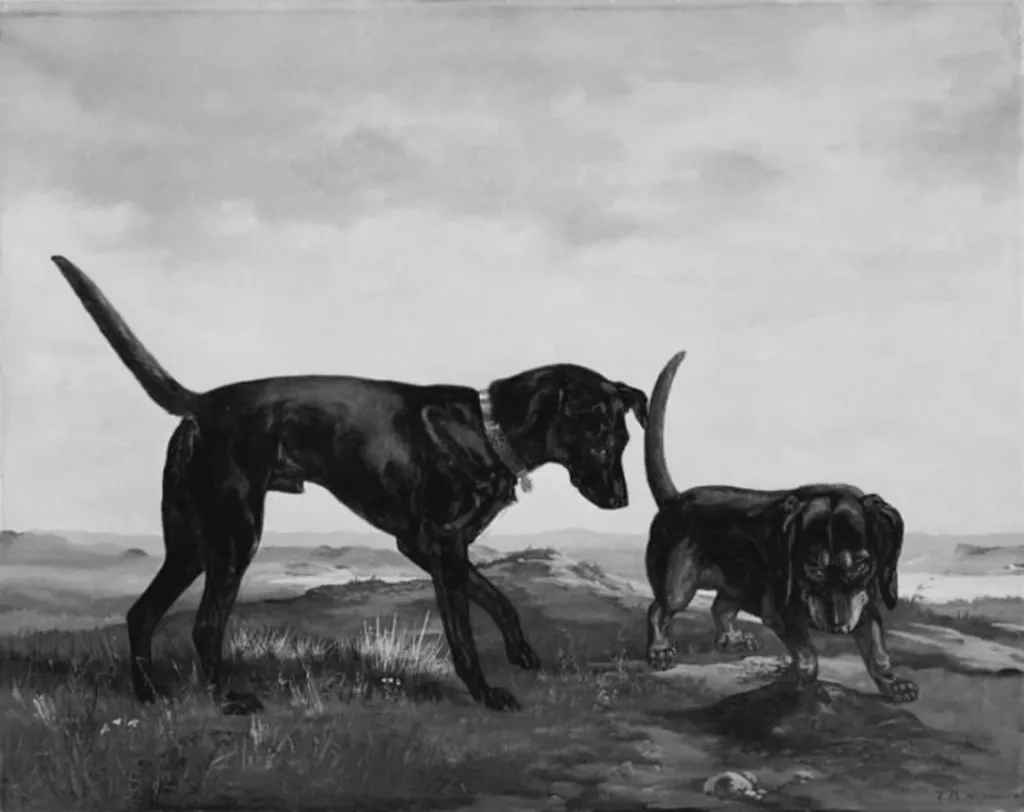
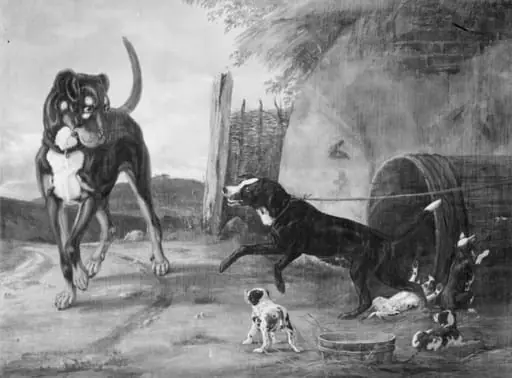
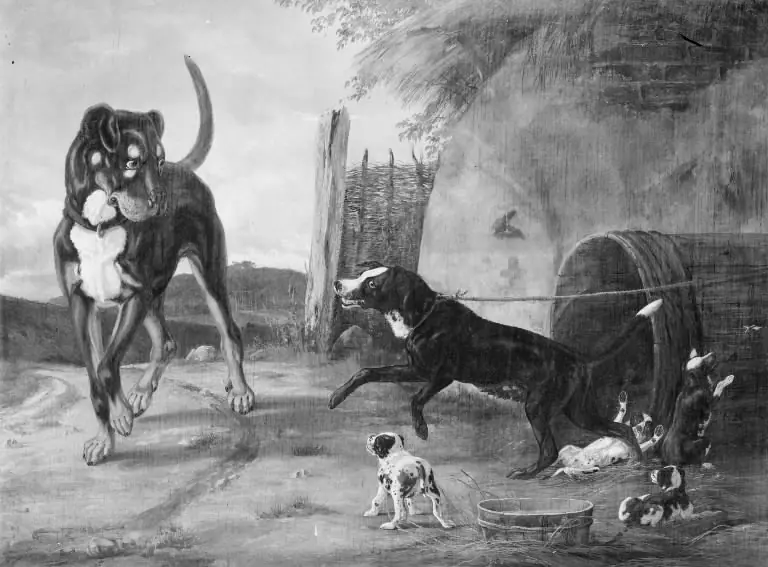
Et par hunde som opgraver et muldvarpeskud is an oil painting by the Realist artist Theodor Julius Kiellerup. It dates from 1838 and is held in the collection of the Statens Museum for Kunst.
About this work
Overview
It reflects the artist’s interest in naturalistic scenes of rural life, rendered with careful attention to animal anatomy and environmental detail.
Painted in 1838 by Theodor Julius Kiellerup, this oil on canvas depicts two dogs engaged in the act of digging. The work is part of the collection at Statens Museum for Kunst in Copenhagen. It reflects the artist’s interest in naturalistic scenes of rural life, rendered with careful attention to animal anatomy and environmental detail. The composition avoids dramatic narrative, focusing instead on quiet observation.
Subject & Meaning
Two dogs, one larger and one smaller, both dark brown, are shown uncovering a molehill in a quiet countryside setting. Their postures suggest focused instinct rather than human-directed activity. The scene carries no overt symbolism; its significance lies in the unembellished portrayal of animal behavior within a natural landscape, reflecting 19th-century Danish interest in empirical observation of nature.
Technique & Style
Kiellerup employed oil paint to achieve subtle gradations of tone and texture, particularly in the dogs’ fur and the grassy terrain. The brushwork is precise but not overly polished, favoring naturalism over idealization. The background blends soft atmospheric perspective with muted hues to suggest distance, while the foreground remains sharply defined, anchoring the viewer’s focus on the animals’ action.
History & Provenance
The painting entered the collection of Statens Museum for Kunst shortly after its creation, likely acquired directly from the artist. It has remained in Danish public ownership since the 19th century, with no documented changes in custody. Its consistent presence in the museum’s holdings suggests early recognition of its quiet observational value within Danish art circles.
Context
Created during a period when Danish artists increasingly turned to everyday rural subjects, the painting aligns with a broader movement away from mythological or aristocratic themes. Kiellerup’s focus on animals in their natural habitat reflects scientific curiosity and the influence of Romantic-era naturalism, common in Nordic art of the 1830s.
Legacy
Though not widely exhibited outside Denmark, the painting remains a representative example of Kiellerup’s contribution to 19th-century Danish genre painting. It is studied for its unadorned depiction of animal behavior and its role in documenting the cultural shift toward valuing ordinary natural scenes as worthy artistic subjects.
Own this work as a print
Artist & collection
Artist
Theodor Julius Kiellerup (1818–1850) was an artist, born in Copenhagen.