Artwork
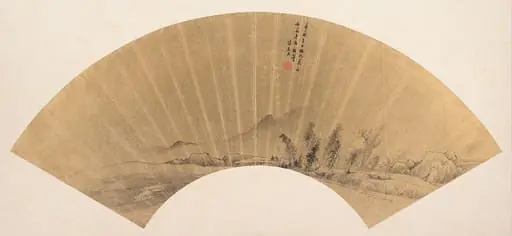
明 佚名 倣邵彌 倣文徵明山水 扇頁|Landscape After Wen Zhengming
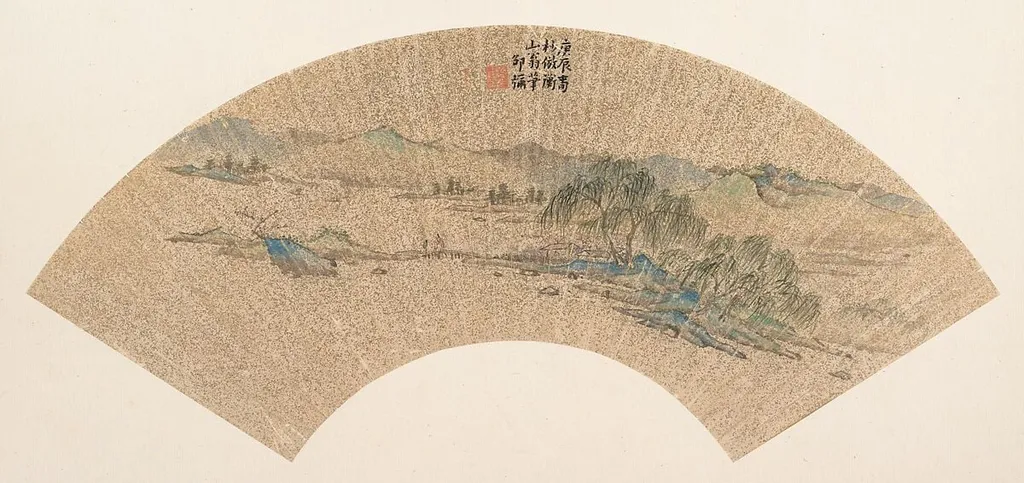
明 佚名 倣邵彌 倣文徵明山水 扇頁|Landscape After Wen Zhengming is an ink painting by the Baroque artist Shao Mi. It dates from 1640 and is held in the collection of the Metropolitan Museum of Art.
About this work
Overview
The title explicitly identifies the work as an imitation of the style of Wen Zhengming, a leading figure of the Wu School.
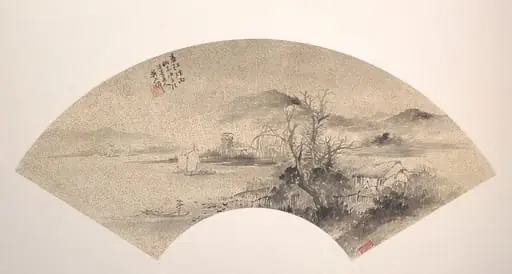
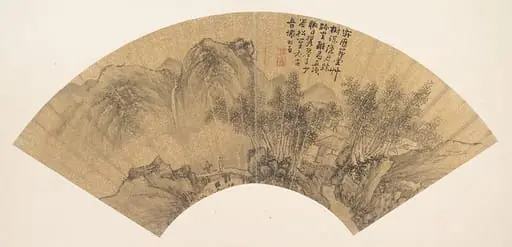
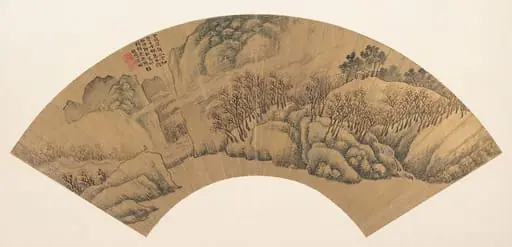
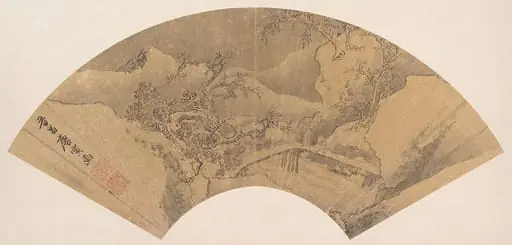
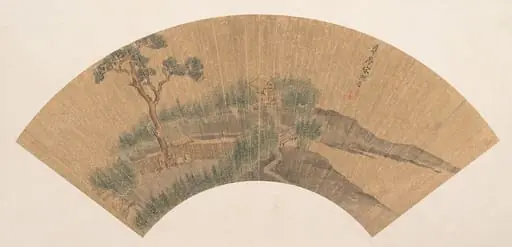
Created in 1640 by the Chinese artist Shao Mi, this work is a landscape painting executed in ink and color on gold-flecked paper, mounted as an album leaf from a folding fan. The composition depicts a serene natural scene featuring rugged mountains, dense clusters of trees, and a body of water. A small architectural structure is situated on the left side of the frame, anchoring the landscape. The title explicitly identifies the work as an imitation of the style of Wen Zhengming, a leading figure of the Wu School. This practice of 'imitating' past masters was a central tenet of literati painting during the late Ming dynasty, serving as a method for artists to engage with tradition and demonstrate their mastery of established brush techniques. Shao Mi, active during the transition from the Ming to the Qing dynasty, is known for his delicate and refined approach to landscape, often drawing inspiration from earlier masters like Wen Zhengming and Ni Zan. This specific fan leaf exemplifies the late Ming trend of creating intimate, portable works that combined technical skill with scholarly reference, preserving the aesthetic values of the literati class on a small, luxurious format.
Subject & Meaning
The composition presents a serene landscape vista, featuring towering mountains that recede into the distance, lush trees, and a tranquil body of water. A small building is subtly integrated into the scene on the left side, suggesting human presence within the expansive natural setting. Such landscapes often invited contemplation of nature's grandeur and the human place within it, a common theme in Chinese painting.
Technique & Style
Shao Mi employed ink and color to render this scene, utilizing the distinctive surface of gold-flecked paper, which adds a subtle shimmer to the artwork. The painting's original format as a folding fan leaf dictated its curved shape, now preserved as it is mounted for album presentation. The title indicates the artist's deliberate emulation of the stylistic conventions of the earlier master Wen Zhengming, a practice known as fang (imitating).
Context
Created during the late Ming dynasty, this work reflects a common practice among Chinese literati painters to study and interpret the styles of historical predecessors. By painting "after Wen Zhengming," Shao Mi engaged in an artistic dialogue across centuries, demonstrating both his reverence for the past master and his own interpretive skill. This approach was central to the development and continuation of painting traditions.
Artist & collection


 明/清 佚名 倣文徴明 山水 扇|Landscape
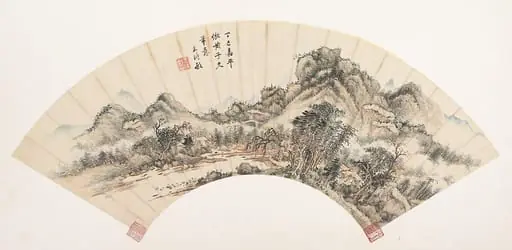 清 王時敏 倣黃子久筆意山水 扇頁|Landscape after Huang Gongwang
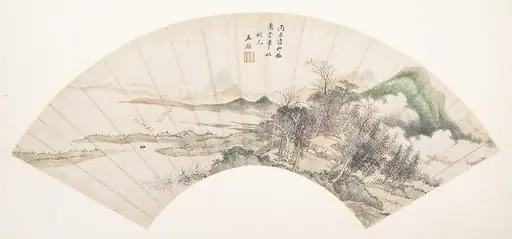 清 佚名 倣王鑑 倣惠崇山水圖 扇|Landscape in the Style of Huichong
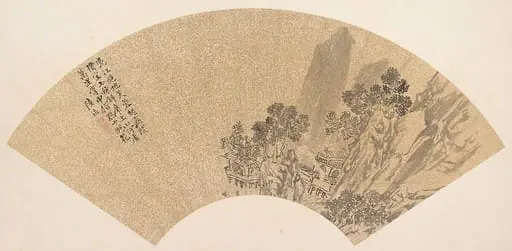 明 佚名 倣陸治 山水 扇|Landscape
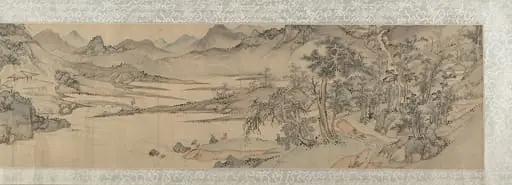 明 佚名 傳文伯仁 山水圖 卷|Landscape
 明 宋懋晉 樓居圖 扇|Dwelling in Landscape
 清 張熊 山水 冊頁|Landscape
 明 鄒之麟 山水圖 扇面|Landscape
 清 程庭鷺 山水 冊頁|Landscape
 明(?) 陸克正 倣北苑山水 扇|Landscape in the manner of Dong Yuan