Artwork
Bamboo Pavilion, Tiger Hill, from Twelve Views of Tiger Hill, Suzhou
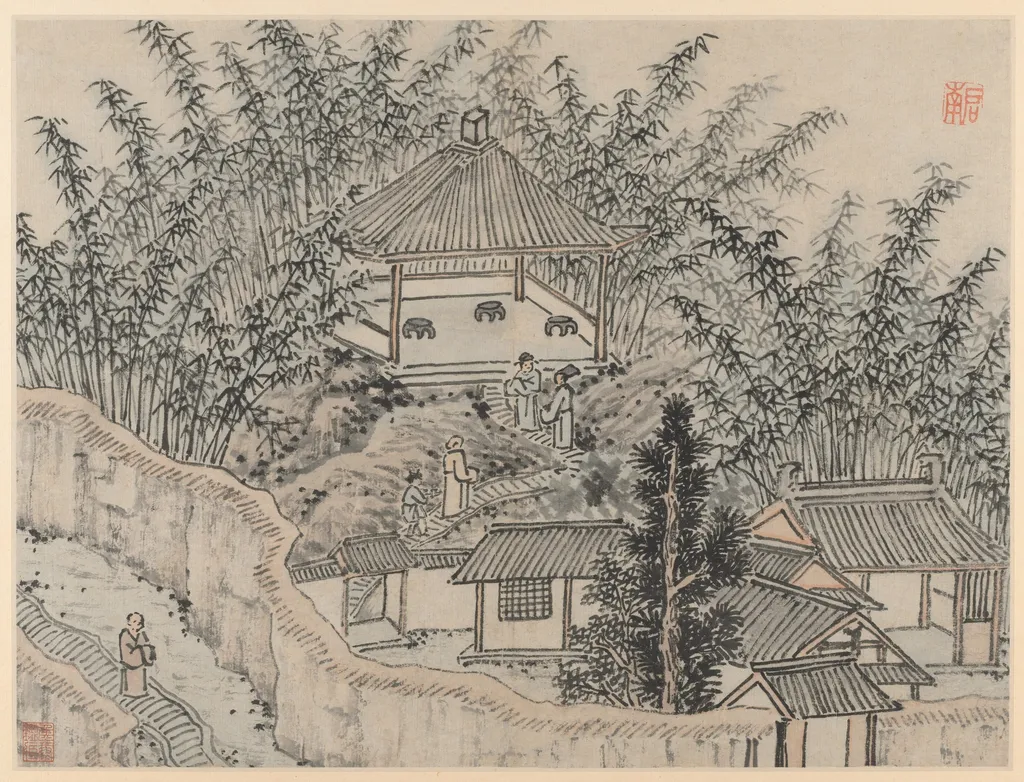
Bamboo Pavilion, Tiger Hill, from Twelve Views of Tiger Hill, Suzhou is an unspecified painting by Shen Zhou. It dates from 1500 and is held in the collection of the Cleveland Museum of Art.
About this work
Overview
Tall bamboo stalks dominate the left foreground, rendered with swift, calligraphic brushstrokes that emphasize their verticality and texture.
Bamboo Pavilion, Tiger Hill, from Twelve Views of Tiger Hill, Suzhou is a 1500 ink and color on paper album leaf by Shen Zhou, a founding master of the Wu School. Created during the Ming Dynasty, this work is part of a celebrated series depicting the scenic spots of Suzhou. The composition centers on a pavilion with a distinctive curved roof, nestled within a lush garden setting. Tall bamboo stalks dominate the left foreground, rendered with swift, calligraphic brushstrokes that emphasize their verticality and texture. Three small figures animate the scene: one seated beneath the pavilion roof, another standing on a winding path, and a third figure walking away, suggesting a narrative of leisurely retreat. The background features soft, atmospheric washes of ink that create a sense of depth and mist, characteristic of Shen Zhou's mature style. This painting exemplifies the literati tradition, where the artist combines poetic sensibility with precise observation of nature. Shen Zhou, who painted this series in his later years, uses the work to express the ideal of scholarly seclusion and the harmony between human presence and the natural world. The piece stands as a significant example of early 16th-century Chinese landscape painting, reflecting the cultural importance of Tiger Hill as a site of inspiration for Suzhou's intellectual elite.
Subject & Meaning
The composition centers on a distinctive pavilion with a curved roof, nestled within a quiet garden. Tall bamboo shoots occupy the left foreground, while distant rocky hills and additional structures softly emerge in the background. Three small, indistinct figures are subtly integrated into the scene—one beneath the pavilion, another on a path, and a third walking away—suggesting human interaction with the natural world without dominating the serene atmosphere.
Technique & Style
Shen Zhou rendered this landscape using a palette of soft grays and muted greens. The artist's approach emphasized simple shapes and fluid brushstrokes, particularly visible in the swift, dark lines that define the bamboo, conveying a sense of organic movement. The figures are intentionally small and somewhat blurred, contributing to the painting's overall peaceful quality and prioritizing the atmospheric impression over minute detail.
Context
This painting is an individual piece from Shen Zhou's extensive series, *Twelve Views of Tiger Hill, Suzhou*. Tiger Hill, a renowned scenic and historical site near Suzhou, was a frequent subject for literati artists and poets during the Ming dynasty. Through this work, Shen Zhou captures a specific architectural feature, the Bamboo Pavilion, integrating it seamlessly into the celebrated natural and cultivated beauty of the region.
Own this work as a print
Artist & collection
Artist
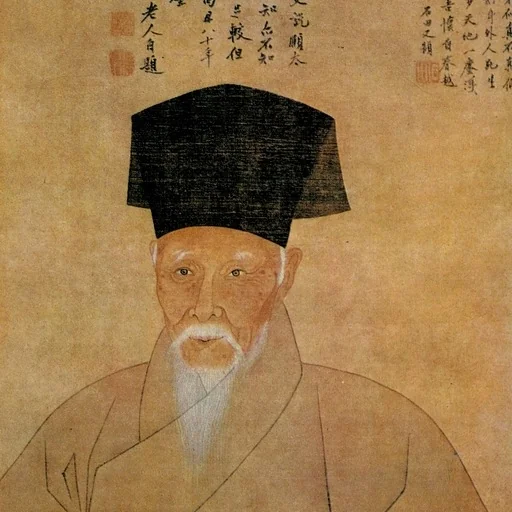
Shen Zhou spent his life in the Suzhou region of China, where his family’s money and connections mattered more than art—until it did.

 Untitled
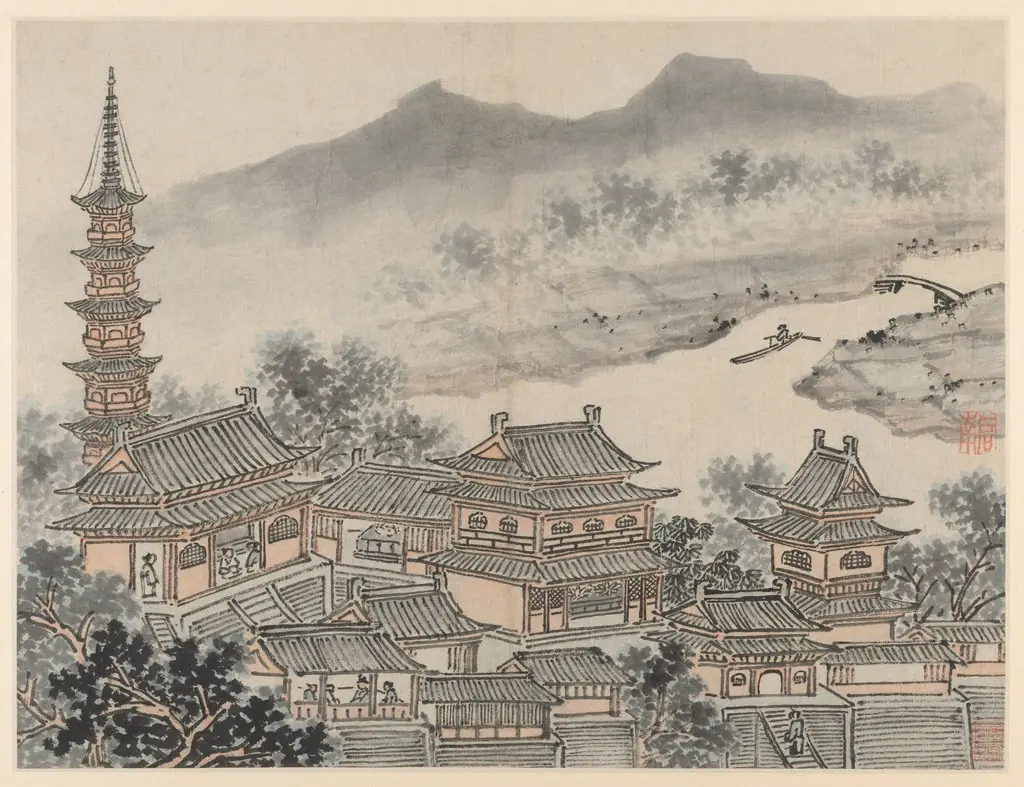 The Thousand Buddha Hall and the Pagoda of the "Cloudy Cliff" Monastery, from Twelve Views of Tiger Hill, Suzhou
 Untitled
 Untitled
 明 沈周 溪山秋色圖 卷|明 沈周 溪山秋色圖 卷明 楷書溪山秋色圖 引首|Autumn Colors among Streams and Mountains
 明 (倣)沈周 怡松圖 卷|Enjoying the Pines
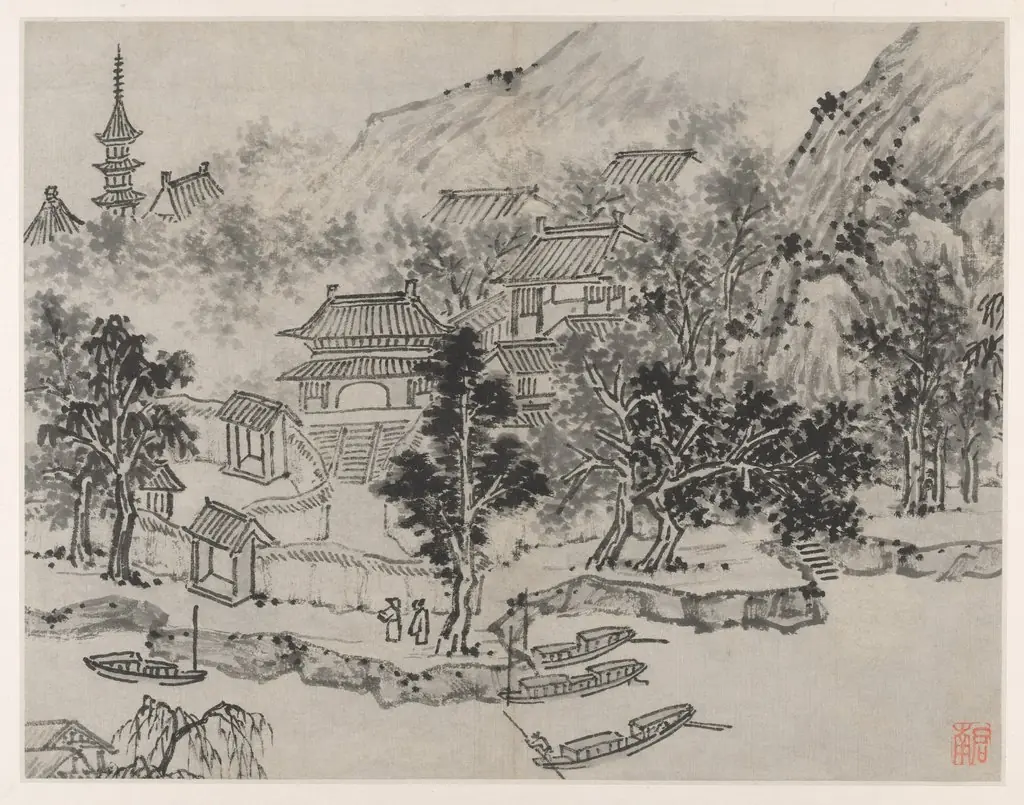 Distant View of Tiger Hill from the Canal Mooring, from Twelve Views of Tiger Hill, Suzhou
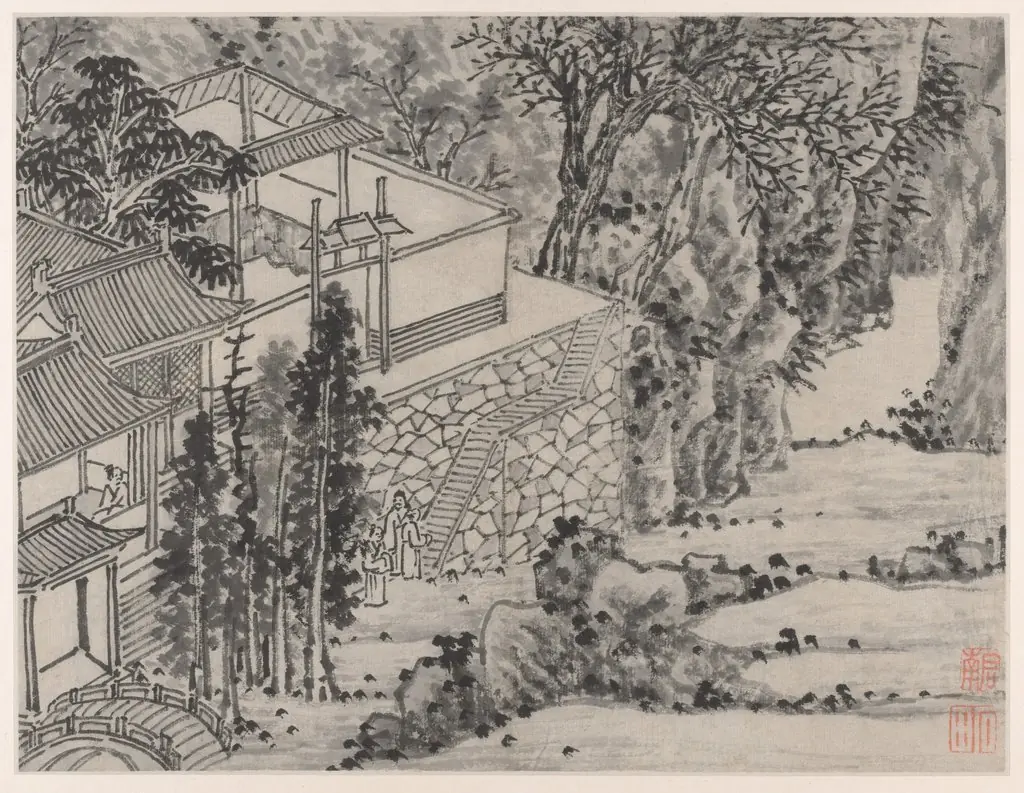 The Enlightened Stone Retreat, from Twelve Views of Tiger Hill, Suzhou
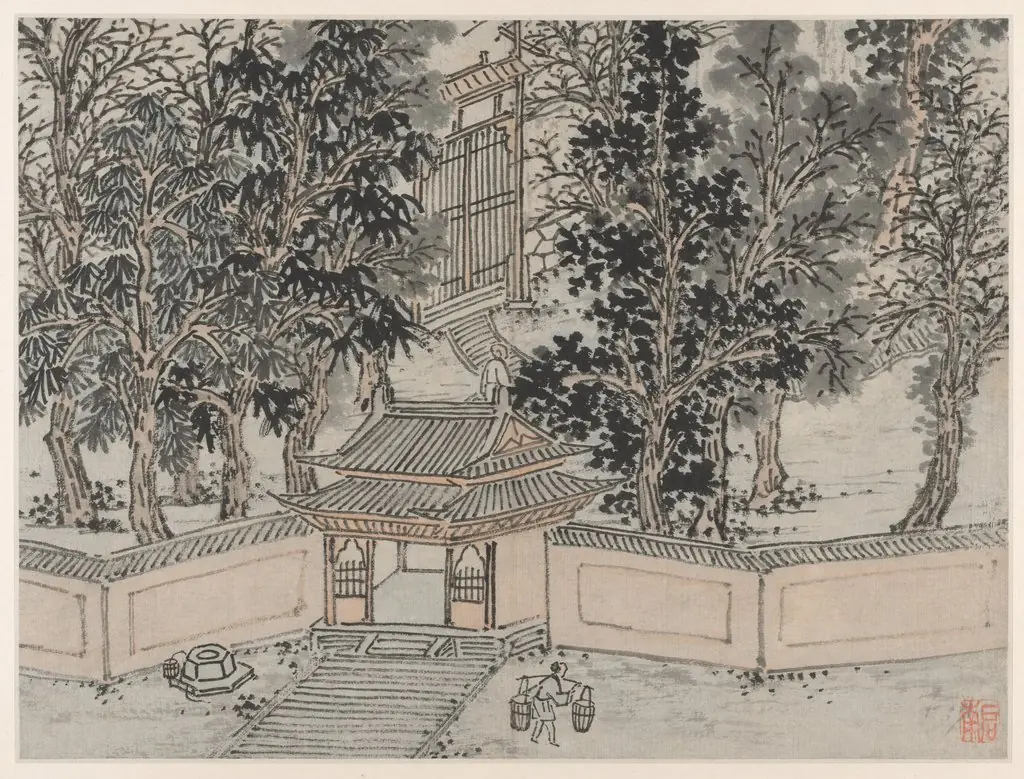 Tiger-Flight Spring at the Back Gate, from Twelve Views of Tiger Hill, Suzhou
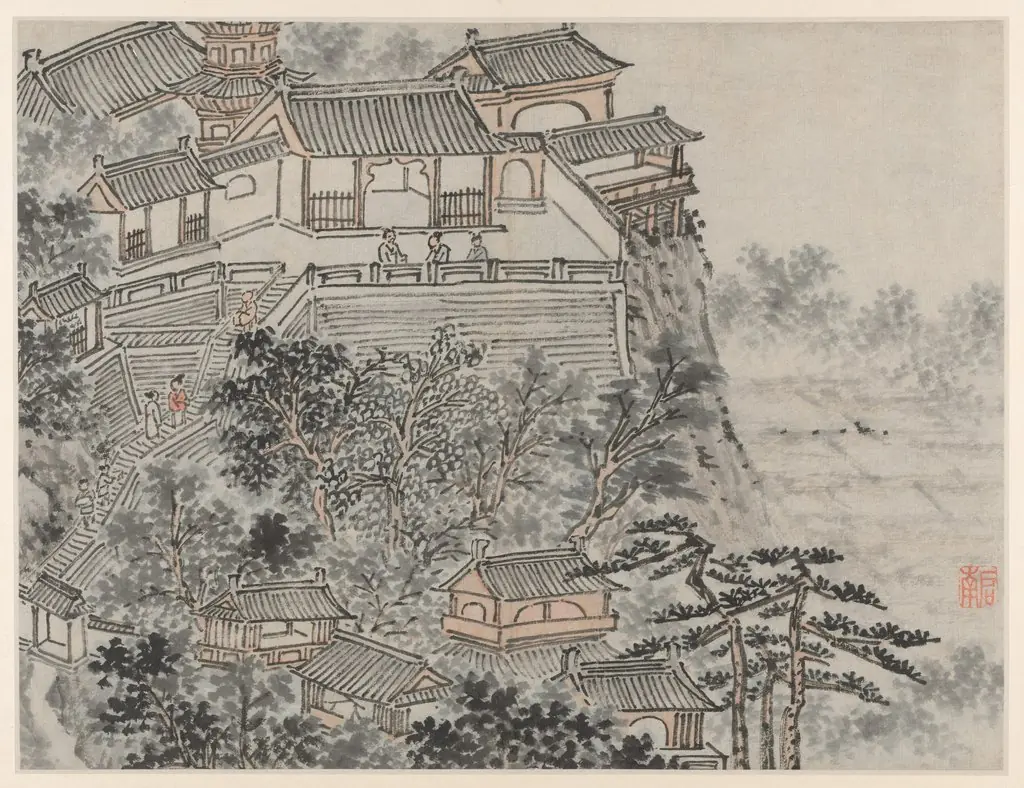 The Five Sages Terrace, from Twelve Views of Tiger Hill, Suzhou
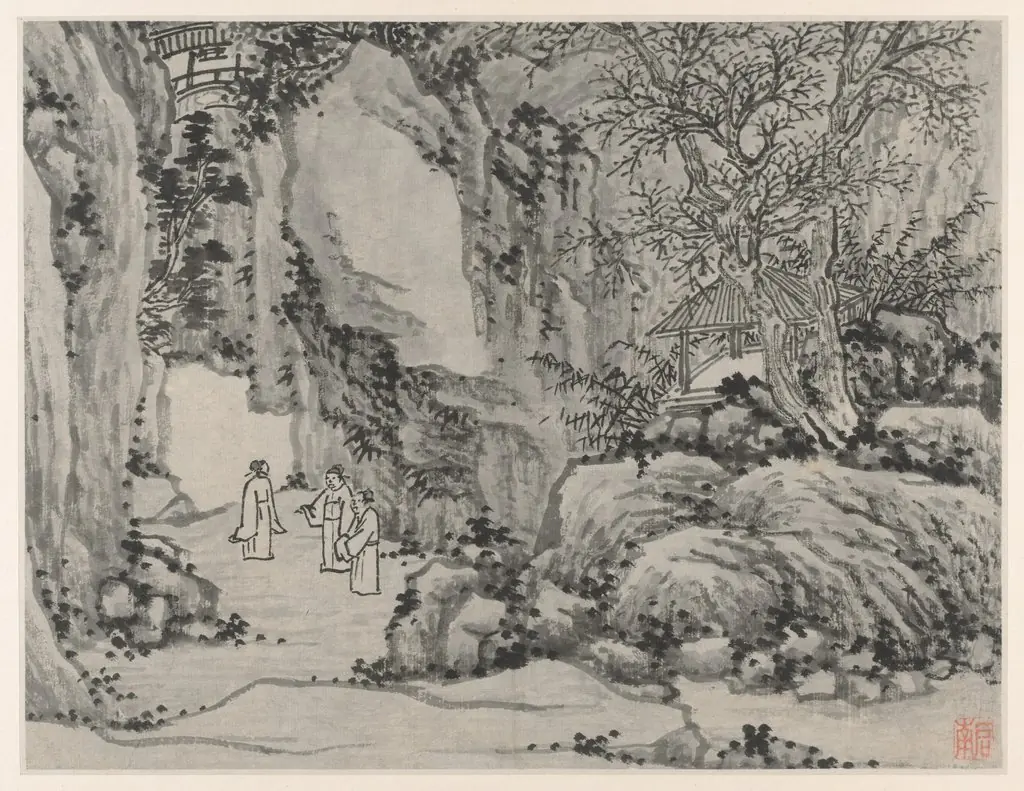 The Sword Spring, Tiger Hill, from Twelve Views of Tiger Hill, Suzhou
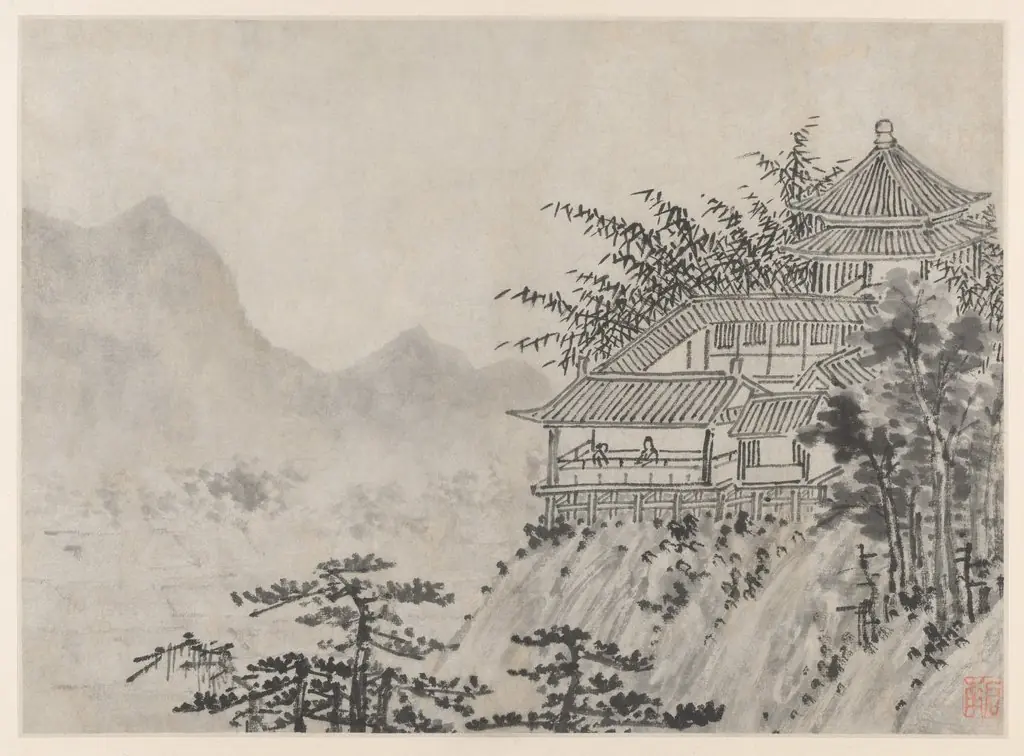 The Thousand Acres of Clouds, from Twelve Views of Tiger Hill, Suzhou
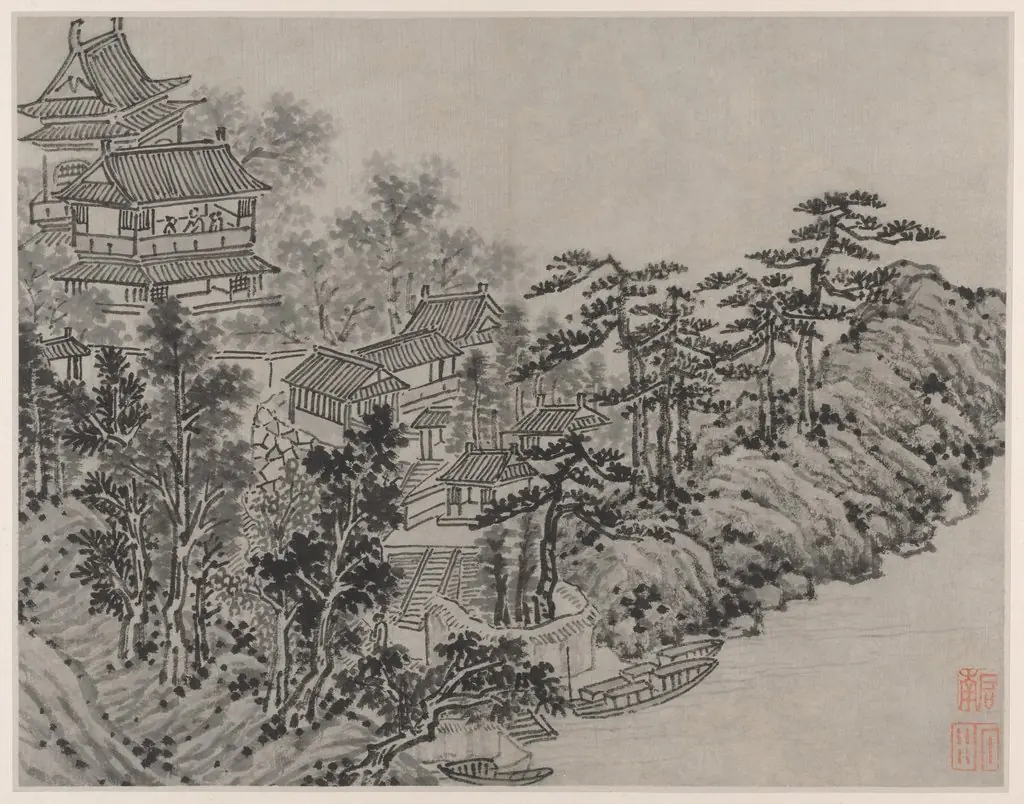 Cloud-Climbing Pavilion, from Twelve Views of Tiger Hill, Suzhou