Artwork
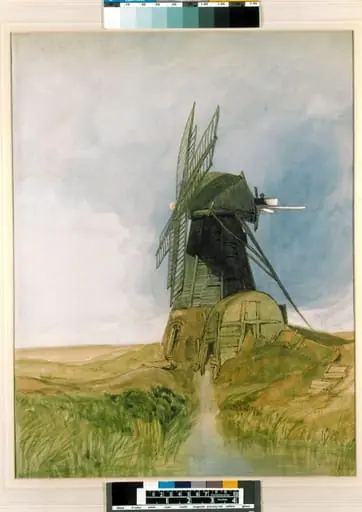
River scene with a windmill
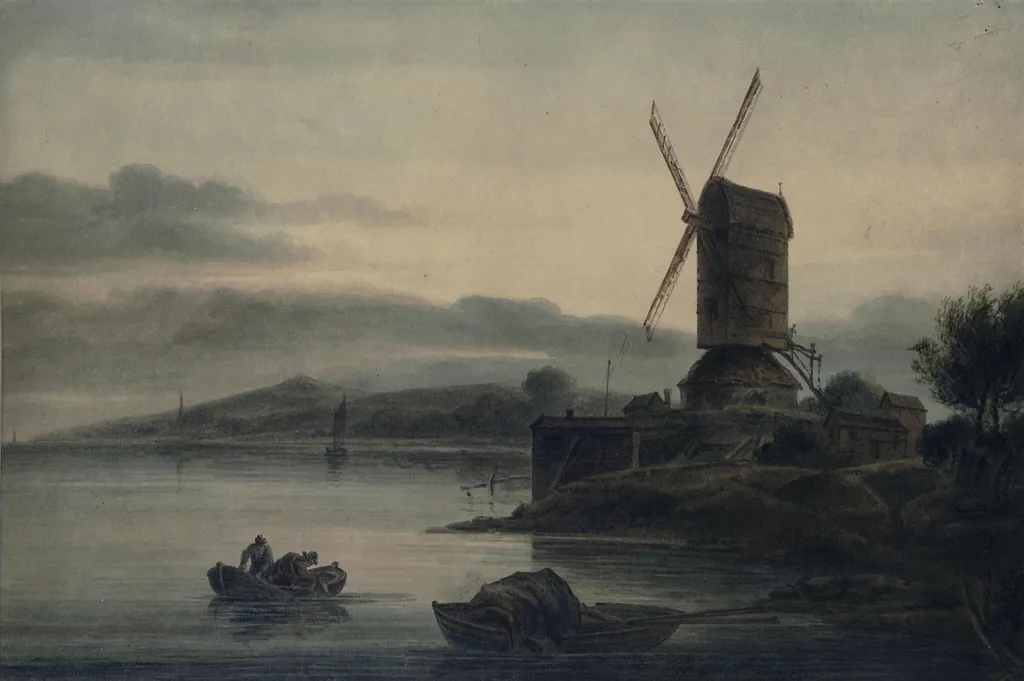
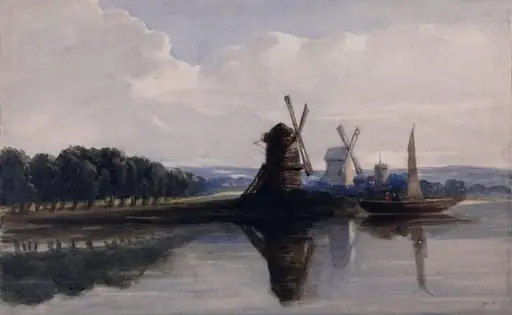
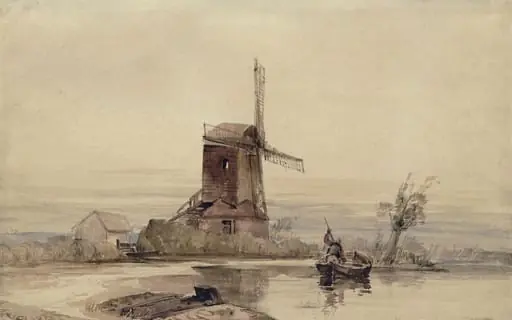
River scene with a windmill is a watercolor work on paper by the Romanticist artist William P. Sherlock. It dates from 1810 and is held in the collection of the Victoria and Albert Museum. Painted in 1810, this watercolour by William P.
About this work
Overview
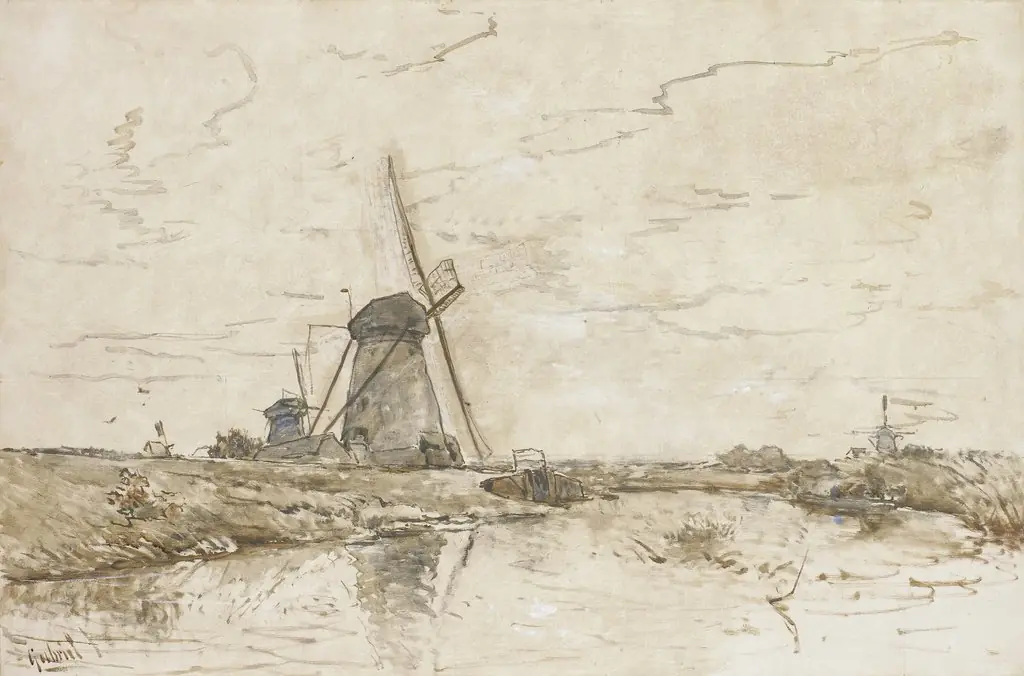
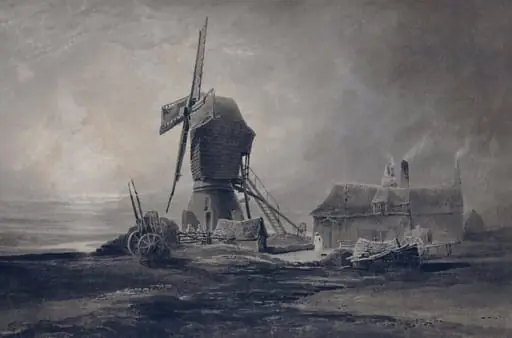
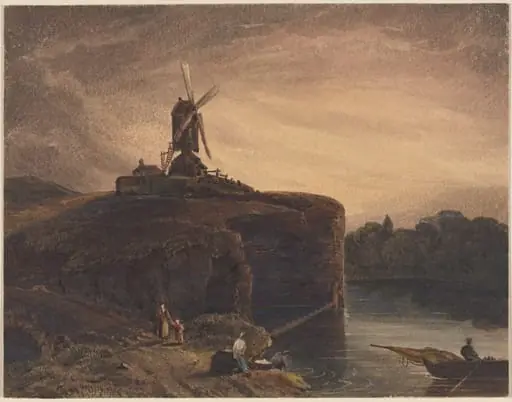
Painted in 1810, this watercolour by William P. Sherlock captures a tranquil riverside landscape with a windmill rising in the distance. Executed in a medium known for its unpredictability, the work demonstrates careful control over washes and layering. The artist’s signature confirms authorship and situates the piece within his documented output during the early nineteenth century.
Subject & Meaning
The scene presents a quiet, uneventful stretch of water bordered by modest vegetation and a single windmill, likely functional rather than decorative. There is no human activity visible, suggesting an emphasis on stillness and the quiet rhythm of rural life. The windmill, positioned as a structural anchor, implies the presence of agriculture or milling activity without overt narrative.
Technique & Style
Sherlock employed watercolour’s transparency to build subtle tonal gradations, particularly in the sky and water. Light is rendered through delicate washes rather than sharp contrasts, evoking a soft, diffused atmosphere. While not strictly chiaroscuro, the work uses graduated hues to suggest depth and volume, especially in the windmill’s form and the river’s reflective surface.
History & Provenance
The painting is signed and dated, indicating it was likely a finished work rather than a sketch. No documented exhibition or ownership history is known prior to its current record. Its survival in relatively intact condition suggests it was preserved privately, possibly within the artist’s circle or a local collector’s collection in early Victorian England.
Context
In 1810, watercolour was gaining recognition as a serious medium in Britain, favored for landscape studies and topographical records. Sherlock’s work aligns with a broader trend of amateur and professional artists documenting the English countryside. The windmill, a common feature in rural areas, reflects the era’s agrarian economy and the aesthetic appeal of vernacular architecture.
Legacy
Sherlock’s watercolour remains a modest but representative example of early 19th-century British landscape watercolours.
Sherlock’s watercolour remains a modest but representative example of early 19th-century British landscape watercolours. While not widely published or exhibited, it contributes to the understanding of how lesser-known artists engaged with naturalistic observation and the technical challenges of watercolour. Its preservation offers insight into the quiet, everyday subjects that defined regional artistic practice.
Artist & collection