Artwork
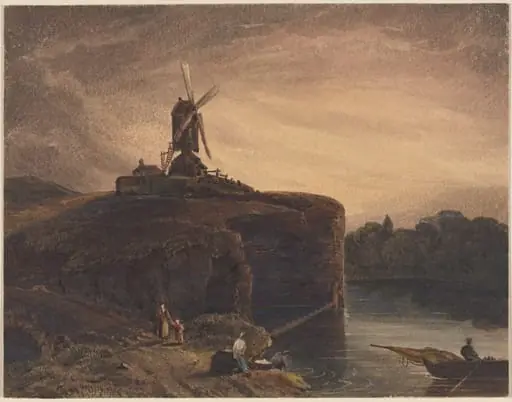
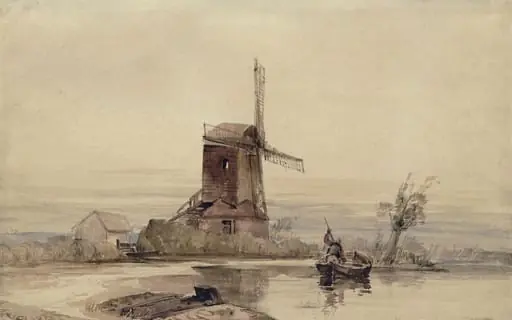
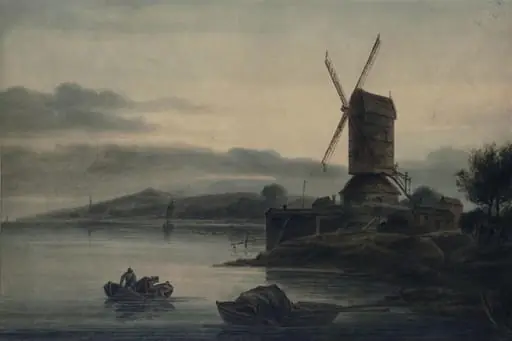
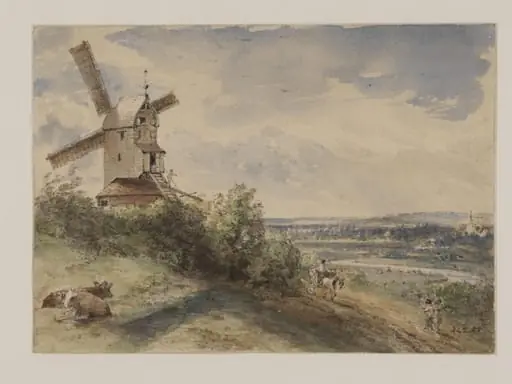
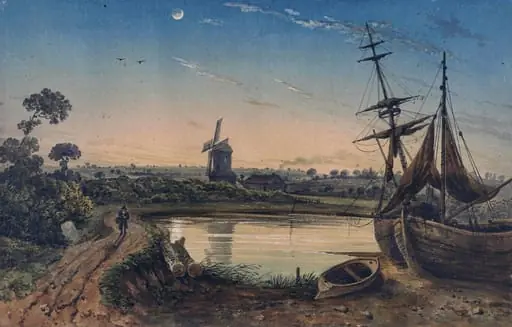
Moonlight scene with a windmill by a river
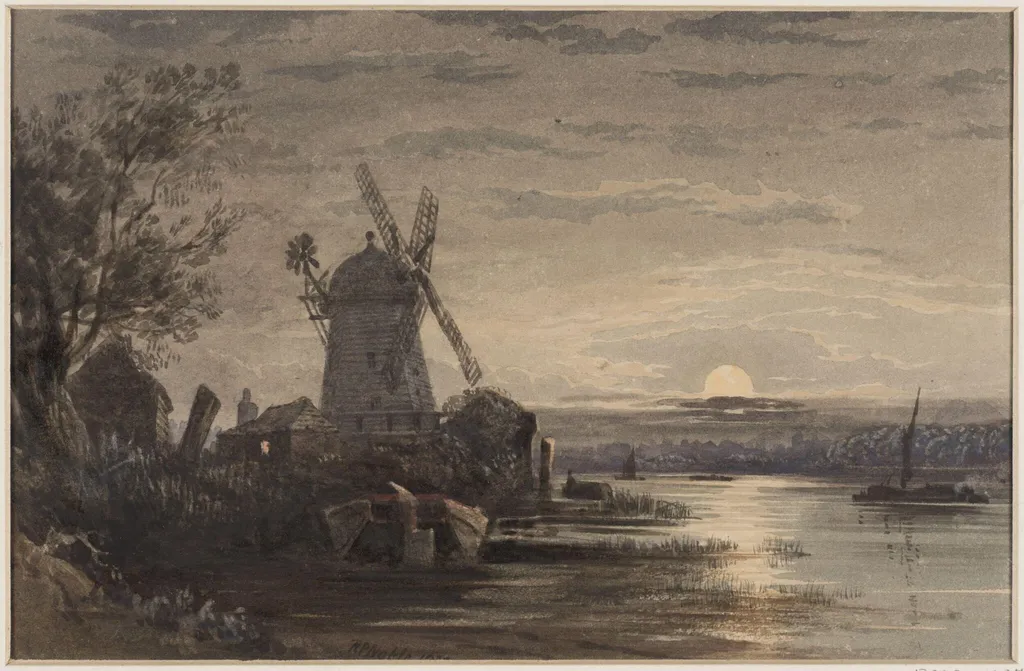
Moonlight scene with a windmill by a river is a drawing by the Romanticist artist R. P. Noble. It dates from 1838 and is held in the collection of the Victoria and Albert Museum. A watercolor drawing from 1838 by R.
About this work
Overview
Executed with delicate washes and minimal detail, the work conveys atmosphere over precision, typical of 19th-century topographical sketches.
A watercolor drawing from 1838 by R. P. Noble captures a quiet riverside scene under moonlight. The composition centers on a windmill standing near still water, with a faint outline of a distant town on the horizon. The artist’s signature is present, confirming authorship. Executed with delicate washes and minimal detail, the work conveys atmosphere over precision, typical of 19th-century topographical sketches.
Subject & Meaning
The scene depicts a tranquil rural landscape at night, emphasizing stillness and solitude. The windmill’s motionless blades suggest a pause in daily labor, while the calm river and muted sky reinforce a sense of quietude. The distant town, barely defined, implies human presence without intrusion. The image evokes contemplation rather than narrative, focusing on the harmony between nature and quiet industry.
Technique & Style
Noble employed loose, fluid watercolor washes to suggest moonlight and shadow, avoiding sharp outlines. Delicate brushwork defines the windmill’s structure and the water’s surface, while sparse cross-hatching adds texture to rocks and tree trunks. The sky is rendered in soft gradients, with the moon a pale highlight. The overall approach is suggestive rather than detailed, prioritizing mood over topographical accuracy.
History & Provenance
Created in 1838, the drawing is one of several known works by R. P. Noble, a lesser-known British artist active in the early 19th century. Its provenance traces to private collections in England, with no record of public exhibition during the artist’s lifetime. The piece remained in family hands until its acquisition by the current institution, where it was cataloged as a representative example of amateur topographical art of the period.
Context
In the 1830s, watercolor drawing was widely practiced by amateur artists and professionals alike as a means of recording landscapes. Noble’s work aligns with the tradition of English topographical art, which valued observational accuracy and atmospheric effect. Though not part of the Romantic movement’s grand narratives, such drawings reflected a growing public interest in quiet, everyday natural scenes.
Legacy
The drawing survives as a modest but evocative example of early Victorian landscape sketching. It offers insight into how non-professional artists engaged with the natural world through intimate, personal observation. While not influential in broader art movements, it contributes to the understanding of how ordinary people documented their surroundings during a time of rapid industrial change.
Own this work as a print
Artist & collection
Artist
R. P. Noble drew quiet 19th-century landscapes; in 1838 they captured a moonlit river scene with a windmill standing still beside the water. The sheet is soft and pale, letting the river glow just enough to show its…