Artwork
柴田是真筆 烏鷺図屏風|Egrets and Crows
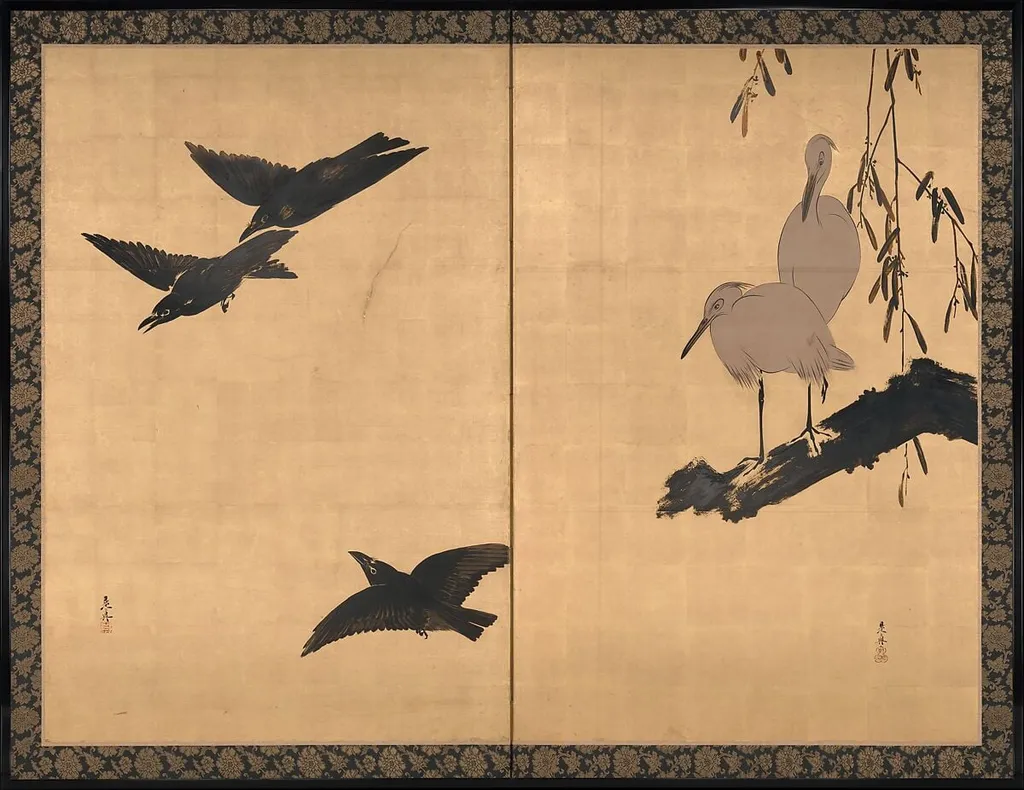
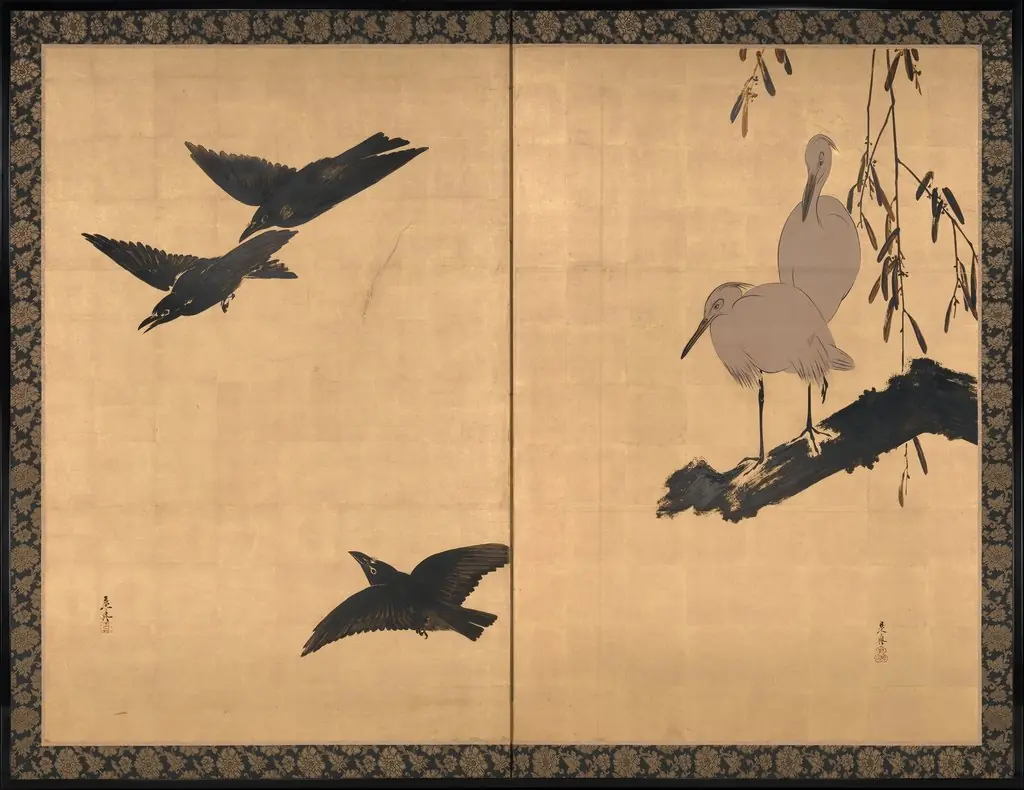
柴田是真筆 烏鷺図屏風|Egrets and Crows is a gold painting by the Impressionist artist Shibata Zeshin. It dates from 1883 and is held in the collection of the Metropolitan Museum of Art.
About this work
Overview
Created in 1883 by the Japanese artist Shibata Zeshin, this two‑panel folding screen is part of the Metropolitan Museum of Art’s collection. The work combines colored lacquer, white pigment, and gold leaf applied to paper, forming a compact landscape that juxtaposes two avian motifs across its panels.
Subject & Meaning
The left panel captures two black crows in mid‑flight, their silhouettes rendered with swift, energetic strokes that suggest motion. In contrast, the right panel presents a pair of white egrets resting on a branch, depicted with calmer, more measured lines that convey a sense of stillness. Together, the birds offer a study of contrasting behaviors within a shared natural setting.
Technique & Style
Zeshin employs a limited palette of warm beige background, bold lacquered lines, and subtle gold leaf accents. The use of colored lacquer and gold leaf on paper creates a luminous surface, while the white pigment highlights the egrets’ plumage. The expressive brushwork emphasizes the dynamic tension between the crows’ flight and the egrets’ repose.
History & Provenance
The screen was produced during the late Meiji period, a time when Japanese artists were experimenting with traditional materials in new formats. It entered the Metropolitan Museum of Art’s collection through acquisition in the early 20th century, reflecting the museum’s interest in showcasing Japanese decorative arts of the era.
Context
Shibata Zeshin is renowned for his mastery of lacquer techniques, often integrating Western influences with Japanese aesthetics. This piece exemplifies his ability to blend decorative surface treatment with a minimalist compositional approach, aligning with broader Meiji‑era trends that sought to modernize while preserving cultural heritage.
Artist & collection