Artwork
Untitled
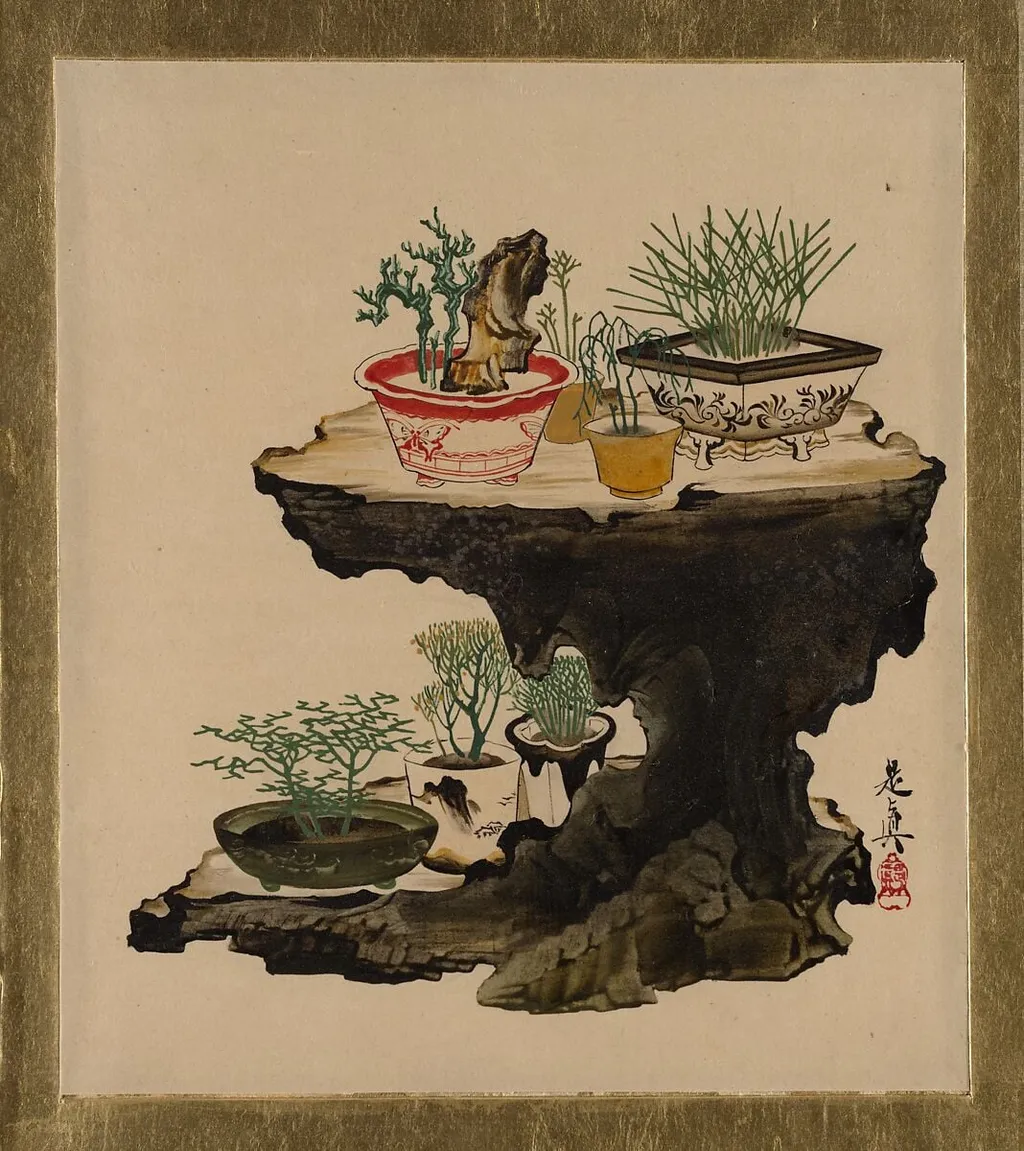
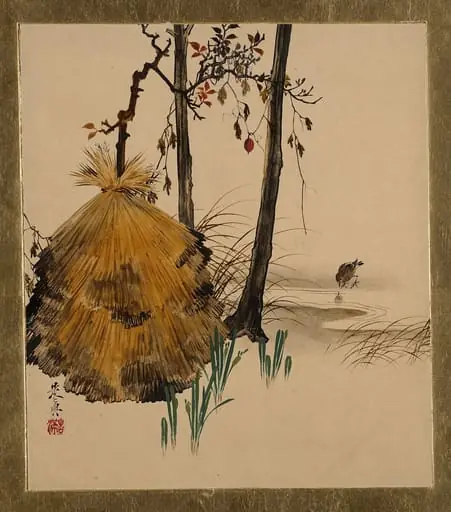
Untitled is an unspecified painting by the Impressionist artist Shibata Zeshin. It dates from 1882 and is held in the collection of the Metropolitan Museum of Art.
About this work
Overview
This technique highlights Zeshin's unique position in 19th-century Japanese art, where he bridged the gap between decorative arts and fine painting.
Created in 1882, this untitled work by Shibata Zeshin depicts a solitary stalk of bamboo emerging from a moss-covered rock. The composition is minimal, focusing on the vertical line of the bamboo against a dark, unadorned background. Executed in lacquer on paper, the piece demonstrates Zeshin's innovative approach to the medium, which was traditionally reserved for functional objects like boxes and furniture rather than two-dimensional painting. The artist applied thick, glossy black lacquer to create a surface that retains a wet appearance even when dry, contrasting with the subtle textures of the moss and the curling, ribbon-like leaves of the bamboo. This technique highlights Zeshin's unique position in 19th-century Japanese art, where he bridged the gap between decorative arts and fine painting. As a master of lacquerware who also worked in other media, Zeshin utilized the material's reflective qualities to evoke depth and atmosphere in a landscape format. The work stands as a testament to his technical mastery and his ability to transform a craft material into a vehicle for expressive, painterly effects during the late Edo and early Meiji periods.
Subject & Meaning
The painting focuses on a single bamboo shoot, its slender leaves unfurling like green ribbons against the muted backdrop of rock and moss. The choice of a lone plant suggests themes of resilience and quiet vitality within a natural setting.
Technique & Style
Zeshin applied multiple layers of lacquer to paper, achieving a thick, glossy finish that retains a wet appearance even when dry. This method, uncommon for paintings, allows subtle gradations of tone and a softening of edges reminiscent of the sfumato technique, enhancing the illusion of living foliage.
History & Provenance
The work belongs to a period when Zeshin experimented with lacquer beyond traditional decorative objects such as boxes and bowls. Its date of 1882 places it among his later explorations, reflecting his ongoing interest in expanding the material possibilities of Japanese painting.
Artist & collection