Artwork
Leaf from a Kalighat album: Rama and Sita in the Royal Palace (recto); Radha and Krishna (verso)
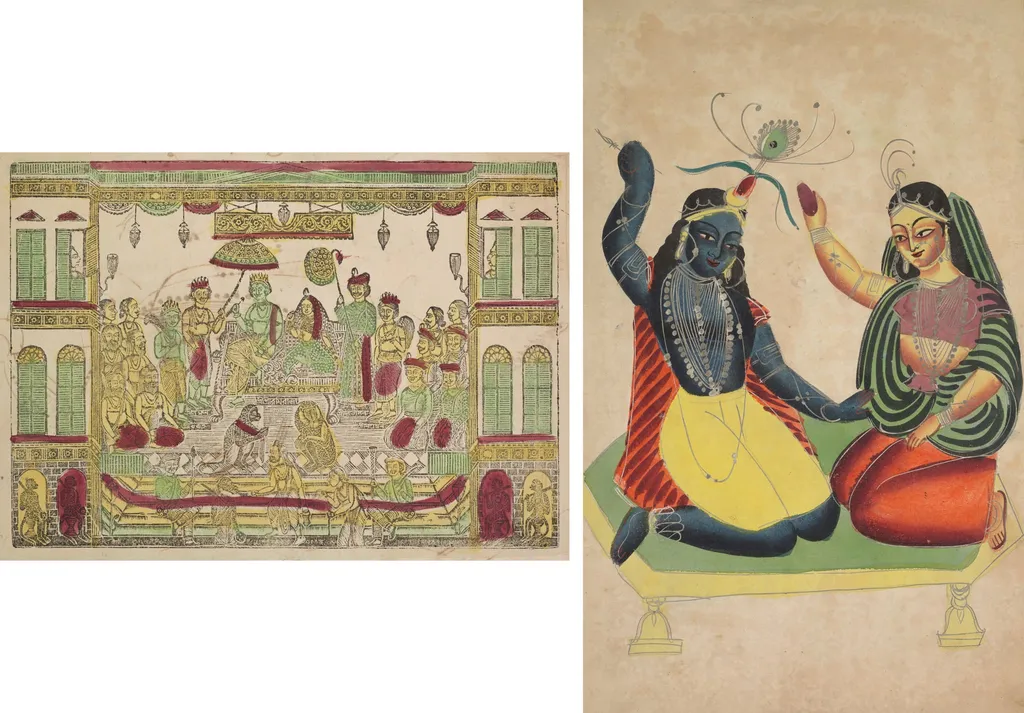
Leaf from a Kalighat album: Rama and Sita in the Royal Palace (recto); Radha and Krishna (verso) is a print by the Impressionist artist Shri Gobinda Chandra Roy. It dates from 1890 and is held in the collection of the Cleveland Museum of Art.
About this work
Overview
The work exemplifies the commercial art tradition of 19th-century Bengal, blending religious themes with accessible visual language for a broad audience.
This single paper leaf, created around 1890 by Shri Gobinda Chandra Roy, features two distinct scenes painted on opposite sides. It originates from a Kalighat album, a format used to collect devotional and narrative images sold near the Kalighat temple in Kolkata. The work exemplifies the commercial art tradition of 19th-century Bengal, blending religious themes with accessible visual language for a broad audience.
Subject & Meaning
The recto depicts Rama and Sita seated on a throne within a royal palace, attended by servants holding fans and lanterns, symbolizing ideal kingship and dharma. The verso shows Radha and Krishna in a more intimate setting, with Krishna playing the flute and Radha listening, evoking divine love and devotion. Together, the scenes juxtapose royal duty with spiritual intimacy, reflecting two central modes of Hindu devotion.
Technique & Style
The artist employed bold, fluid ink outlines and flat areas of vivid pigment—reds, greens, and golds—characteristic of Kalighat painting. Forms are simplified, with minimal shading and no perspective, emphasizing clarity over realism. The composition is densely packed with figures, creating rhythmic visual energy. This style emerged from the adaptation of traditional patachitra techniques to urban market demands.
History & Provenance
Created in Kolkata during the late 19th century, this leaf was likely part of a bound album sold to pilgrims or collectors near the Kalighat temple. Such albums served both devotional and souvenir functions. The work entered the Cleveland Museum of Art’s collection as part of a broader acquisition of South Asian folk and commercial art, preserving a rare example of this ephemeral genre.
Context
Kalighat paintings arose as a response to urbanization and colonial influence in 19th-century Bengal. Artists adapted traditional religious iconography to appeal to a growing middle class and foreign visitors. These works often combined mythological narratives with subtle social commentary, reflecting both spiritual devotion and the changing cultural landscape of Calcutta.
Legacy
Though produced for mass consumption and often discarded, Kalighat works like this leaf are now recognized as vital records of Bengali visual culture. They bridge folk and fine art traditions, influencing later modern Indian artists who sought indigenous forms of expression. Their survival in museum collections underscores their historical significance beyond their original commercial purpose.
Artist & collection

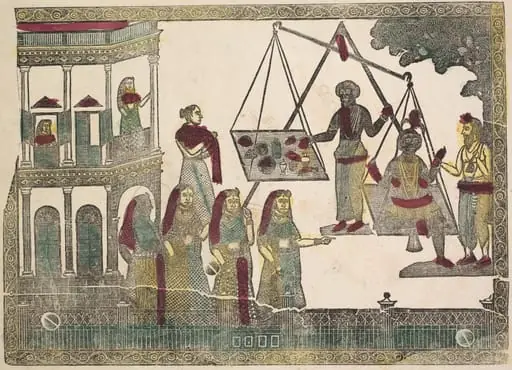 Krishna weighed against precious objects(?) (verso), from a Kalighat album
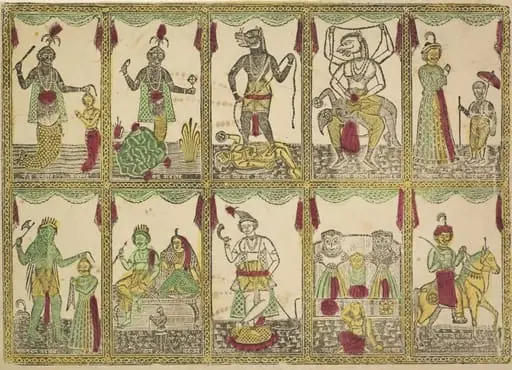 Das Avataras, Ten Incarnations of Vishnu (verso), from a Kalighat album
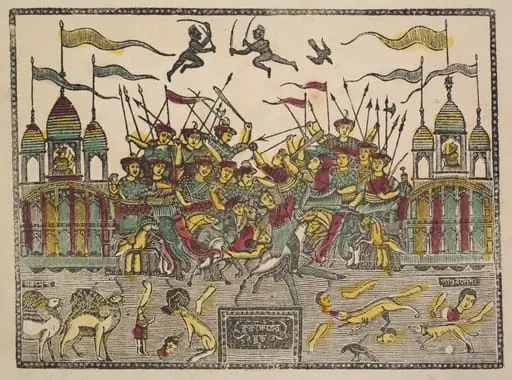 Battle Scene at Kurukshetra from the Mahabharata War (verso), from a Kalighat album
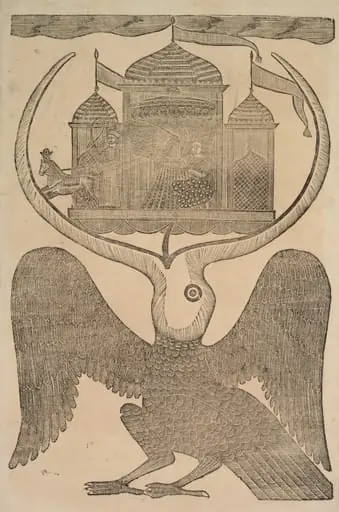 Jatayu hinders Ravana’s chariot trying to prevent Sita’s abduction (recto), from a Kalighat album
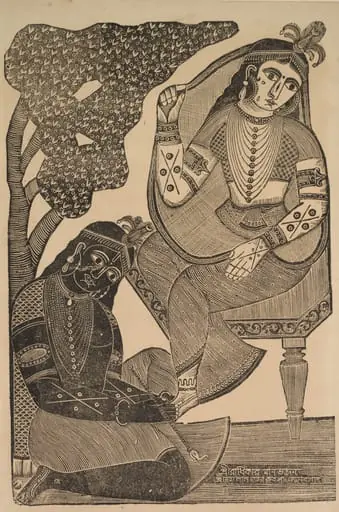 Krishna Stroking Radha's Feet
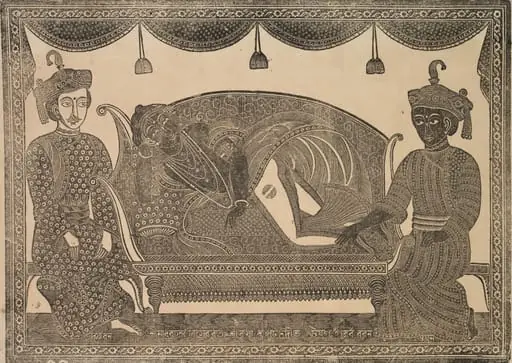 Kalighat Painting
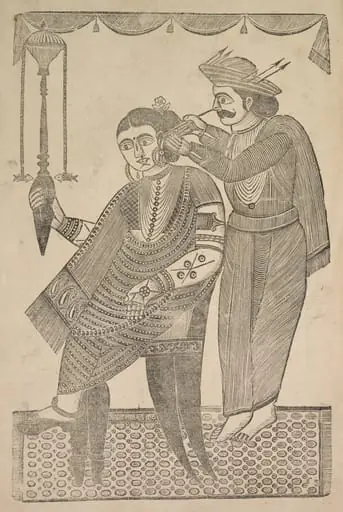 A Barber Cleaning the Ear of a Courtesan
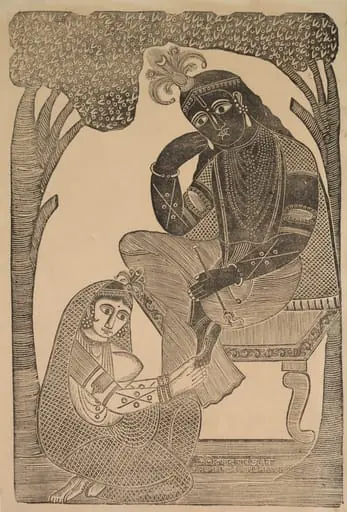 Radha Stroking Krishna's Feet
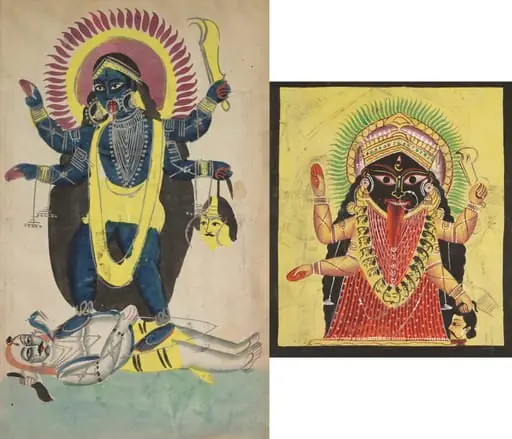 Leaf from a Kalighat album: Two Aspects of Kali
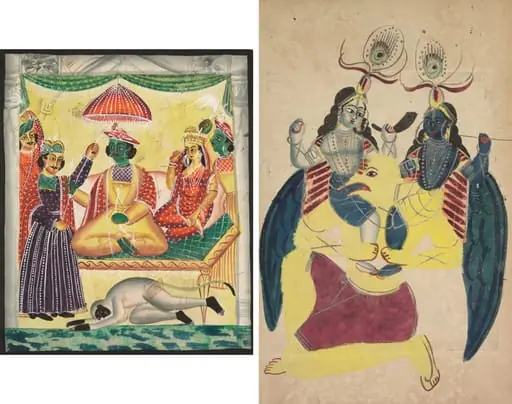 Leaf from a Kalighat album: Rama and Sita enthroned (recto); Garuda carrying Balarama and Krishna (verso)
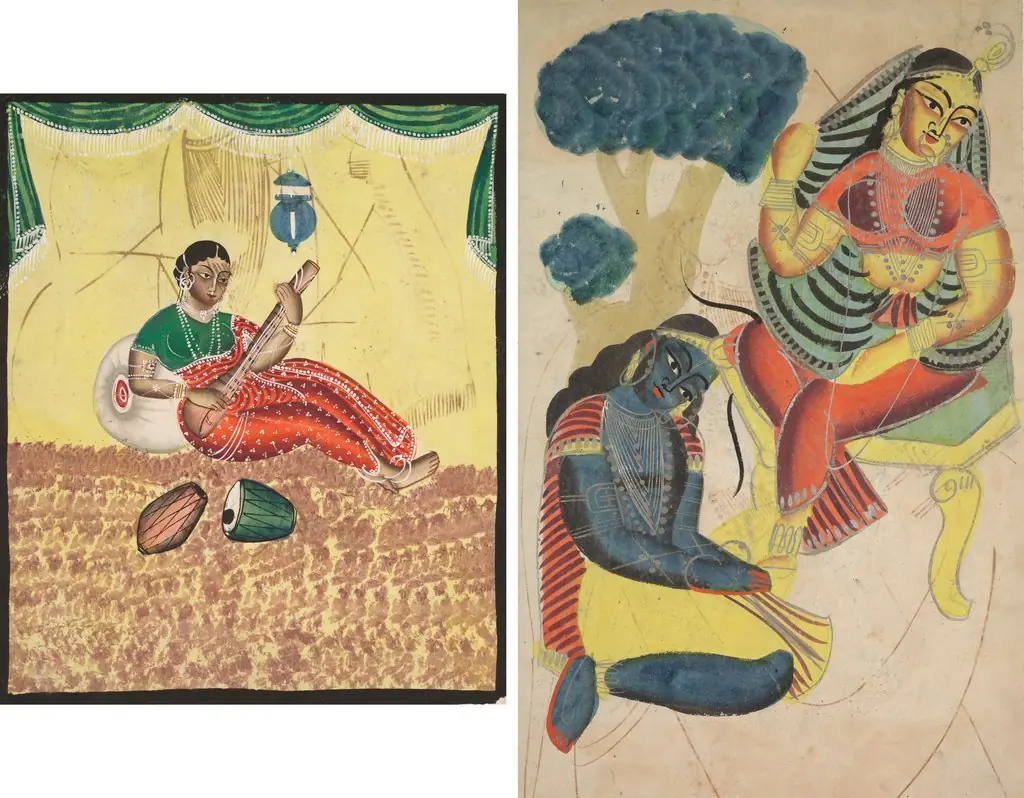 Leaf from a Kalighat album: Woman Playing Music (recto); Krishna Stroking Radha's Feet (verso)
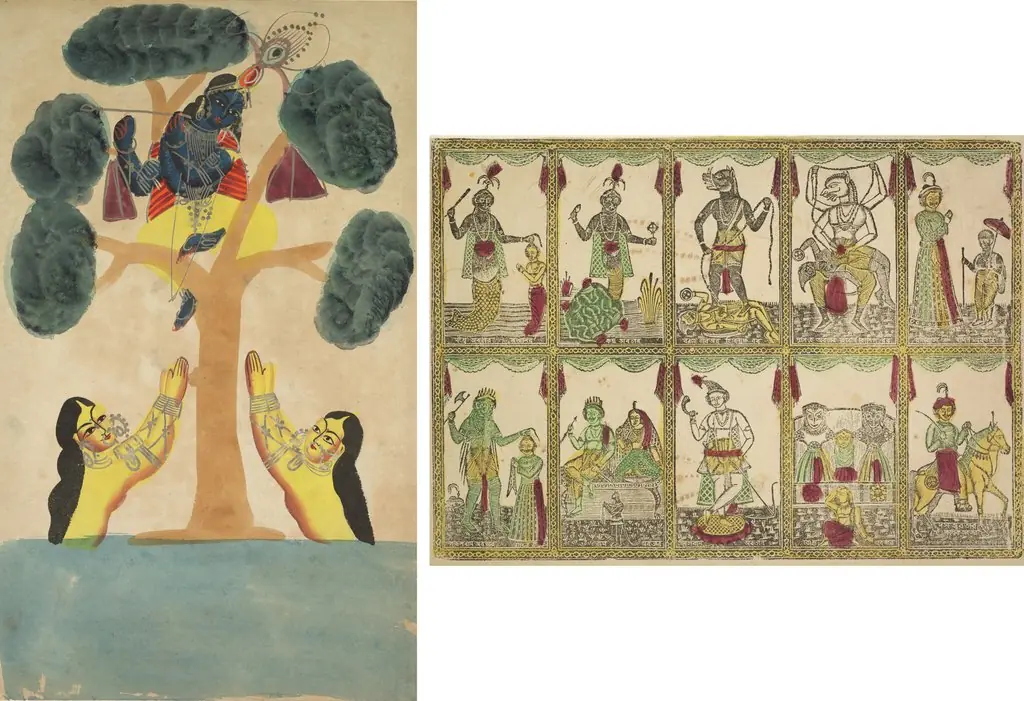 Leaf from a Kalighat album: Krishna Steals the Clothes of the Cowgirls (Gopis) (recto); Das Avataras, Ten Incarnations of Vishnu (verso)
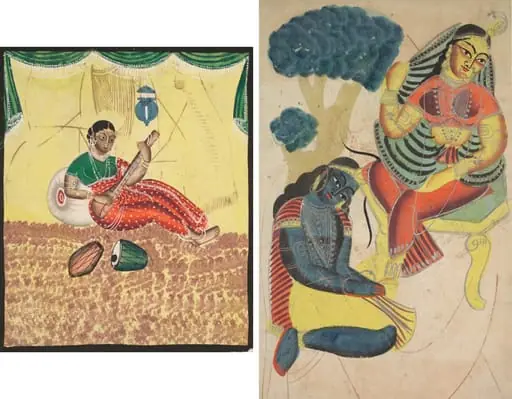 Leaf from a Kalighat album: Woman Playing Music (recto); Krishna Stroking Radha's Feet (verso)
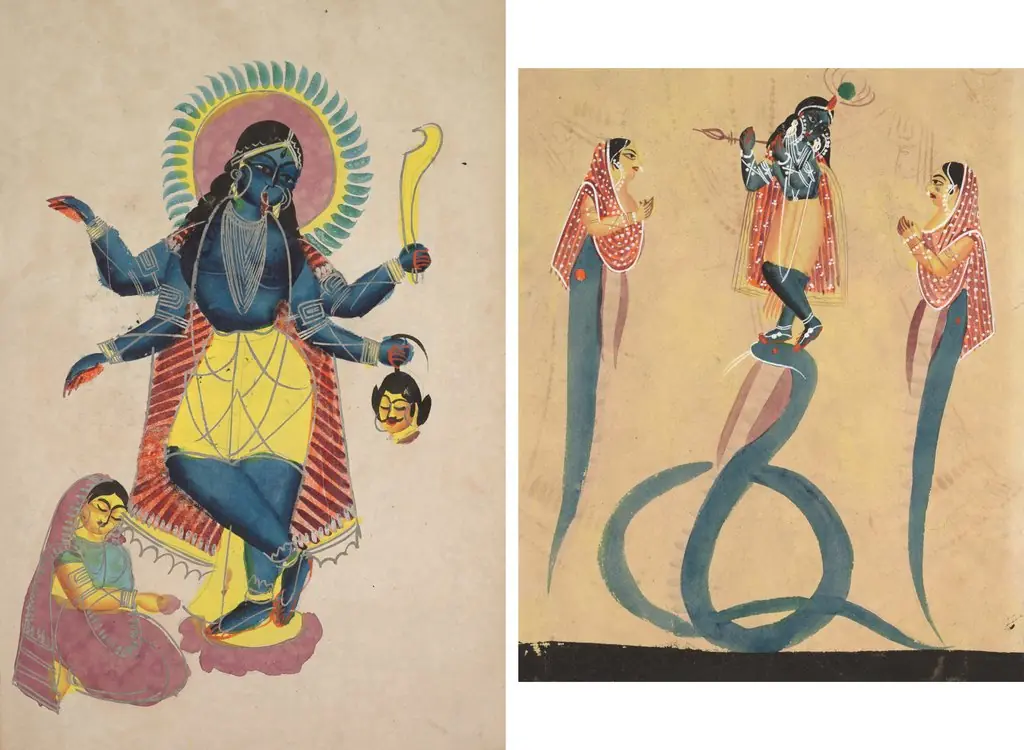 Leaf from a Kalighat album: Krishna as Kali worshipped by Radha (recto); Krishna quells the serpent Kaliya (verso)
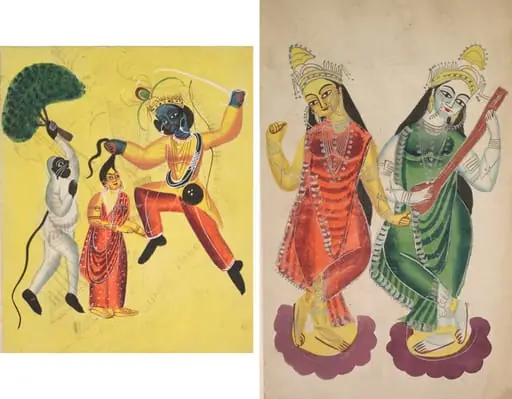 Leaf from a Kalighat album: Hanuman attacks Indrajit holding an apparition of Sita by the hair (recto); Goddesses Lakshmi and Sarasvati (verso)
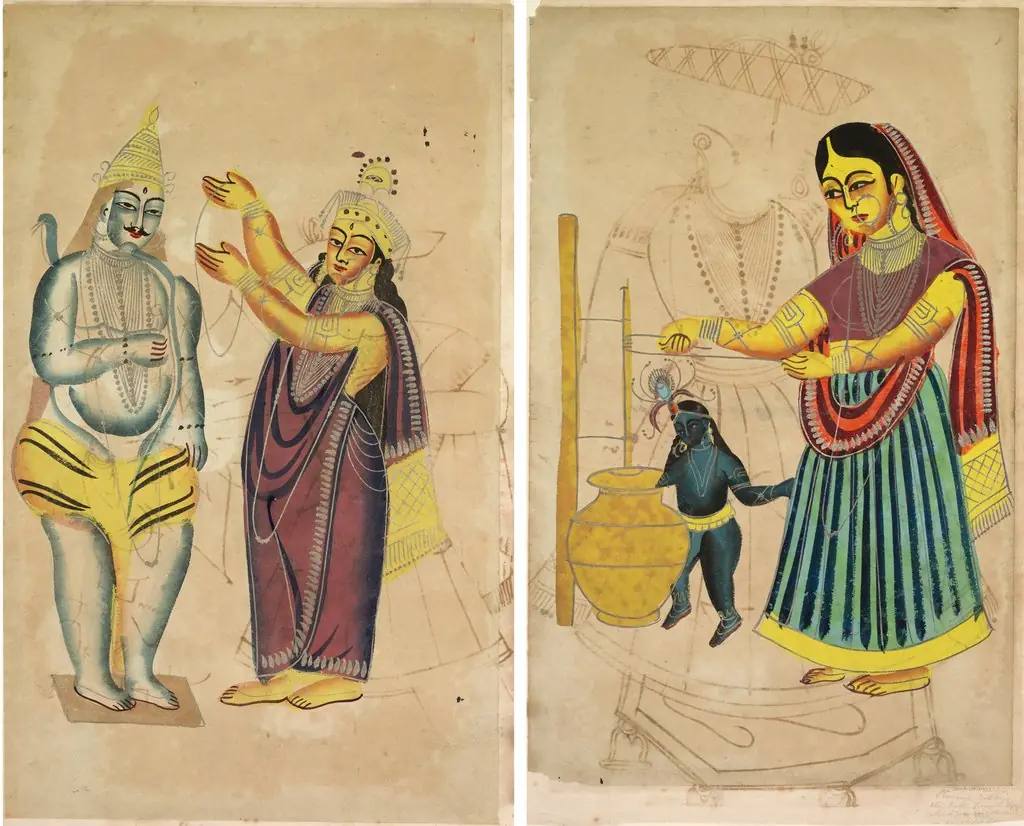 Leaf from a Kalighat album: Parvati Placing a Wedding Garland on Shiva (recto); Yasoda Churning Butter (verso)
 Leaf from a Kalighat album: Parvati Placing a Wedding Garland on Shiva (recto); Yasoda Churning Butter (verso)
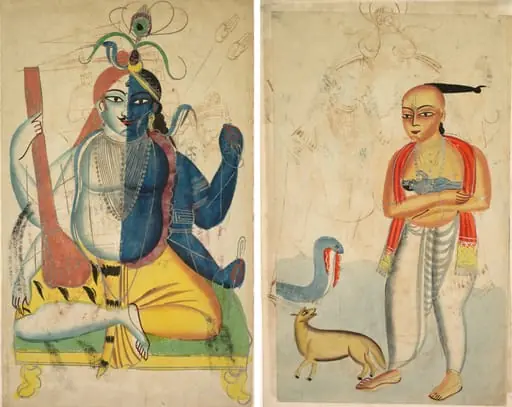 Leaf from a Kalighat album: Hari-Hara (recto); Vasudeva (Krishna's Father) Fleeing with Krishna Encounters a Cobra and a Jackal (verso)
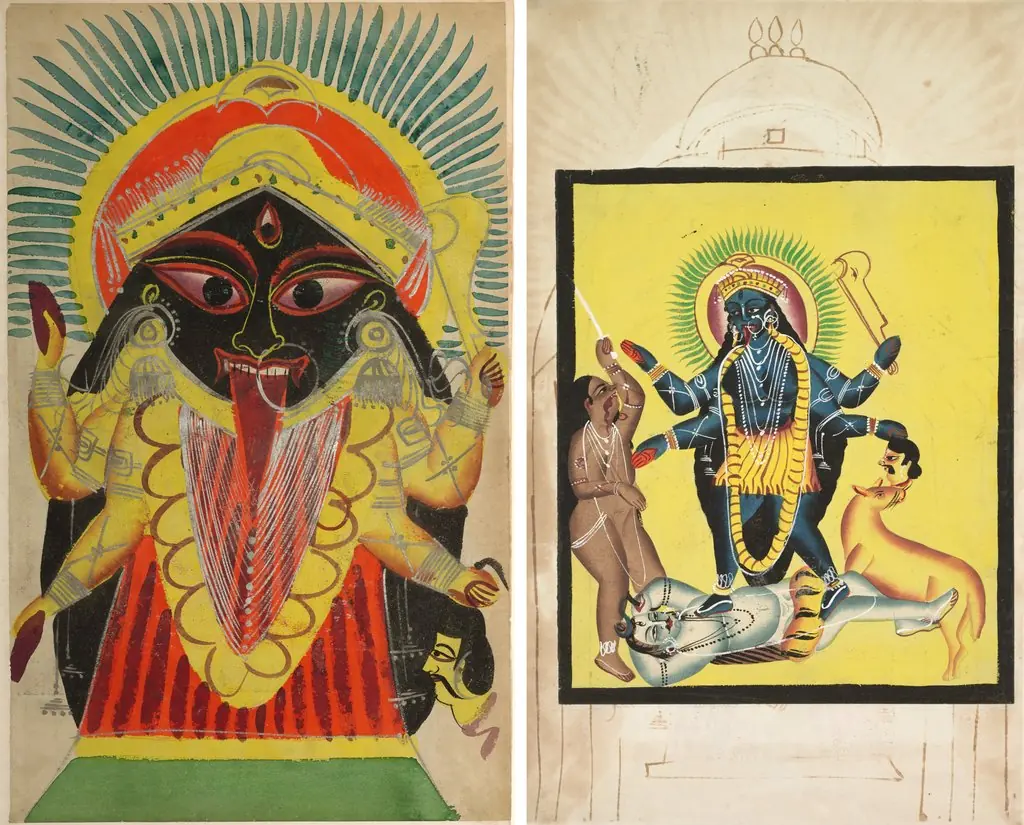 Leaf from a Kalighat album: The Goddess Kali (recto); Kali Standing on Shiva (verso)
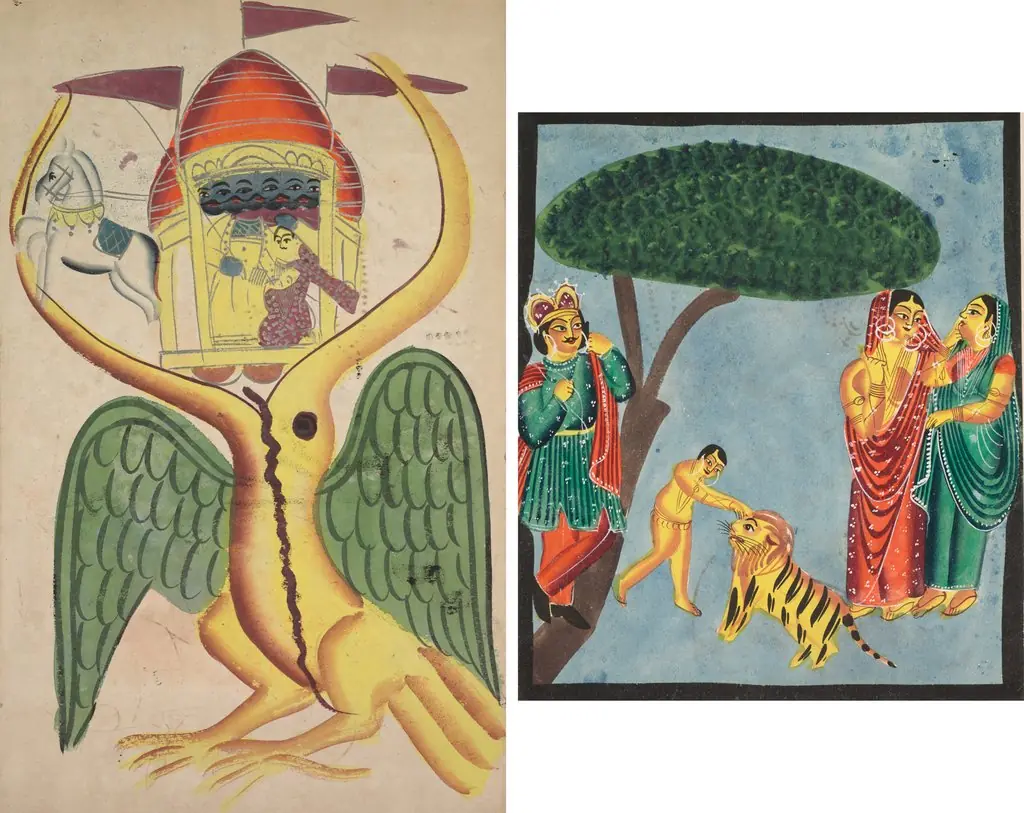 Leaf from a Kalighat album: Jatayu hinders Ravana’s chariot, trying to prevent the abduction of Sita (recto); Dushyanta watching his son Bharat playing with the tiger at the end of the Abhijnanashakuntalam (verso)