Artwork
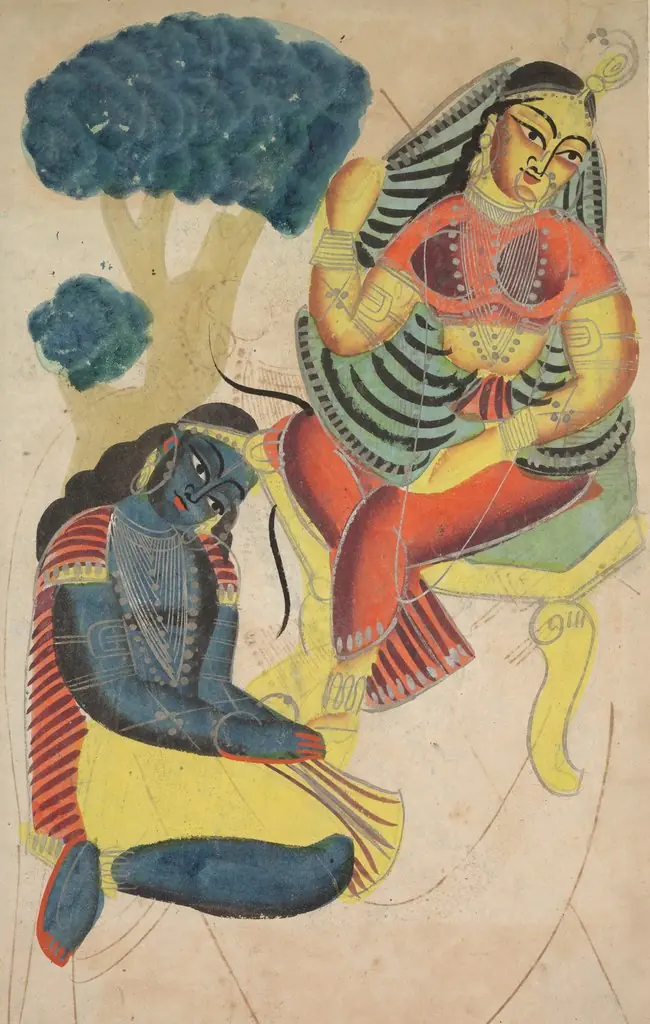
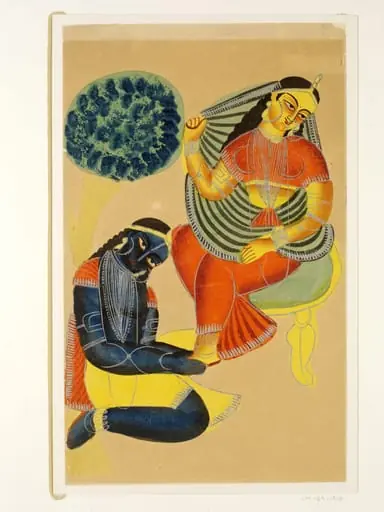
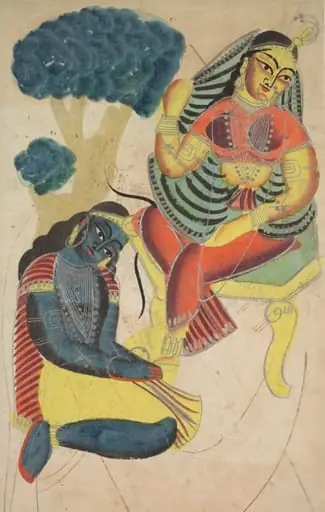
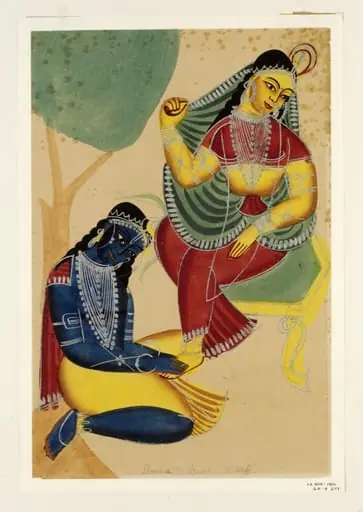
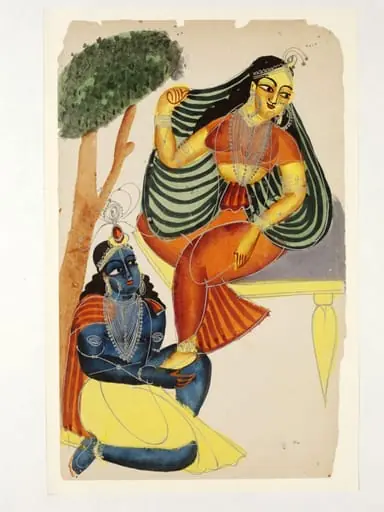
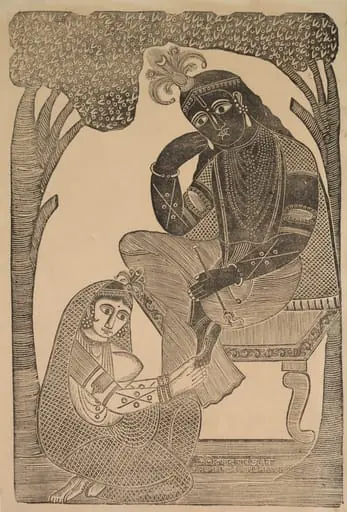
Krishna Stroking Radha's Feet
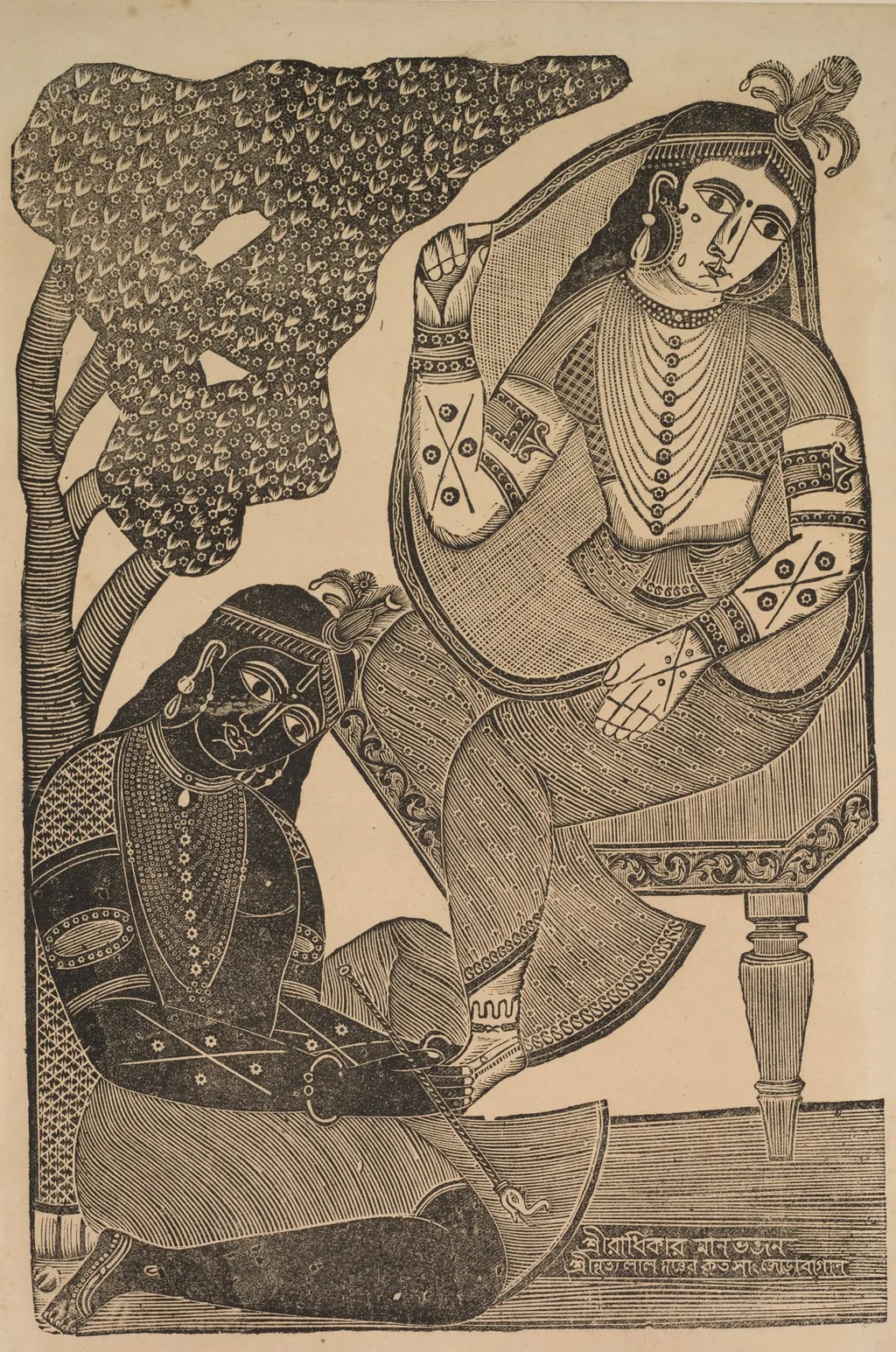
Krishna Stroking Radha's Feet is a print by the Impressionist artist Shri Gobinda Chandra Roy. It dates from 1890 and is held in the collection of the Cleveland Museum of Art.
About this work
Overview
Created around 1890 by Shri Gobinda Chandra Roy, this print depicts a moment of intimate devotion between Krishna and Radha.
Created around 1890 by Shri Gobinda Chandra Roy, this print depicts a moment of intimate devotion between Krishna and Radha. Executed in the Kalighat style, it combines bold outlines with flat, decorative patterning. The work is part of the collection at The Cleveland Museum of Art, where it represents a regional Indian artistic tradition that emerged near Kolkata, blending religious themes with accessible visual language for pilgrims and urban audiences.
Subject & Meaning
The scene illustrates Krishna, crowned and robed, kneeling before Radha, who sits elevated on a platform, adorned with jewelry and a headdress. His gesture of touching her feet signifies reverence and spiritual surrender, a motif drawn from devotional texts where Radha embodies divine love. The composition inverts typical power dynamics, emphasizing emotional intimacy over hierarchy, reflecting the Bhakti tradition’s focus on personal devotion over ritual formality.
Technique & Style
Rendered in ink and watercolor on paper, the print employs sharp, confident lines and areas of unmodulated color. Backgrounds are filled with stylized floral motifs, swirling patterns, and geometric borders, characteristic of Kalighat art. Figures are simplified yet expressive, with minimal shading and no perspective, creating a graphic, almost symbolic quality. The style reflects the influence of both folk traditions and early commercial printmaking in 19th-century Bengal.
History & Provenance
The work originates from the Kalighat region near the Kalighat Temple in Kolkata, where artists produced affordable devotional images for pilgrims. Shri Gobinda Chandra Roy was among the local painters who adapted traditional iconography for a growing urban clientele. The print entered the Cleveland Museum of Art’s collection through documented acquisitions in the 20th century, preserving a rare example of this rapidly evolving artistic practice.
Context
In late 19th-century Bengal, Kalighat paintings responded to social change, colonial influence, and rising literacy. Artists used inexpensive materials and rapid brushwork to produce images that conveyed religious narratives with immediacy. This piece reflects a shift from temple-based iconography to market-driven art, where spiritual themes were rendered with visual clarity to appeal to both devout and curious buyers in expanding urban centers.
Legacy
Kalighat prints like this one influenced later Indian modernists and remain key references in studies of vernacular art. Their fusion of religious symbolism with graphic simplicity paved the way for new modes of visual storytelling. Though the tradition declined by the early 20th century due to industrial printing, surviving works continue to inform contemporary discussions on the intersection of faith, commerce, and artistic identity in colonial India.
Artist & collection

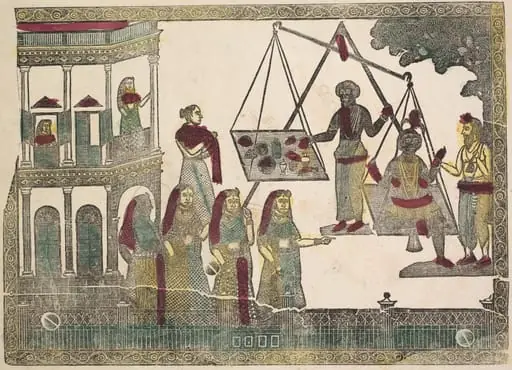 Krishna weighed against precious objects(?) (verso), from a Kalighat album
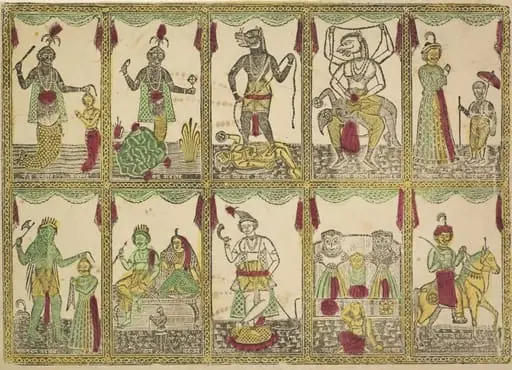 Das Avataras, Ten Incarnations of Vishnu (verso), from a Kalighat album
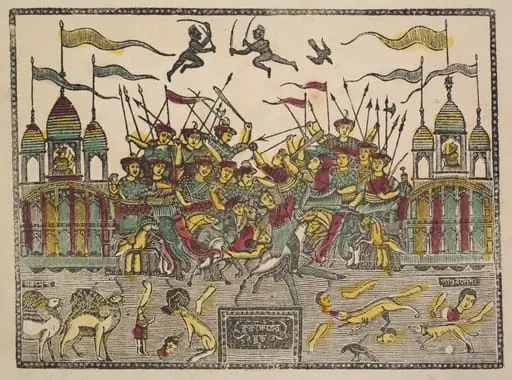 Battle Scene at Kurukshetra from the Mahabharata War (verso), from a Kalighat album
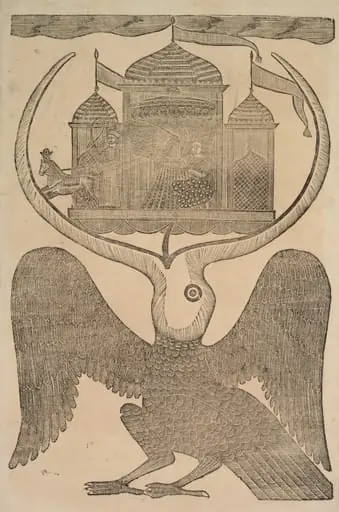 Jatayu hinders Ravana’s chariot trying to prevent Sita’s abduction (recto), from a Kalighat album
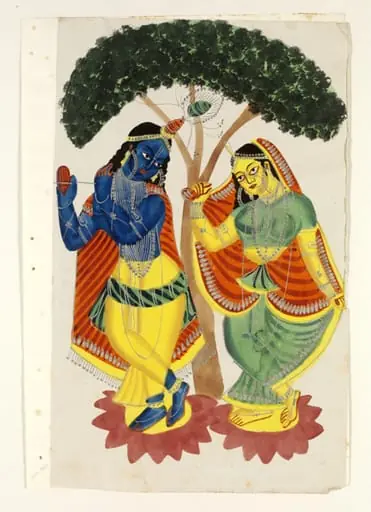
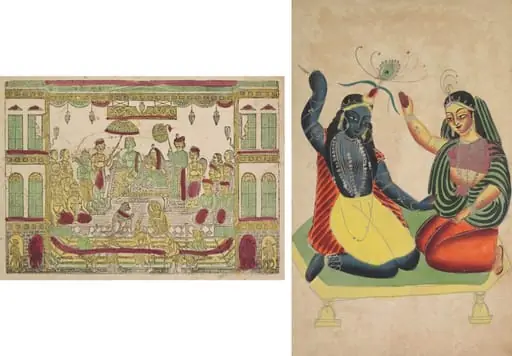 Leaf from a Kalighat album: Rama and Sita in the Royal Palace (recto); Radha and Krishna (verso)
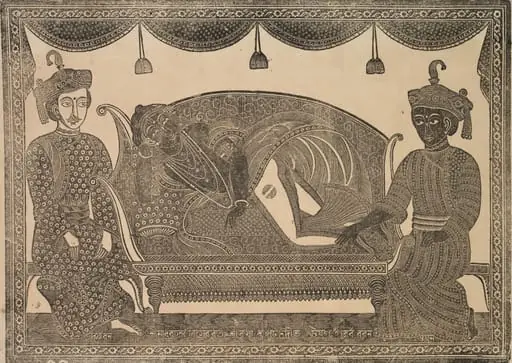 Kalighat Painting
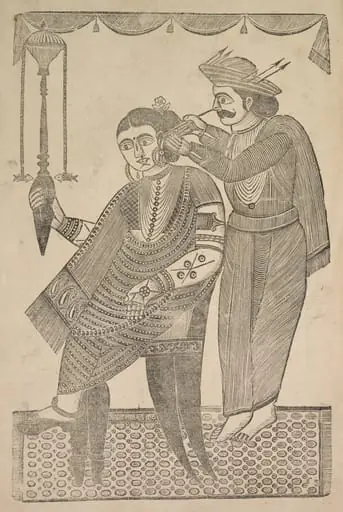 A Barber Cleaning the Ear of a Courtesan
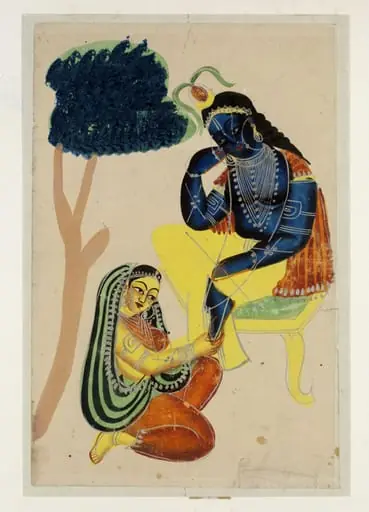
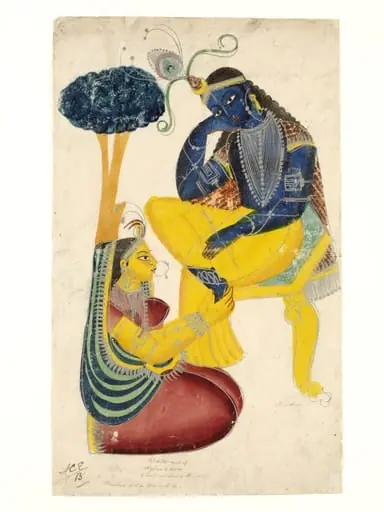
 Radha Stroking Krishna's Feet