Artwork
「大判事清澄 坂東三津五郎」(三代)・「久我之助 嵐小六」(四代)|Bandō Mitsugorō III as Daihanji Kiyozumi and Arashi Koroku IV as Koganosuke
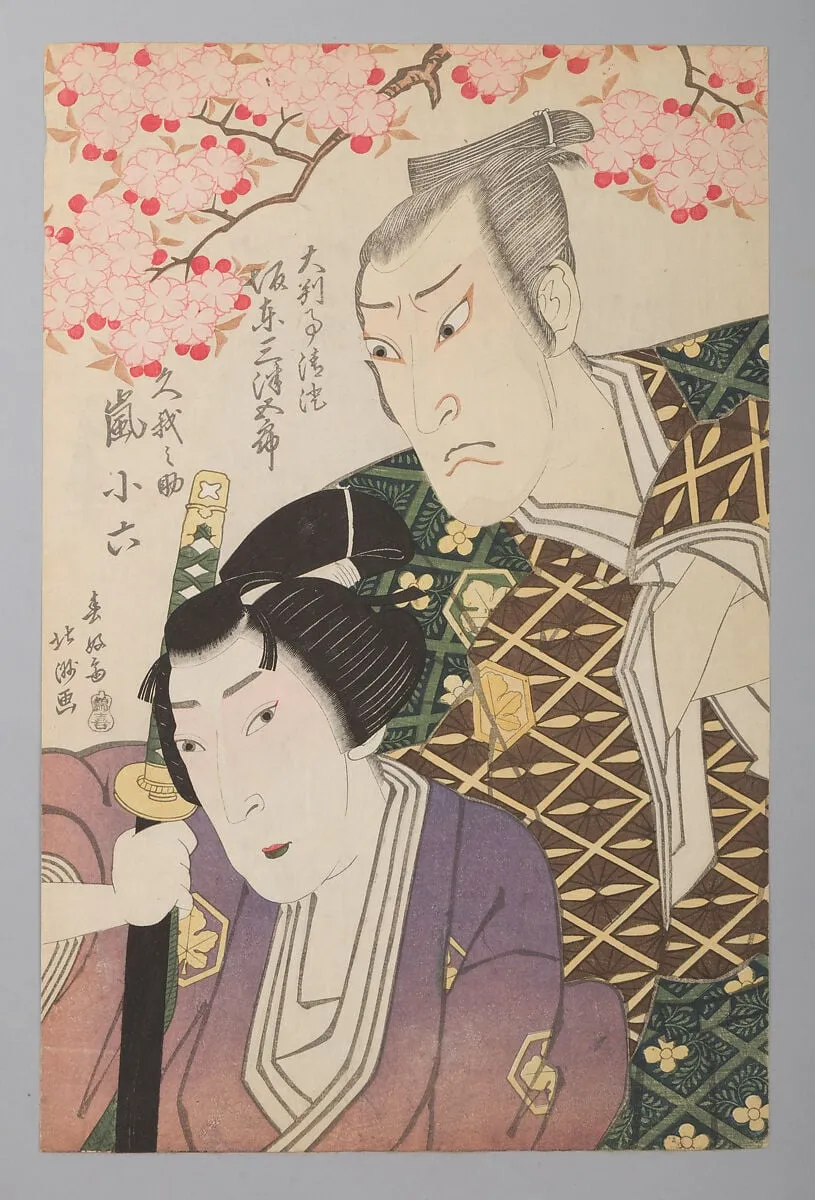
「大判事清澄 坂東三津五郎」(三代)・「久我之助 嵐小六」(四代)|Bandō Mitsugorō III as Daihanji Kiyozumi and Arashi Koroku IV as Koganosuke is an ink print by the Romanticist artist Shunkōsai Hokushū. It dates from 1821 and is held in the collection of the Metropolitan Museum of Art.
About this work
Overview
Created in 1821 by the Edo‑period printmaker Shunkōsai Hokushū, this vertical ōban diptych presents a pair of kabuki actors in the midst of a dramatic tableau. Executed as a nishiki-e woodblock print, the work measures a single sheet and combines ink with vivid pigments on paper, capturing a moment of theatrical action in a format that was widely collected by contemporary audiences.
Subject & Meaning
The composition features Bandō Mitsugorō III portraying the magistrate Daihanji Kiyozumi and Arashi Koroku IV in the role of the servant Koganosuke, accompanied by the character Imoseyama Onna Teikin. Both figures are rendered in exaggerated poses: one brandishes a sword, the other clutches a scroll, emphasizing the narrative tension of the scene and the actors’ skill in embodying their characters.
Technique & Style
Hokushū employs the multicolour nishiki-e technique, allowing fine line work to delineate intricate costume patterns while bold pigments highlight the actors’ elaborate robes and makeup. The vertical ōban format provides a compact yet detailed view, and the use of chiaroscuro in the ink outlines gives the figures a three‑dimensional presence, approaching the effect of a painted portrait.
History & Provenance
Printed during the late Edo period, the image was part of a flourishing market for kabuki‑e, prints sold as souvenirs of popular performances. Original copies would have circulated among theatergoers and collectors in the 1820s, and the sheet later entered museum collections as a representative example of early nineteenth‑century actor portraiture.
Context
The work reflects the symbiotic relationship between kabuki theatre and ukiyo‑e publishing, where actors’ fame boosted print sales and prints, in turn, promoted performances. By documenting specific roles and stage costumes, such prints serve as visual records of Edo‑era theatrical conventions, informing modern scholarship on costume design, performance practice, and the commercial culture surrounding the arts.
Artist & collection

Artist
Shunkōsai Hokushū spent his life in Osaka, where the city’s lively theater scene shaped his work.
