Artwork
Untitled
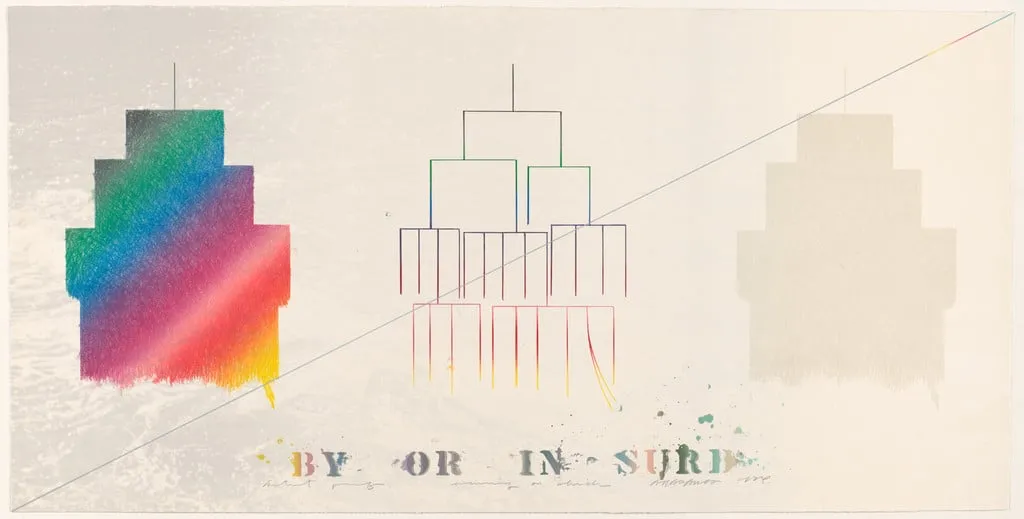
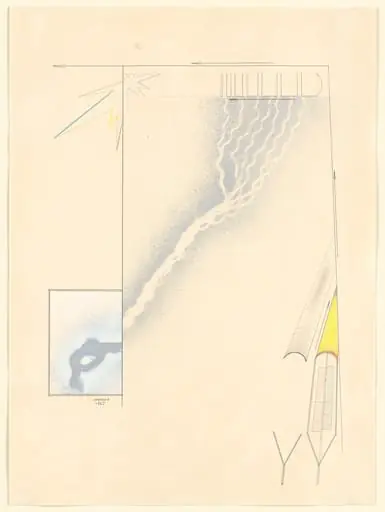
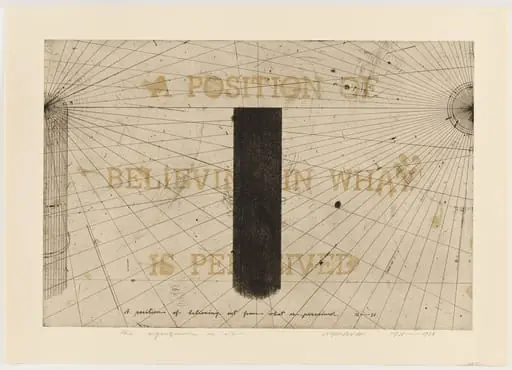
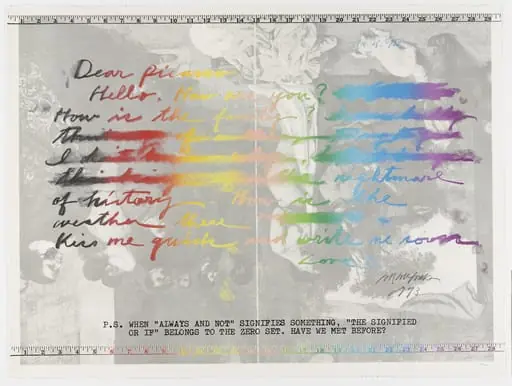
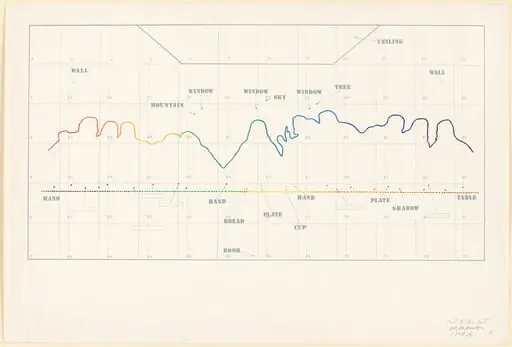
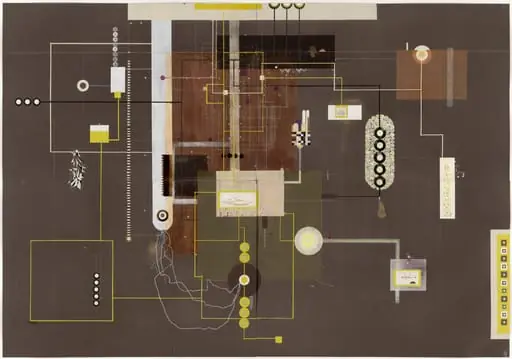
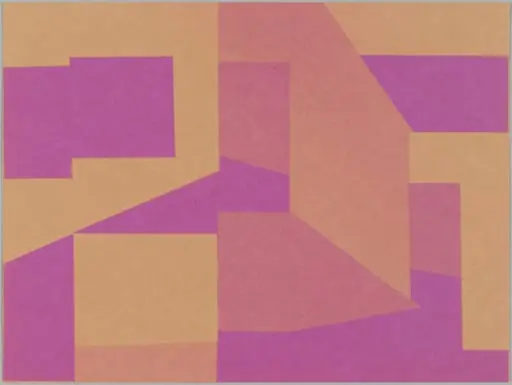
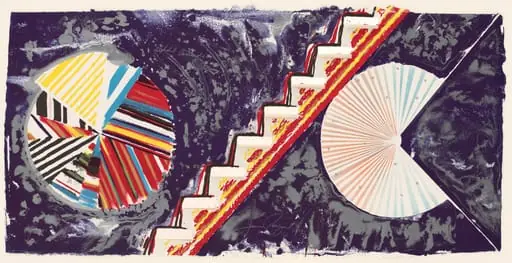
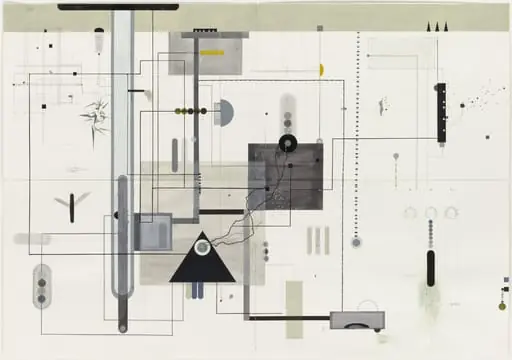
Untitled is an ink print by Shusaku Arakawa. It dates from 1974 and is held in the collection of the Museum of Modern Art. This 1974 print by Shūsaku Arakawa combines lithography, screenprinting, and embossing to create a layered visual field.
About this work
Overview
This 1974 print by Shūsaku Arakawa combines lithography, screenprinting, and embossing to create a layered visual field. It belongs to a series of works that interrogate how perception and language shape understanding. The piece is held in The Museum of Modern Art’s collection and exemplifies Arakawa’s move beyond traditional art forms toward systems that challenge cognitive habits.
Subject & Meaning
The work resists clear interpretation, instead prompting viewers to question how visual and linguistic cues construct reality.
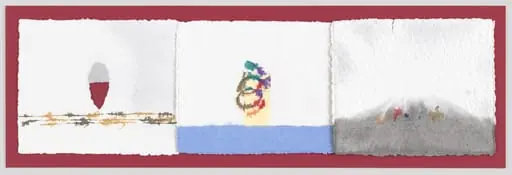
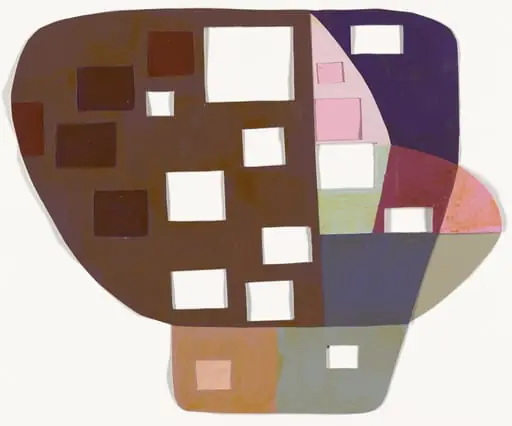
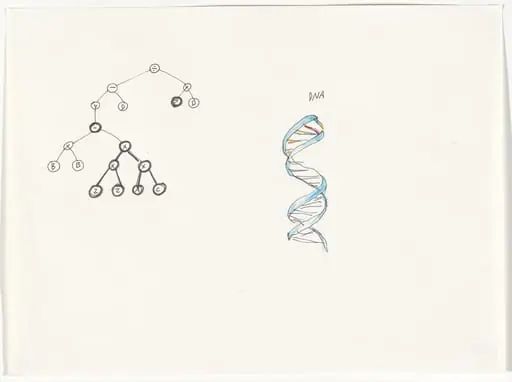
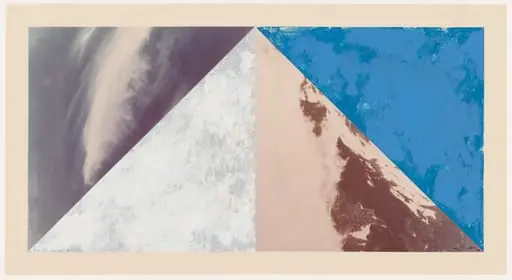
Three architectural forms dominate the composition, each treated differently: one is a gradient of saturated hues, another a schematic grid, and the third a muted monochrome. Beneath them, the phrase 'BY OR IN SURD' appears in irregular script, evoking ambiguity in meaning. The work resists clear interpretation, instead prompting viewers to question how visual and linguistic cues construct reality.
Technique & Style
Arakawa employed multiple printmaking methods to vary surface and texture. The colorful structure uses layered screenprinting for fluid transitions, while the central form relies on precise lithographic lines to suggest architectural plans. Embossing adds subtle physical dimensionality, making the image tactile. The hand-drawn text contrasts with the geometric precision, introducing human irregularity into a structured field.
History & Provenance
Created in 1974, this work emerged during Arakawa’s intensive period of experimentation with print as a conceptual tool. It was produced before his full collaboration with Madeline Gins on architectural projects but aligns with his early investigations into perception. The print entered The Museum of Modern Art’s collection as part of its broader acquisition of postwar conceptual prints.
Context
In the 1970s, Arakawa was part of a generation of artists rejecting passive viewing in favor of active cognitive engagement. His work intersected with linguistic philosophy and phenomenology, responding to thinkers like Merleau-Ponty. This print reflects a broader shift in art toward systems that make viewers aware of their own perceptual processes rather than offering aesthetic pleasure.
Legacy
Arakawa’s integration of printmaking with philosophical inquiry influenced later conceptual and architectural practices. His insistence on art as a tool for rethinking perception paved the way for interdisciplinary projects that merge visual form with cognitive science. This print remains a key example of how print media can be used to destabilize, rather than illustrate, meaning.
Artist & collection
Artist
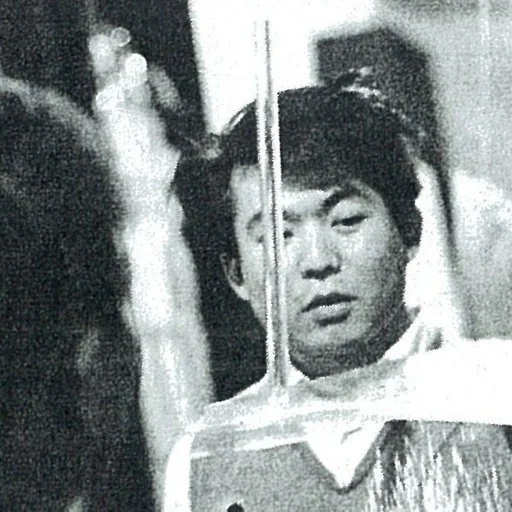
Shūsaku Arakawa (荒川 修作, Arakawa Shūsaku; July 6, 1936 – May 19, 2010) was a Japanese conceptual artist and architect.