Artwork
Untitled
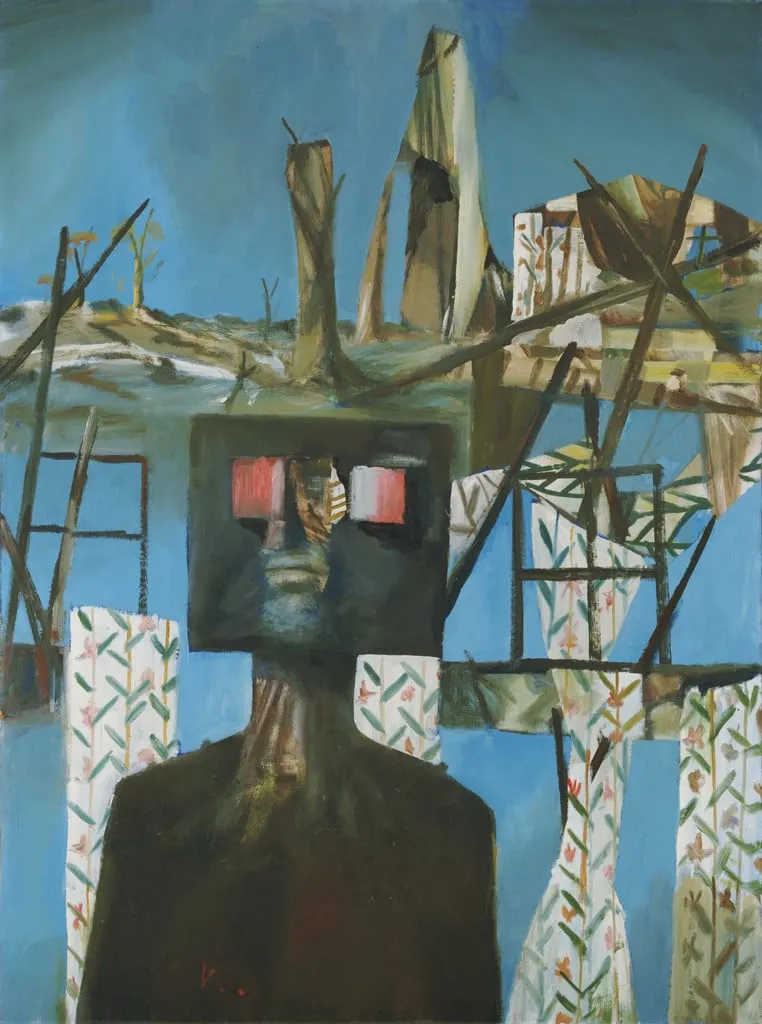
Untitled is an unspecified painting by Sidney Nolan. It dates from 1955 and is held in the collection of the Museum of Modern Art.
About this work
Overview
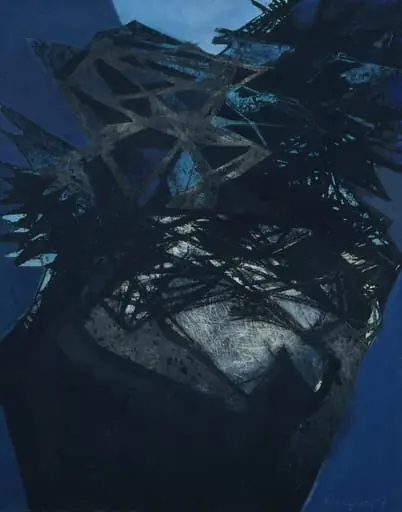
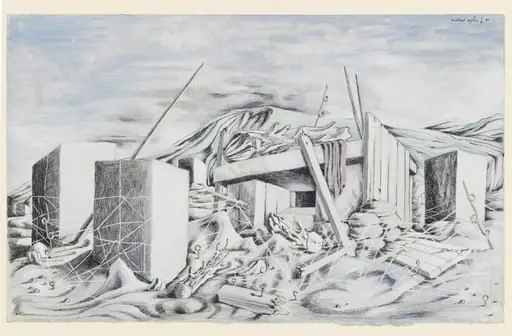
Behind the figure, a chaotic arrangement of broken masts, tangled sticks and striped fabric drifts against a deep blue sky, punctuated by brief flashes of red.
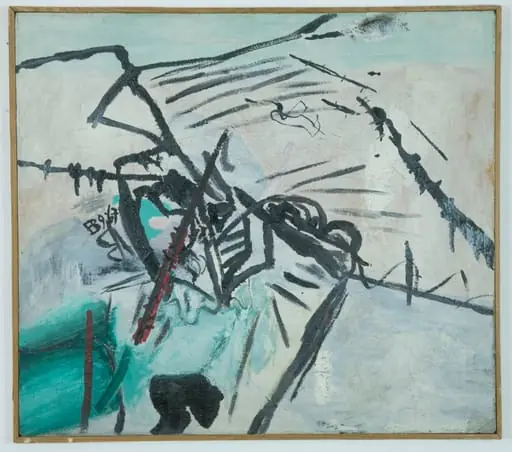
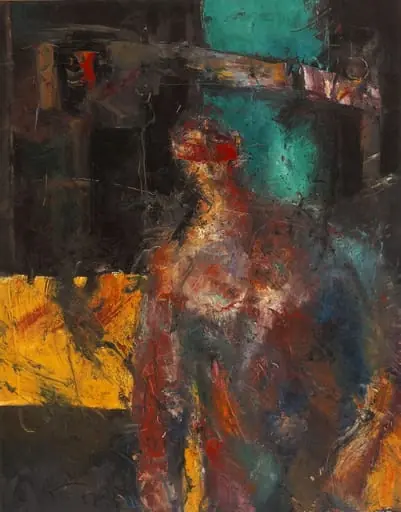
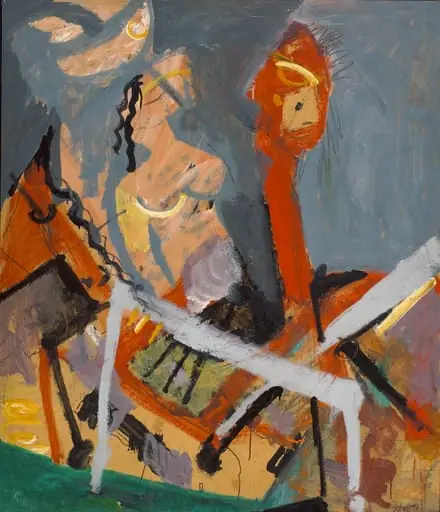
Created in 1955, this untitled work by Australian painter Sidney Nolan employs enamel on board to produce a compact, striking image. A solitary, darkened figure dominates the composition, its head rendered as a flat, mask‑like surface that obscures facial features. Behind the figure, a chaotic arrangement of broken masts, tangled sticks and striped fabric drifts against a deep blue sky, punctuated by brief flashes of red.
Subject & Meaning
The central figure, faceless and enclosed within a screen‑like head, suggests anonymity or the erasure of identity, a recurring theme in Nolan’s investigations of Australian myth. The surrounding wreckage—splintered masts and disordered timber—evokes the remnants of a ship or a collapsed structure, hinting at loss, disruption, or the aftermath of historical conflict.
Technique & Style
Nolan’s choice of enamel on board allows for vivid, flat areas of colour and a glossy surface that heightens the painting’s graphic quality. The bold palette—deep blues, burnt umbers, and stark reds—combined with simplified, almost mechanical forms reflects his modernist approach, where narrative is conveyed through stylized, symbolic imagery rather than detailed representation.
History & Provenance
The piece belongs to Nolan’s mid‑career period, when he was expanding beyond his well‑known Ned Kelly series to explore broader historical narratives. Though untitled, the work has been exhibited in several Australian public collections, illustrating the artist’s continued relevance in discussions of national identity and visual storytelling.
Artist & collection
Artist
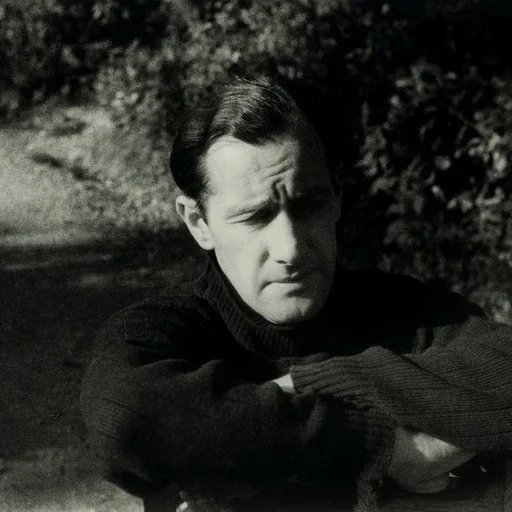
Sir Sidney Robert Nolan (22 April 1917 – 28 November 1992) was one of the leading Australian artists of the 20th century.