Artwork
Untitled
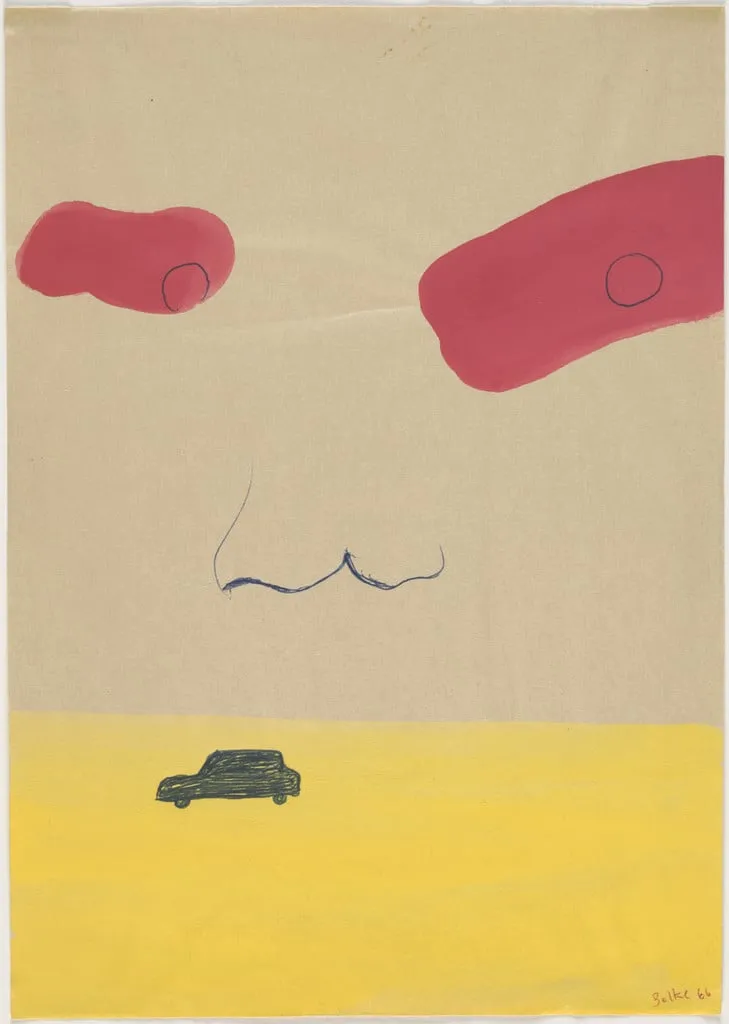
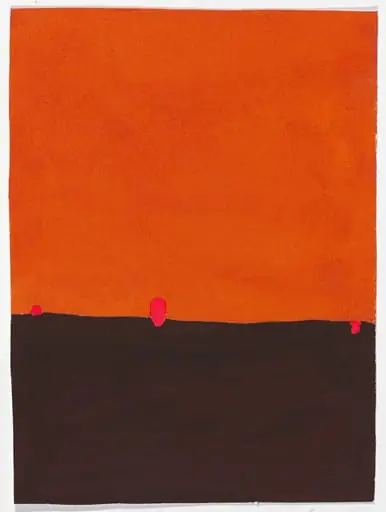
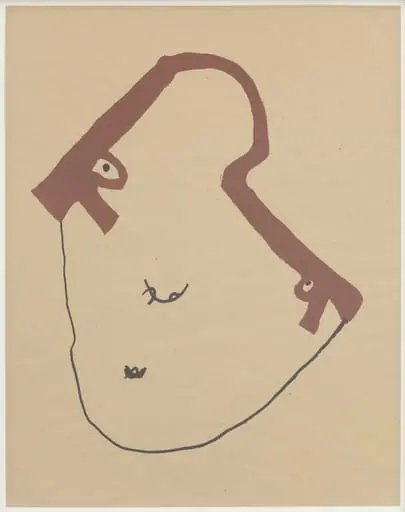
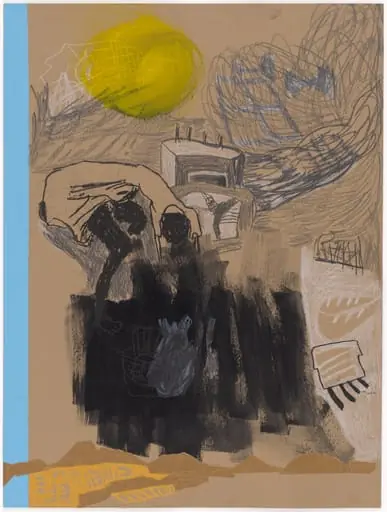
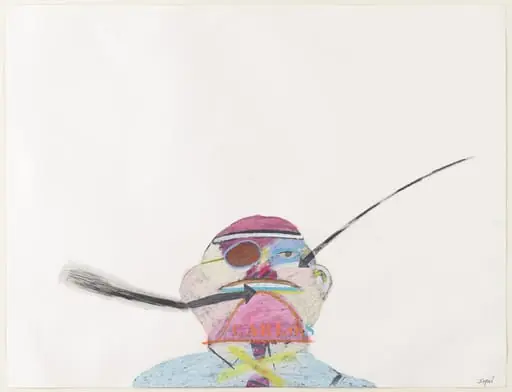
Untitled is a gouache drawing by Sigmar Polke. It dates from 1966 and is held in the collection of the Museum of Modern Art.
About this work
Overview
Created in 1966, this drawing by Sigmar Polke combines ballpoint pen and gouache on paper, reflecting his early interest in non-traditional materials.
Created in 1966, this drawing by Sigmar Polke combines ballpoint pen and gouache on paper, reflecting his early interest in non-traditional materials. Its modest scale and casual execution contrast with the deliberate layering of color and form. The work belongs to a period when Polke was challenging conventional artistic norms, embracing improvisation and everyday media to question the boundaries of painting and drawing.
Subject & Meaning
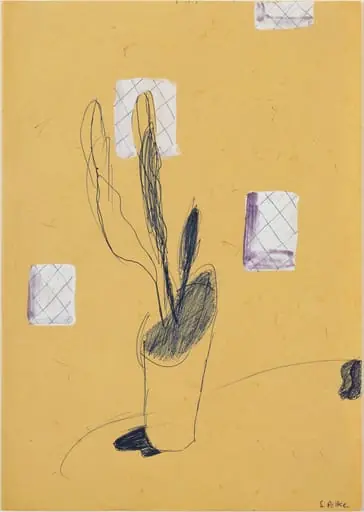
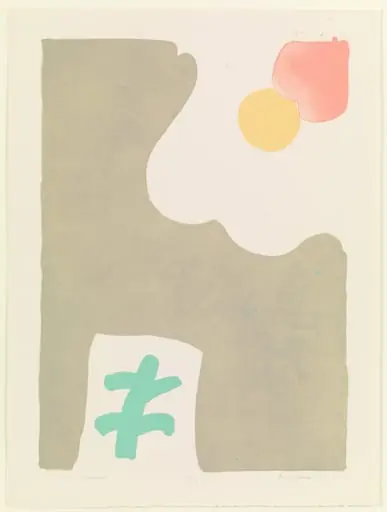
The composition features two red, irregular shapes with internal circles near the top, flanking a centrally placed line drawing of a car. Above the vehicle, a loose, wavy mark suggests a signature or abstract gesture. The imagery resists clear narrative, instead evoking a sense of visual ambiguity. The car, a symbol of modernity, is rendered without detail, inviting interpretation rather than representation.
Technique & Style
Polke applied gouache in flat, unmodulated areas—beige, yellow, and darker yellow—dividing the background into horizontal bands. Ballpoint pen outlines define the forms with minimal precision, emphasizing spontaneity over refinement. The contrast between the controlled color fields and the freehand drawing creates tension between order and chaos, a recurring theme in his early work.
History & Provenance
This piece emerged during Polke’s formative years in West Germany, shortly after his involvement with the Capitalist Realism movement. It predates his later photographic and abstract investigations but anticipates his interest in deconstructing visual language. The work remained in private collections until entering institutional holdings, where it is now studied as an early example of his experimental approach.
Context
In mid-1960s Germany, artists were redefining art in response to postwar consumer culture and media saturation. Polke’s use of mundane materials like ballpoint pen and household paint aligned with a broader rejection of high-art traditions. This drawing reflects a climate in which artistic authority was being questioned, and everyday imagery was repurposed to provoke new ways of seeing.
Legacy
Though modest in scale, this drawing exemplifies Polke’s enduring commitment to material experimentation and visual ambiguity. It influenced later generations of artists who embraced process over polish and embraced the irregularities of everyday mark-making. Its presence in major collections underscores its role as a quiet but significant step in the evolution of postwar German art.
Artist & collection
Artist
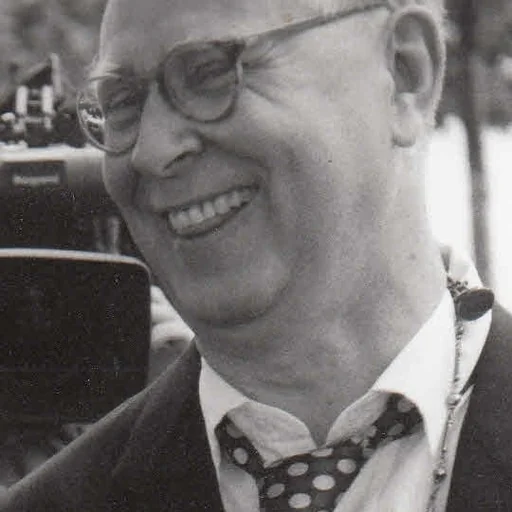
Sigmar Polke (13 February 1941 – 10 June 2010) was a German painter and photographer.