Artwork
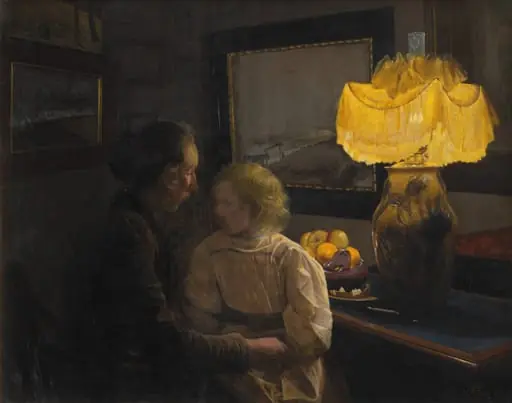
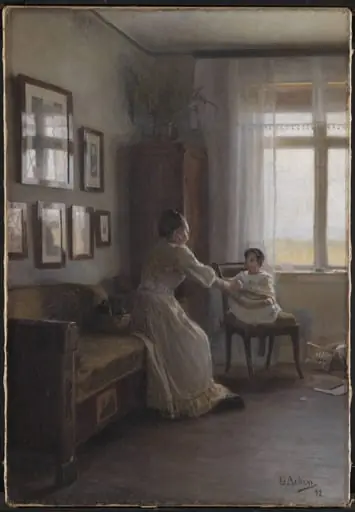
Afteninteriør. Moder og barn
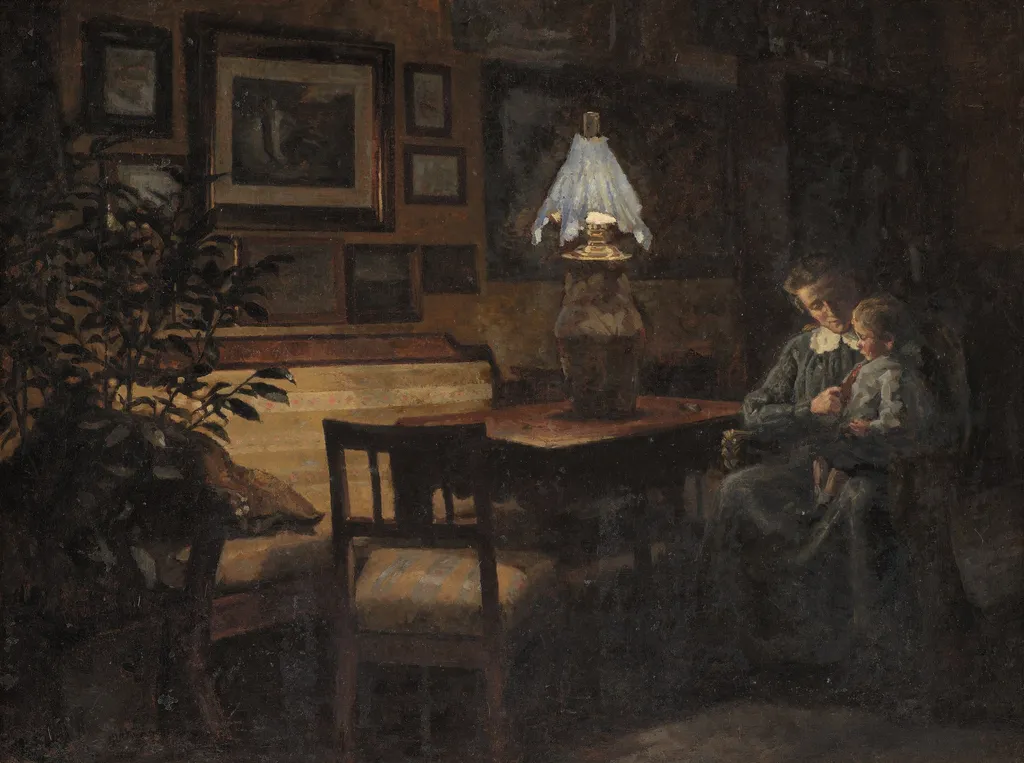
Afteninteriør. Moder og barn is an oil painting by the Post-Impressionist artist Sigurd Wandel. It dates from 1900 and is held in the collection of the Statens Museum for Kunst.
About this work
Overview
Wandel, who later led the Royal Danish Academy of Fine Arts, employed a restrained palette and careful lighting to evoke stillness.
Painted in 1900 by Danish artist Sigurd Wandel, *Afteninteriør. Moder og barn* is an oil-on-canvas interior scene that captures a quiet moment between mother and child. Wandel, who later led the Royal Danish Academy of Fine Arts, employed a restrained palette and careful lighting to evoke stillness. The work resides in the collection of Statens Museum for Kunst, reflecting its significance in early 20th-century Danish art.
Subject & Meaning
The painting portrays a mother seated with her child on her lap, both illuminated by the soft glow of a table lamp. Their stillness and proximity suggest an intimate, unspoken bond. The absence of narrative action shifts focus to the emotional resonance of the moment—domestic tranquility rendered without sentimentality. The setting, sparse yet lived-in, underscores the dignity of ordinary domestic life.
Technique & Style
Wandel used chiaroscuro to model form through subtle shifts between shadow and light, enhancing the painting’s tactile presence. The lamp’s warm glow defines the central figures, while surrounding areas recede into muted tones. Brushwork is deliberate but unobtrusive, avoiding overt brushstroke expression. The composition, anchored by the verticality of the chair and plant, balances intimacy with spatial depth.
History & Provenance
Created in 1900, the painting entered the collection of Statens Museum for Kunst shortly after its completion. Wandel’s position within Denmark’s artistic establishment ensured its preservation and public visibility. No significant changes in ownership are recorded; its continuous institutional custody reflects its recognized place in the national canon of domestic genre painting.
Context
In early 1900s Denmark, interior scenes of family life were common, often tied to ideals of modesty and moral quietude. Wandel’s work aligns with this tradition but distinguishes itself through its atmospheric restraint and avoidance of narrative embellishment. Unlike some contemporaries who emphasized social commentary, he focused on sensory immediacy—light, texture, and silence—as the vehicle of meaning.
Legacy
Though not widely exhibited outside Denmark, the painting remains a touchstone for its understated emotional precision. It exemplifies how Danish artists of the period translated post-impressionist concerns—light, mood, structure—into intimate, non-dramatic narratives. Its enduring presence in the national collection affirms its role as a quiet but enduring record of domestic life in early modern Denmark.
Artist & collection
Artist
Sigurd Wandel (22 February 1875 – 3 June 1947) was a Danish painter who became director of the Royal Danish Academy of Fine Arts.