Artwork
Taiteilija Fahle Basilier
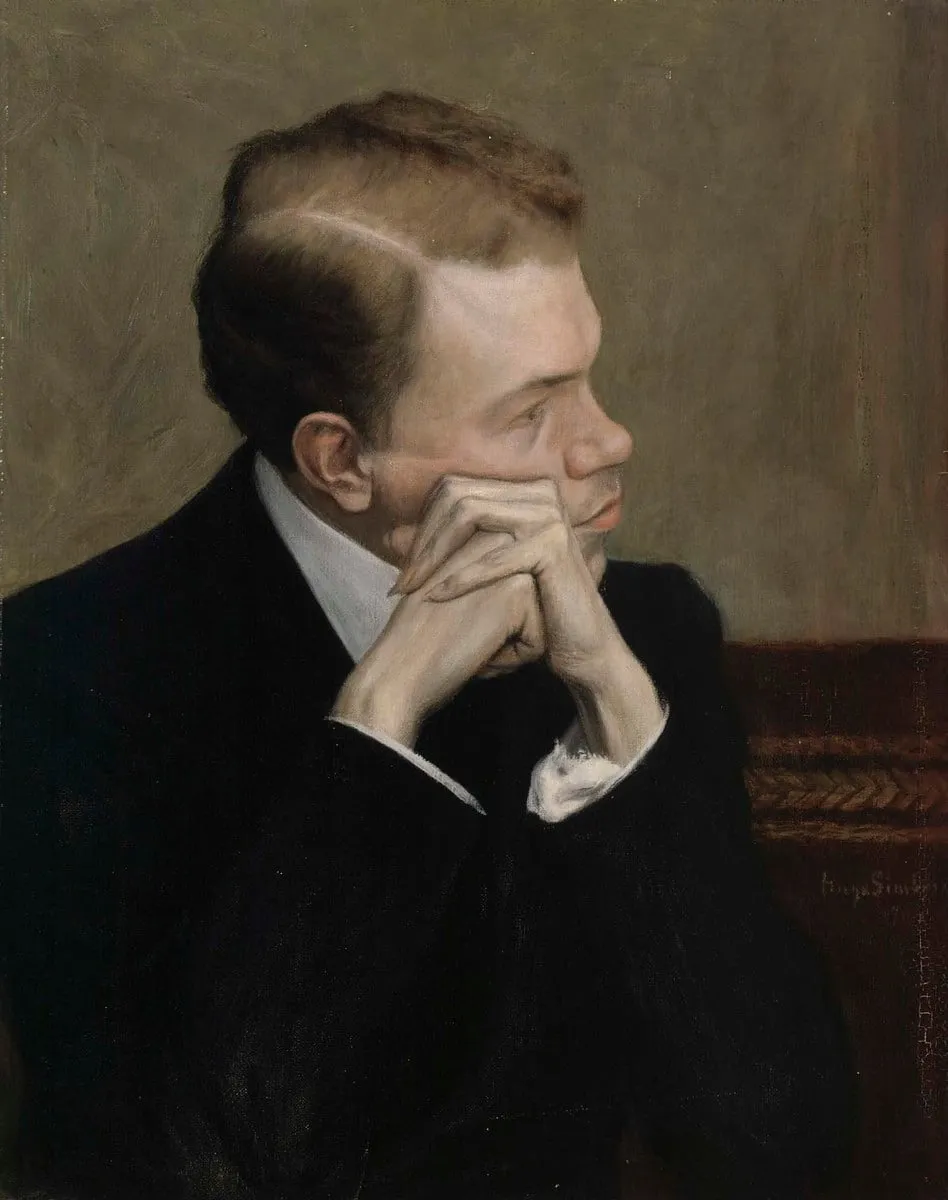
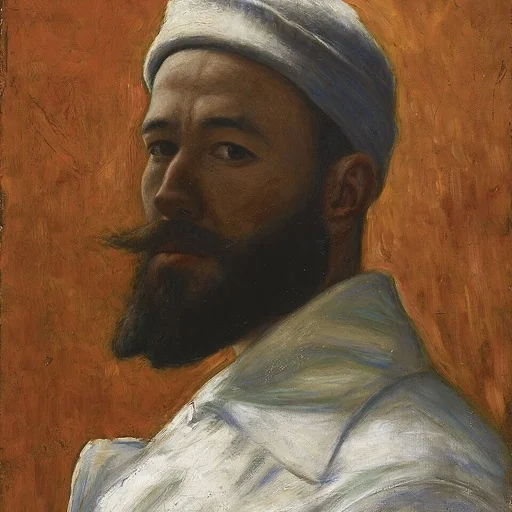
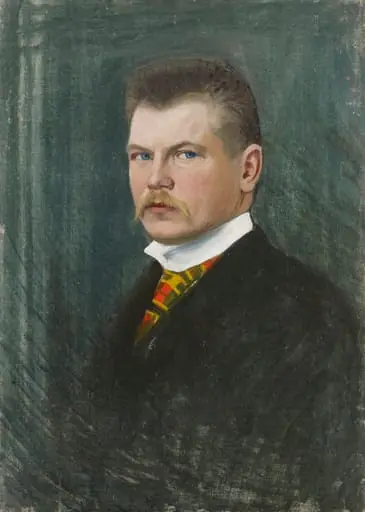
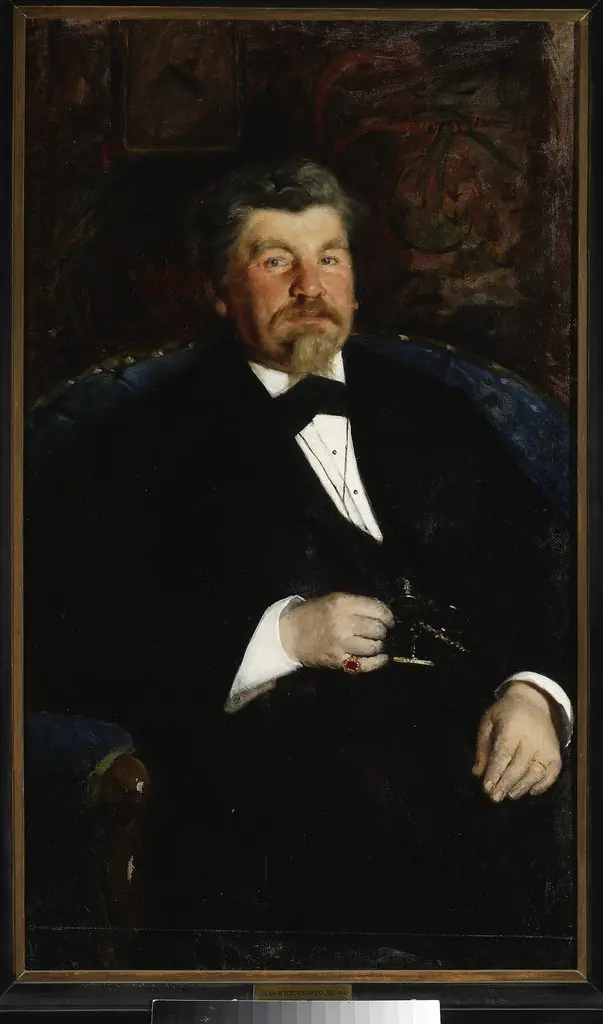
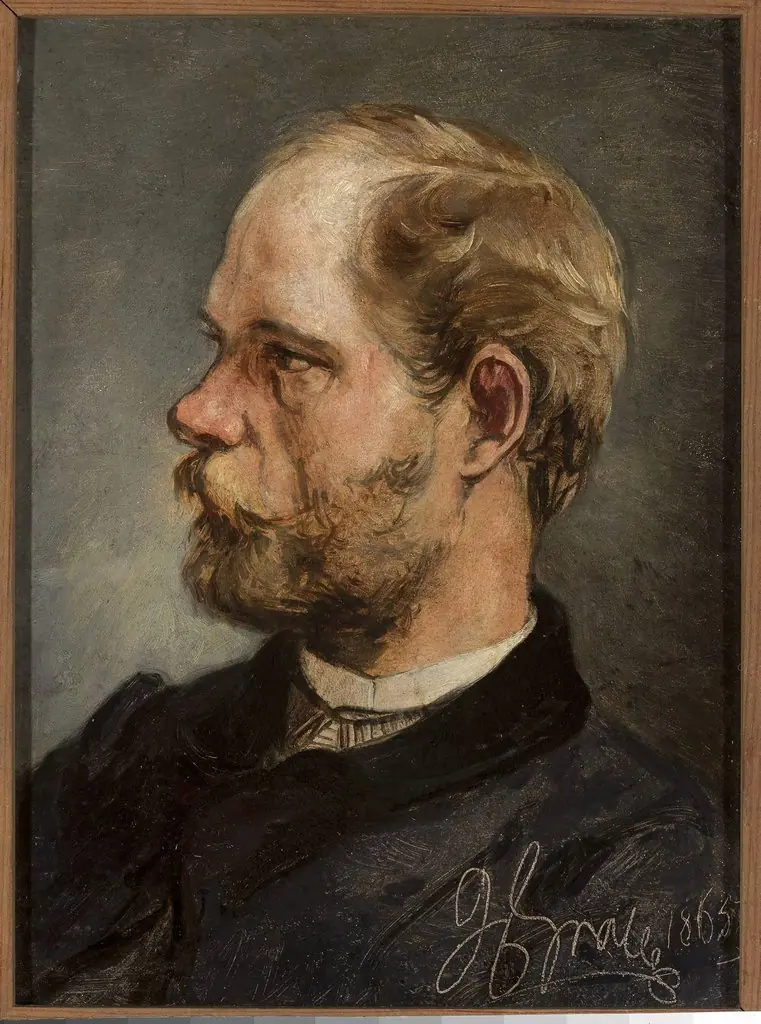
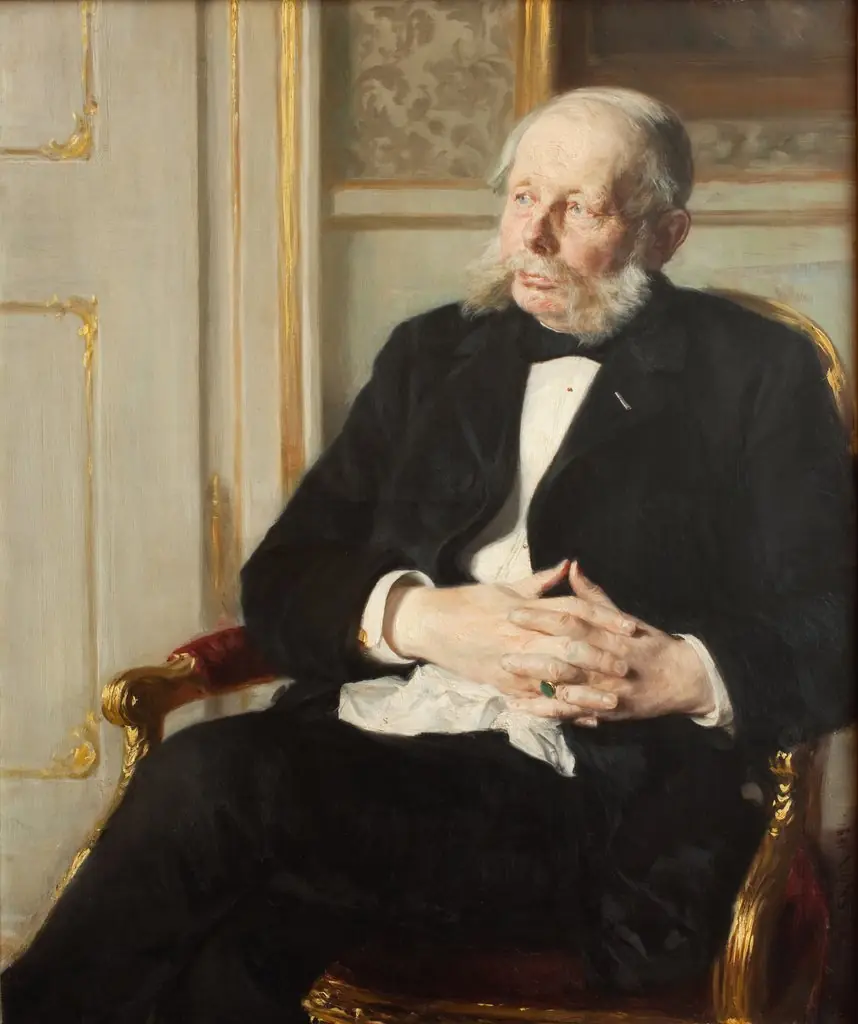
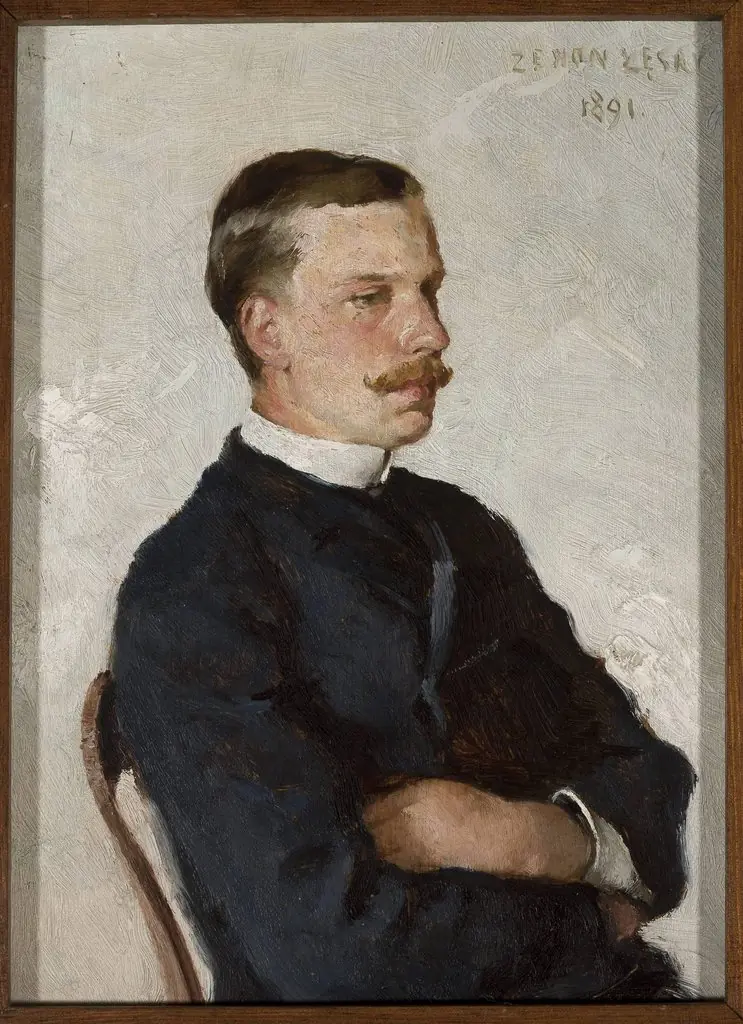
Taiteilija Fahle Basilier is an unspecified painting by Hugo Simberg. It is held in the collection of the Finnish National Gallery. This portrait depicts a man in formal attire, seated with hands clasped beneath his chin.
About this work
Overview
The absence of overt symbolism or environment suggests an emphasis on inner presence rather than social status.
This portrait depicts a man in formal attire, seated with hands clasped beneath his chin. The composition is tightly focused on his face and upper torso, set against a deep, unbroken background. Subtle lighting isolates his features, drawing attention to his demeanor while minimizing contextual detail. The absence of overt symbolism or environment suggests an emphasis on inner presence rather than social status.
Subject & Meaning
The figure’s downward gaze and restrained posture convey introspection rather than engagement. His attire—a dark suit with a white collar—hints at professional or clerical identity, though no identifiers are present. The quiet intensity of his expression invites contemplation, suggesting a moment of private reflection rather than public performance. The work avoids narrative, favoring psychological stillness.
Technique & Style
The painting employs chiaroscuro to model the face with soft gradations of light and shadow, enhancing volume without harsh contrast. The background remains nearly featureless, with only a faint suggestion of carved texture on the right, adding minimal depth. Brushwork is subdued, favoring smooth transitions over visible strokes, reinforcing the portrait’s quiet, meditative tone.
History & Provenance
The artist, Fahle Basilier, is not widely documented in major art historical records. The work’s origin, date, and early ownership remain unverified. It exists primarily as a single known image, with no public exhibition history or archival references available. Its current location and acquisition path are not publicly recorded.
Context
Created in a period when portrait painting often emphasized status or identity, this work diverges by prioritizing psychological nuance over external markers. Its minimalist approach aligns with quieter, introspective trends in early 20th-century portraiture, though it lacks clear ties to known movements or schools. The absence of contextual clues makes precise cultural positioning difficult.
Legacy
The portrait remains obscure, with no known influence on other artists or inclusion in scholarly studies. It survives as a solitary example of its maker’s output, offering a quiet, personal vision unconnected to broader artistic currents. Its endurance lies in its understated emotional resonance rather than historical significance.
Artist & collection