Artwork
Donor and His Wife
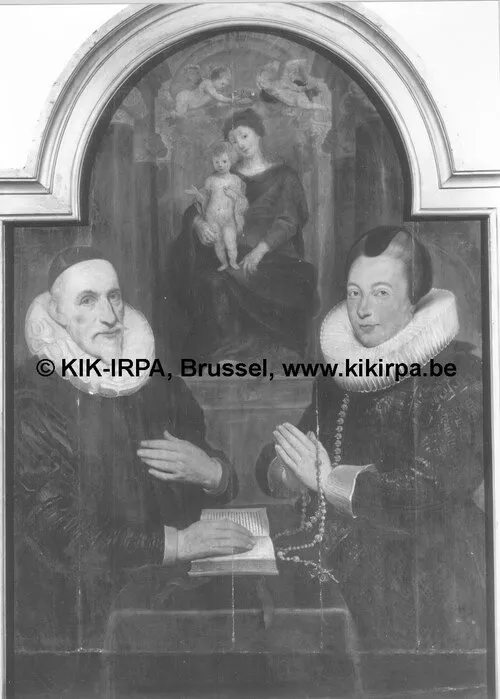
Donor and His Wife is an oil painting by the Dutch Golden Age artist Simon de Vos. It dates from 1649 and is held in the collection of the Royal Museum of Fine Arts Antwerp.
About this work
Overview
Created circa 1649, this oil painting presents a seated donor and his wife in a formal, devotional pose. Both figures stand side by side, hands clasped in prayer, the husband holding an open book while the wife clutches a string of beads. A smaller vignette of a woman with a child appears within an arched frame behind them, adding a narrative layer to the composition.
Subject & Meaning
The central couple is likely a patron and his spouse, depicted as pious benefactors. Their prayerful gesture and the inclusion of a religious miniature suggest a request for divine favor or commemoration. The bead rosary and the book reinforce themes of faith and learning, while the background scene of a mother with child may symbolize familial continuity or the Christian ideal of charity.
Technique & Style
The painted frame and miniature are integrated with delicate brushwork that suggests a later, more polished phase in the artist’s career.
Executed in the Flemish Baroque idiom, the work combines a restrained palette with careful modeling of flesh and fabric. The figures are rendered with a soft chiaroscuro that recalls Caravaggesque influences, yet the composition’s grandeur and the dignified posture reflect the later impact of Rubens and van Dyck on de Vos. The painted frame and miniature are integrated with delicate brushwork that suggests a later, more polished phase in the artist’s career.
History & Provenance
Attributed to Simon de Vos, a Flemish painter active in the mid‑17th century, the painting belongs to his mature period when he turned from genre scenes to larger, more formal works. Its provenance traces back to private collections in the Low Countries before entering a museum inventory in the early 20th century, where it has remained, displaying typical signs of age such as edge wear and slight craquelure.
Context
The portrait emerges from the Dutch Golden Age, a time when affluent patrons commissioned works that combined personal likeness with devotional symbolism. In Flanders, the Baroque style emphasized opulent attire and dynamic composition, aligning with contemporary tastes for both status display and religious expression. De Vos’s shift toward such portraiture mirrors broader market demands among the mercantile and aristocratic classes.
Artist & collection
Artist
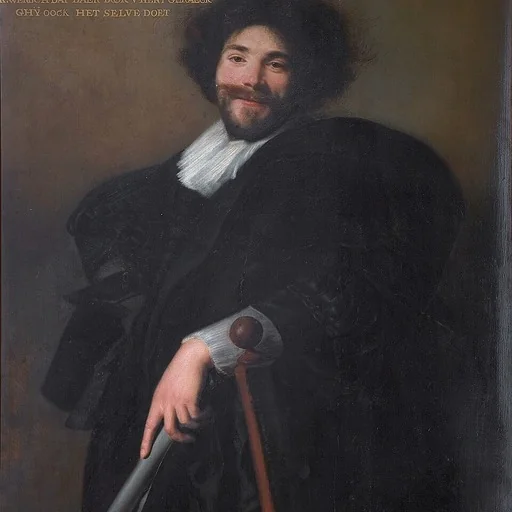
Simon de Vos (20 October 1603 – 15 October 1676) was a Flemish painter, draughtsman and art collector.

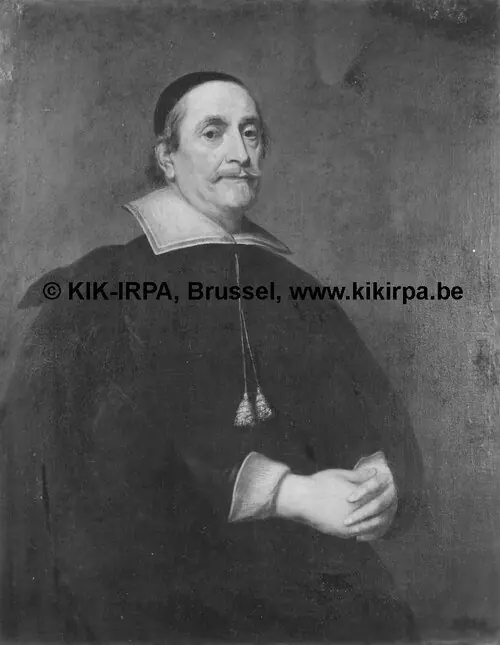 Hendrik van Halmale, Mayor of Antwerp
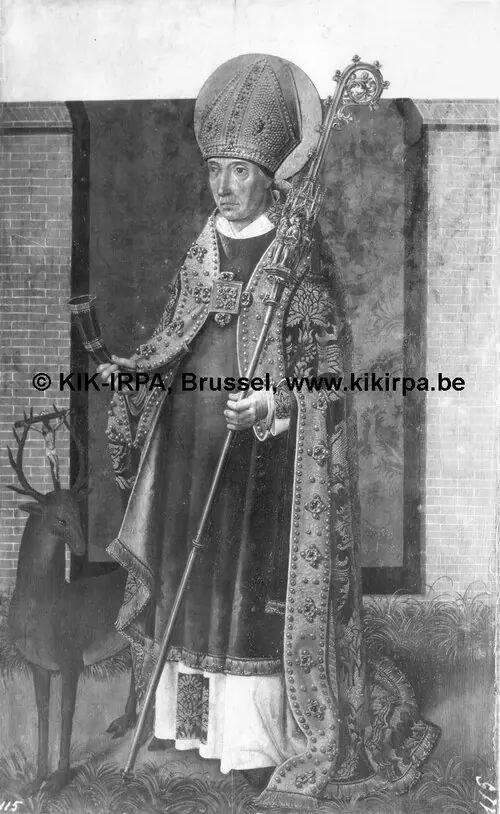 Saint Hubert
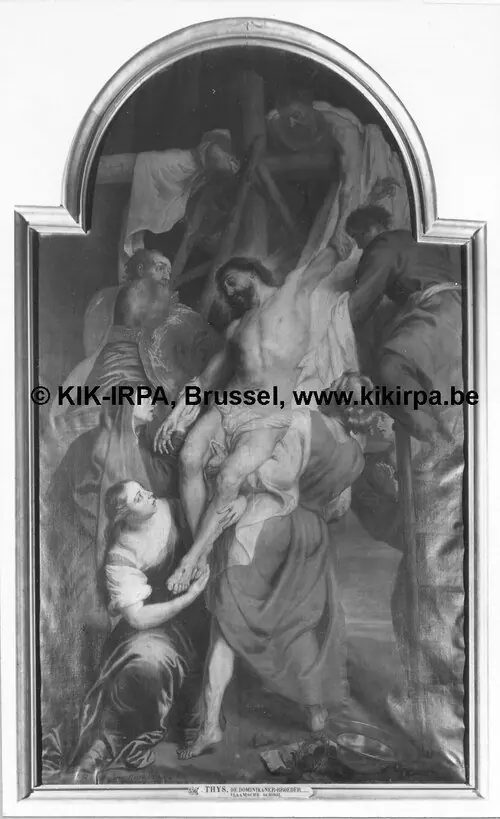 Descent from the Cross
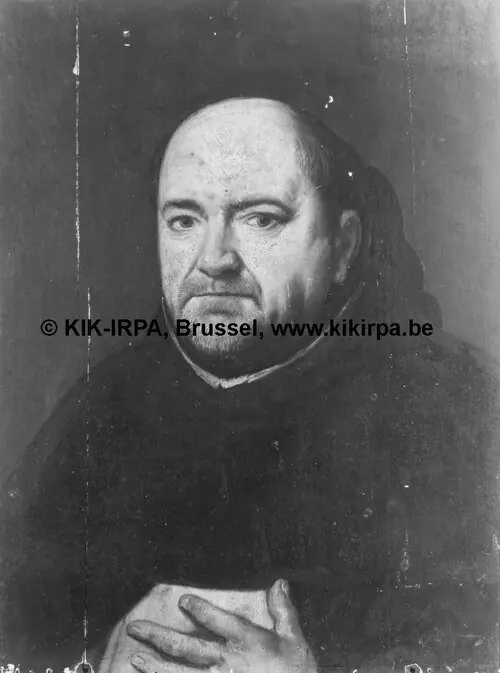 Portrait of a Dominican
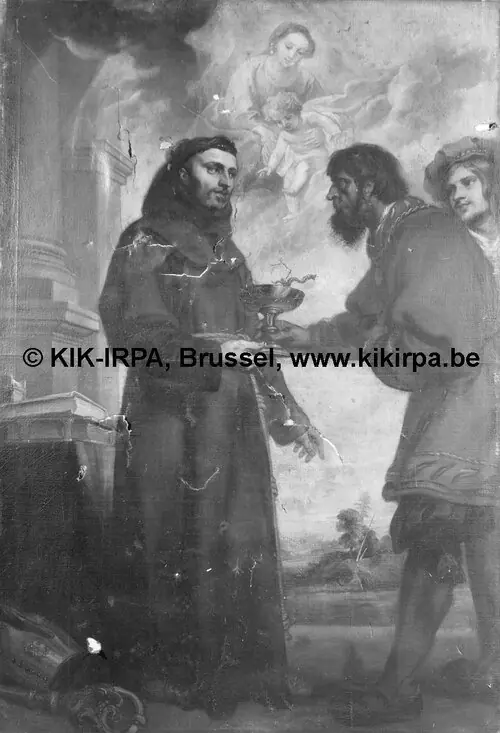 Saint James of the Marches and the Poisoned Cup
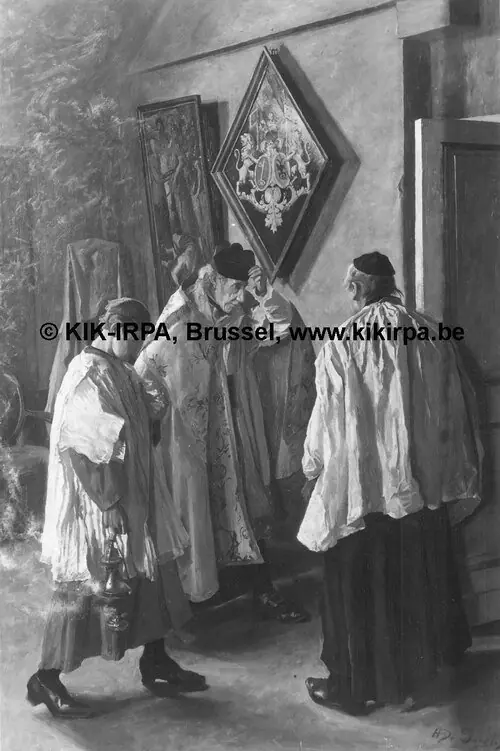 The Sacristy
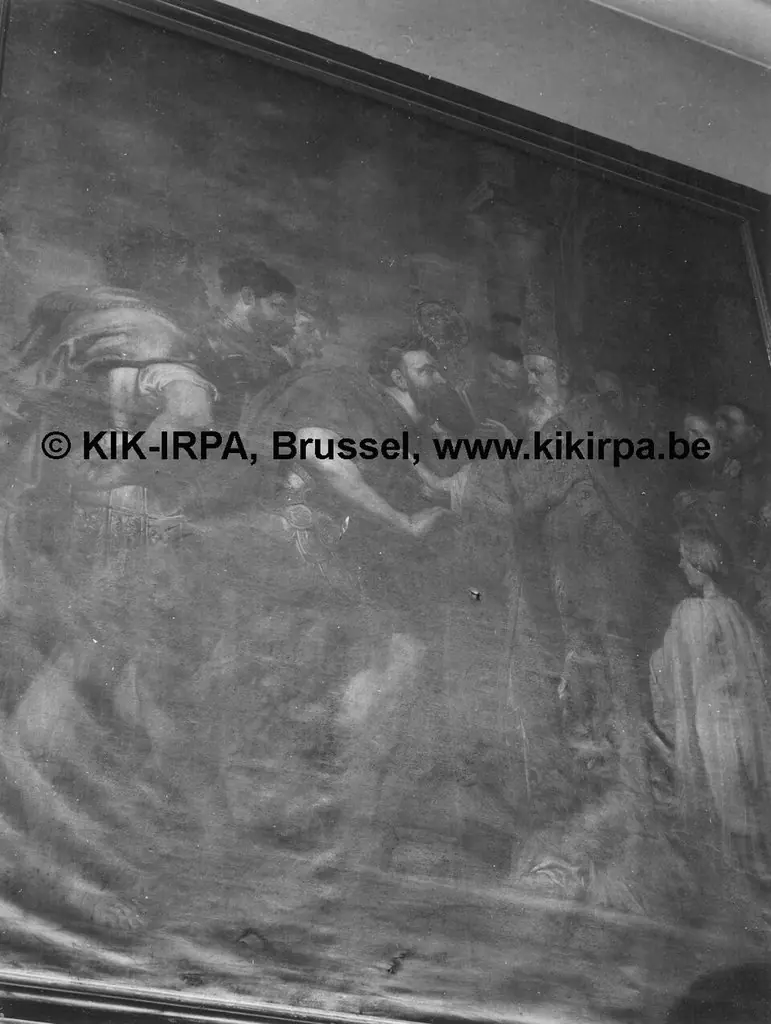 St Ambrose and Theodosius
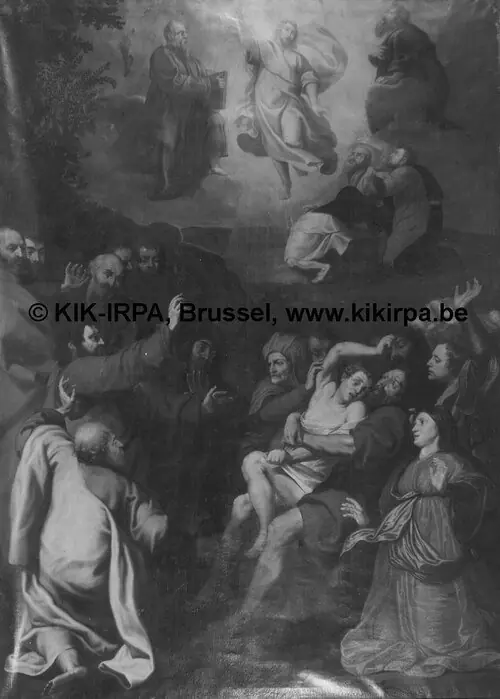 The transfiguration
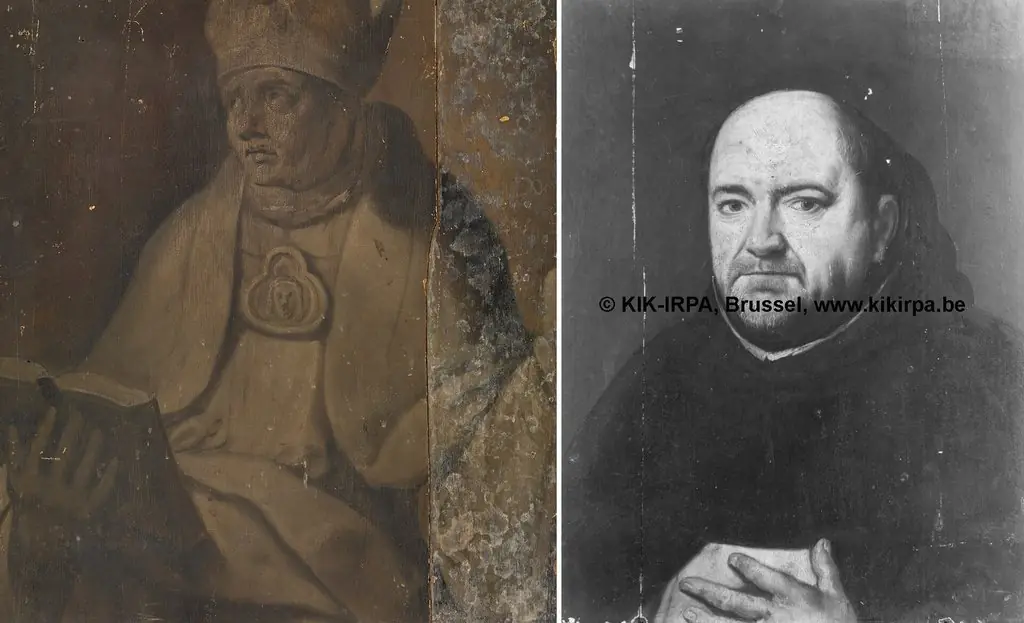 Portret van een dominicaan
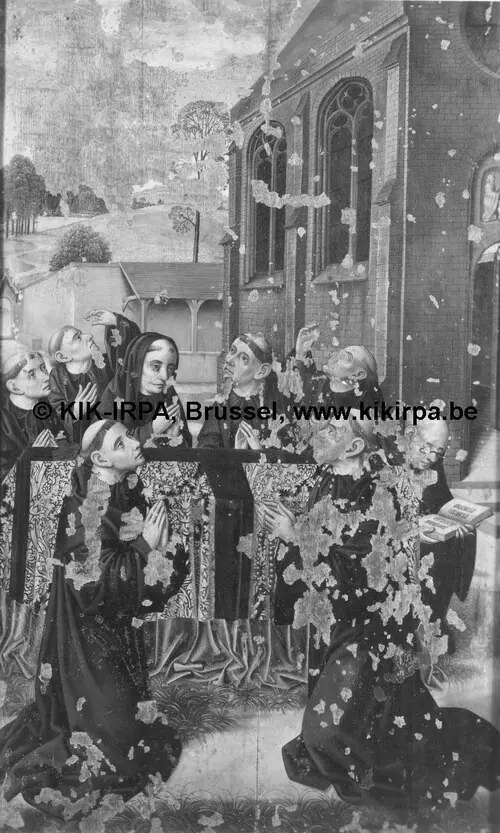 Scene from the Life of the Holy Hubertus
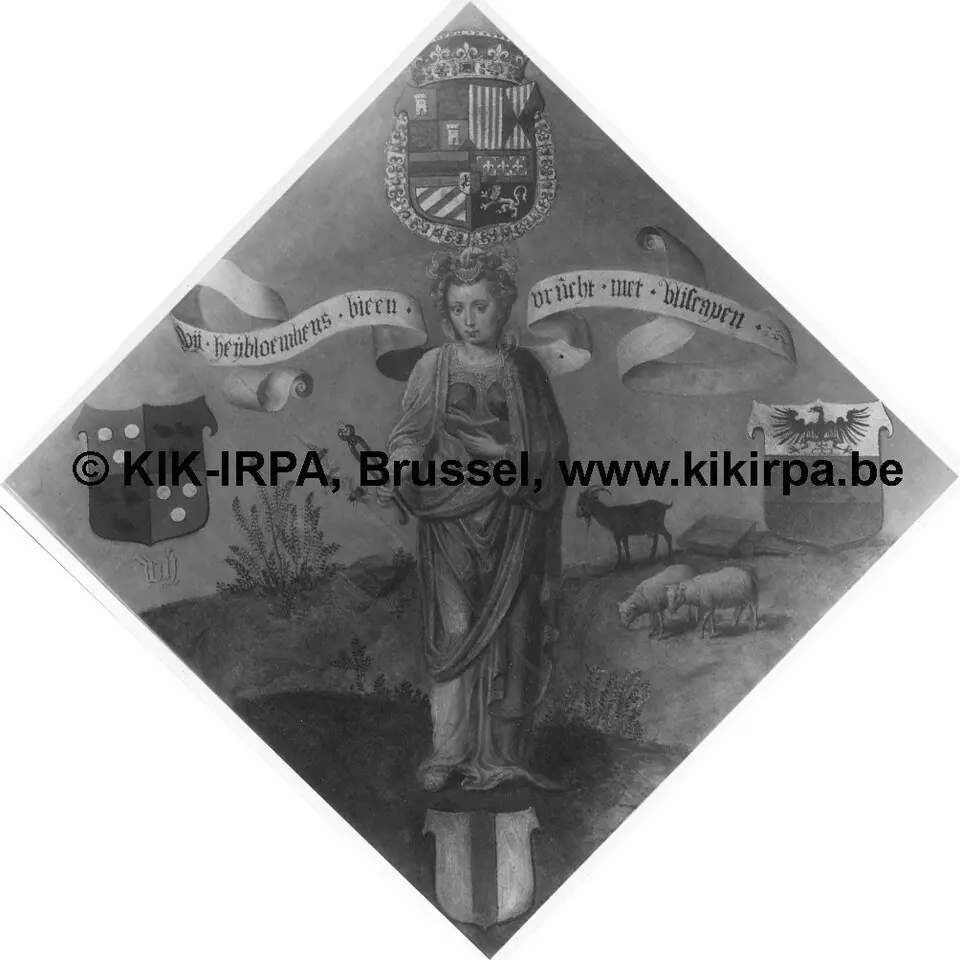 Blazon of the Turnhout Chamber of Rhetoric "Het Heibloemke"
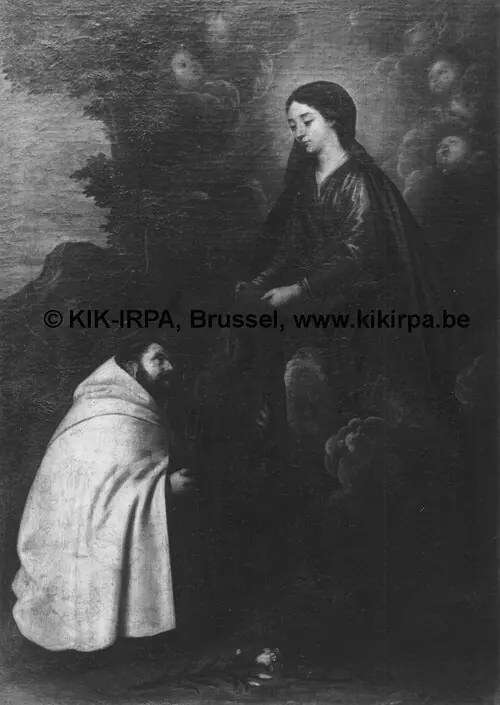 Mary with Scapulier