Artwork
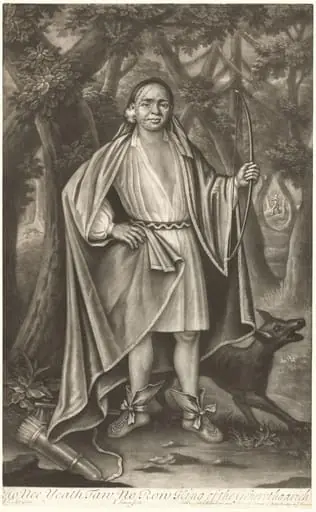
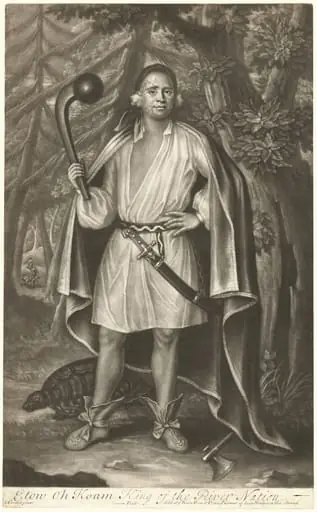
Etow oh Koam, King of the River Nation
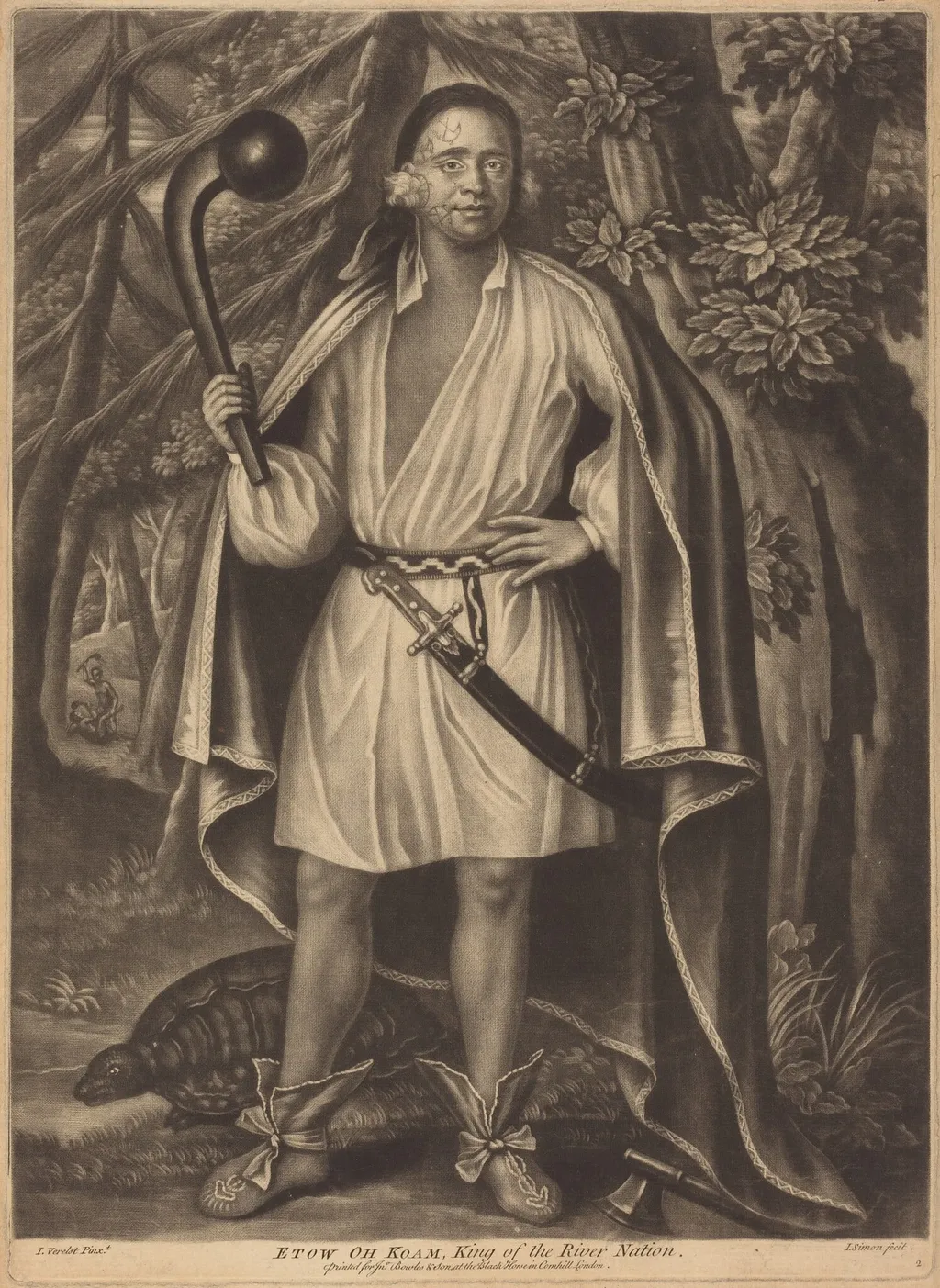
Etow oh Koam, King of the River Nation is an ink print by the Romanticist artist Pierre Simon II. It dates from 1780 and is held in the collection of the National Gallery of Art.
About this work
Overview
Created in 1780 by Pierre Simon II, this mezzotint depicts a figure identified as Etow oh Koam, referred to as 'King of the River Nation.
Created in 1780 by Pierre Simon II, this mezzotint depicts a figure identified as Etow oh Koam, referred to as 'King of the River Nation.' Unlike a painted portrait, the image is a printed reproduction, leveraging the tonal richness of the mezzotint technique to render light and shadow with subtle gradations. The composition centers on a solitary figure in a wooded setting, evoking a sense of quiet dignity amid natural elements.
Subject & Meaning
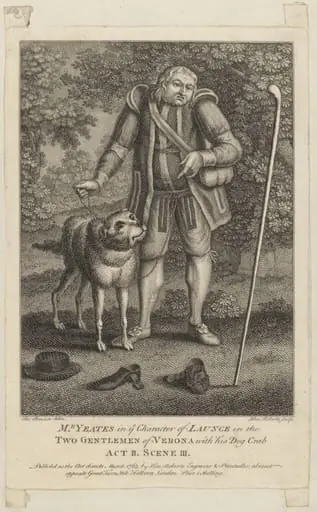
The figure, identified by title as a Native American leader, is portrayed with regal posture—hand on hip, staff in hand, sword at his belt. His attire and the presence of a dog suggest both authority and connection to the land. The designation 'King of the River Nation' reflects European attempts to interpret Indigenous leadership through familiar monarchical frameworks, though the actual political structure of his people likely differed significantly.
Technique & Style
Using mezzotint, Simon II achieved a range of deep blacks and soft mid-tones by roughening a copper plate with a rocker tool, then smoothing areas to hold less ink. This method allowed for atmospheric depth and velvety shadows, enhancing the dramatic mood. The blurred edges and muted textures of foliage and clothing contribute to a romanticized, almost dreamlike quality, typical of late 18th-century print aesthetics.
History & Provenance
The print was produced during a period of heightened European interest in Indigenous North American figures, often as part of diplomatic or ethnographic projects. Etow oh Koam, a Cherokee leader, visited England in 1762 with other delegations; Simon’s print likely derives from earlier portraits made during that visit. Its 1780 publication suggests continued fascination with Native leaders as symbols of exotic nobility.
Context
In the late 1700s, European artists frequently depicted Indigenous leaders through idealized, romanticized lenses, blending observation with myth. This print aligns with broader trends in visual culture that sought to frame non-European figures as noble savages—exotic yet dignified. Such imagery served both curiosity and colonial narratives, positioning Native leaders as relics of a vanishing world rather than active political agents.
Legacy
Though not widely known today, the print remains a document of cross-cultural representation in the colonial era. It reflects how European printmakers interpreted and mediated Indigenous identities, often stripping them of context to fit prevailing aesthetic and ideological norms. As such, it offers insight into the visual rhetoric of empire and the complexities of cultural portrayal in the 18th century.
Artist & collection