Artwork
Luistinrata
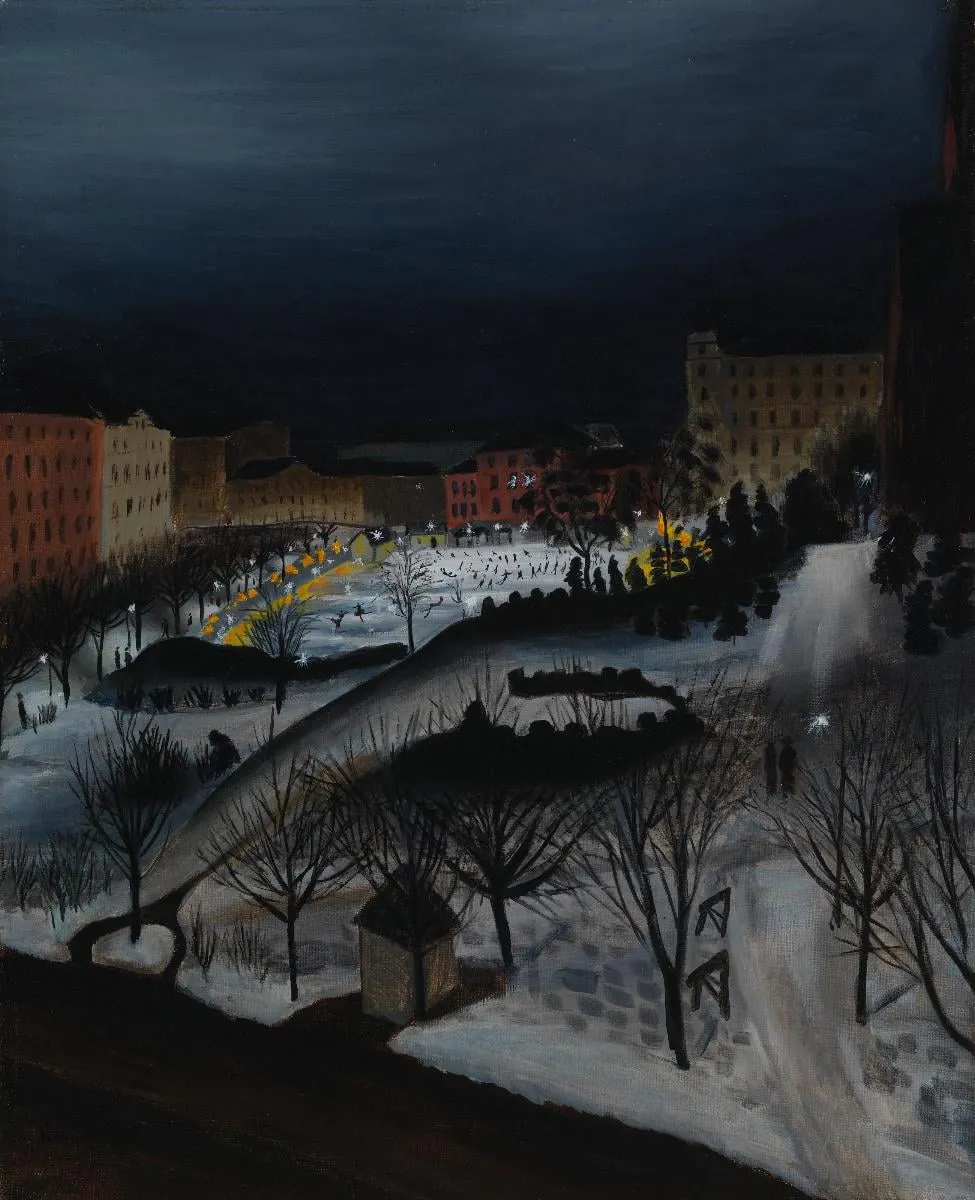
Luistinrata is an unspecified painting by Sulho Sipilä. It is held in the collection of the Finnish National Gallery. This image depicts a winter scene centered on a frozen pond, where figures skate and play a form of hockey.
About this work
Overview
The sky is dark, and artificial light from the structures illuminates the ice, creating a contrast between the cold night and the human activity below.
This image depicts a winter scene centered on a frozen pond, where figures skate and play a form of hockey. Surrounding the pond are bare trees, a winding path, and distant tall buildings with numerous windows. The sky is dark, and artificial light from the structures illuminates the ice, creating a contrast between the cold night and the human activity below. The work is held in the collection of the Museum of Ethnography.
Subject & Meaning
The scene captures everyday winter recreation in an urban or semi-urban setting, emphasizing communal activity amid seasonal hardship. Skating and hockey suggest social cohesion and adaptation to harsh climates. The presence of architecture implies a settled community, while the dark sky and artificial lighting hint at the intersection of nature and human infrastructure in daily life.
Technique & Style
The composition uses light sources from buildings to cast illumination across the ice, drawing attention to movement and form. Bare trees in the foreground frame the scene, while the distant structures recede into shadow. The style favors observation over idealization, with attention to spatial depth and the quiet atmosphere of a winter evening, rendered through tonal contrast rather than vivid color.
History & Provenance
The work is held by the Museum of Ethnography, suggesting its documentation of cultural practices rather than its status as fine art. Its origins are not specified, but its focus on ordinary winter life implies it may have been created as part of a regional or ethnographic record, possibly from northern Europe or a similarly cold-climate region.
Context
The scene reflects a common seasonal activity in regions with long winters, where frozen waterways became public spaces for recreation. The presence of tall, windowed buildings indicates a developed settlement, possibly 19th or early 20th century, when urbanization expanded into colder areas. Such imagery often served to record folk customs or local life before industrialization altered traditions.
Legacy
As part of an ethnographic collection, the image contributes to the documentation of how communities engaged with their environment seasonally. It preserves a visual record of informal, non-competitive winter sports and the social rhythms tied to climate. Its value lies in its unembellished portrayal of ordinary life, offering insight into historical patterns of public space use.
Artist & collection