Artwork
Lumbering in the Snow
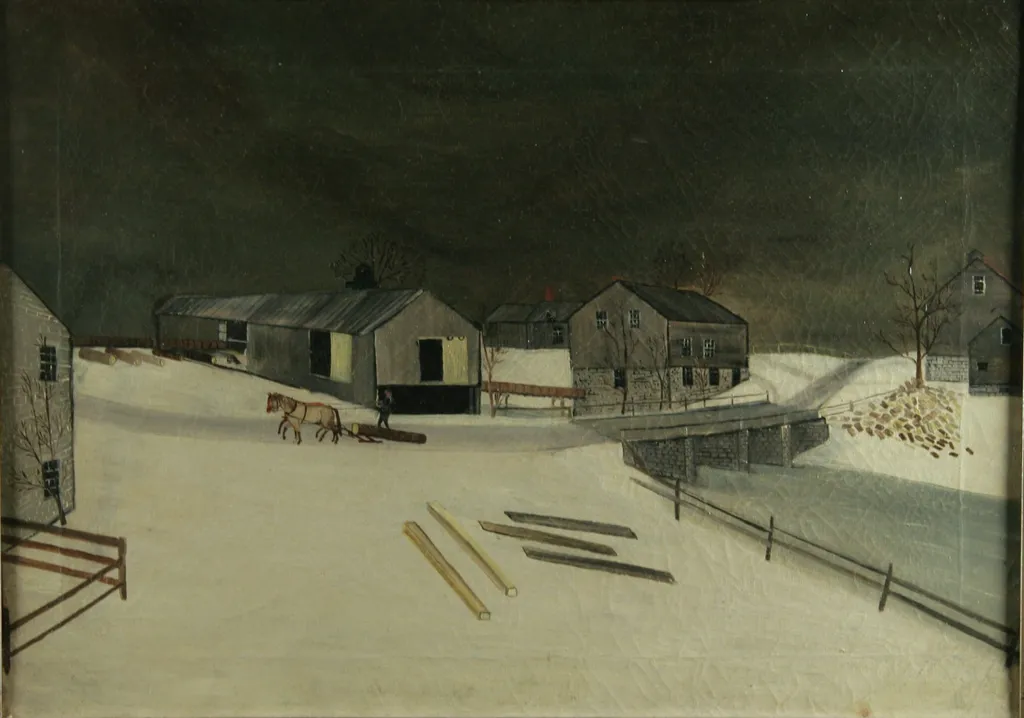
Lumbering in the Snow is an oil painting by the Barbizon school artist Unknown. It dates from 1845 and is held in the collection of the Detroit Institute of Arts.
About this work
Overview
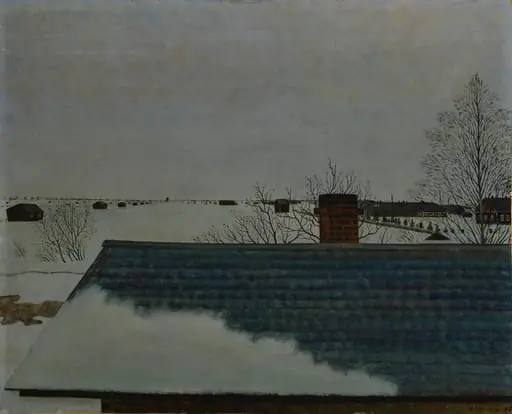
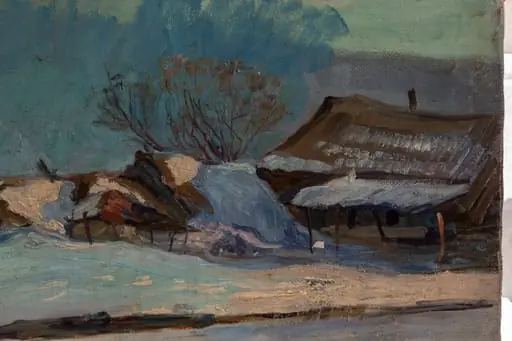
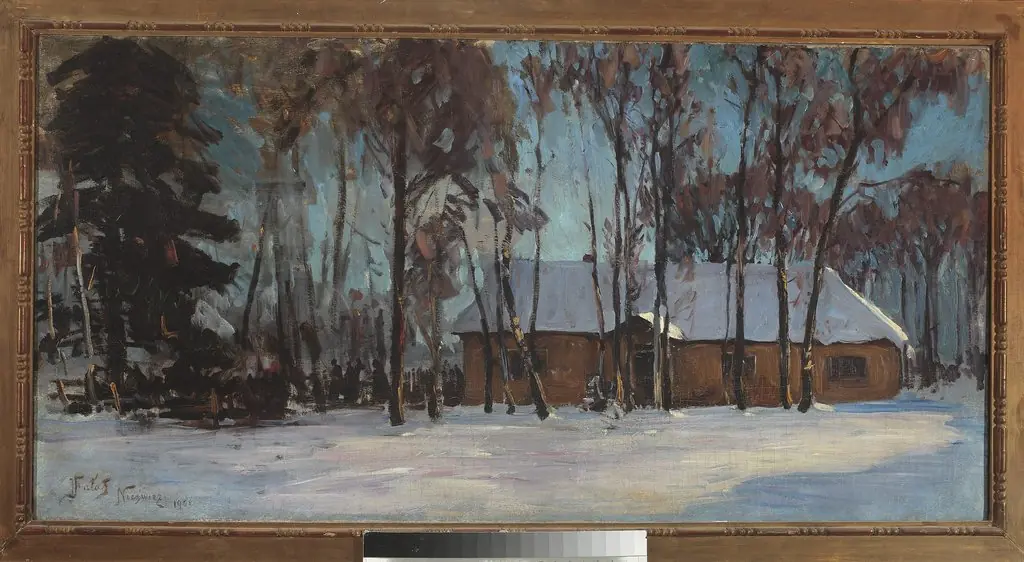
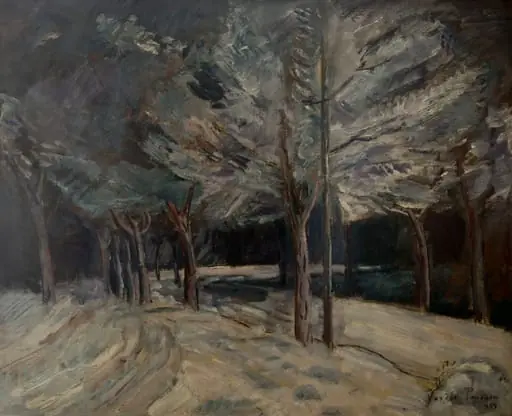
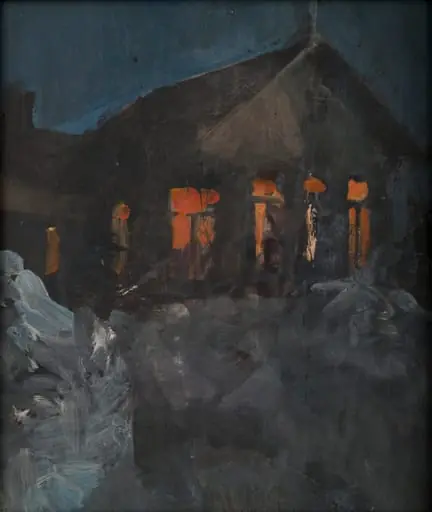
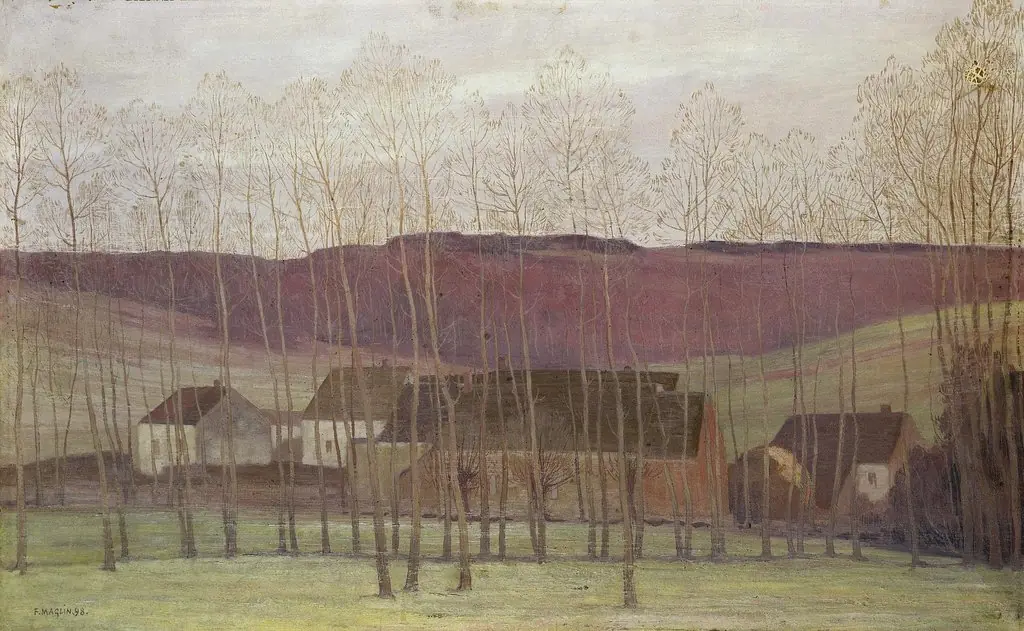
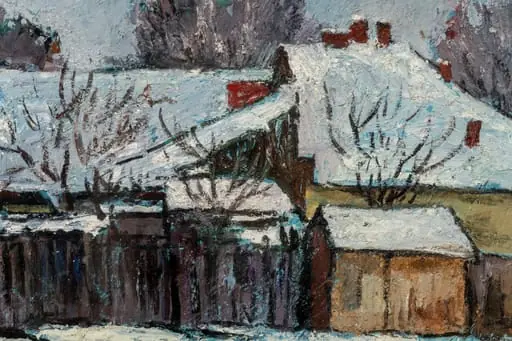
This oil painting depicts a quiet winter scene in a rural setting, where snow blankets the ground and simple wooden structures stand quietly in the distance.
This oil painting depicts a quiet winter scene in a rural setting, where snow blankets the ground and simple wooden structures stand quietly in the distance. A horse-drawn cart moves slowly through the snow, while logs and planks lie scattered in the foreground. The composition emphasizes stillness and restraint, with no figures visible, allowing the landscape itself to convey a sense of solitude and calm.
Subject & Meaning
The scene suggests daily winter labor—transporting timber in cold weather—without dramatizing it. The absence of people shifts focus to the quiet endurance of the environment and the rhythm of rural life. The scattered wood implies recent activity, yet the stillness of the snow and sky evokes a pause in time, reflecting themes of quiet industry and seasonal rhythm.
Technique & Style
The artist employs muted tones of gray, white, and brown to unify the snowy landscape, enhancing its tranquil mood. Chiaroscuro is used subtly to define forms, guiding attention toward the cart and buildings without harsh contrasts. Brushwork is restrained, with soft edges blending snow and sky, reinforcing the atmosphere of stillness and cold.
History & Provenance
The painting’s origins are not widely documented, but its subject and technique align with 19th-century regional traditions in Northern Europe or North America, where winter landscapes were painted as observations of daily life rather than idealized scenes. Its provenance remains private, with no known exhibition history prior to recent cataloging.
Context
Created during a period when rural economies relied on seasonal labor, the painting reflects a time when wood transport was essential for heating and construction. Unlike romanticized winter scenes, this work avoids sentimentality, instead presenting the landscape as a working environment shaped by weather and necessity.
Legacy
The painting contributes to a quiet tradition of winter realism that values observation over drama. It has not influenced major movements but remains a modest example of how artists captured the subdued beauty of rural winter life, offering a counterpoint to more theatrical depictions of the season.
Artist & collection

 Domestic Scene
 Giacomo and Cardinal Marco, investing Andrea, Abbot of San Zeno, with his Benefice
 The Nymph of Fontainebleau
 Portrait of a Woman
 Madonna and Child with Saints in the Enclosed Garden
 Venus and Minerva
 Family Group of Four on Sofa
 Wall painting from Room H of the Villa of P. Fannius Synistor at Boscoreale