Artwork
Puistokuva
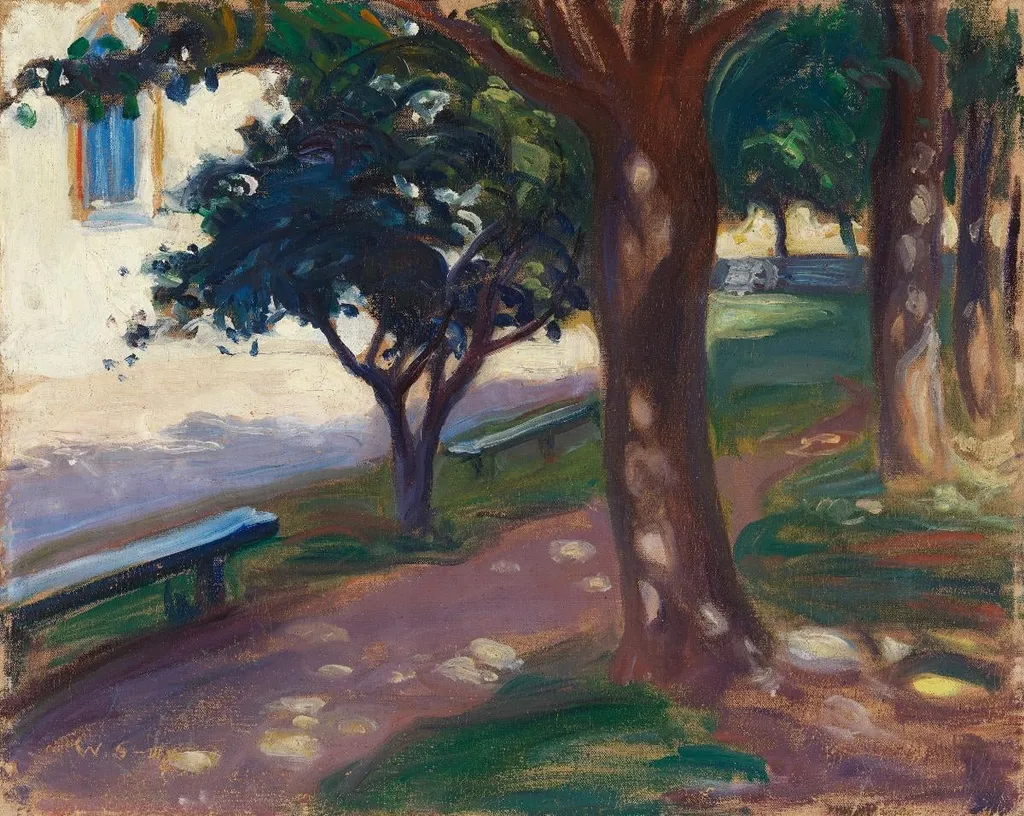
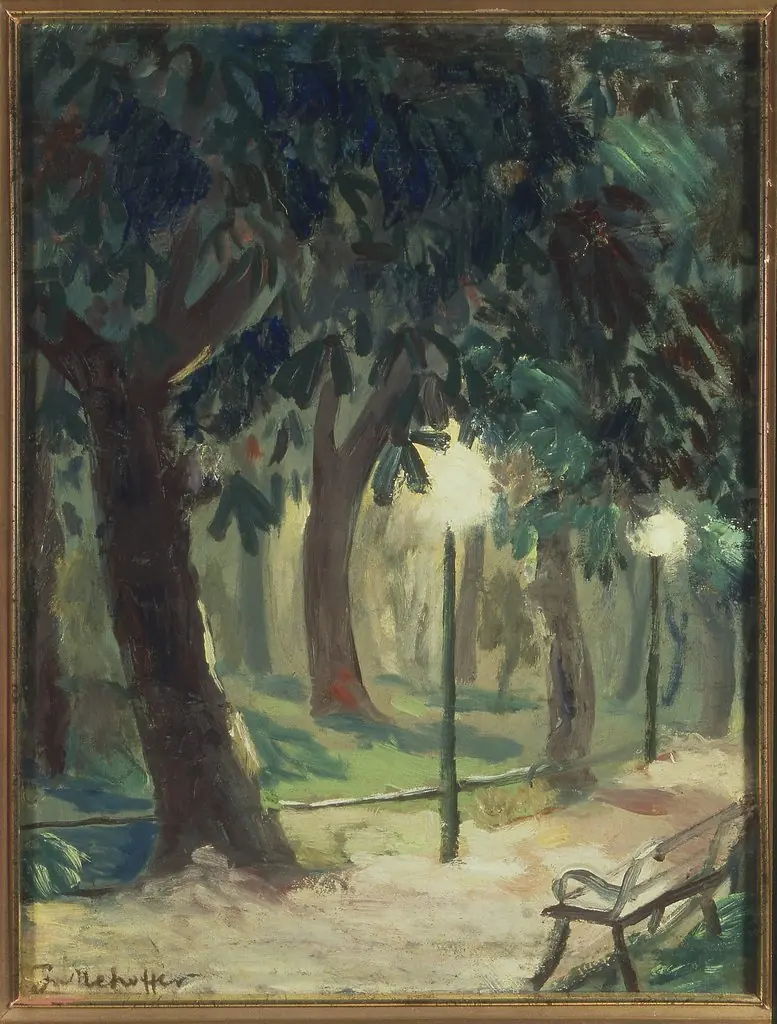
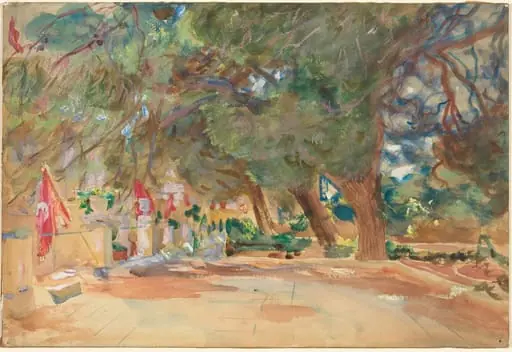
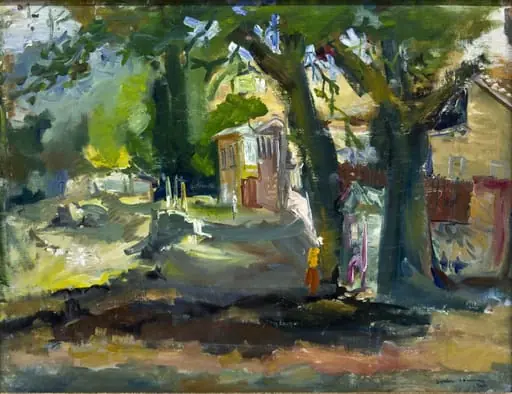
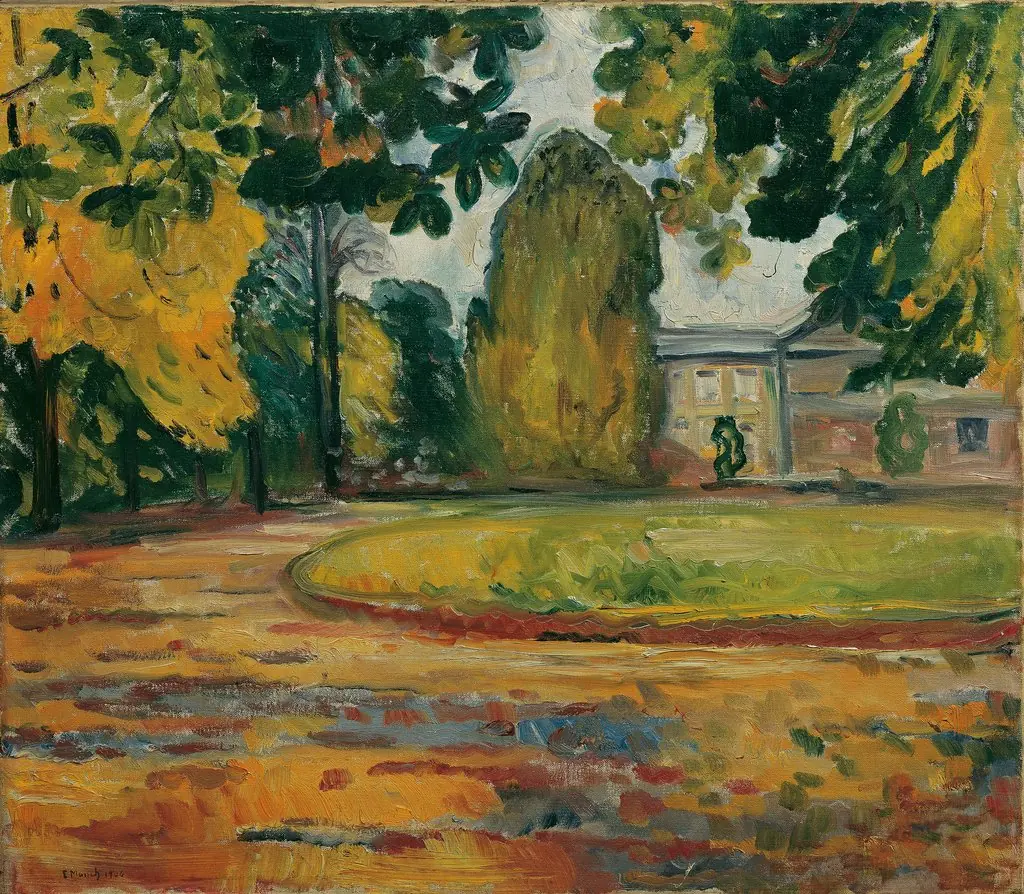
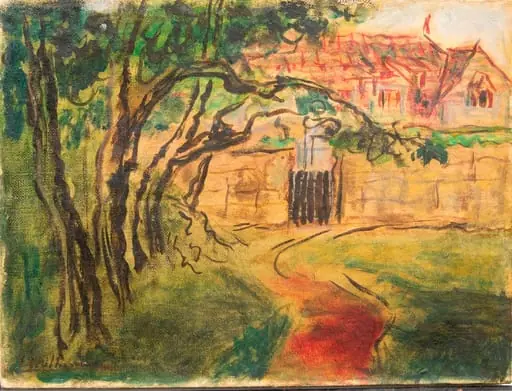
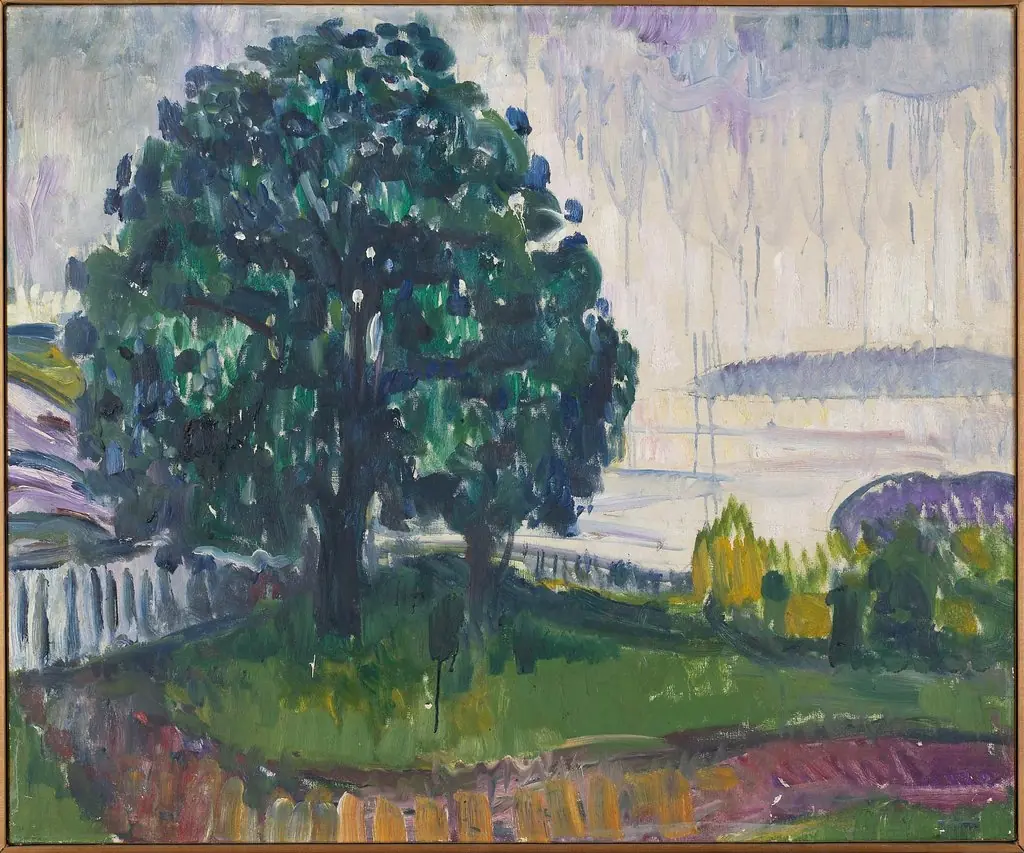
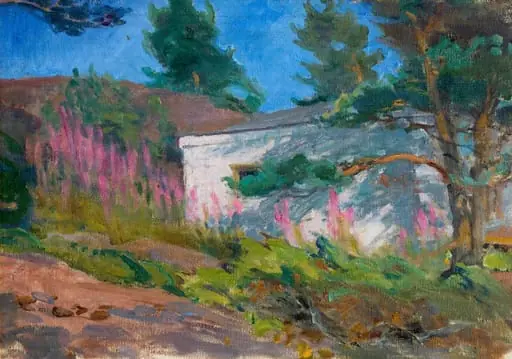
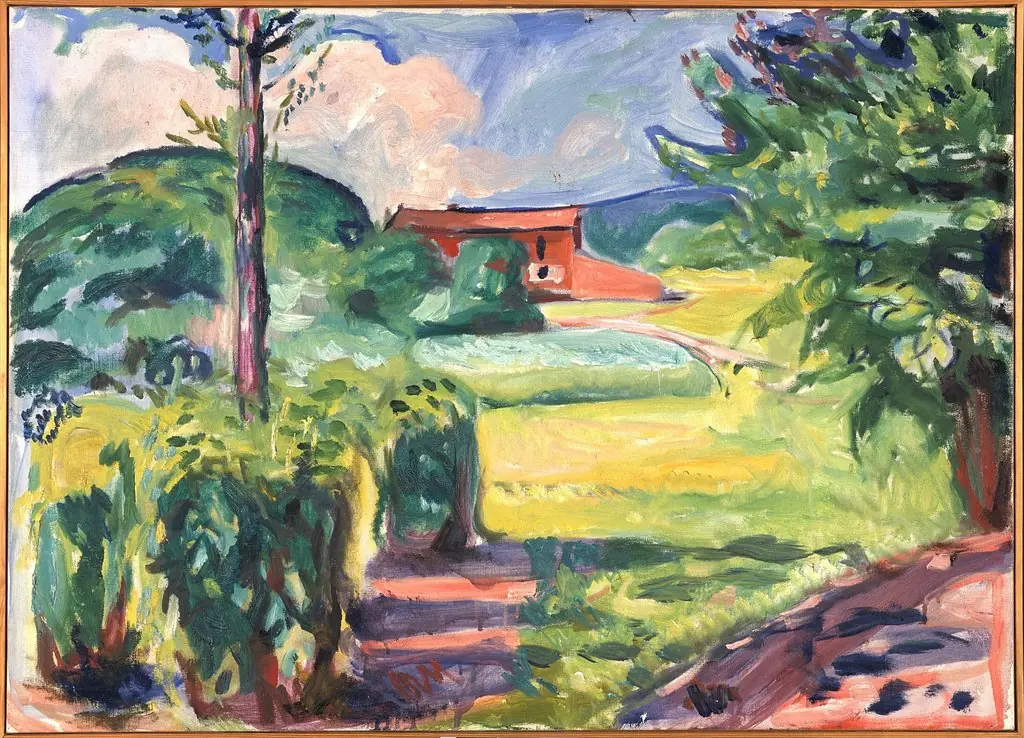
Puistokuva is an unspecified painting by Wilho Sjöström. It is held in the collection of the Finnish National Gallery. This image depicts a tranquil park at a quiet moment, rendered with thick, textured brushwork that emphasizes the immediacy of the scene.
About this work
Overview
This image depicts a tranquil park at a quiet moment, rendered with thick, textured brushwork that emphasizes the immediacy of the scene.
This image depicts a tranquil park at a quiet moment, rendered with thick, textured brushwork that emphasizes the immediacy of the scene. Three tall trees frame a winding path, their forms rendered with visible impasto strokes. A damp ground reflects scattered light, and an empty bench rests beneath them. A distant columned structure emerges through the foliage, suggesting human presence without figures.
Subject & Meaning
The scene conveys stillness and absence. The empty bench, the unoccupied path, and the lack of people invite contemplation rather than narrative. The interplay of light and shadow on wet grass and bark suggests a fleeting moment—perhaps late afternoon—where nature holds quiet dominion. The distant architecture hints at civilization, but remains subdued, framed by the organic forms of the trees.
Technique & Style
The artist employs impasto to build texture, particularly on tree trunks and foliage, giving the surface a tactile, almost sculptural quality. Brushstrokes are energetic and unblended, capturing the transient effects of light without fine detail. The damp ground is suggested through broken patches of reflected color, while the grass blends muted greens and browns to convey seasonal decay and moisture.
History & Provenance
No documented history or ownership record is available for this work. It appears to be an unattributed image, possibly a study or sketch made outdoors. Its informal composition and rapid execution suggest it was not intended for public display, but rather as a personal observation of light and atmosphere in a natural setting.
Context
Created during a period when plein air painting was gaining traction, the work aligns with late 19th-century practices of capturing transient natural conditions. The emphasis on light, texture, and immediacy reflects broader artistic shifts away from studio idealism toward direct observation. Yet its lack of signature or title places it outside formal art-historical narratives.
Legacy
Though unattributed and undocumented, the piece exemplifies how everyday observations of light and landscape contributed to evolving artistic languages. Its raw, unpolished quality preserves the artist’s direct response to nature, offering insight into informal practices that often preceded more finished works in the broader movement toward modern landscape representation.
Artist & collection
Artist
Wilho Sjöström painted quiet scenes of everyday life in Finland from the early 1900s.