Artwork
Taiteilija Woldemar Toppeliuksen muotokuva
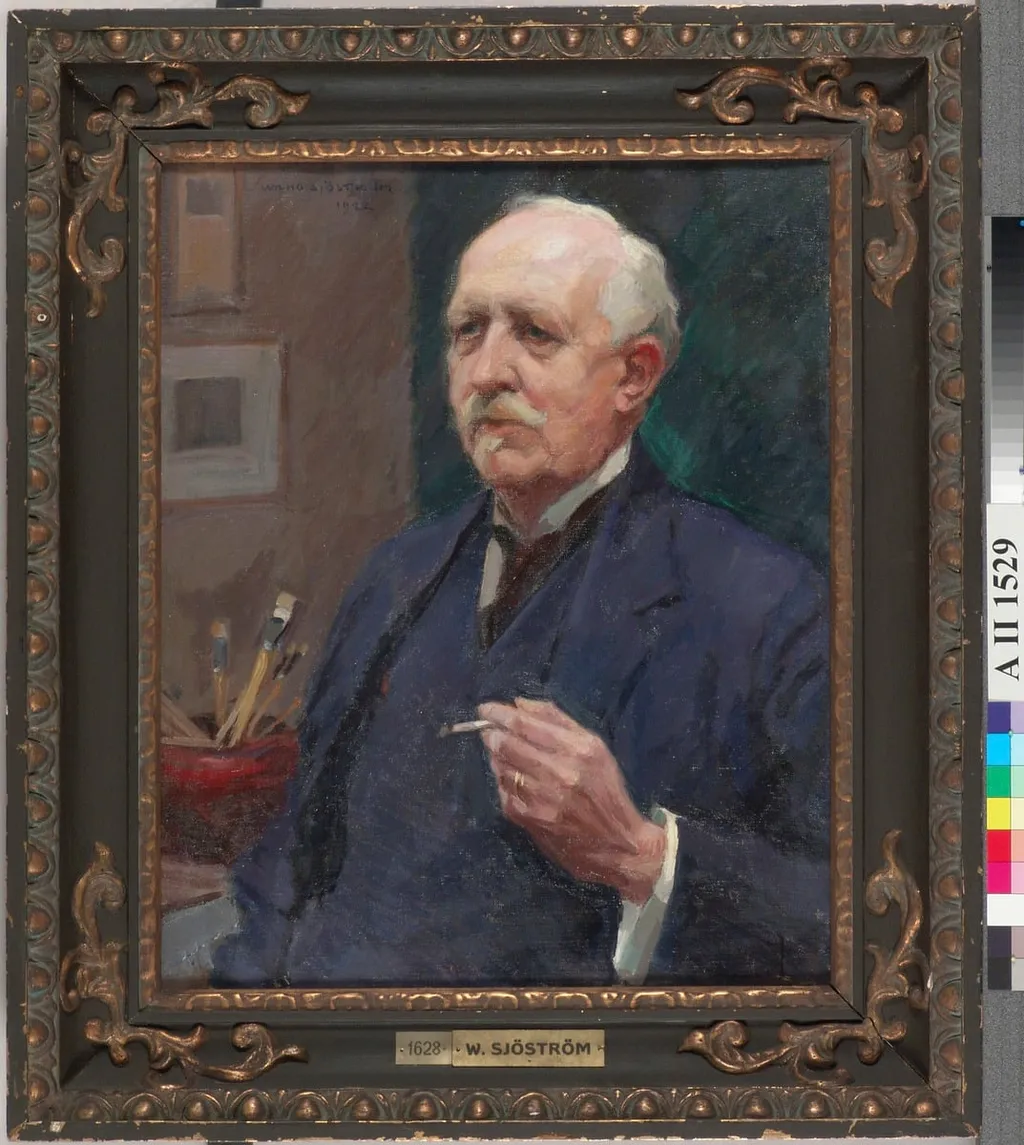
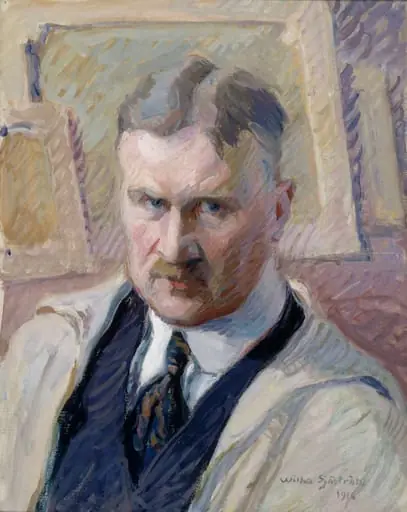
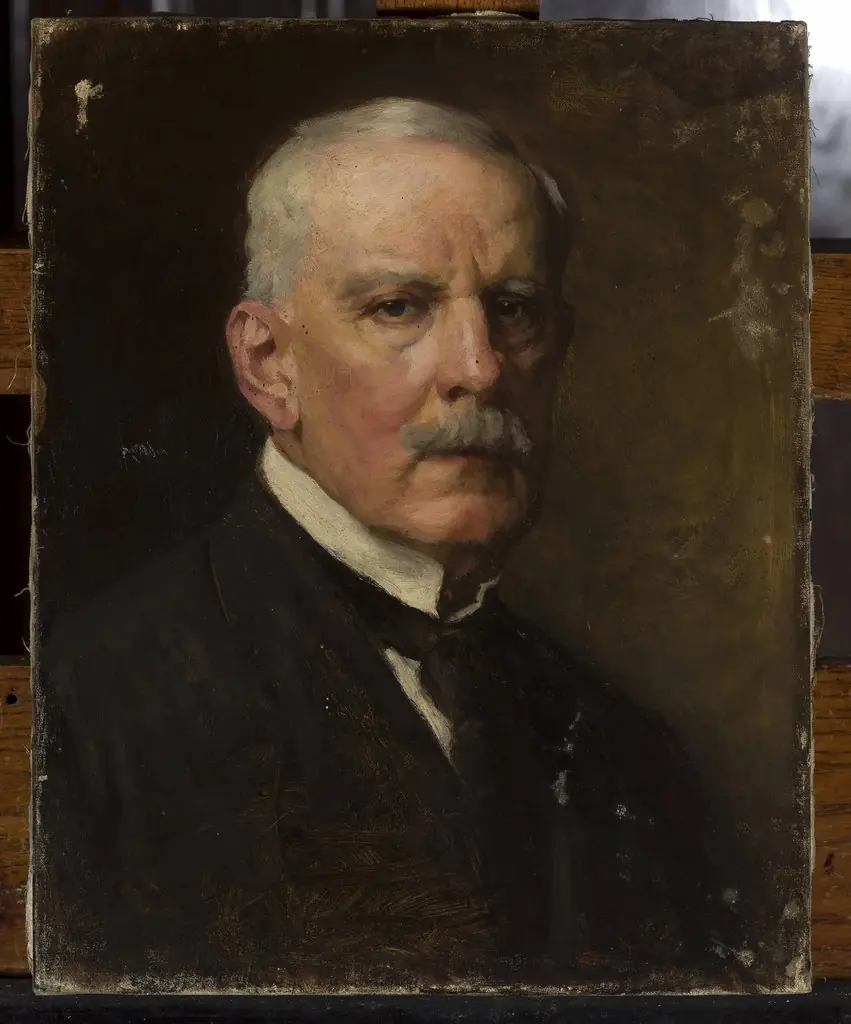
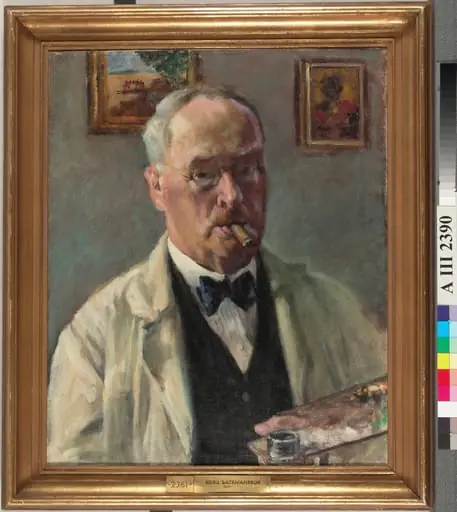
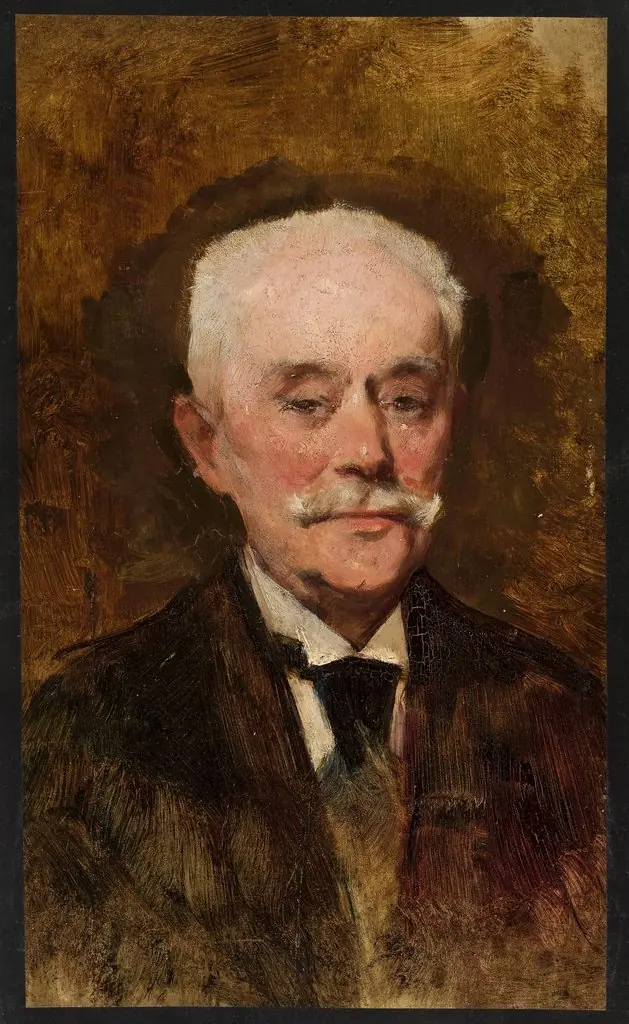
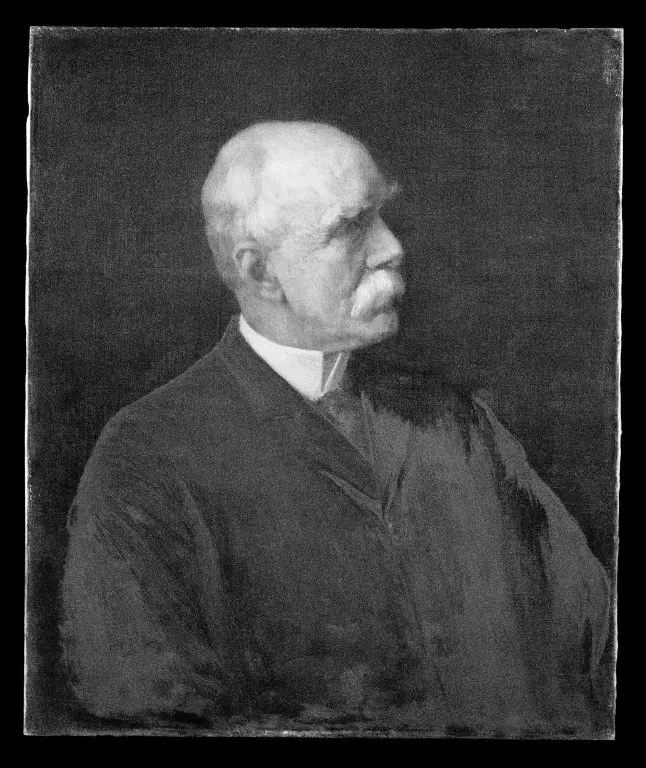
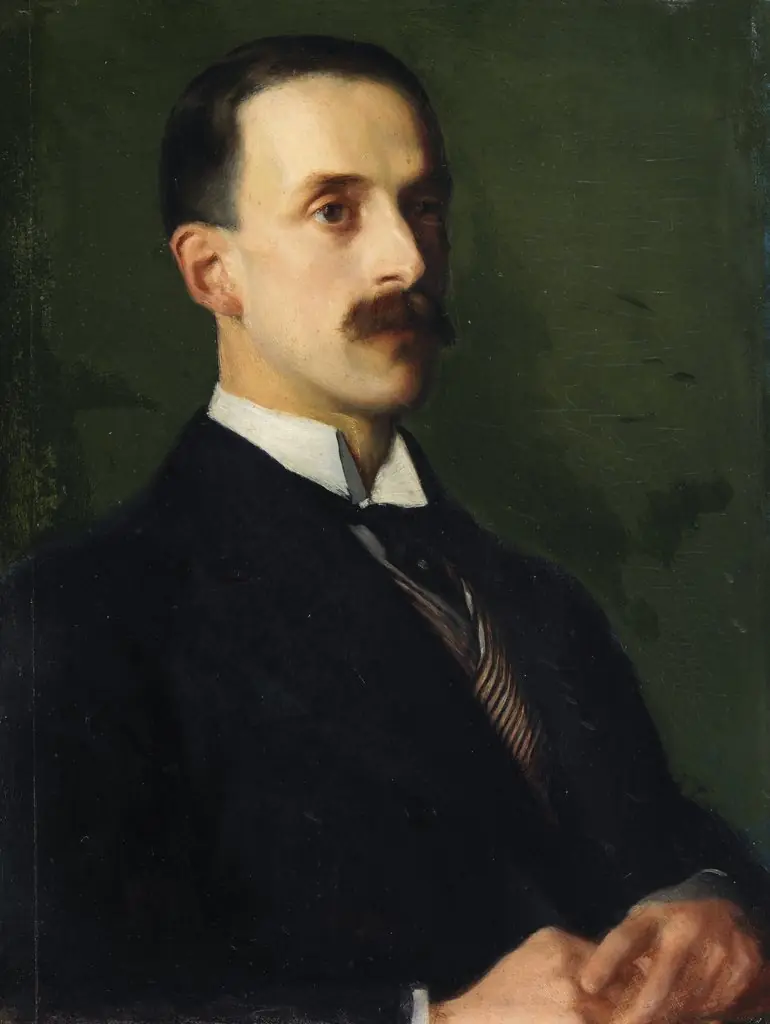
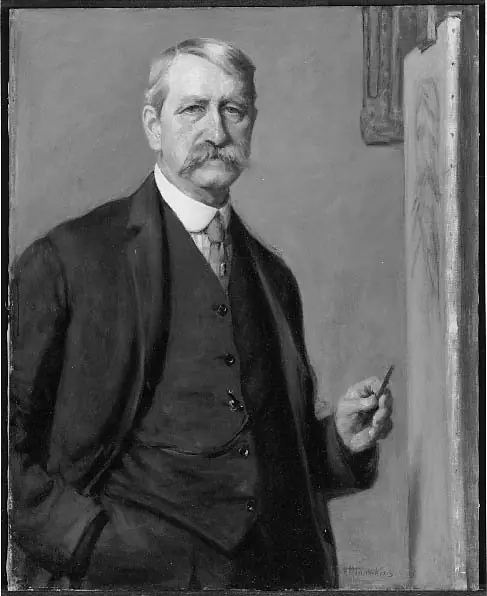
Taiteilija Woldemar Toppeliuksen muotokuva is an unspecified painting by Wilho Sjöström. It is held in the collection of the Finnish National Gallery. The portrait depicts an elderly gentleman with white hair and a moustache, attired in a dark suit and holding a cigarette holder.
About this work
Overview
The portrait depicts an elderly gentleman with white hair and a moustache, attired in a dark suit and holding a cigarette holder. He is positioned before a shelf that carries brushes and several framed pictures. The overall palette is subdued, with a gentle warmth illuminating his face.
Subject & Meaning
The sitter appears to be an artist or someone connected to the visual arts, suggested by the presence of brushes on the shelf behind him. The cigarette holder and the contemplative expression convey a sense of introspection and perhaps a reflective moment in his later years.
Technique & Style
The artist employs loose, sketch‑like brushwork, especially evident in the rendering of the jacket and background, giving the work an unfinished, spontaneous quality. The handling of light creates a subtle chiaroscuro effect, with muted tones contrasted by the warm glow on the subject's face.
History & Provenance
The work is titled "Taiteilija Woldemar Toppeliuksen muotokuva," indicating it is a portrait of the Finnish artist Woldemar Toppelius. No further details about its creation date, exhibition history, or ownership are provided.
Context
Woldemar Toppelius (1841–1908) was a prominent Finnish painter known for his landscapes and genre scenes. This portrait, likely produced toward the end of his life, reflects a personal setting that includes artistic tools, linking the image to his professional identity.
Artist & collection
Artist
Wilho Sjöström painted quiet scenes of everyday life in Finland from the early 1900s.