Artwork
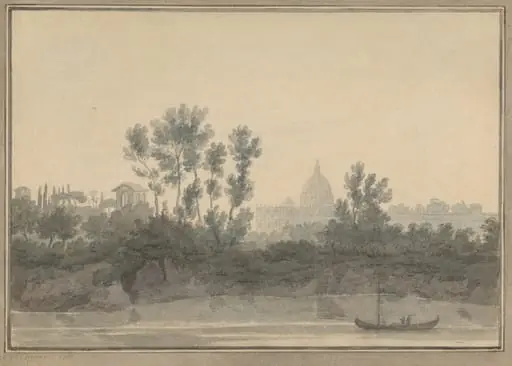
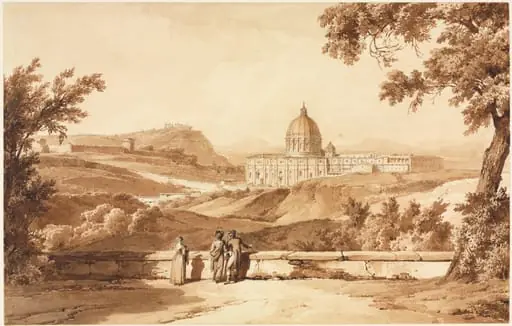
A view of Rome with the Tiber, the Castle of S. Angelo, and in the background St. Peter's
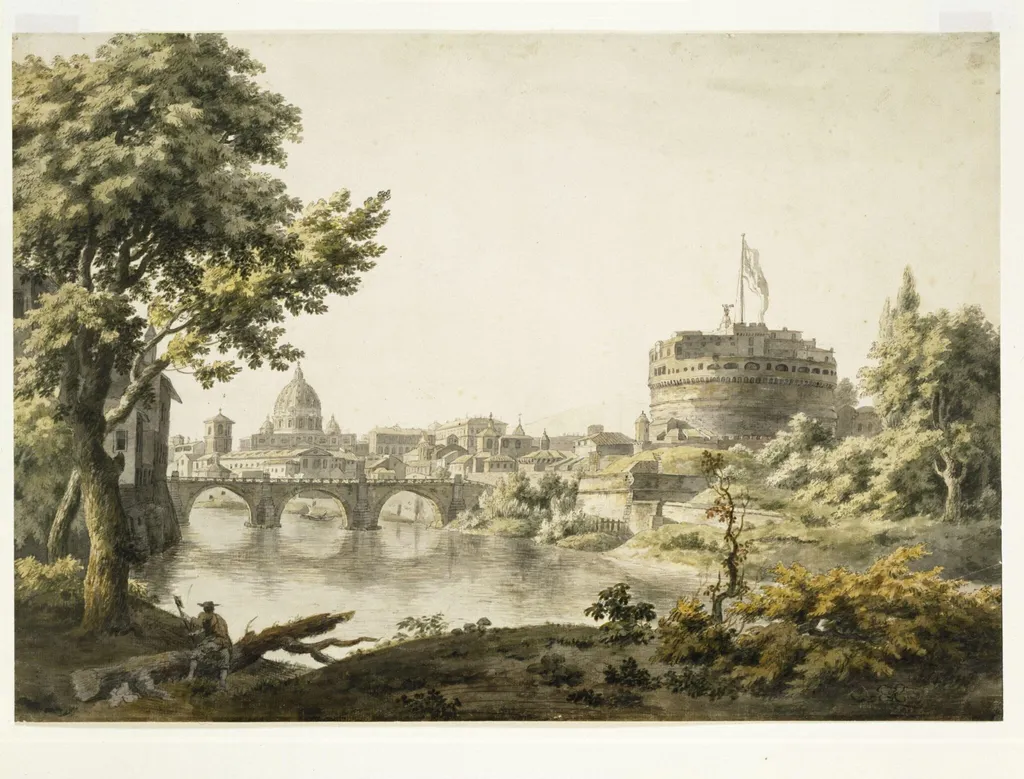
A view of Rome with the Tiber, the Castle of S. Angelo, and in the background St. Peter's is a watercolor work on paper by the Rococo painting artist Jonathan Skelton. It dates from 1758 and is held in the collection of the Victoria and Albert Museum. This watercolour captures a serene stretch of the Tiber River in Rome, framed by architectural landmarks and natural elements.
About this work
Overview
Delicate brushwork and translucent washes convey atmospheric light, while a solitary figure near the shore adds quiet human presence.
This watercolour captures a serene stretch of the Tiber River in Rome, framed by architectural landmarks and natural elements. The composition includes the Castel Sant’Angelo on the right bank, St. Peter’s Basilica rising in the distance, and a pedestrian bridge crossing the water. Delicate brushwork and translucent washes convey atmospheric light, while a solitary figure near the shore adds quiet human presence. The piece is signed and dated by the artist, with Italian inscriptions identifying key sites.
Subject & Meaning
The scene presents Rome as a lived-in, tranquil urban landscape rather than a monumental spectacle. The inclusion of a fisherman suggests daily life alongside historical grandeur. The positioning of Castel Sant’Angelo and St. Peter’s anchors the view in recognizable geography, while the soft rendering avoids overt drama. The work reflects an observational, almost topographical interest in the city’s layered identity—ancient fortifications, religious centers, and ordinary activity coexisting.
Technique & Style
The artist employs transparent watercolour washes to suggest subtle shifts in light and depth. Buildings and foliage are rendered with loose, suggestive strokes rather than precise detail, allowing the paper’s whiteness to imply highlights. The river’s surface is hinted at with horizontal glazes, while the dome of St. Peter’s emerges through layered pale blues and ochres. The technique prioritizes mood over precision, characteristic of 18th-century topographical watercolours.
History & Provenance
The work is documented as signed and dated by its creator, indicating it was produced as a finished piece rather than a sketch. Its Italian titles suggest the artist was either Italian or deeply familiar with Roman nomenclature. While its early ownership is unrecorded, it entered the collection of the Victoria and Albert Museum, where it remains among other 18th-century British and continental watercolours of Italian scenes.
Context
Created during a period when Grand Tourists sought visual souvenirs of Rome, this watercolour aligns with a tradition of topographical art that documented landmarks for private collectors. Unlike grand oil paintings meant for public display, such works were often intimate, portable, and intended for personal reflection. The focus on recognizable sites, rendered with restrained detail, reflects both artistic convention and the tastes of an educated, traveling clientele.
Legacy
This watercolour contributes to a broader corpus of 18th-century topographical art that preserved Rome’s urban fabric before modernization. Its quiet realism distinguishes it from idealized vedute, offering instead a grounded perspective on the city’s enduring landmarks. Today, it serves as a record of how contemporaries experienced Rome—not as a ruin, but as a living, breathing environment.
Artist & collection
Artist
Jonathan Skelton spent his life with a paintbox and a passport, chasing the light in Rome like it was going out of style.

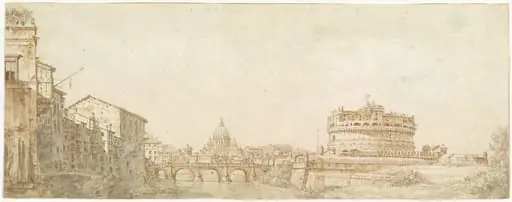 View of Rome with the Dome of Saint Peter's and the Castel Sant' Angelo
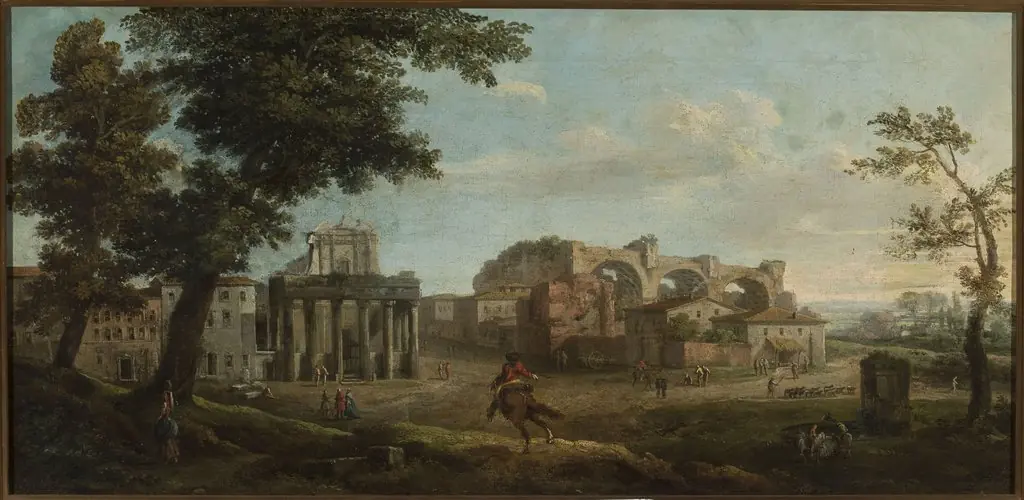 View of Rome
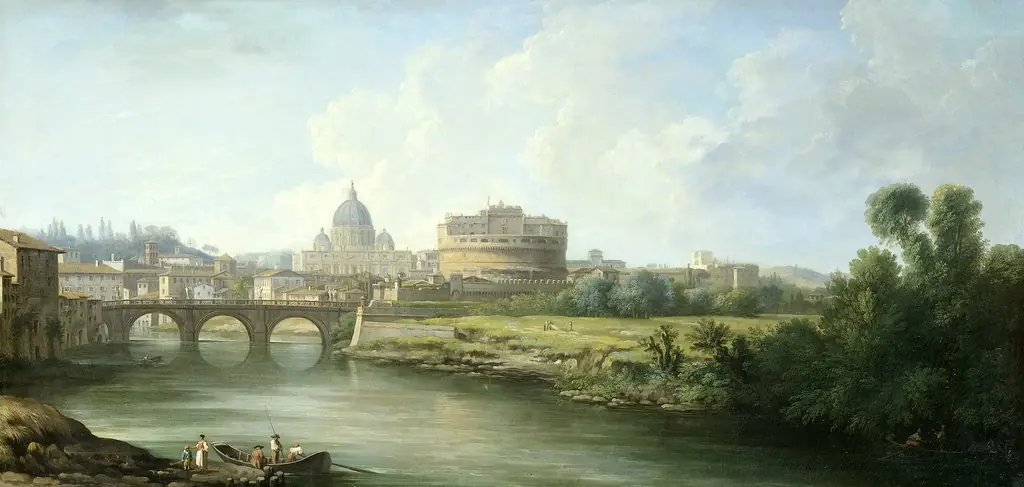 View of the Castel Sant'Angelo in Rome
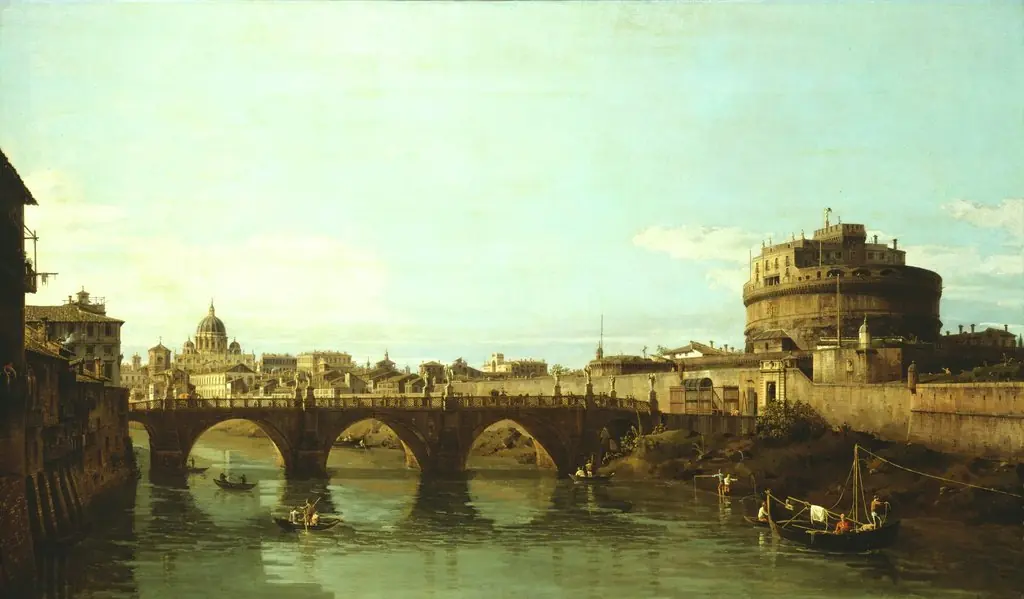 View of the Tiber in Rome with the Castel Sant'Angelo
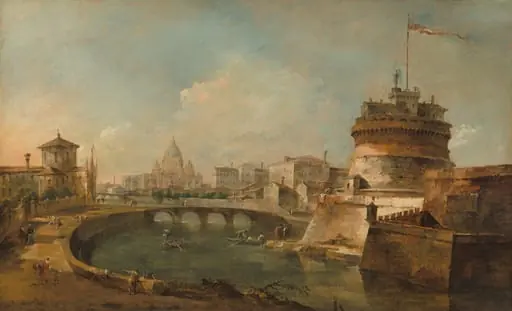 Fanciful View of the Castel Sant'Angelo, Rome
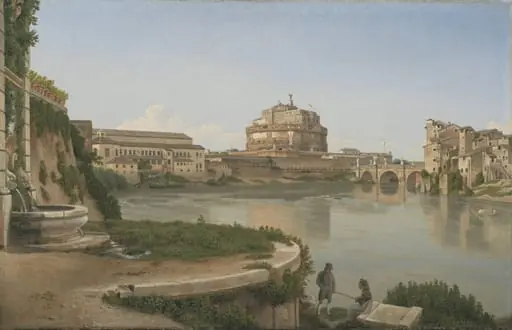 A View across the Tiber from Trastevere towards Castel S. Angelo
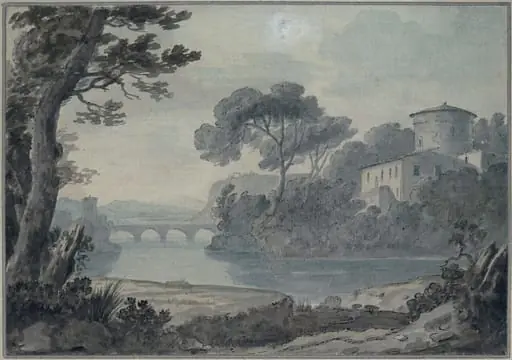 View near Rome
 View of St. Peters, Rome