Artwork
John G. Read
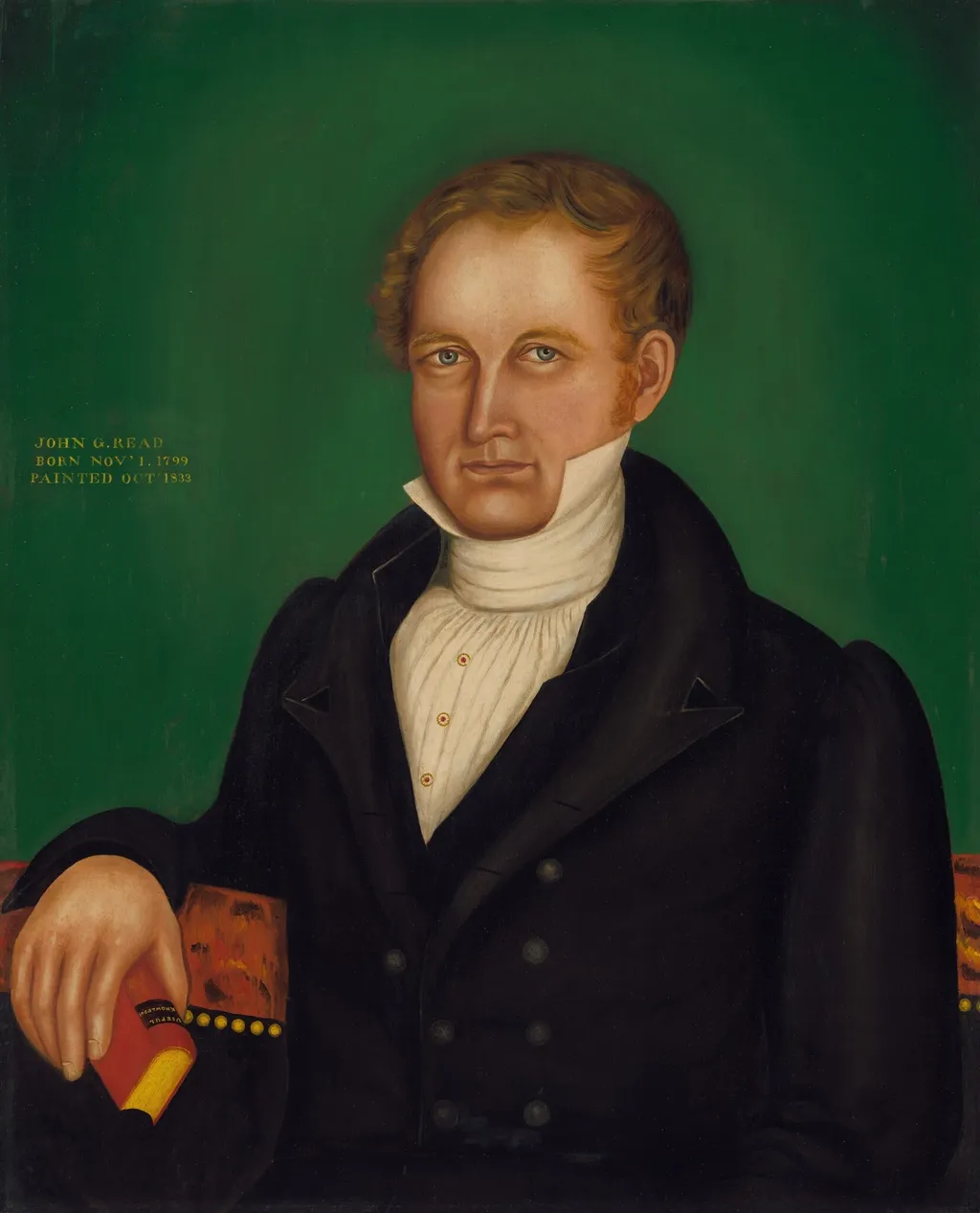
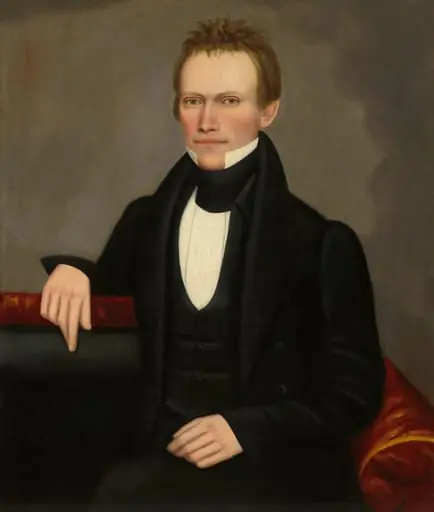
John G. Read is an oil painting by the American Folk Art artist Royall Brewster Smith. It dates from 1833 and is held in the collection of the National Gallery of Art. The oil on canvas painting, titled John G.
About this work
If you're interested in exploring more works from the Romanticism movement, you can learn more about it next.
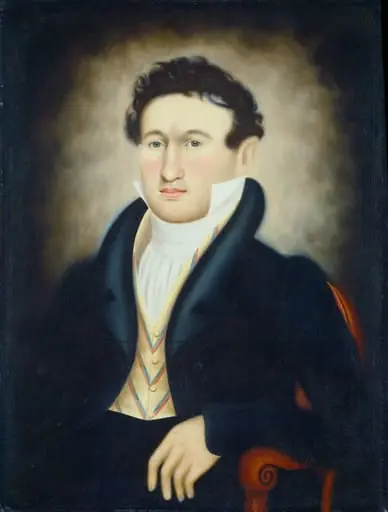
This portrait features a man with short, wavy brown hair and blue eyes, dressed in a black jacket with a high collar and a white shirt with a high neck and buttons. He is seated, with his left hand resting on a red object adorned with yellow and black accents.
The man's attire and hairstyle suggest a formal setting, possibly from the early 19th century. The background of the painting is a solid green color, which adds to the overall sense of formality.
If you're interested in exploring more works from the Romanticism movement, you can learn more about it next.
Overview
The oil on canvas painting, titled John G. Read, was created by Royall Brewster Smith in 1833. This formal portrait depicts a seated man, characterized by his early 19th-century attire and a composed demeanor. The work serves as a record of its subject, executed with the directness typical of portraiture from the period, offering a glimpse into the individual's appearance and presentation.
Subject & Meaning
The subject, John G. Read, is presented with short, wavy brown hair and blue eyes, wearing a black jacket with a high collar over a white shirt. His left hand rests upon a distinctive red object adorned with yellow and black details, suggesting an item of personal significance or status. The solid green background emphasizes the figure, contributing to the portrait's formal and somewhat austere character, aligning with the conventions of early 19th-century portraiture.
Technique & Style
Executed in oil on canvas, Smith's technique emphasizes a clear, direct representation of his sitter. The smooth application of paint and controlled brushwork contribute to the portrait's formal quality. The use of a solid green background, rather than an elaborate setting, focuses attention squarely on the subject, a common approach in early 19th-century portraiture to convey dignity and presence without distraction.
Own this work as a print
Artist & collection