Artwork
Kaupunkikuva
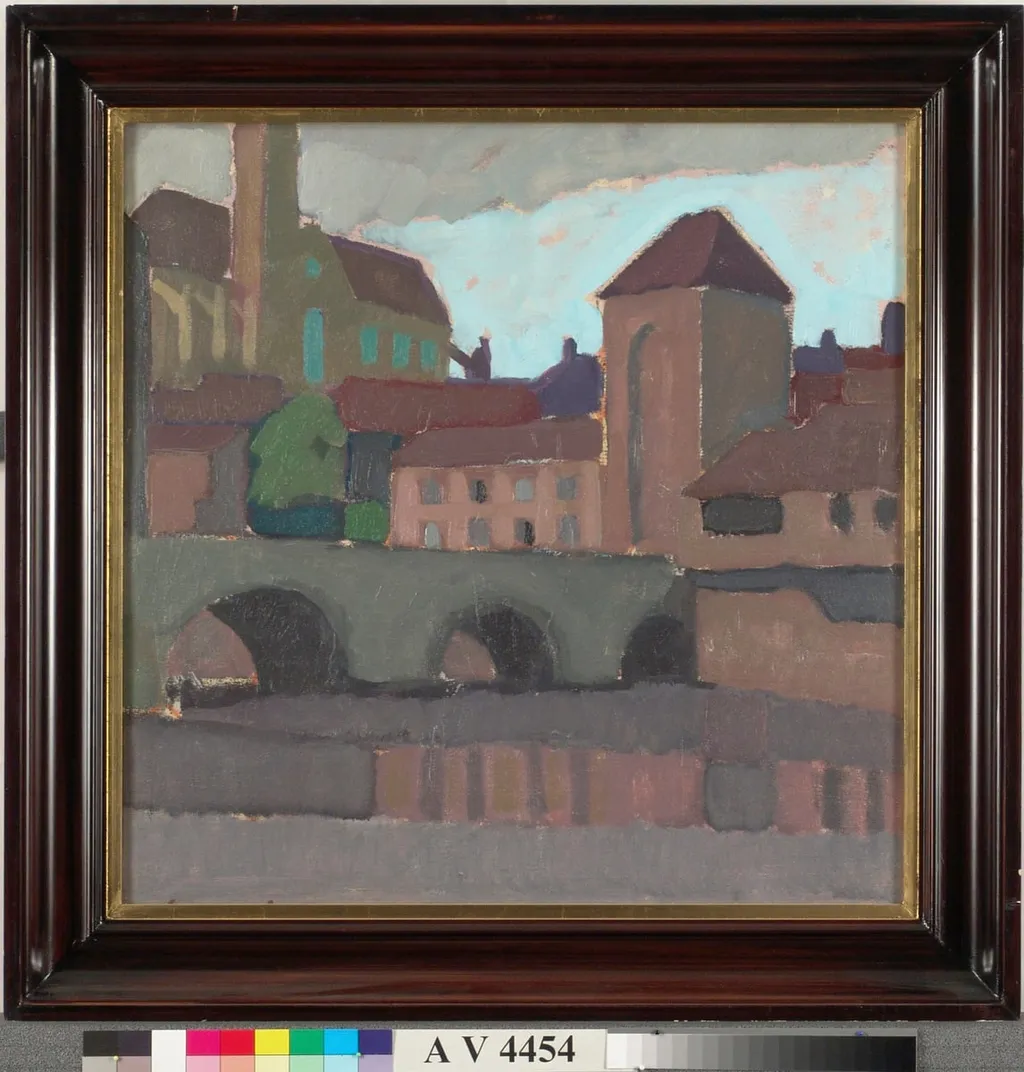
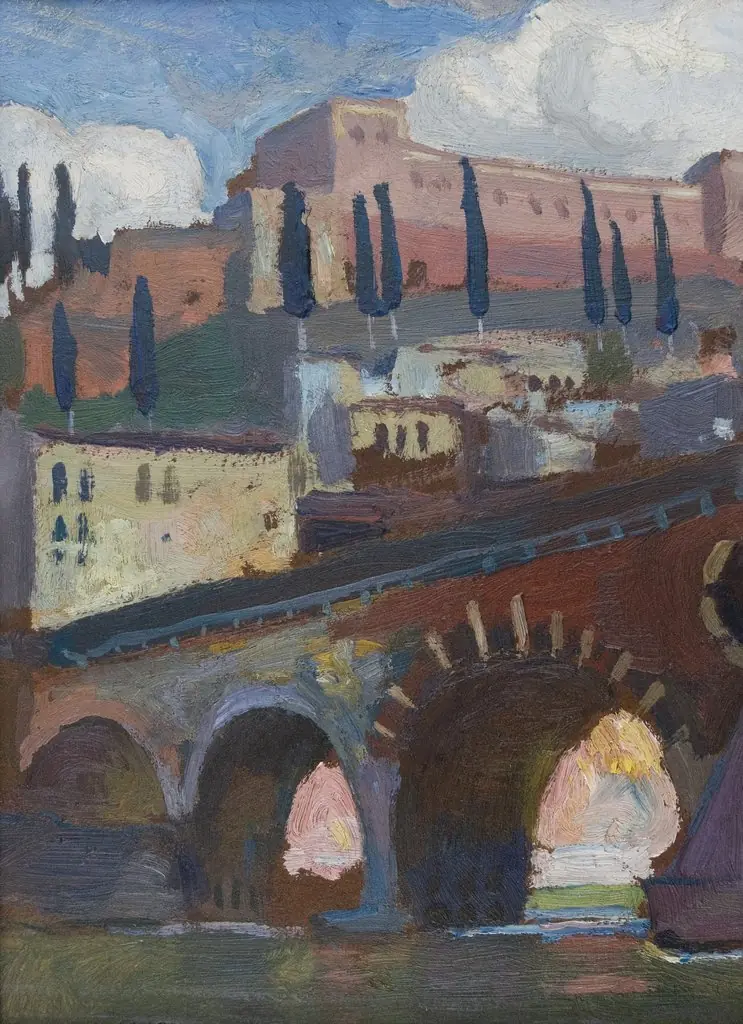
Kaupunkikuva is an unspecified painting by Eero Snellman. It is held in the collection of the Finnish National Gallery. This image depicts a quiet urban landscape with modest buildings, a stone bridge, and a church tower rising in the distance.
About this work
Overview
This image depicts a quiet urban landscape with modest buildings, a stone bridge, and a church tower rising in the distance.
This image depicts a quiet urban landscape with modest buildings, a stone bridge, and a church tower rising in the distance. The scene is rendered in flat, unmodulated colors and thickly applied paint, creating a tactile surface. The composition is grounded by the bridge in the foreground, drawing the eye toward the architectural elements behind. The sky, lightly detailed, balances the heavier forms below.
Subject & Meaning
The subject is an ordinary townscape, devoid of human figures or dramatic action. The focus on simple dwellings and a single church tower suggests a quiet, everyday environment rather than a grand or symbolic setting. The absence of movement or narrative implies an emphasis on place and structure, inviting contemplation of the built environment’s quiet persistence.
Technique & Style
The painting employs impasto, with paint applied in thick, visible strokes that create texture and physical depth. Colors are applied in broad, flat areas without blending, emphasizing form over realism. The rough surface enhances the sense of materiality, aligning the work with early modern approaches that valued expressive brushwork over smooth finish.
History & Provenance
The work’s origin is undocumented in available records, and no known exhibition history or collector lineage has been established. It is cataloged as an image without attribution to a specific artist or date, suggesting it may be a lesser-known or anonymous study. Its preservation appears to be the result of institutional or private archival practice rather than public recognition.
Context
The scene reflects a common European townscape of the late 19th or early 20th century, where modest architecture and stone infrastructure defined daily life. The use of impasto aligns with broader artistic movements that moved away from academic realism, favoring direct, physical engagement with paint. Such works often emerged from regional studios rather than major urban centers.
Legacy
Though not widely exhibited or reproduced, the painting exemplifies a quiet strand of modernist landscape painting that prioritized material presence over narrative. Its unadorned subject and tactile technique resonate with later artists who valued the physicality of paint. It remains a modest but instructive example of how ordinary scenes were reimagined through expressive brushwork.
Artist & collection
Artist
Eero Snellman made small oil paintings and metal reliefs of Finnish streets and people in the early 1900s.

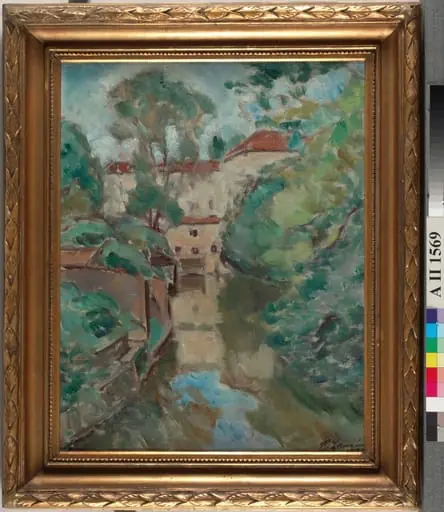 Charentonin vanha mylly
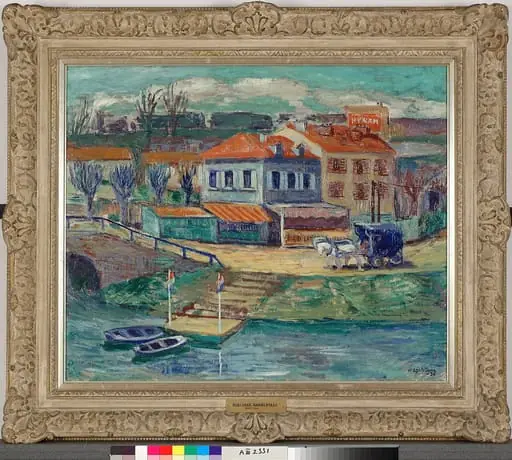 Joinville le Pont
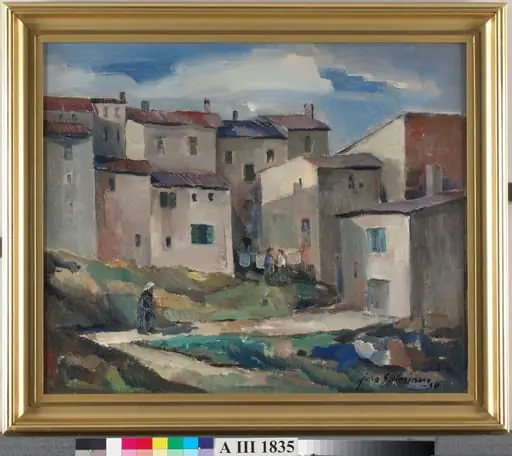 Ranskalainen kyläkuva
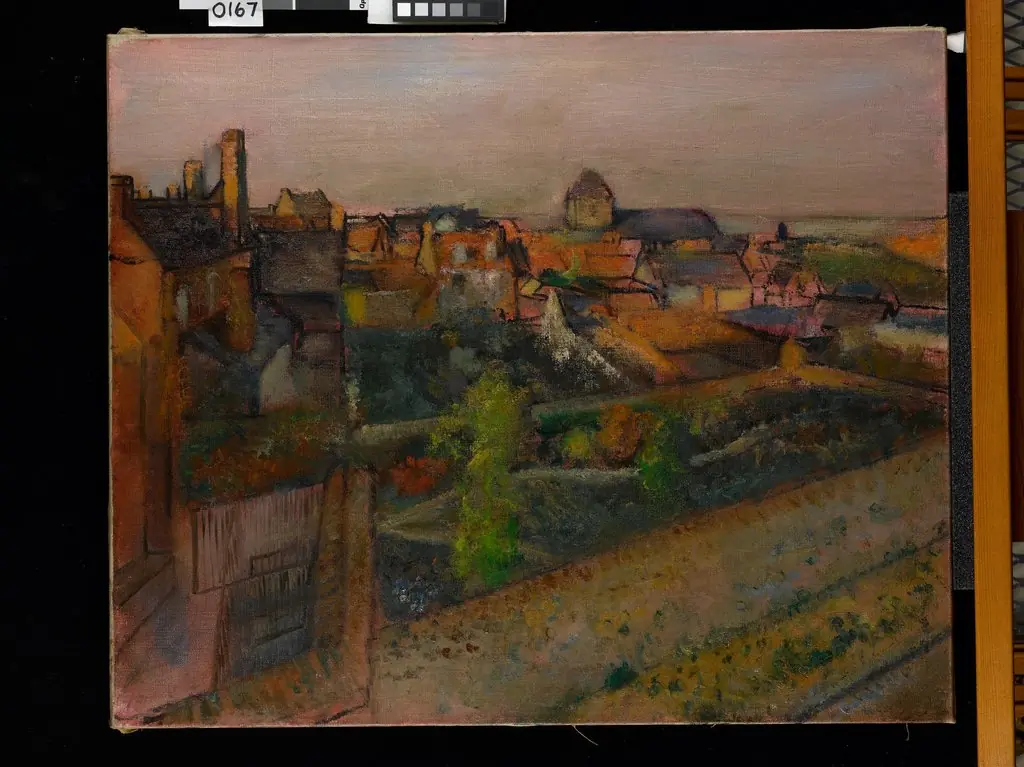 View of Saint-Valéry-sur-Somme
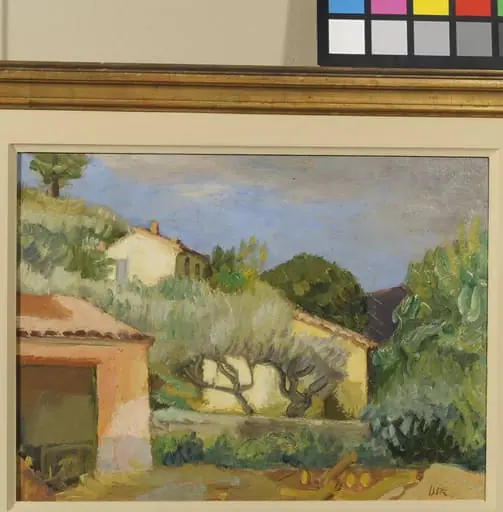 Peisaj din Franța
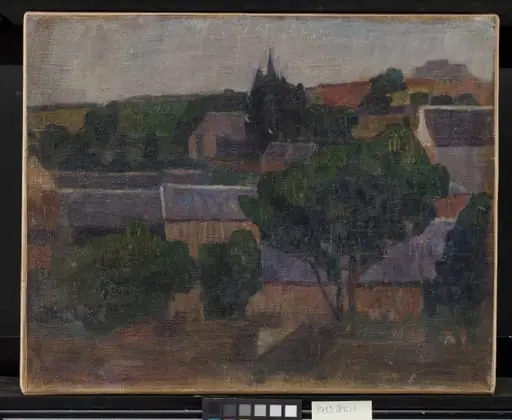 Village in Brittany
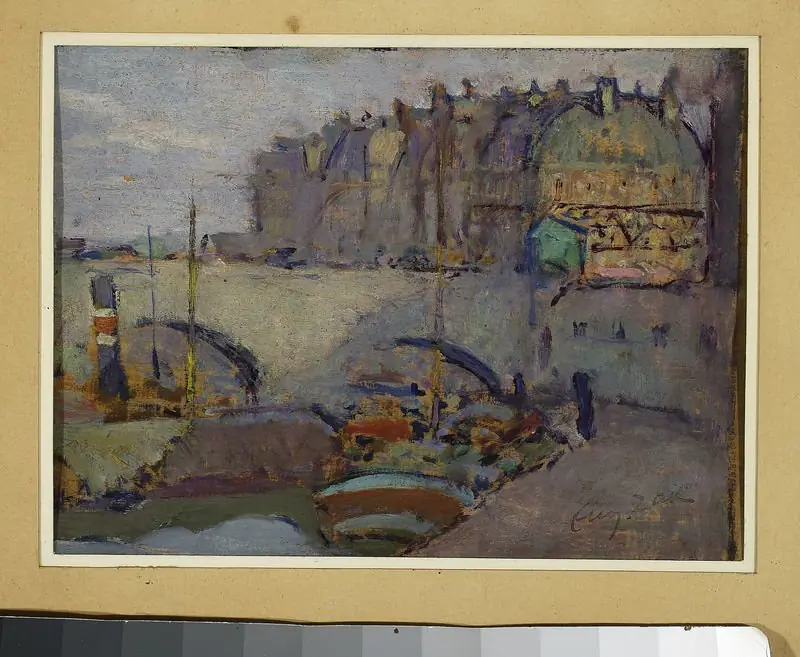 Paris – Fragment of a city with bridges (Seine in Paris)
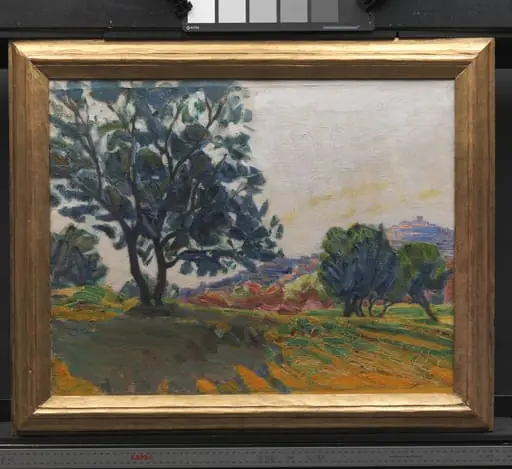 The Olive Grove. With Cagnes in the Background. Against the Light
 Fortress in Verona
 Talo Hesperiassa
 Jokimaisema rakennuksineen
 Jokimaisema