Artwork
Tyttö ja lampaita
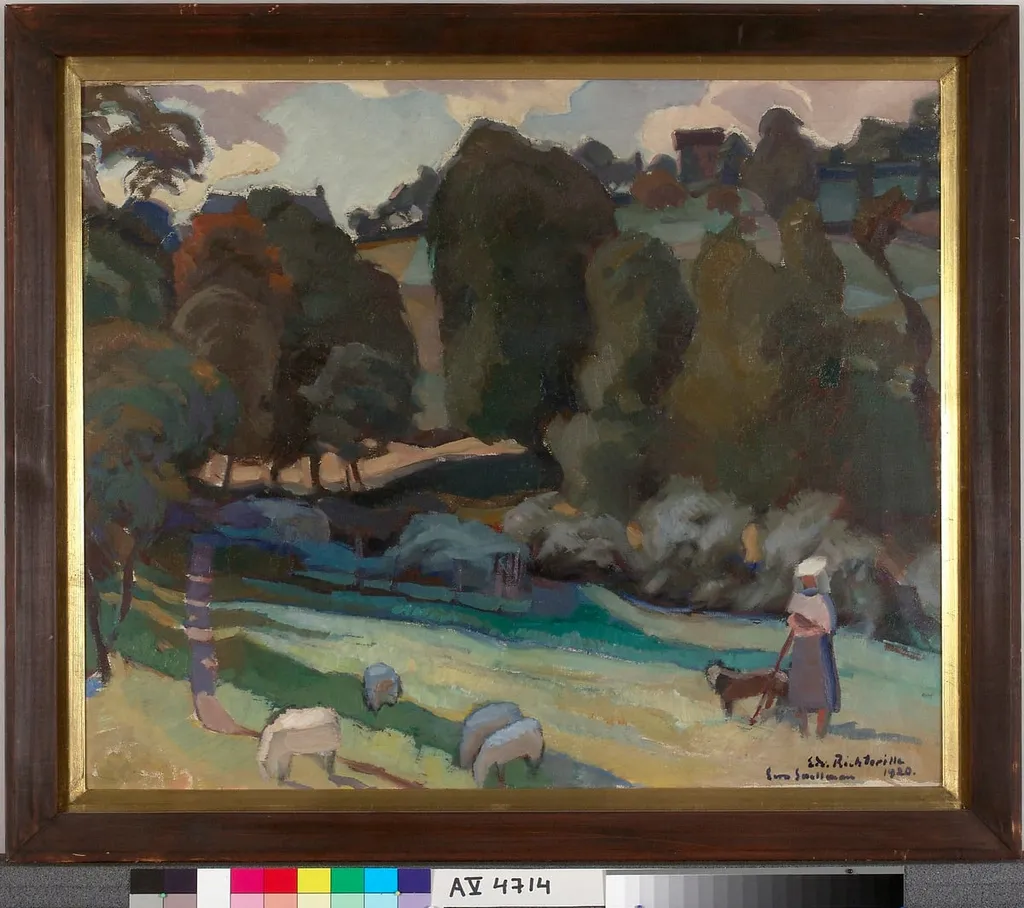
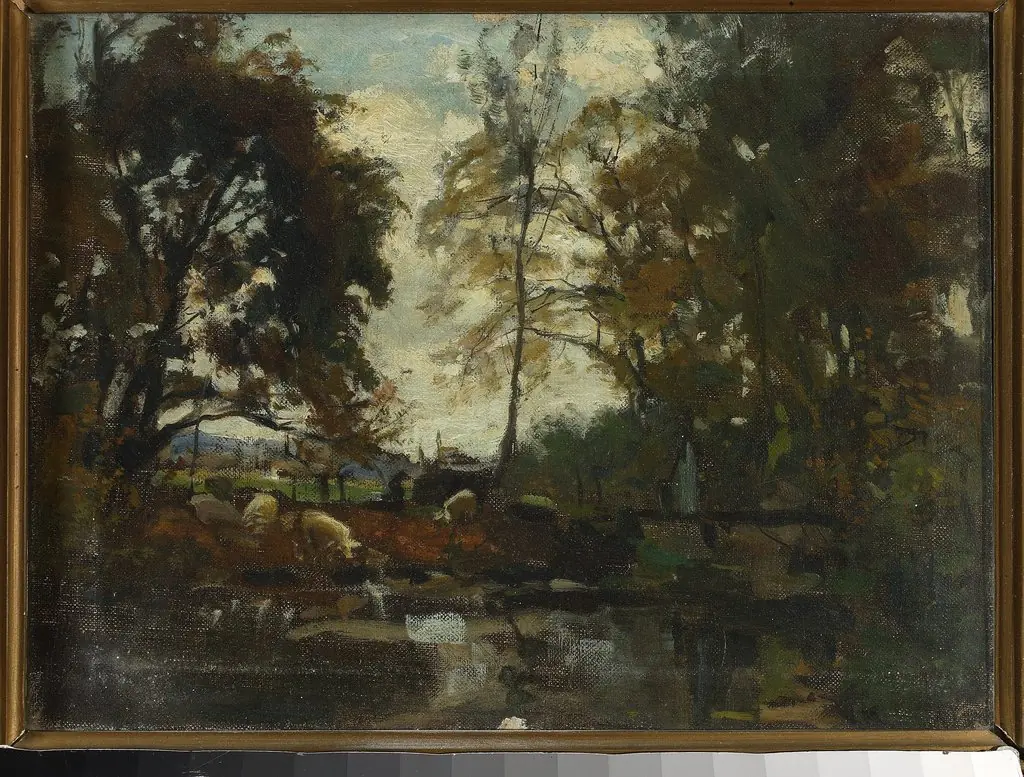
Tyttö ja lampaita is an unspecified painting by Eero Snellman. It is held in the collection of the Finnish National Gallery. This painting depicts a woman in a white headscarf guiding a sheepdog through a grassy pasture, herding a small group of sheep.
About this work
Overview
This painting depicts a woman in a white headscarf guiding a sheepdog through a grassy pasture, herding a small group of sheep.
This painting depicts a woman in a white headscarf guiding a sheepdog through a grassy pasture, herding a small group of sheep. The background features distant trees and buildings under a muted, overcast sky. The surface is built with thick, expressive brushwork, emphasizing texture over fine detail. The palette is restrained yet vivid, capturing the quiet rhythm of rural life without idealization.
Subject & Meaning
The scene portrays an everyday moment of pastoral labor, centering a woman engaged in the quiet work of herding. Her presence, framed by the animals and landscape, suggests a harmony between human activity and the natural environment. There is no dramatic narrative—only the steady, unremarkable rhythm of rural existence, rendered with dignity and restraint.
Technique & Style
The artist employs impasto to build form and movement, particularly in the wool of the sheep and the fur of the dog. Brushstrokes are deliberate and tactile, creating a sense of physical presence. Color is applied broadly, avoiding fine detail, which enhances the immediacy of the scene. The sky and foliage are rendered with loose, atmospheric strokes, grounding the composition in a sense of place.
History & Provenance
The work’s origin is tied to a regional artistic tradition focused on rural life, though specific records of its creation or early ownership are not documented. It likely emerged from a local artist’s direct observation of agricultural communities, reflecting a broader 19th-century interest in everyday scenes outside urban centers.
Context
This image aligns with a period when artists across Europe turned to rural subjects as industrialization reshaped society. Unlike romanticized depictions, this work avoids sentimentality, presenting labor as unembellished and integrated into the land. Its simplicity reflects a shift toward authenticity in visual storytelling during the late 1800s.
Legacy
The painting contributes to a quiet but persistent tradition of depicting rural labor with observational honesty. Its emphasis on texture and light over narrative detail influenced later artists seeking to convey atmosphere through material brushwork rather than polished finish. It remains a modest but resonant example of regional realism.
Artist & collection
Artist
Eero Snellman made small oil paintings and metal reliefs of Finnish streets and people in the early 1900s.