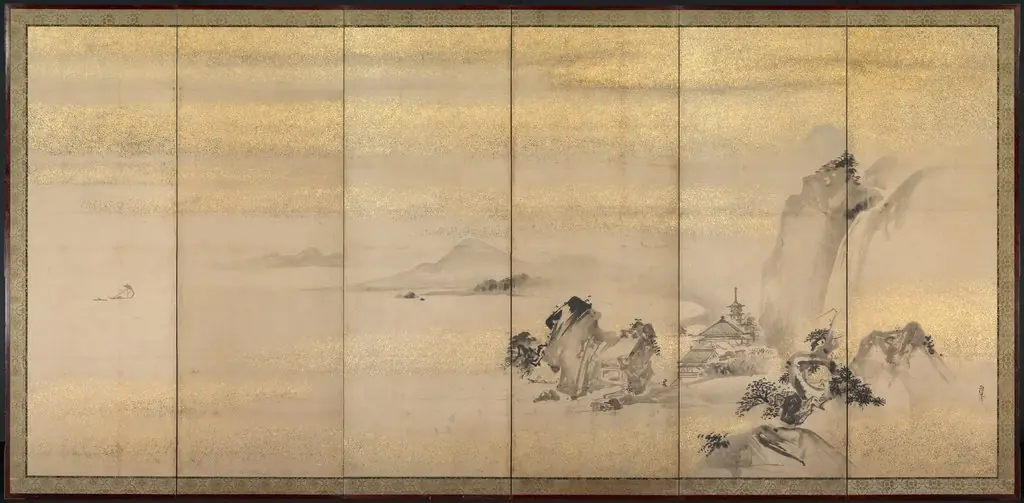
Artwork
The Eight Immortals of the Wine Cup
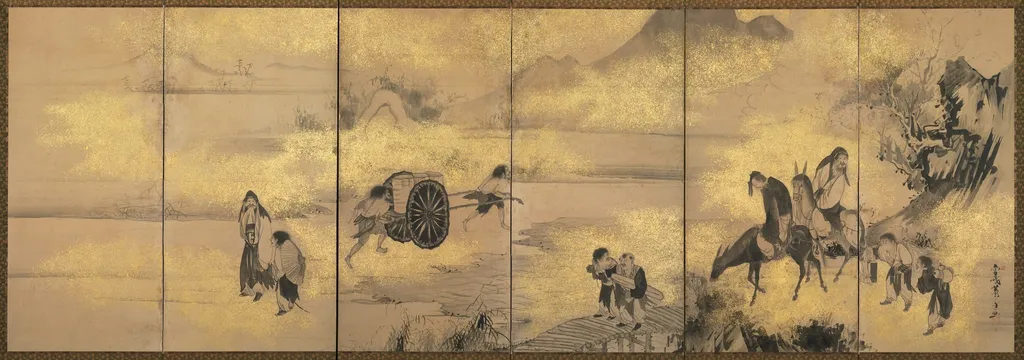
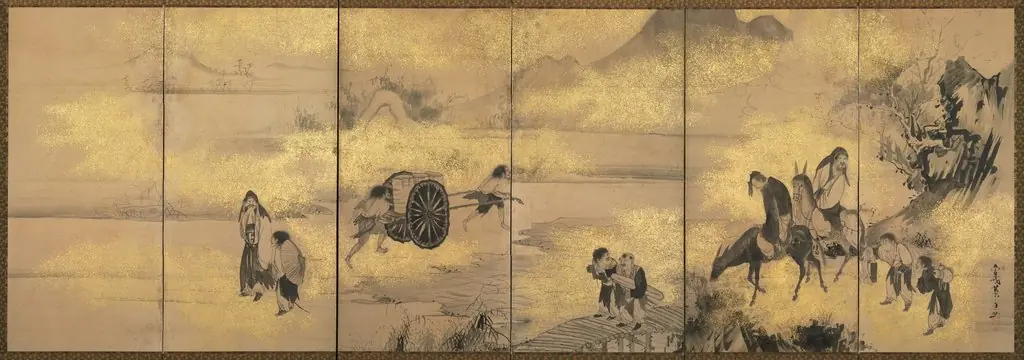
The Eight Immortals of the Wine Cup is an unspecified painting by the Nihonga artist Soga Shōhaku. It dates from 1765 and is held in the collection of the Cleveland Museum of Art.
About this work
Overview
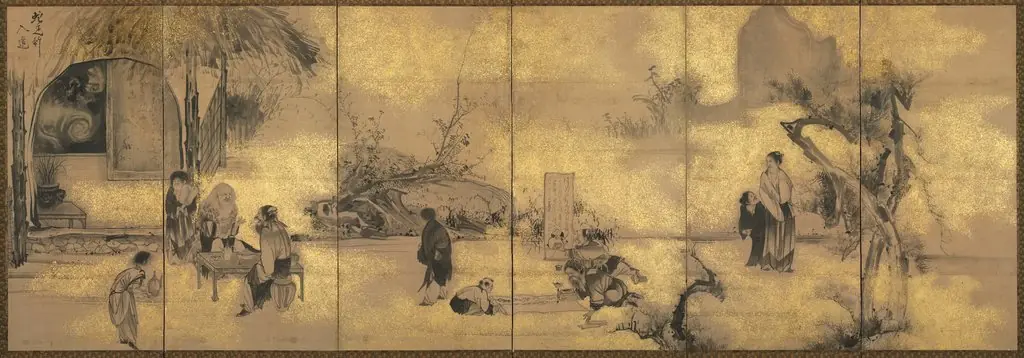
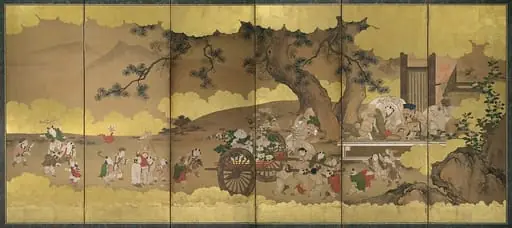
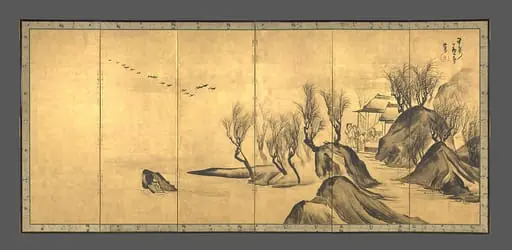
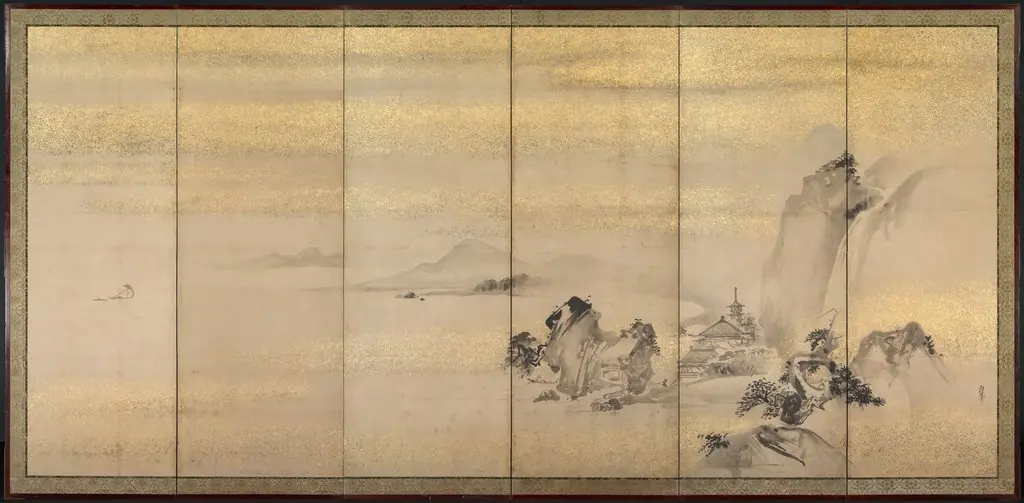
Created in 1765 by the Japanese painter Soga Shōhaku, the work titled The Eight Immortals of the Wine Cup is a six‑panel folding screen. It is part of the collection of the Cleveland Museum of Art. The panels are unified by a shimmering gold ground that frames a series of figures rendered in monochrome ink with occasional gold highlights.
Subject & Meaning
The screen depicts a procession of figures dressed in traditional Japanese attire, each engaged in distinct actions such as a man bearing a large wheel and another astride a horse. The title alludes to the legendary Eight Immortals of Chinese folklore, known for their fondness for wine, suggesting a playful or celebratory narrative within the depicted scenes.
Technique & Style
Shōhaku employs a realistic rendering of human forms and objects, using bold black ink lines against the gold background. The contrast of monochrome figures with selective gold accents creates a sense of depth while maintaining a decorative surface. The composition balances detailed observation of clothing and movement with the flat, luminous quality of the gilded plane.
History & Provenance
Since its creation in the mid‑eighteenth century, the screen has remained in private hands before entering the Cleveland Museum of Art, where it is displayed as part of the museum’s Asian art holdings. Its provenance reflects the continued interest in Edo‑period screen painting among both Japanese collectors and Western institutions.
Artist & collection
Artist
Shōhaku spent his life in Kyoto, the creative heart of Japan, where he painted scrolls and screens that looked nothing like the soft landscapes of his day.