Artwork
The Eight Immortals of the Wine Cup
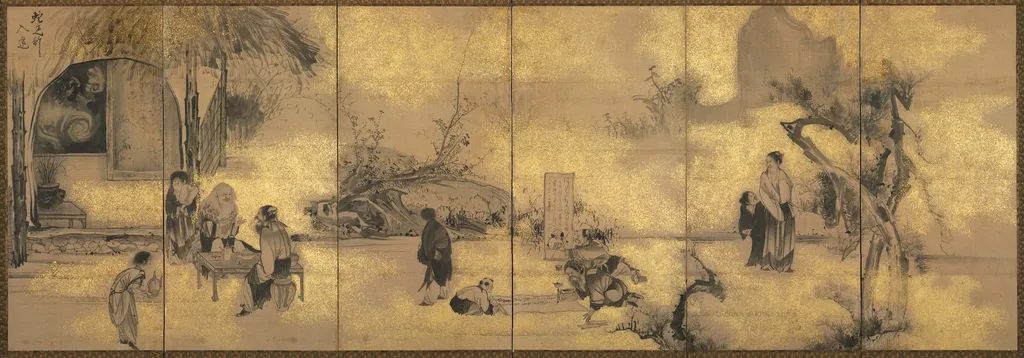
The Eight Immortals of the Wine Cup is an unspecified painting by the Nihonga artist Soga Shōhaku. It dates from 1765 and is held in the collection of the Cleveland Museum of Art.
About this work
Overview
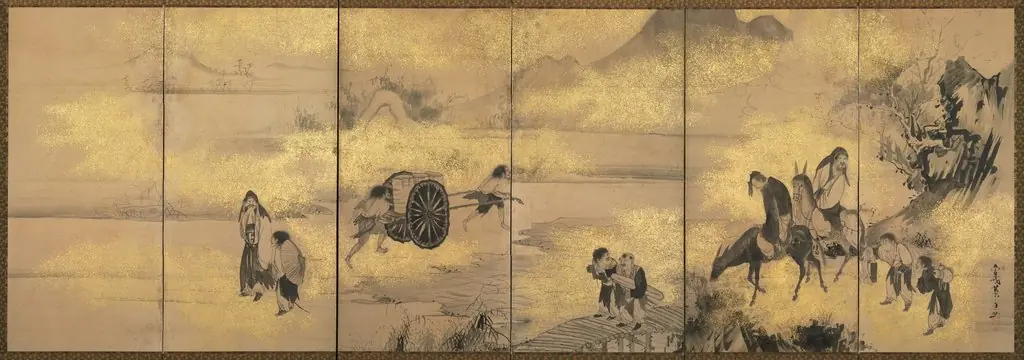
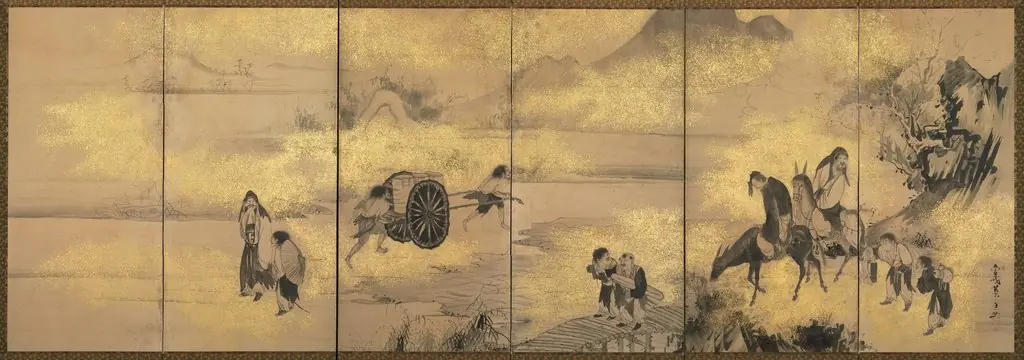
Created in 1765 by the Japanese painter Soga Shōhaku, this ink-and-color work depicts a tranquil garden scene populated by eight distinct figures.
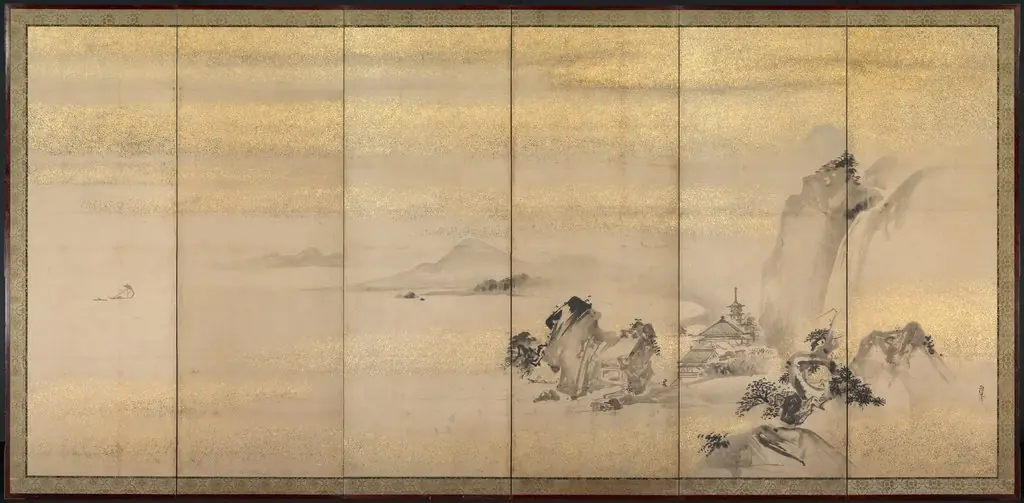
Created in 1765 by the Japanese painter Soga Shōhaku, this ink-and-color work depicts a tranquil garden scene populated by eight distinct figures. The composition balances seated drinkers at a low table with wanderers and recliners beneath trees, while a modest building with a dark interior recedes in the background. Earthy browns and muted golds dominate the palette, lending the tableau a subdued, almost dreamlike atmosphere.
Subject & Meaning
The gathering represents the legendary Eight Immortals of the Wine Cup, a motif drawn from Chinese folklore that celebrates conviviality and the pleasures of wine. Each figure is rendered with individualized traits—varying ages, postures, and even a companion monkey—suggesting a playful exploration of personality within the shared theme of indulgence and camaraderie.
Technique & Style
Shōhaku employs a loose brushwork characteristic of the Edo period’s literati tradition, allowing forms to emerge from suggestive strokes rather than precise outlines. The muted earth tones are applied in layered washes, while darker shadows define depth without disrupting the overall softness. This approach creates a harmonious blend of realism and abstraction, emphasizing mood over detailed representation.
History & Provenance
The painting entered the collection of the Cleveland Museum of Art, where it remains on display. Its acquisition reflects the museum’s broader interest in East Asian art from the 18th century, and it serves as a rare example of Shōhaku’s later output, offering insight into his mature stylistic choices.
Context
During the mid‑18th century, Japanese artists often looked to Chinese literary subjects for inspiration, adapting them to local aesthetic sensibilities. Shōhaku’s rendition of the Eight Immortals aligns with this trend, merging a Chinese narrative with a distinctly Japanese garden setting, thereby situating the work within the cross‑cultural artistic exchanges of the Edo period.
Artist & collection
Artist
Shōhaku spent his life in Kyoto, the creative heart of Japan, where he painted scrolls and screens that looked nothing like the soft landscapes of his day.