Artwork
Două personaje în interior
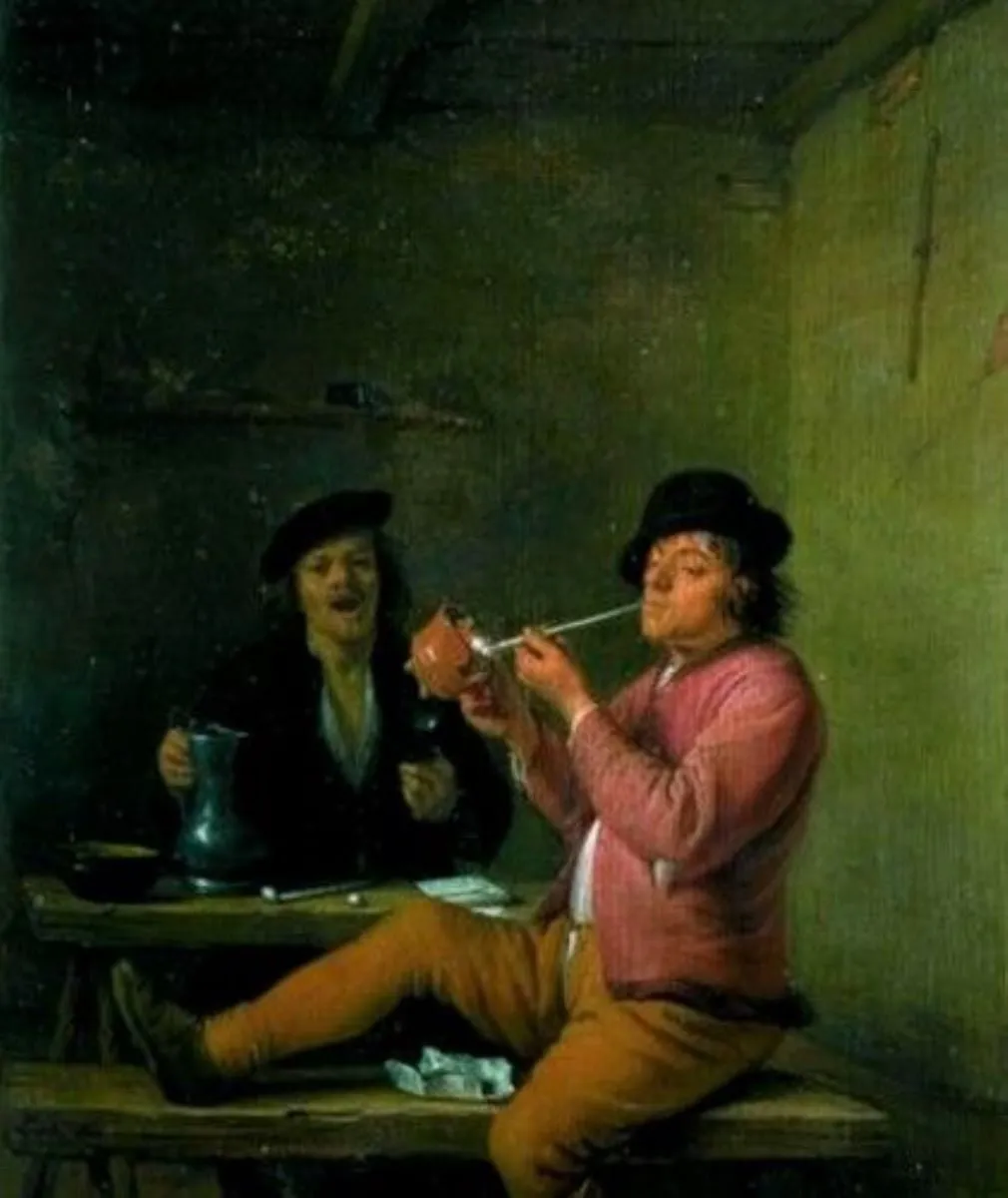
Două personaje în interior is an unspecified painting by the Baroque artist Hendrick Martensz Sorgh. It dates from 1648 and is held in the collection of the National Museum of Art of Romania.
About this work
Overview
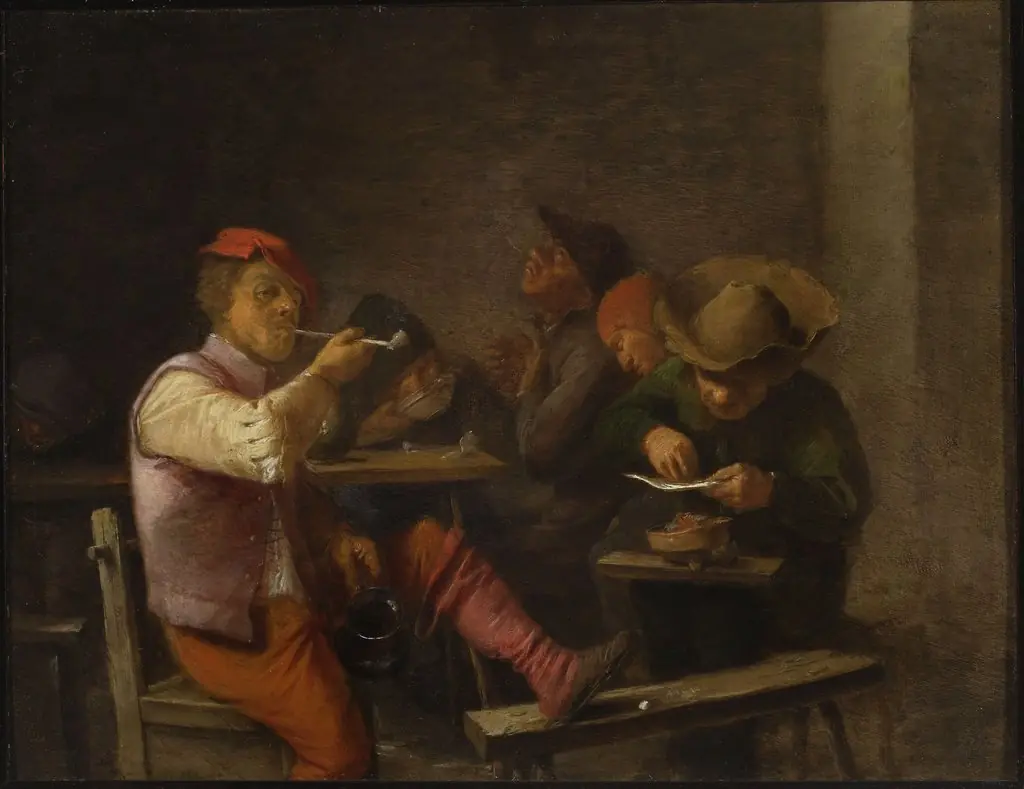
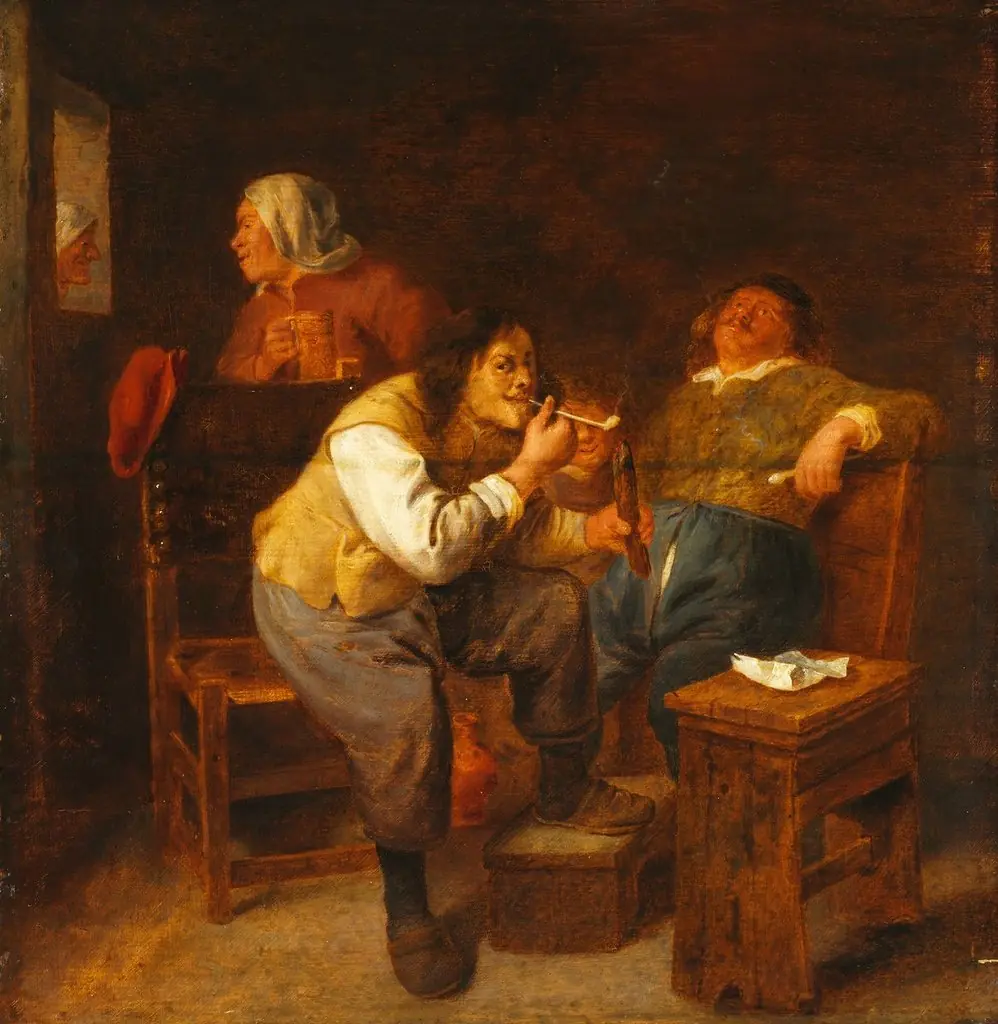
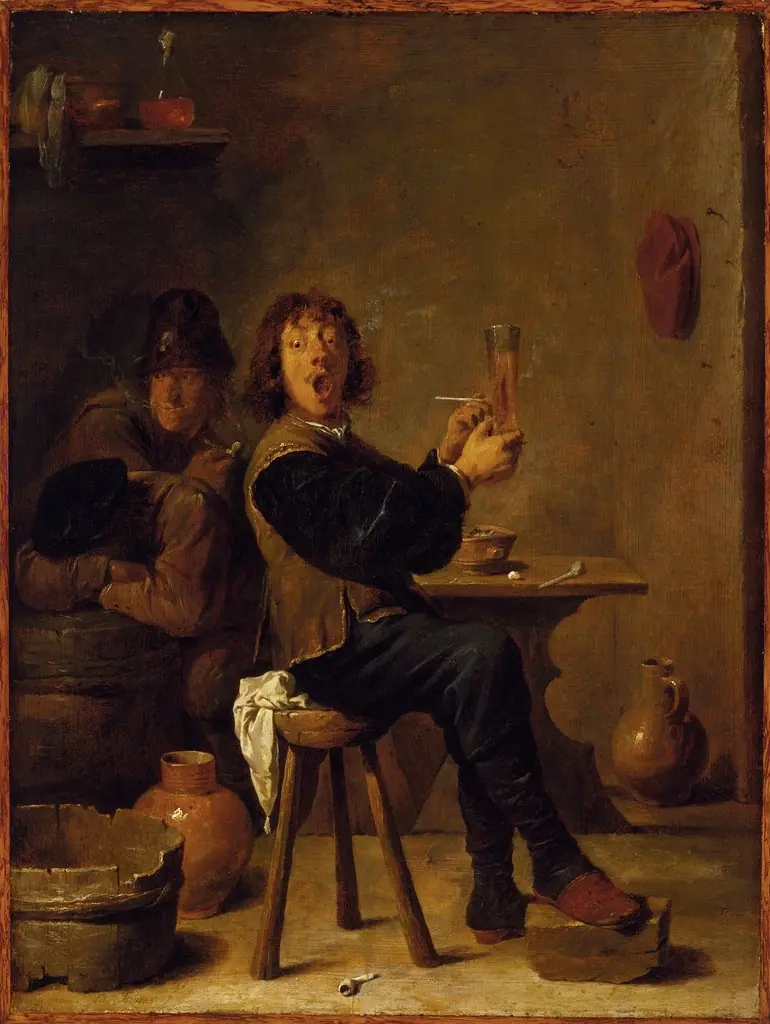
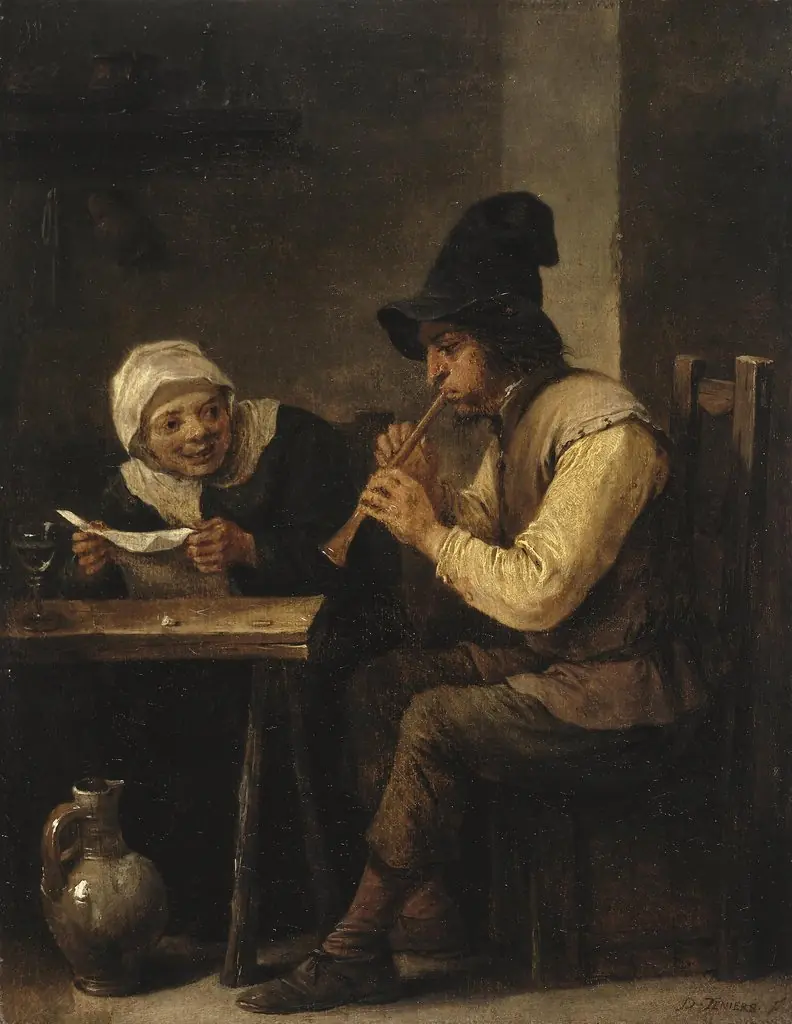
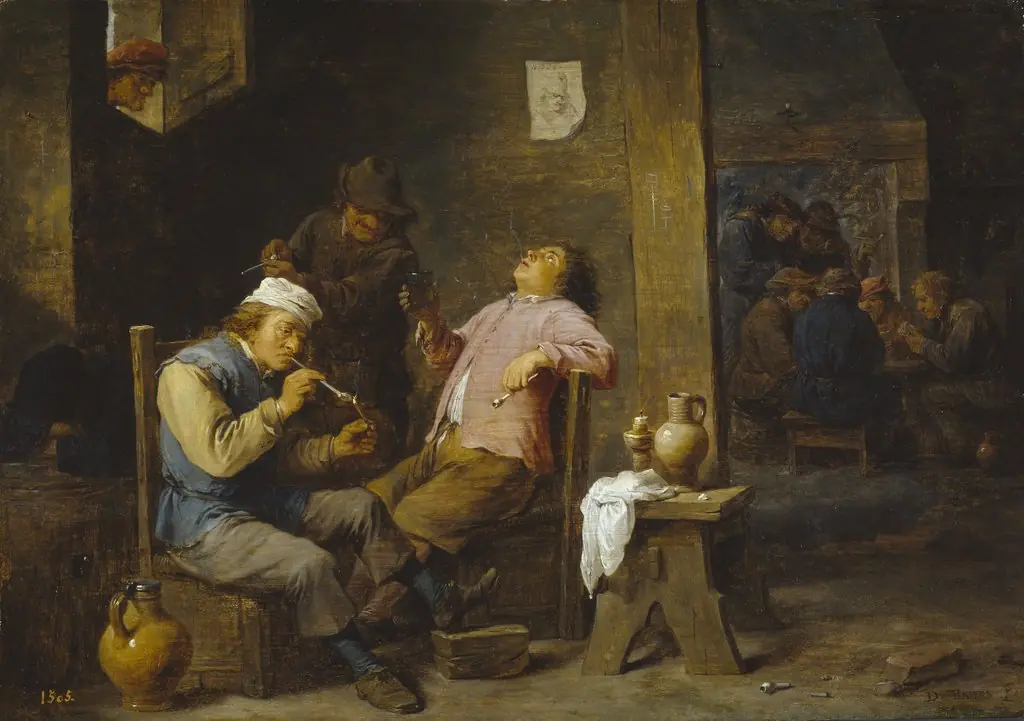
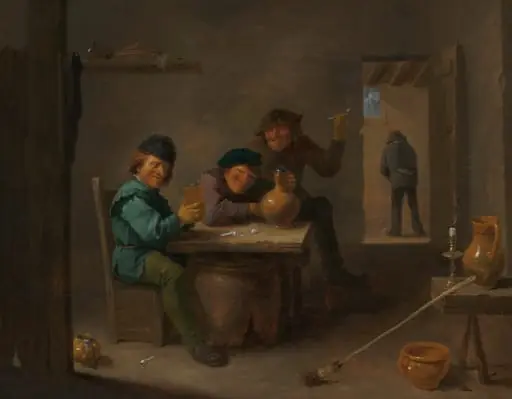
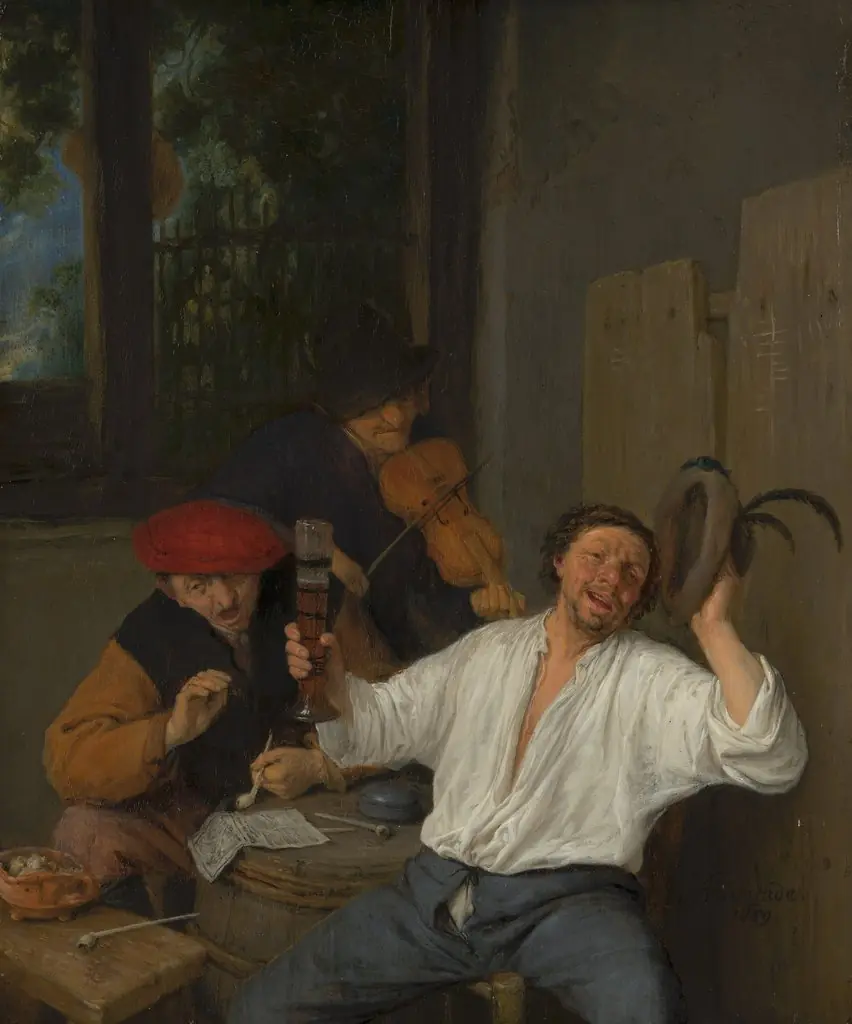
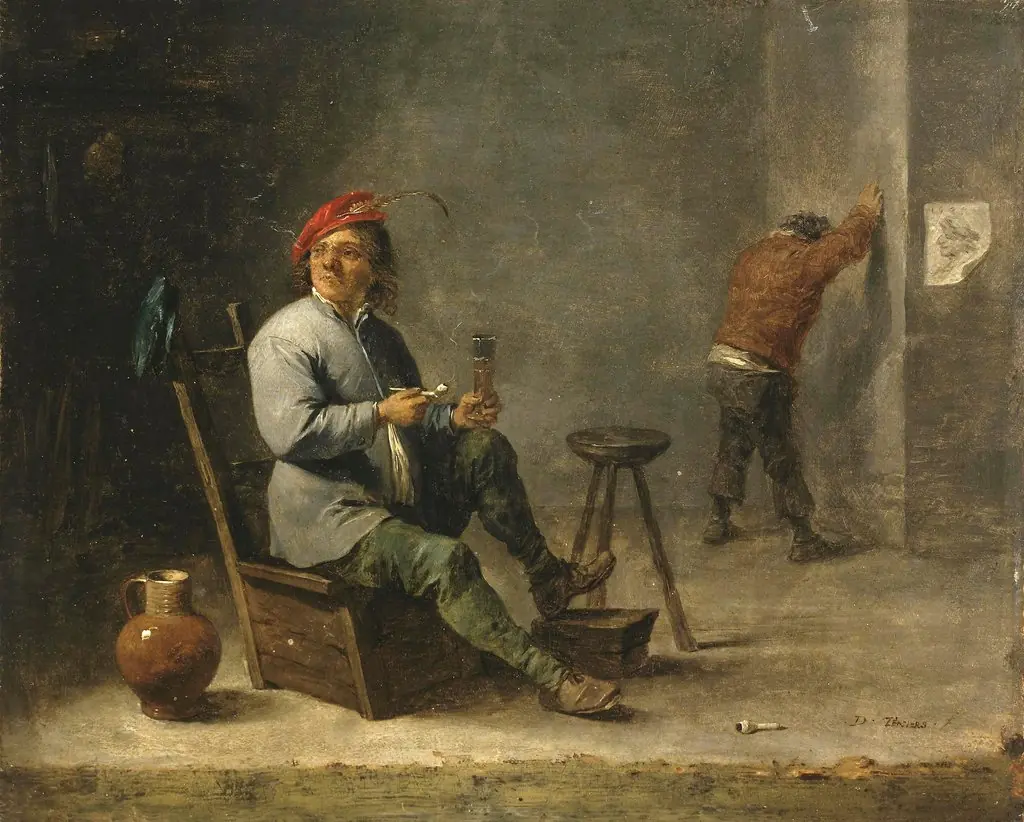
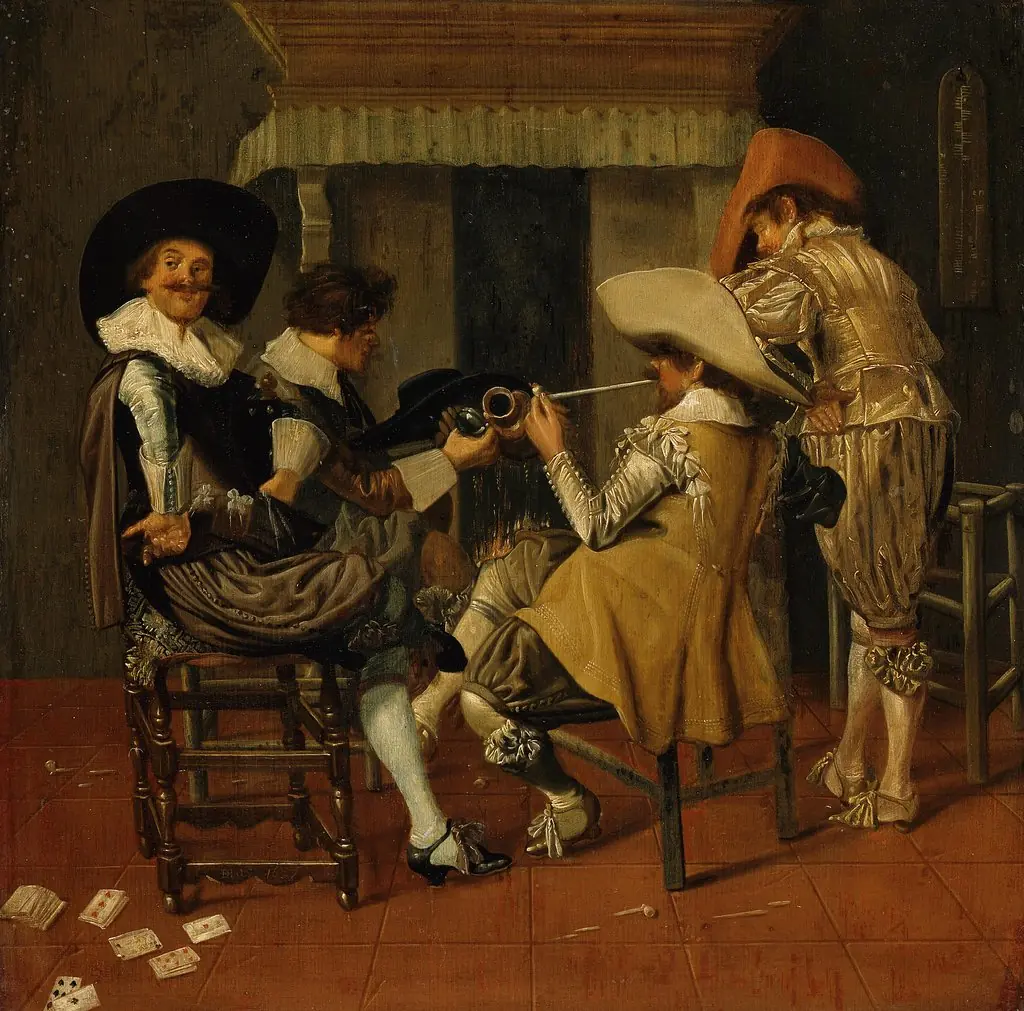
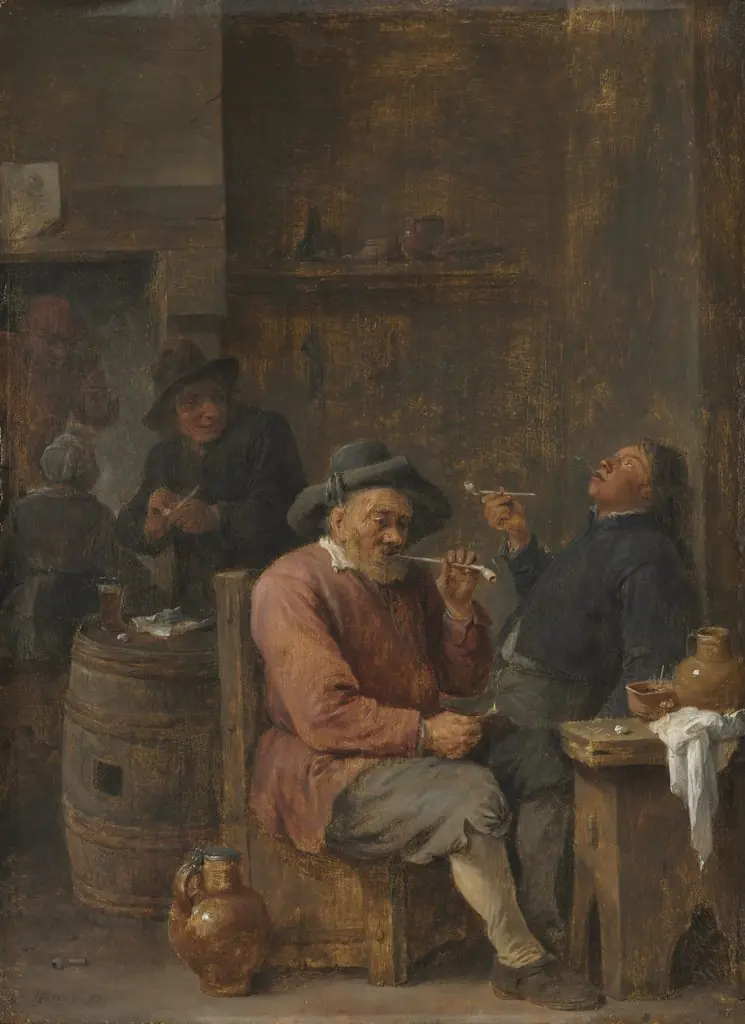
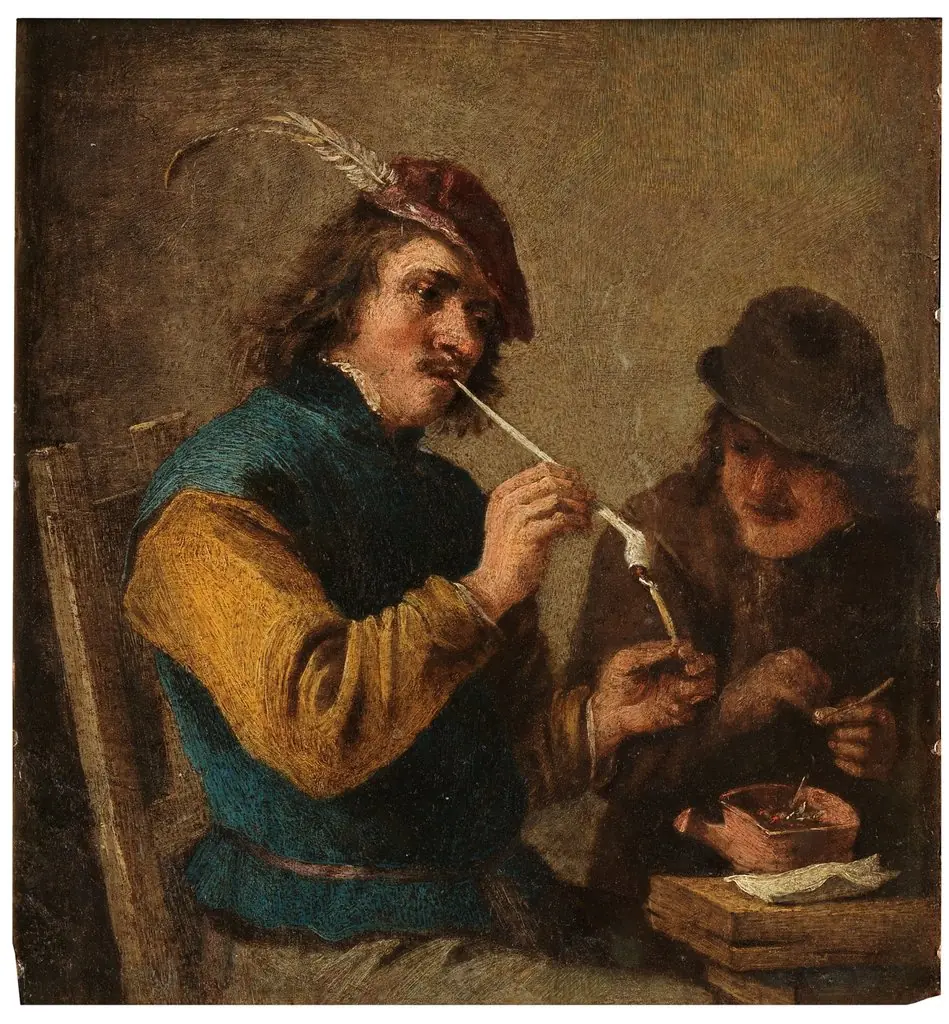
Painted in 1648 by Hendrick Martensz Sorgh, this small interior scene depicts two men in a modest, dimly lit room. The setting suggests a humble tavern or domestic space, rendered with quiet attention to everyday detail. The figures are engaged in a moment of informal interaction, their postures and gestures conveying a sense of quiet companionship rather than grand narrative.
Subject & Meaning
The two figures—a man smoking a pipe and another laughing with a pitcher nearby—suggest a moment of relaxed camaraderie. Their attire and surroundings imply lower-middle-class life, not aristocratic leisure. The absence of overt symbolism points to a focus on ordinary human behavior, reflecting Dutch genre painting’s interest in authentic, unidealized moments of daily life.
Technique & Style
Sorgh employs subtle chiaroscuro to model forms and define space, with soft light falling on the table, glass, and pipe while shadows deepen around the figures’ faces and walls. The brushwork is restrained yet precise, capturing textures like worn wood, rough fabric, and glazed ceramic. The greenish ambient tone unifies the scene, enhancing its intimate, enclosed atmosphere.
History & Provenance
The painting dates to the height of Dutch genre painting, a period when domestic and tavern scenes gained popularity among middle-class patrons. While its early ownership is undocumented, it has remained within private collections since at least the 19th century. Its survival in relatively unchanged condition reflects its modest scale and lack of overt political or religious content.
Context
Created during the Dutch Golden Age, the work aligns with a broader trend of depicting ordinary life with psychological nuance. Unlike grand historical or religious subjects, Sorgh’s scene reflects the cultural value placed on private moments, domestic virtue, and the quiet dignity of common activities. Similar compositions appear in the works of Pieter de Hooch and Jan Steen.
Legacy
Though not widely exhibited, the painting exemplifies the quiet realism that defined Dutch genre art. Its understated composition and sensitive handling of light influenced later artists interested in intimate interiors. It remains a quiet testament to the era’s fascination with the emotional resonance of everyday scenes, preserved without embellishment.
Artist & collection
Artist