Artwork
Untitled
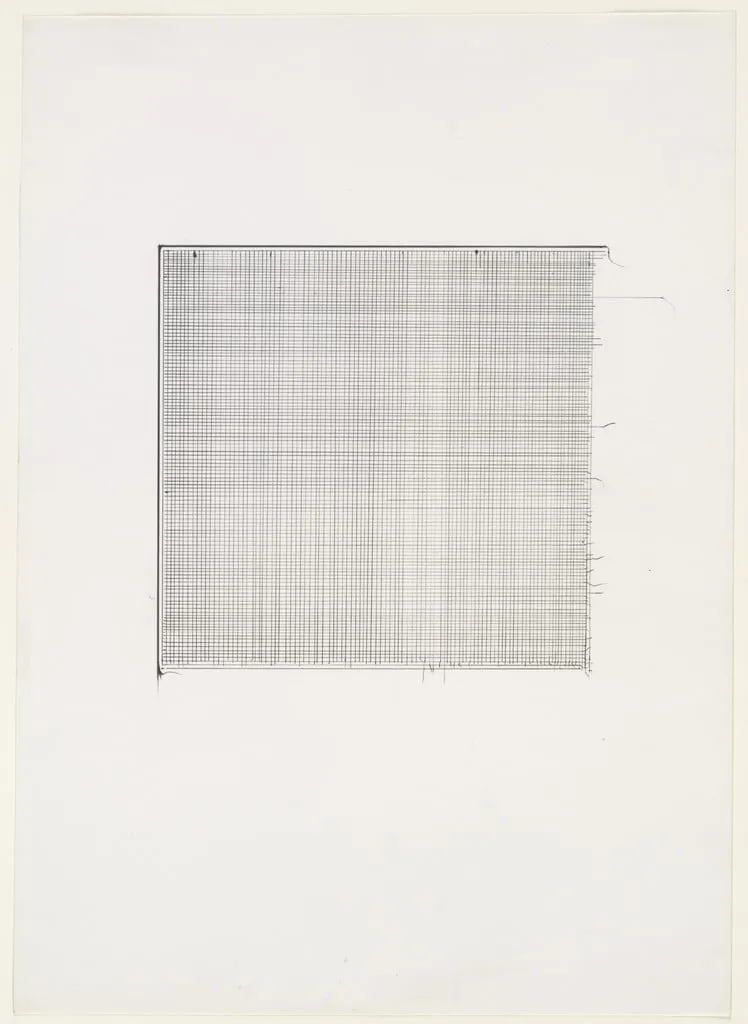
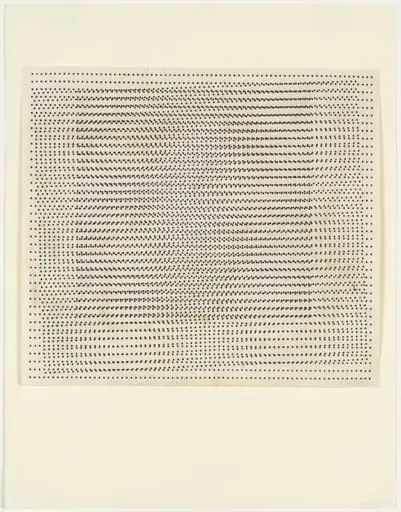
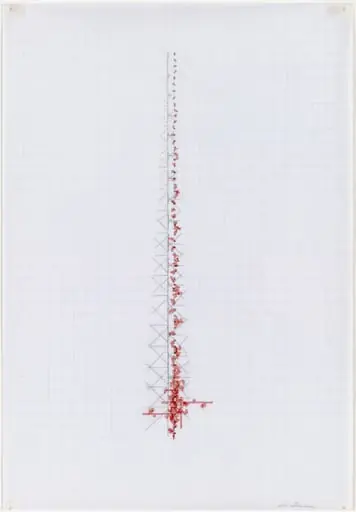
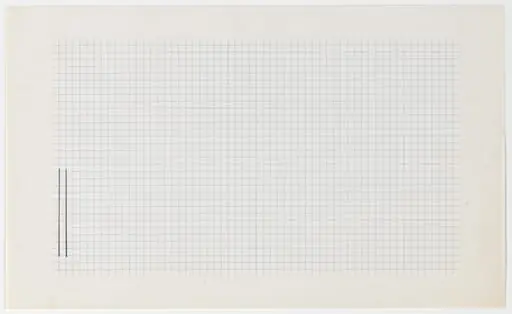
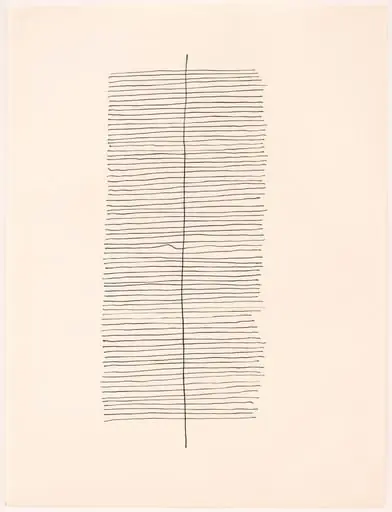
Untitled is an ink drawing by Stanislav Kolibal. It dates from 1975 and is held in the collection of the Museum of Modern Art.
About this work
Overview
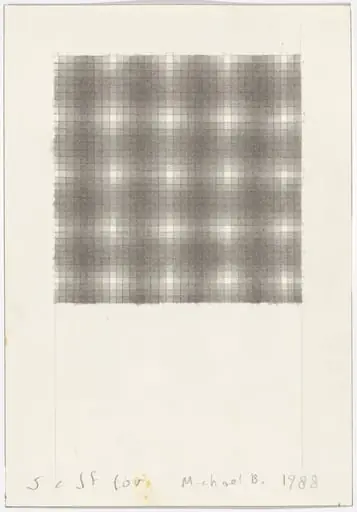
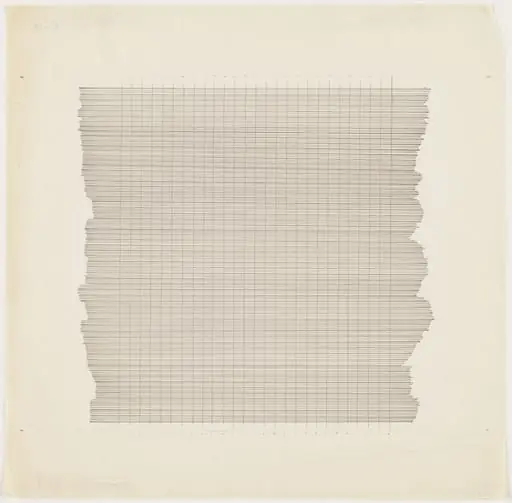
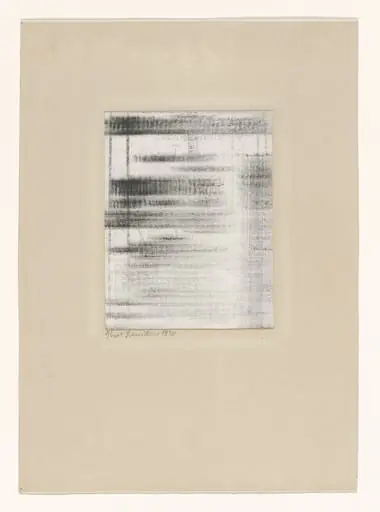
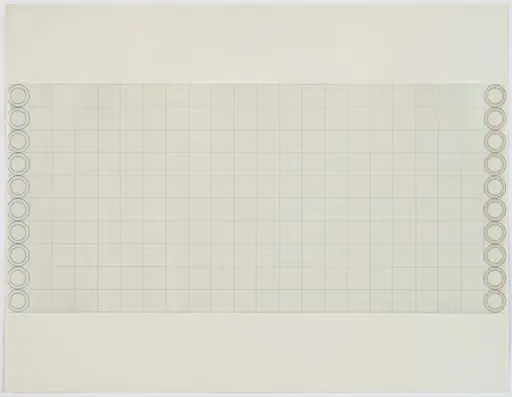
Created in 1975, this drawing by Stanislav Kolibal is executed in ballpoint pen and ink on white paper.
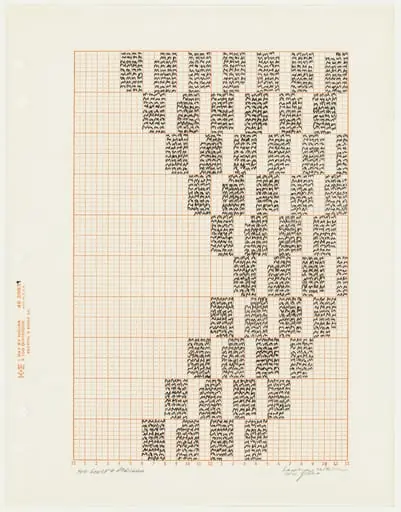
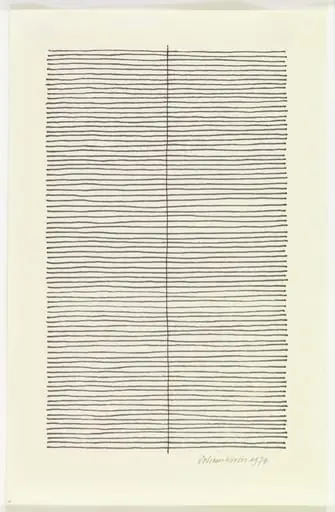
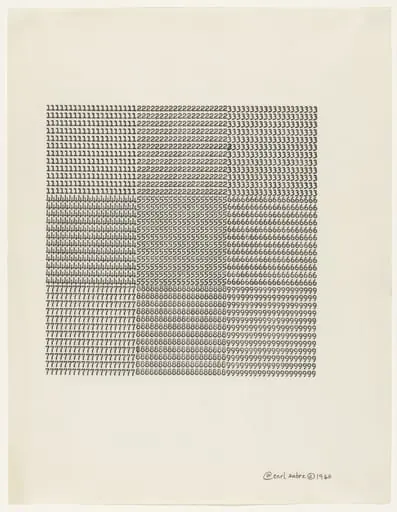
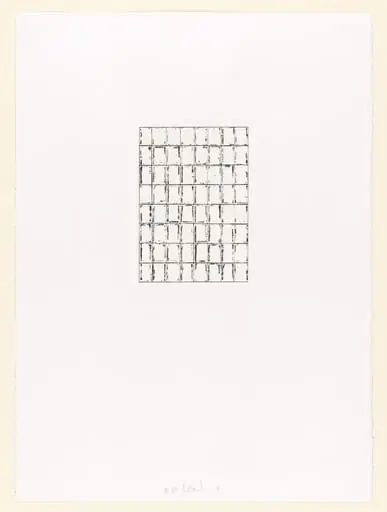
Created in 1975, this drawing by Stanislav Kolibal is executed in ballpoint pen and ink on white paper. It presents a tightly packed grid of fine, hand-drawn lines, arranged with methodical regularity. The contrast between the dark ink and the unmarked paper emphasizes the structure, while subtle irregularities in the strokes reveal the artist’s manual process. No other elements interrupt the surface, focusing attention solely on the rhythm of the lines.
Subject & Meaning
The work avoids representational imagery, instead presenting an abstract field of lines that suggest order, repetition, and labor. Its minimalism invites contemplation of process over narrative. The grid may reference systems of measurement, industrial production, or the quiet discipline of mark-making. Meaning emerges not from depiction but from the endurance and precision required to produce it.
Technique & Style
Kolibal used a ballpoint pen to apply dense, parallel lines with consistent pressure, creating a uniform texture. Slight variations in line weight and spacing betray the hand’s movement, preventing mechanical uniformity. The technique resembles cross-hatching but avoids shading, instead building density through sheer accumulation. The result is a surface that reads as both controlled and humanly imperfect.
History & Provenance
The drawing was made in 1975 and entered the collection of The Museum of Modern Art in New York. It belongs to a series of works from Kolibal’s early period, in which he explored the limits of drawing through repetitive mark-making. Its acquisition reflects institutional interest in conceptual and minimal approaches to drawing during the 1970s.
Context
Created during a period when artists across Europe and the U.S. were redefining drawing beyond illustration, Kolibal’s work aligns with trends in process art and minimalism. It shares affinities with the work of Sol LeWitt and Agnes Martin, who also used grids and repetition to investigate structure and perception. The piece resists emotional expression, favoring quiet, systematic inquiry.
Legacy
The drawing contributes to a broader reevaluation of drawing as a primary medium for conceptual exploration rather than preparatory sketching. Its endurance in MoMA’s collection underscores its role in expanding definitions of what drawing can be. Later artists have cited its restrained discipline as an influence in works emphasizing repetition, time, and material presence.
Artist & collection