Artwork
Untitled
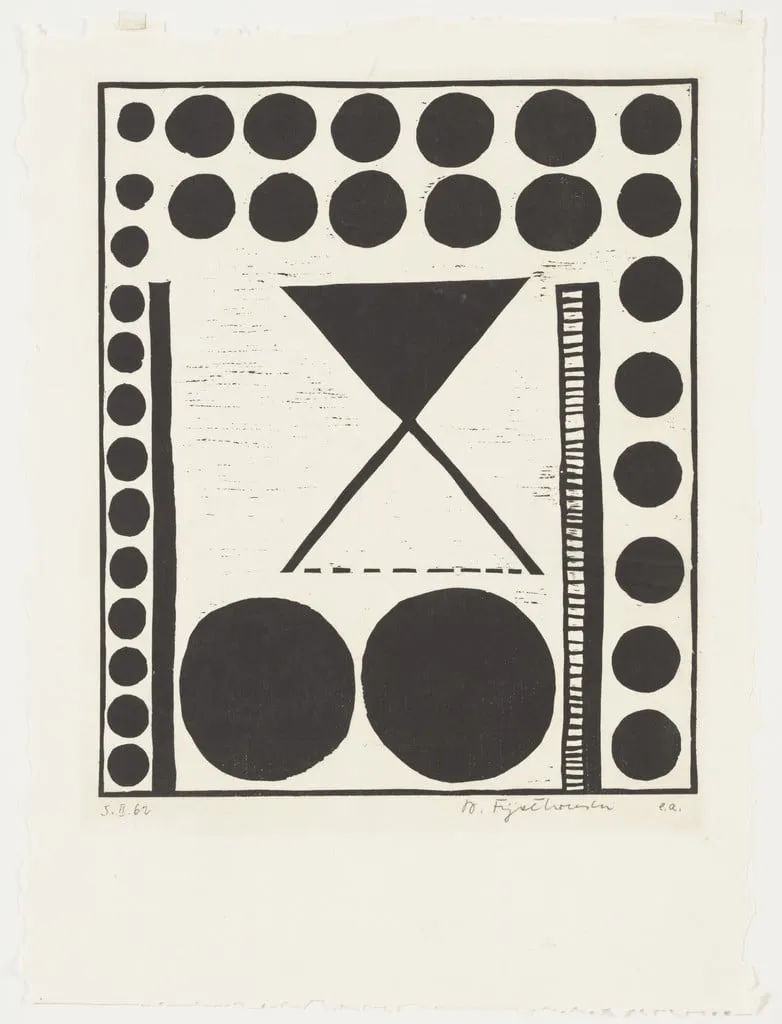
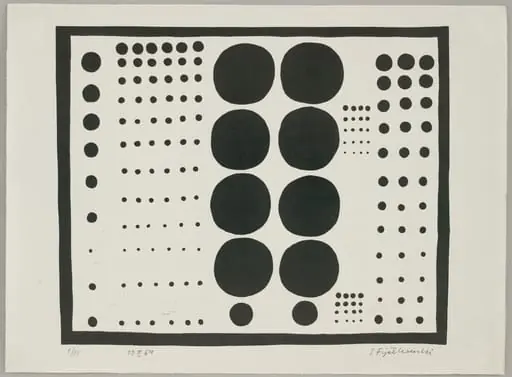
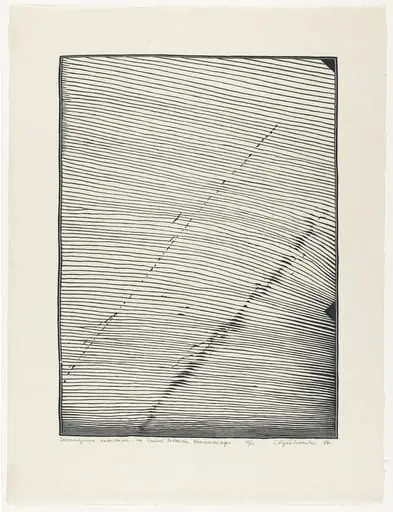
Untitled is a print by Stanislaw Fijalkowski. It dates from 1962 and is held in the collection of the Museum of Modern Art. Created in 1962, this linoleum cut by Stanisław Fijalkowski is part of The Museum of Modern Art’s collection.
About this work
Overview
The work presents a non-representational composition of black geometric forms—circles, rectangles, and a triangle—on a white ground.
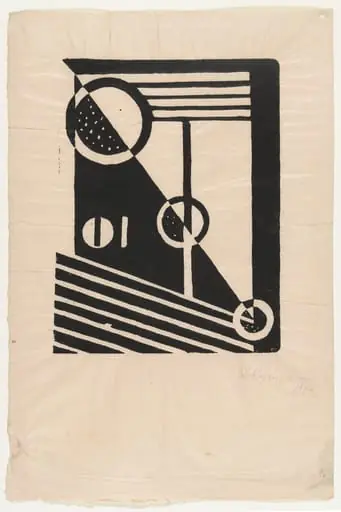
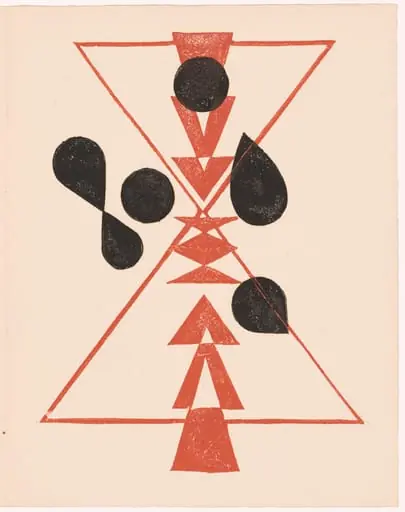
Created in 1962, this linoleum cut by Stanisław Fijalkowski is part of The Museum of Modern Art’s collection. The work presents a non-representational composition of black geometric forms—circles, rectangles, and a triangle—on a white ground. Its stark contrast and simplified elements reflect an interest in abstraction, emphasizing structure over narrative. The print’s physicality is evident in the hand-carved texture and ink application.
Subject & Meaning
The piece avoids figurative reference, instead exploring formal relationships between shape and space. The arrangement of forms appears deliberate yet unstructured, suggesting rhythm without symmetry. The absence of title or symbolic content invites viewers to engage with the work as an exercise in visual balance, where meaning arises from the interaction of lines and negative space rather than external references.
Technique & Style
Fijalkowski employed linoleum cutting to produce bold, tactile forms. Varying line thicknesses—some heavy and solid, others fine and delicate—create visual tension and a sense of depth. The medium’s inherent resistance to fine detail results in a raw, expressive quality. The hand-carved edges and uneven ink distribution preserve the artist’s physical engagement with the block, reinforcing the work’s material presence.
History & Provenance
The work entered The Museum of Modern Art’s collection following its creation in 1962, during a period when Fijalkowski was actively engaged in Poland’s postwar avant-garde scene. While little public documentation exists about its early exhibition history, its acquisition by MoMA reflects institutional interest in European abstract printmaking of the era, particularly works that challenged traditional compositional norms.
Context
Fijalkowski’s work emerged amid broader European movements redefining abstraction after World War II, including Polish Constructivism and Informel. His use of geometric forms aligns with contemporaries exploring minimalism and materiality, yet his approach retains a distinctly personal, handcrafted sensibility. The print reflects a moment when artists sought new visual languages beyond political or figurative constraints.
Legacy
Though not widely exhibited, this print contributes to understanding the diversity of postwar European printmaking. Fijalkowski’s focus on process and formal economy influenced later generations interested in the intersection of craft and abstraction. The work remains a quiet example of how limited palettes and simple shapes can generate complex visual experiences through careful composition and material awareness.
Artist & collection
Artist
Stanislaw Fijalkowski (1922–2020) was a Polish artist, born in Zdolbuniv.