Artwork
Untitled
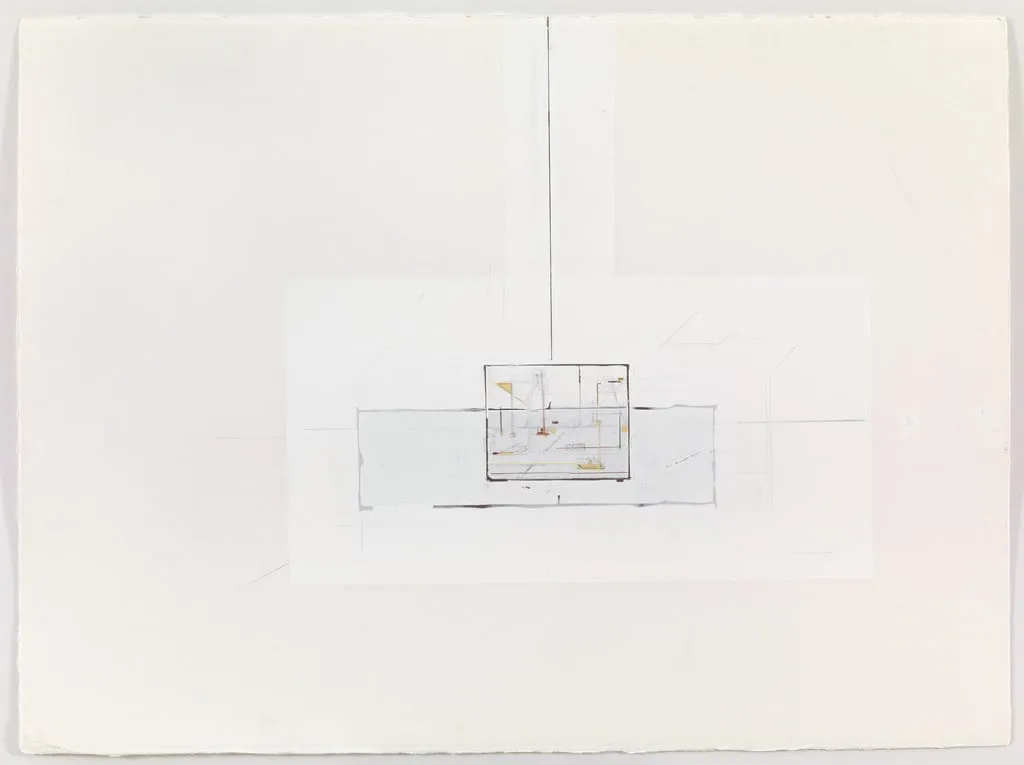
Untitled is a graphite drawing by Stephen Metts. It dates from 2000 and is held in the collection of the Museum of Modern Art.
About this work
Overview
The work’s restraint suggests an intentional reduction of visual information, inviting contemplation of absence as much as presence.
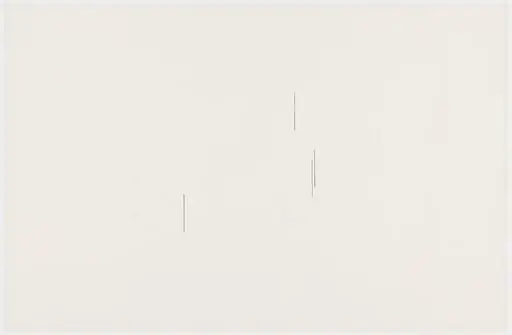
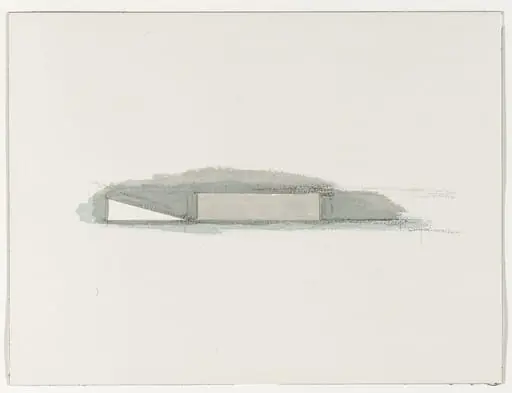
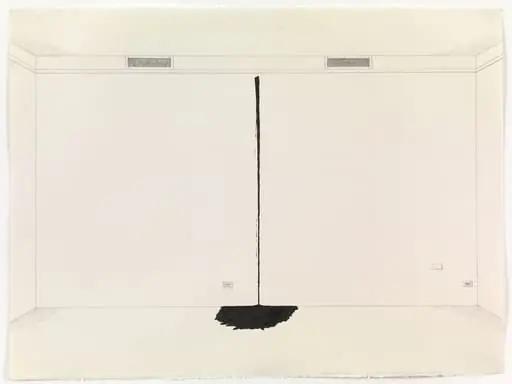
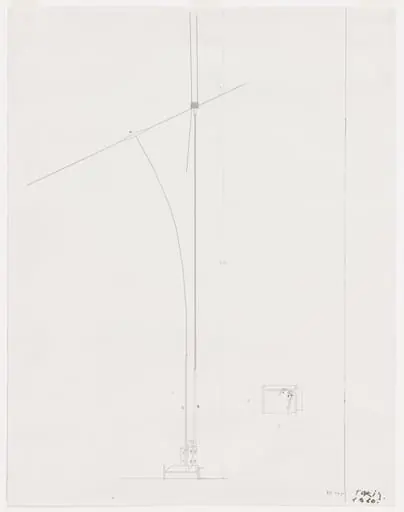
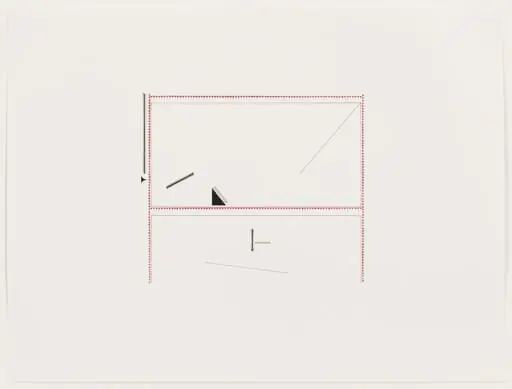
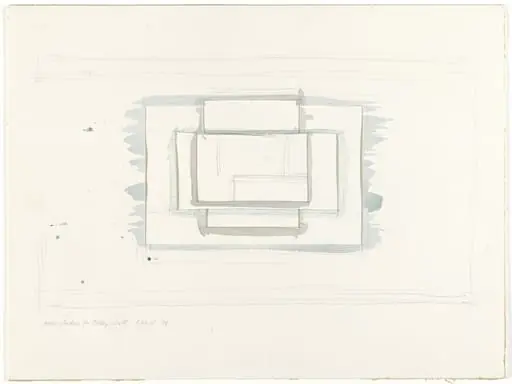
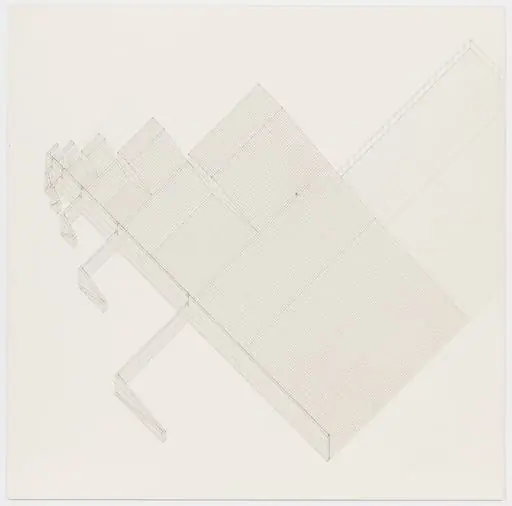
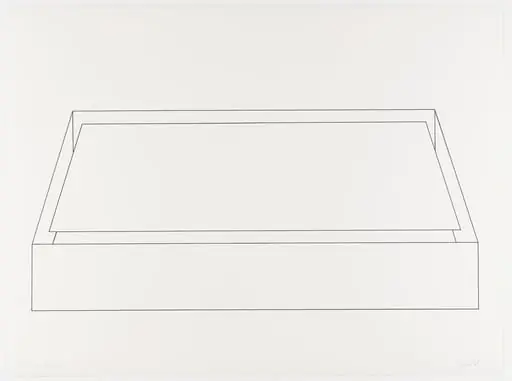
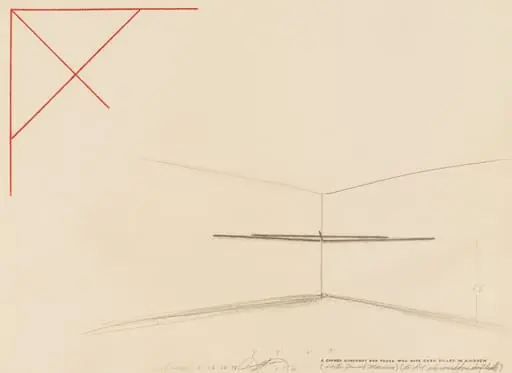
Created in 2000 by Stephen Metts, this drawing is executed in pencil and synthetic polymer paint on paper. It resides in the collection of The Museum of Modern Art. The composition is dominated by expansive white space, with minimal intervention: only a small, indistinct form appears near the center, rendered in faint, hesitant lines. The work’s restraint suggests an intentional reduction of visual information, inviting contemplation of absence as much as presence.
Subject & Meaning
The central element resembles a rudimentary interior—possibly a room, a box, or a contained space—with a few ambiguous lines suggesting furniture or structural elements. These marks are neither detailed nor definitive, evoking memory or the ghost of a thought rather than a concrete scene. The emptiness surrounding the sketch may imply isolation, impermanence, or the fragility of perception, leaving interpretation open to the viewer’s own associations.
Technique & Style
Metts employs pencil and thin washes of synthetic polymer paint to create a muted, translucent effect. The lines are lightly drawn, uneven, and tentative, resembling spontaneous notations rather than deliberate renderings. The palette is subdued, with faint color accents barely emerging from the paper’s surface. This approach prioritizes gesture over finish, emphasizing process and the physicality of mark-making over representation.
History & Provenance
The work entered The Museum of Modern Art’s collection shortly after its creation, reflecting the institution’s interest in conceptual and minimalist practices of the late 1990s and early 2000s. No prior ownership or exhibition history beyond the museum’s acquisition is documented. Its inclusion suggests recognition of Metts’s contribution to a broader trend of reductive drawing within contemporary art at the time.
Context
This piece aligns with a post-minimalist tendency in contemporary drawing, where artists explore silence, erasure, and the limits of visual expression. It shares affinities with works by figures like On Kawara or Robert Ryman, who used restraint to foreground materiality and intention. Metts’s drawing reflects a moment when many artists questioned the necessity of elaboration, favoring quiet, introspective gestures over narrative or decorative content.
Legacy
While not widely reproduced or discussed in major critical texts, the work contributes to an ongoing dialogue about the value of the incomplete in art. It exemplifies how minimal intervention can provoke sustained attention, influencing later artists who prioritize ambiguity and spatial silence. Its presence in MoMA’s collection affirms its role as a quiet but deliberate statement within the evolution of contemporary drawing practices.
Artist & collection