Artwork
Natură moartă cu fructe și pipă
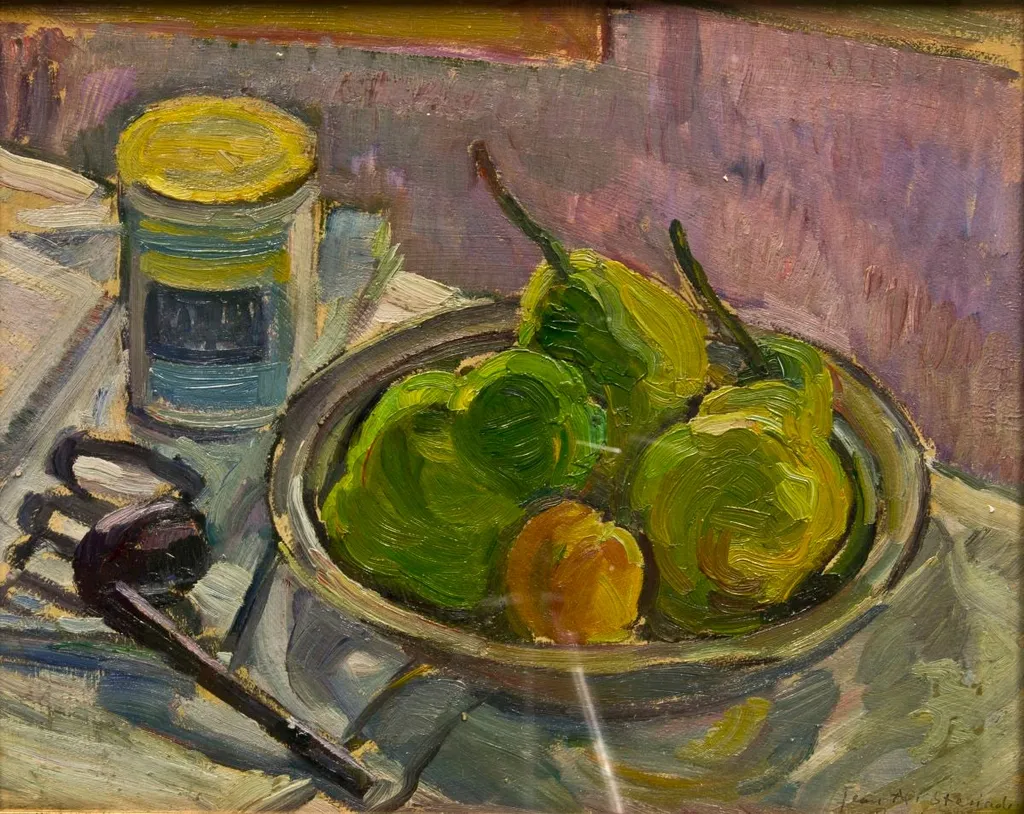
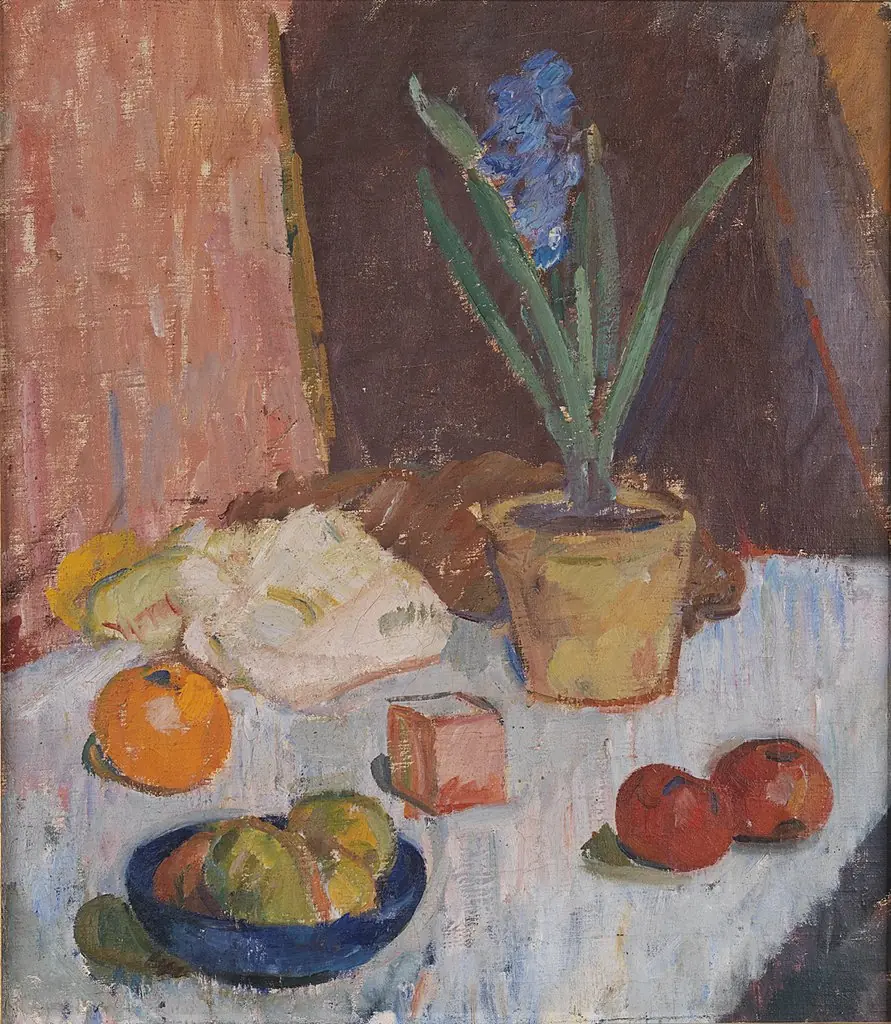
Natură moartă cu fructe și pipă is a print by Jean Alexandru Steriadi. It dates from 1928 and is held in the collection of the National Museum of Art of Romania.
About this work
Overview
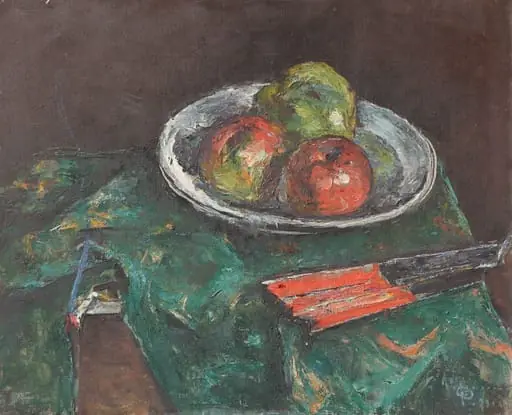
The muted purple background grounds the scene, allowing the subtle tones of the fruit and the dark pipe to hold visual weight without intrusion.
Painted in 1928 by Romanian artist Jean Alexandru Steriadi, this still life presents a quiet arrangement of everyday objects: a bowl of fruit, a pipe, and a cylindrical vessel on a table. The composition is restrained, with no dramatic lighting or elaborate setting. The muted purple background grounds the scene, allowing the subtle tones of the fruit and the dark pipe to hold visual weight without intrusion.
Subject & Meaning
The painting centers on ordinary domestic items—a bowl of mostly green fruit, one orange piece among them, and a black pipe resting on a white surface. These objects suggest a moment of pause, perhaps after a meal or during quiet reflection. The absence of human presence invites contemplation of solitude and routine, turning the mundane into a subject worthy of observation without symbolic embellishment.
Technique & Style
Steriadi employs a restrained palette and soft transitions between tones, avoiding sharp contrasts. The fruit is rendered with subtle gradations of green, while the pipe and container are defined by solid, flat shapes. The white cloth beneath the pipe introduces a quiet highlight, and the background’s muted purple creates a gentle atmospheric depth. Brushwork is deliberate but unobtrusive, favoring clarity over texture.
History & Provenance
Created in 1928, the painting belongs to Steriadi’s interwar period, when he focused on intimate, non-narrative scenes. Its early 20th-century Romanian context situates it within a broader movement of artists turning toward domestic still lifes as a form of quiet resistance to grand historical themes. The work’s provenance remains unrecorded in public archives, suggesting it may have remained in private hands since its creation.
Context
In 1920s Romania, many artists moved away from academic traditions toward more personal, introspective subjects. Steriadi’s still life aligns with this shift, echoing European modernist tendencies toward simplicity and observation. Unlike overtly political or nationalistic works of the time, this painting offers a contemplative alternative, rooted in the quiet dignity of ordinary things.
Legacy
Though not widely exhibited, the painting reflects Steriadi’s consistent interest in understated realism. It contributes to a lesser-known but significant strand of Romanian modernism that valued restraint and subtlety. Its preservation offers insight into how everyday life was rendered with dignity during a period of cultural transition, without reliance on spectacle or symbolism.
Artist & collection

Artist
Jean Alexandru Steriadi was a Romanian painter and drawing artist. He made portraits and compositions based on a strong, expressive drawing; then he evolved towards impressionistic influenced landscapes in which the…