Artwork
The Old Barn, Arreton, Isle of Wight
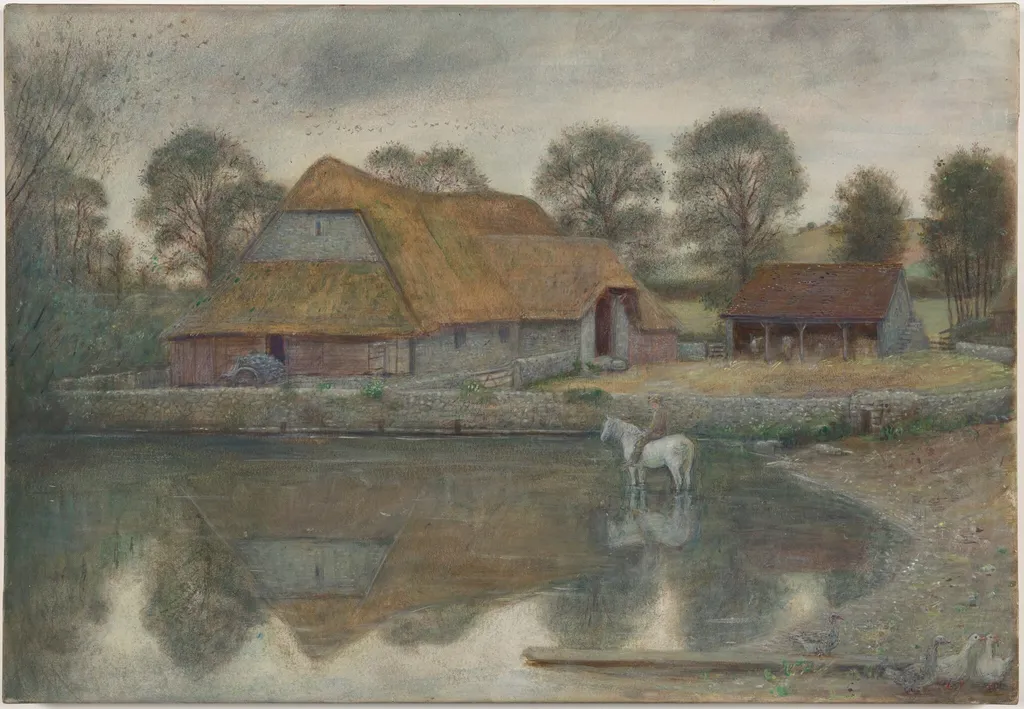
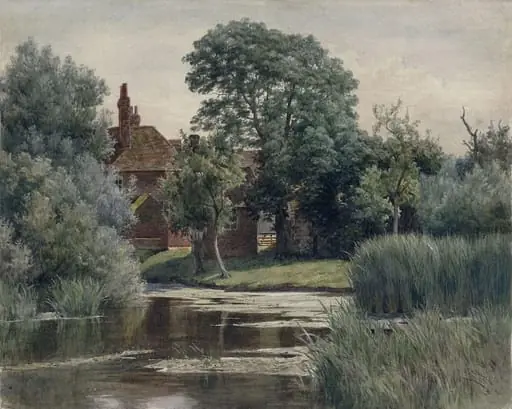
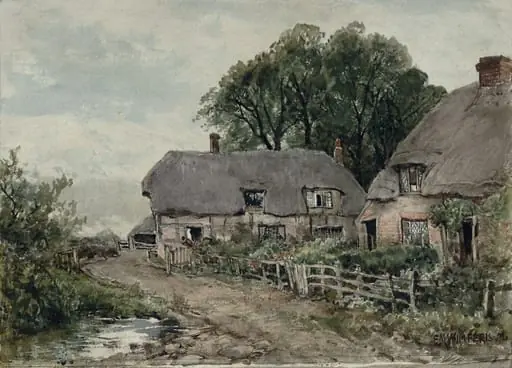
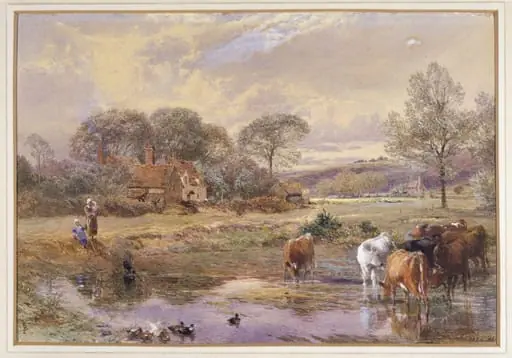
The Old Barn, Arreton, Isle of Wight is a watercolor drawing by the Impressionist artist Marie Spartali Stillman. It dates from 1894 and is held in the collection of the National Gallery of Art.
About this work
Overview
, and reflects Stillman’s interest in landscape and domestic architecture during her later career.
Created around 1894, The Old Barn, Arreton, Isle of Wight is a mixed-media drawing by Marie Spartali Stillman, executed in watercolor and gouache on paper mounted to a wooden stretcher. It depicts a quiet rural scene on the Isle of Wight, emphasizing stillness and natural harmony. The work is part of the National Gallery of Art’s collection in Washington, D.C., and reflects Stillman’s interest in landscape and domestic architecture during her later career.
Subject & Meaning
The composition centers on a weathered barn and a smaller outbuilding, framed by dense trees and a low stone wall. A white horse stands in a shallow pool of water before the structure, while a group of geese rest nearby. The absence of human figures and the calm posture of the animals suggest an atmosphere of solitude and timelessness, evoking the quiet rhythms of rural life without overt narrative or symbolism.
Technique & Style
Stillman employed watercolor and gouache to build layered, translucent tones, enhancing the texture of the barn’s wood and the reflective surface of the water. Brushwork is deliberate yet loose, with visible strokes that suggest form without precise definition. The palette is restrained—dominated by earthy browns, soft greens, and pale grays—creating a subdued, atmospheric effect that prioritizes mood over detail.
History & Provenance
The work was likely painted during Stillman’s visits to the Isle of Wight in the 1890s, a period when she focused increasingly on landscape subjects. It entered the National Gallery of Art’s collection in the 20th century, following the dispersal of her estate. Its mounting on a stretcher indicates a transitional approach, blurring boundaries between drawing and painting, a practice uncommon among her contemporaries.
Context
Stillman, associated with the Pre-Raphaelite circle early in her career, shifted toward landscape in her later years, influenced by broader trends in British art and her own evolving interests. This work aligns with late 19th-century British watercolor traditions that valued intimate, observational scenes over grand historical themes, reflecting a growing appreciation for the quiet beauty of the English countryside.
Legacy
The Old Barn, Arreton stands as a quiet testament to Stillman’s later artistic direction, away from figural subjects toward contemplative landscapes. While not widely exhibited, it contributes to the understanding of women artists in the late Victorian period who pursued personal, non-commercial subjects. Its preservation in a major American institution underscores its significance within the broader context of British watercolor practice.
Artist & collection