Artwork
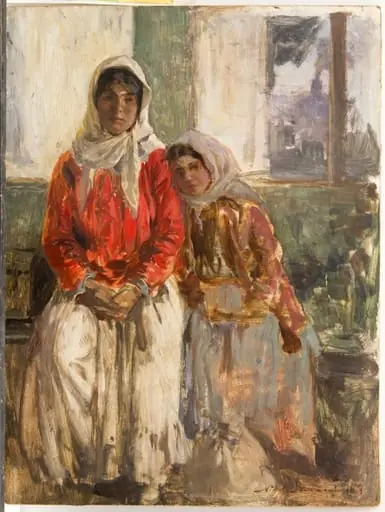
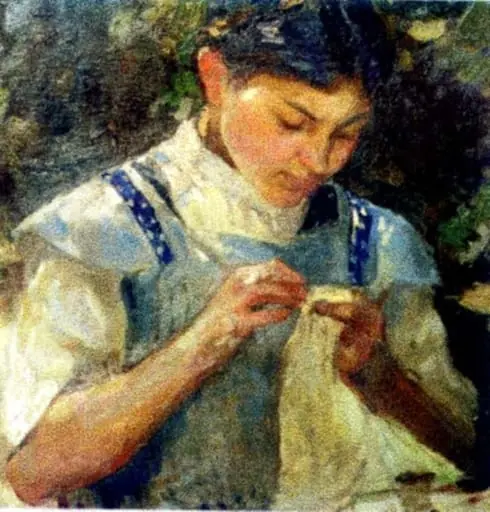
Două țărănci cosând
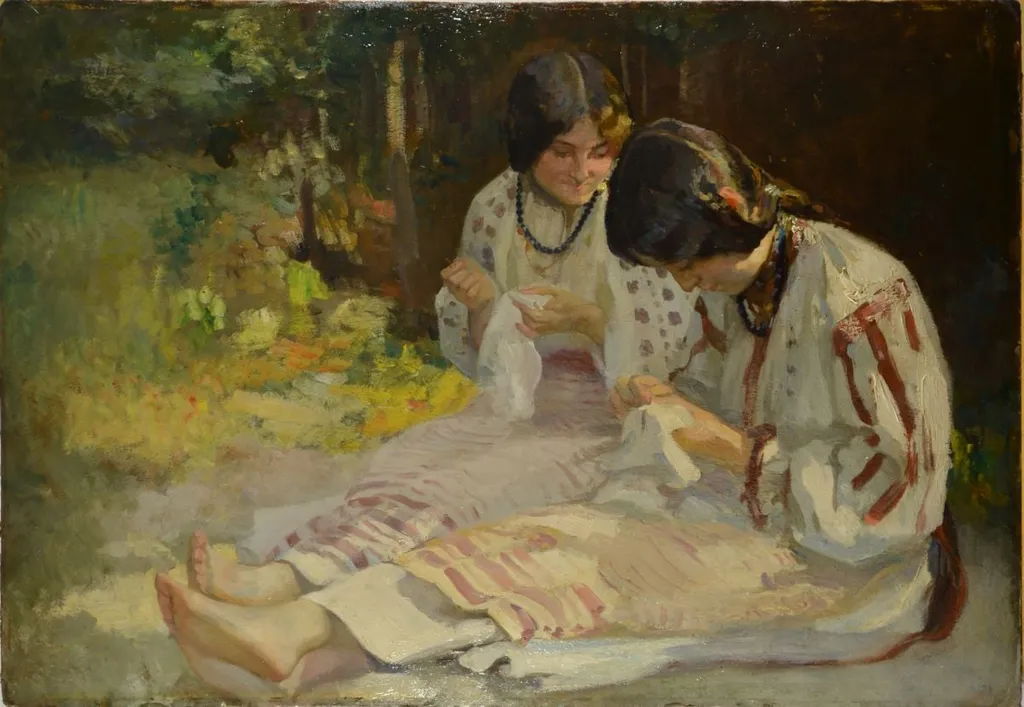
Două țărănci cosând is an unspecified painting by Ipolit Strâmbu(lescu). It dates from 1912 and is held in the collection of the Brukenthal National Museum.
About this work
Overview
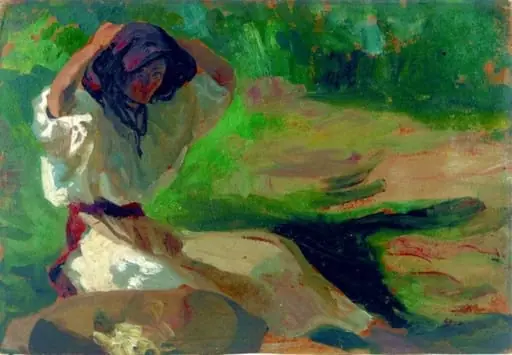
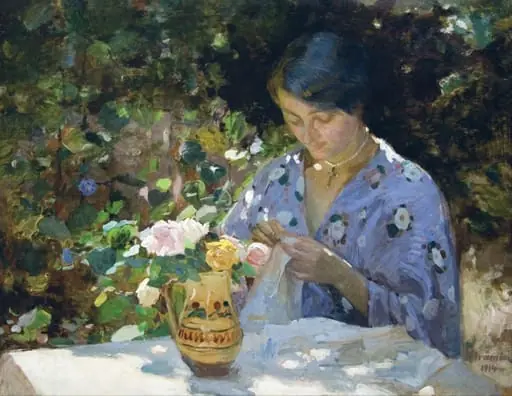
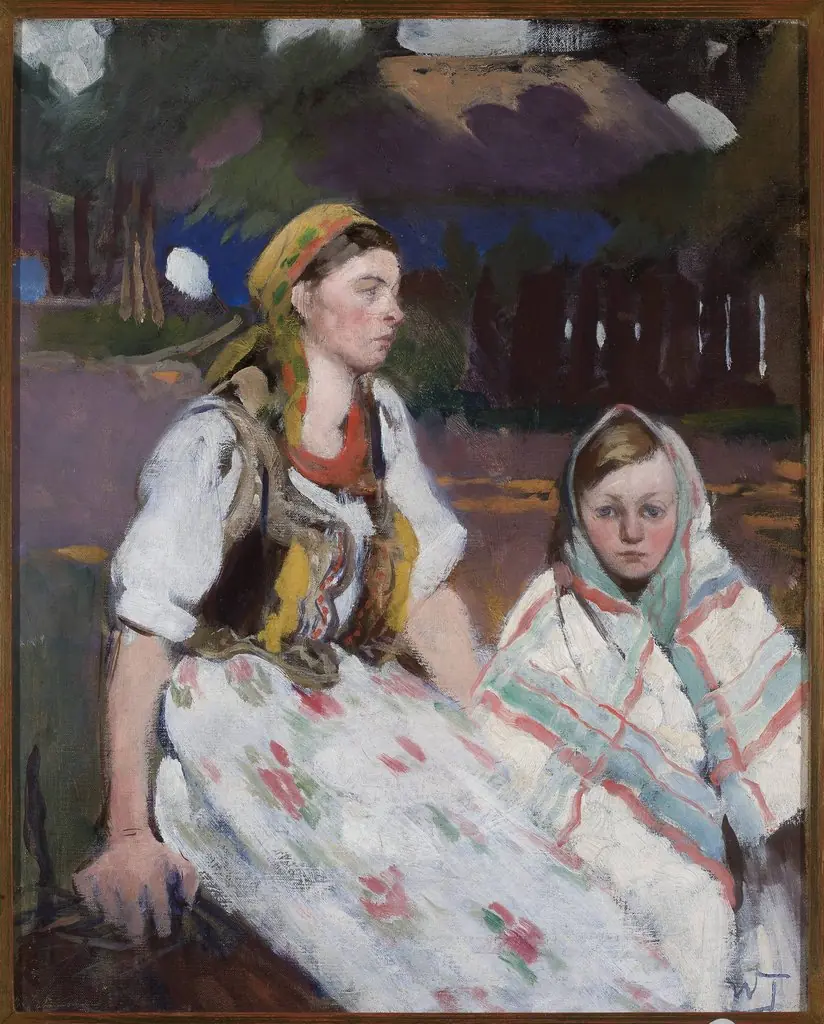
Created around 1912, the work titled Două țărănci cosând depicts a quiet rural scene rendered in oil on canvas. The composition centers on two peasant women seated on a grassy slope, engaged in manual labor. The setting is bathed in soft, diffused light, with a background of indistinct foliage that suggests a meadow or orchard beyond the figures.
Subject & Meaning
The painting presents a moment of everyday life, emphasizing the dignity of agricultural work. One figure holds a length of cloth, while the other cradles a small bundle wrapped in fabric, indicating tasks related to weaving or mending. The modest attire and simple jewelry underscore the social status of the subjects, reflecting a broader interest in portraying the rural populace.
Technique & Style
The artist employs a pronounced impasto technique, applying thick layers of paint especially on the striped sleeve and the woven cloth. This tactile approach heightens the contrast between the vivid hues of the garments and the muted greens and yellows of the surrounding landscape. The brushwork is vigorous yet controlled, lending a sense of immediacy to the scene.
History & Provenance
Attributed to Ipolit Strâmbu, a Romanian painter active in the early twentieth century, the piece dates to circa 1912, a period when the artist focused on genre scenes of peasant life. Its provenance traces through private collections in Romania before entering a public museum holding, where it remains part of the institution’s representation of national folk art.
Artist & collection

Artist
Ipolit Strâmbulescu, known as Ipolit Strâmbu, was a Romanian painter best known for his portraits of women, which ranged from domestic scenes to nudes.