Artwork
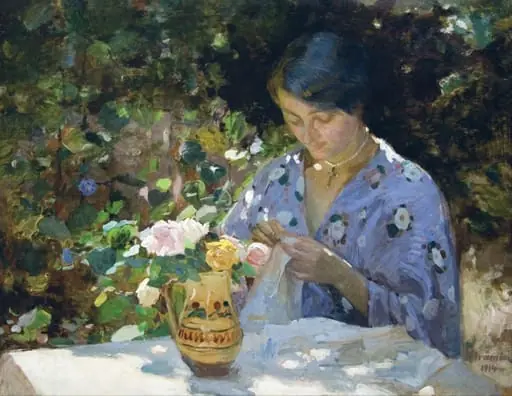
Fetiță cusând
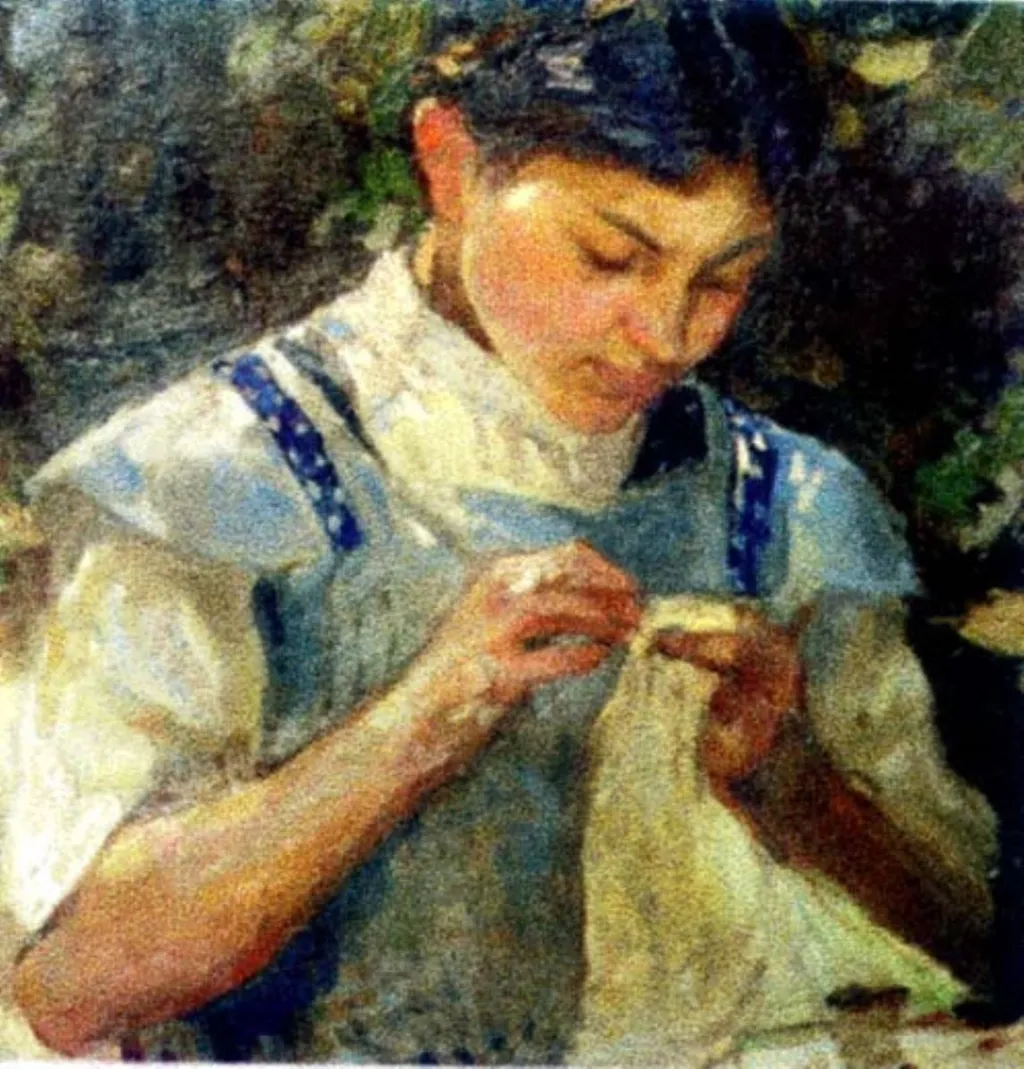
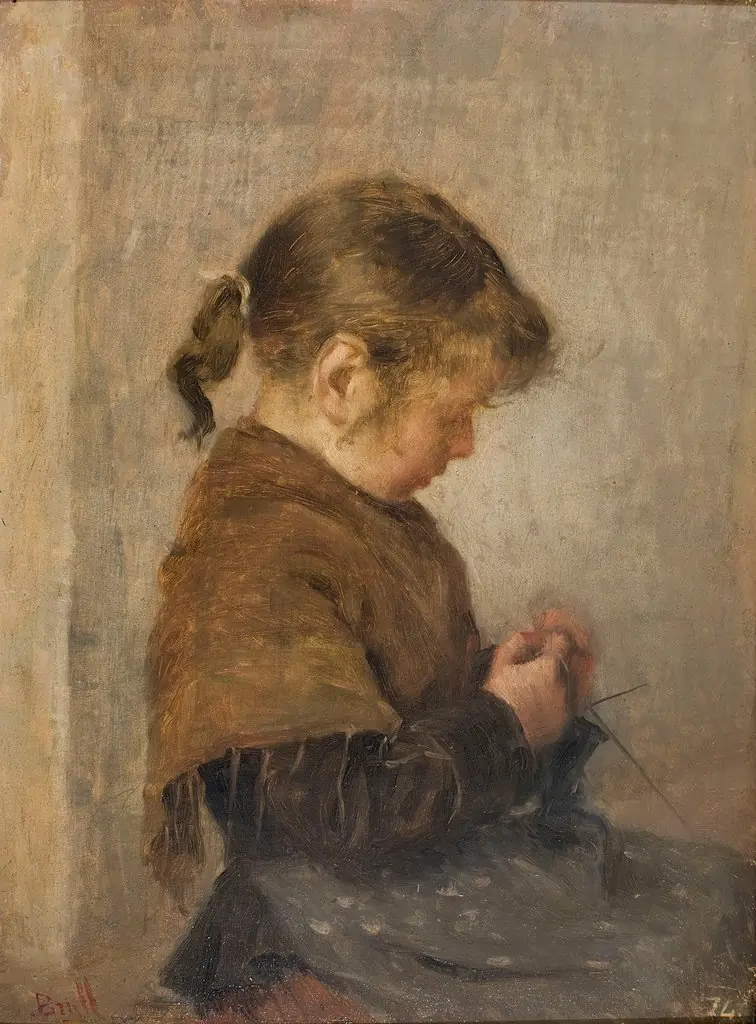
Fetiță cusând is an unspecified painting by Ipolit Strâmbu(lescu). It dates from 1912 and is held in the collection of the Art Museum of Constanta.
About this work
Overview
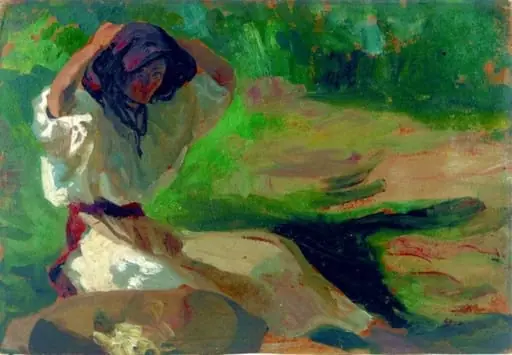
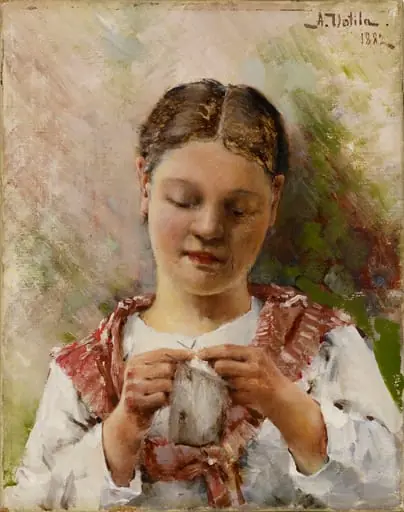
Created around 1912 by Romanian painter Ipolit Strâmbu, “Fetiță cusând” is an oil work preserved in the Museum of Ethnography. The composition centers on a young girl absorbed in needlework, set against a muted backdrop of earth tones punctuated by subtle greens, yellows, and blues. The piece conveys a quiet domestic scene through restrained color and careful arrangement.
Subject & Meaning
The figure is a child, seated at a modest table, her dark hair tied back and attire consisting of a white blouse with blue stripes and a plain apron. Her gaze is lowered, hands poised over the fabric, suggesting concentration and the transmission of traditional craft skills. The painting reflects everyday life and the cultural value placed on domestic handiwork.
Technique & Style
Strâmbu employs a limited palette, allowing the soft whites and blues of the girl’s clothing to stand out against the mottled brown‑green background. Brushwork is smooth, emphasizing the gentle folds of fabric and the delicate posture of the hands. The composition balances the figure with the surrounding space, creating an intimate atmosphere without overt dramatization.
History & Provenance
Attributed to the early 1910s, the work entered the collection of the Museum of Ethnography, where it remains on display. Its acquisition aligns with the museum’s focus on artifacts and images that document Romanian folk traditions and daily life, positioning the painting as a visual complement to ethnographic objects.
Artist & collection

Artist
Ipolit Strâmbulescu, known as Ipolit Strâmbu, was a Romanian painter best known for his portraits of women, which ranged from domestic scenes to nudes.