Artwork
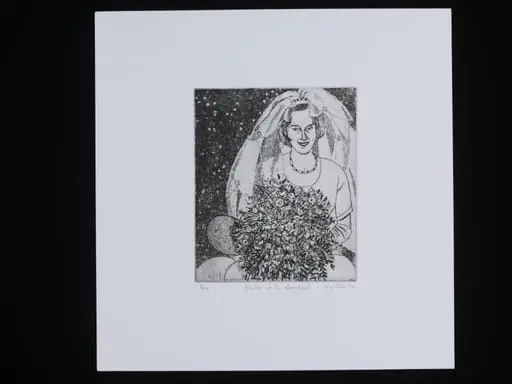
Tablou, desen în tuș, „Elena Ceaușescu cu un băiețel”, atribuit Suzana Fântânaru. Desenul o reprezintă pe Elena Ceaușescu primind un buchet de flori de la un șoim al patriei; atitudinea Elenei Ceaușescu este una maternă față de copil. Cei doi sunt înconjurați de raze solare. Comandat și oferit de Comitetul Județean de Partid Dolj (1984).
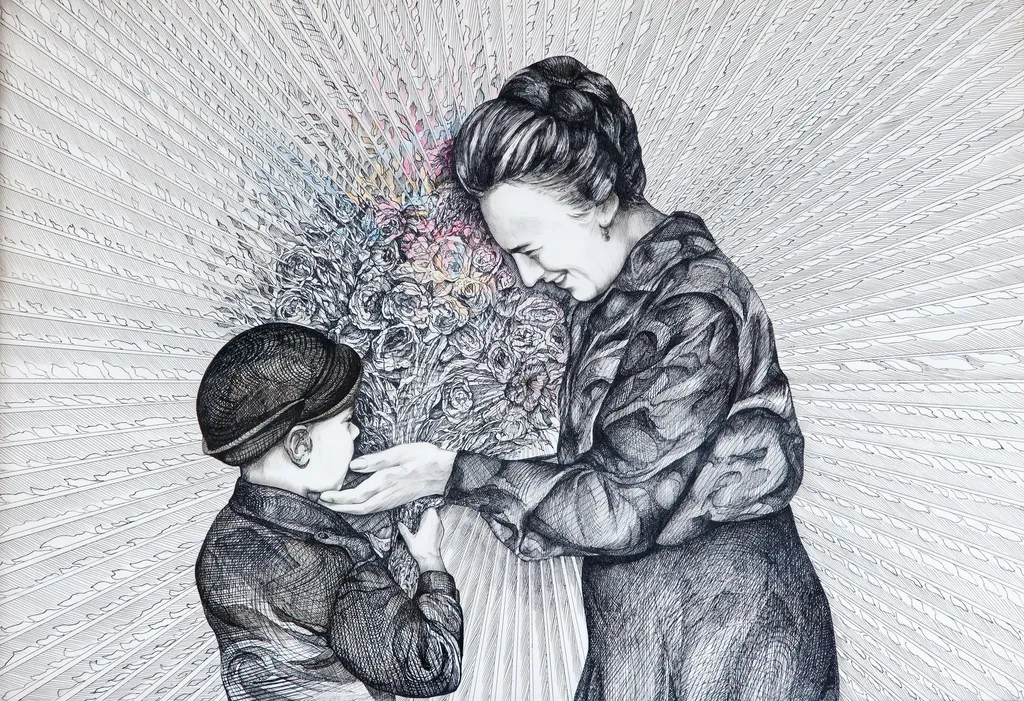
Tablou, desen în tuș, „Elena Ceaușescu cu un băiețel”, atribuit Suzana Fântânaru. Desenul o reprezintă pe Elena Ceaușescu primind un buchet de flori de la un șoim al patriei; atitudinea Elenei Ceaușescu este una maternă față de copil. Cei doi sunt înconjurați de raze solare. Comandat și oferit de Comitetul Județean de Partid Dolj (1984). is a print by Suzana Fântânaru. It is held in the collection of the National Museum of Romanian History.
About this work
Overview
A charcoal drawing, attributed to Suzana Fântânaru, depicts a scene of Elena Ceaușescu interacting with a young boy, set amidst swirling, sun-like rays. The subject's identity, while attributed, remains uncertain due to the lack of definitive confirmation.
Subject & Meaning
The drawing shows a maternal figure, presumed to be Elena Ceaușescu, receiving flowers from a boy, possibly symbolizing state-approved benevolence or maternal ideology under the communist regime. Her serious expression contrasts with the implied warmth of the gesture.
Technique & Style
Executed in charcoal, the piece features expressive, swirling lines to convey sunlight or symbolic rays, potentially alluding to power or divine approval. The style suggests a blend of realism with stylized, emotive elements, characteristic of commissioned political art.
History & Provenance
Commissioned by the Dolj County Party Committee in 1984, the work reflects the era's political patronage of art. Its current location and full exhibition history are not specified in the provided details.
Context
Created during Romania's communist period, the drawing aligns with the regime's use of art for ideological messaging, possibly portraying Elena Ceaușescu in a nurturing role to foster public affinity with the leadership.
Artist & collection
Artist
Suzana Fântânaru drew official portraits in Communist Romania, but her real skill was hiding in plain sight.