National Museum
National Museum of Romanian History

Image: Wikimedia Commons.
National Museum of Romanian History is a national museum in Bucharest, Romania.
About National Museum of Romanian History
Overview & Identity
The National Museum of Romanian History (Muzeul Național de Istorie a României) is a premier cultural institution located at 12 Calea Victoriei in Bucharest, Romania. Established in 1970 and officially inaugurated on May 8, 1972, it serves as a comprehensive repository of Romanian history, spanning from prehistoric times to the modern era. The museum occupies the historic Palace of Posts, a landmark building in the city center, and houses approximately 60 exhibition rooms spread over a surface area of more than 8,000 square meters. It is recognized as one of the most emblematic institutions of Romanian culture, dedicated to preserving and presenting the nation's historical artifacts and heritage.
History & Founding
The museum was established in 1970, with its official inauguration taking place on May 8, 1972. Its creation marked a significant moment in Romanian cultural policy, aiming to consolidate the nation's historical narrative in a single, accessible venue. The institution was founded as the Museum of the History of the Romanian Socialist Republic before adopting its current name. The founding process involved the aggregation of collections from various smaller museums and state archives, creating a unified national narrative. A film documenting the inauguration was produced in 1972, and the museum has since celebrated its 50th anniversary, marking five decades of service to the public and historical research.
Building & Architecture
The museum is housed in the former Palace of Posts (Palatul Poștelor), a monumental building authorized in 1892. The architect, Alexandru Săvulescu, designed the structure in an eclectic style after touring European postal facilities, with the Geneva post office serving as a primary influence. The building is rectangular, featuring a high basement, three upper floors, and a large porch. The stone façade is distinguished by a portico supported by ten Doric columns and a platform of twelve steps spanning the building's length. The exterior is adorned with numerous allegorical sculptural details, reflecting the grandeur of the late 19th-century architectural trends in Bucharest.
Collection Highlights: The Historical Treasure
A centerpiece of the museum is the Historical Treasure, an extraordinary collection comprising over 3,000 artifacts and jewelry pieces. This collection reflects the richness and cultural diversity of the civilizations that inhabited the territory of modern Romania. Notable items include the famous Dacian gold bracelets, the Cloșca with the golden chickens, and the Romanian Crown Jewels, including the Steel Crown and the Crown of Queen Elizabeth. These unique objects illustrate the craftsmanship of artisans from different eras and commemorate crucial moments in national history, serving as a testament to the region's artistic and political evolution.
Major Exhibitions & Notable Holdings
Beyond the Historical Treasure, the museum features a full-size plaster cast of Trajan's Column, a faithful reproduction of the ancient Roman monument that allows visitors to examine the bas-reliefs depicting the Dacian Wars in detail. This exhibit is housed in a dedicated space designed to provide historical and artistic context. The Lapidarium exhibition displays epigraphic and architectural monuments from Antiquity and the Middle Ages, including civil documents, decrees, honorary monuments, and religious funerary and votive sculptures. The museum also maintains a significant philatelic collection, boasting over 11 million stamps, and a vast collection of historical maps.
Significance & Recent Events
The National Museum of Romanian History holds immense significance as the primary institution for the study and display of the nation's past, bridging prehistoric, Roman, medieval, and modern eras. It serves as a critical educational resource and a symbol of national identity. In January 2025, the museum was the site of a major international incident when the Coțofenești Helmet, a Geto-Dacian artifact from the early 4th century BC, was stolen while on loan to the Drents Museum in the Netherlands. This event, along with the theft of three other gold artifacts, led to the dismissal of the museum's director and sparked a national debate regarding the security of cultural heritage loans.
What to see at National Museum of Romanian History
Start with Portretul lui Ion Valjan, acuarelă, redat până la brâu, din semiprofil, privind spre stânga. Fond verde. Ion Valjan a fost pseudonimul scriitorului și dramaturgului român Ion Al. Vasilescu (1881 – 1960). A fost avocat, om politic (membru al PNL) și publicist. În 1950 a fost arestat și închis la Aiud, la Ocnele Mari și la Pitești, unde a decedat. by Semnat EST.
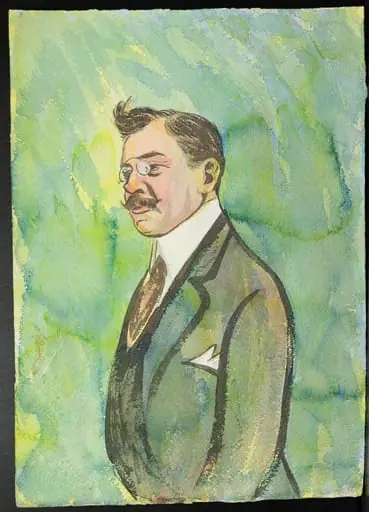 Portretul lui Ion Valjan, acuarelă, redat până la brâu, din semiprofil, privind spre stânga. Fond verde. Ion Valjan a fost pseudonimul scriitorului și dramaturgului român Ion Al. Vasilescu (1881 – 1960). A fost avocat, om politic (membru al PNL) și publicist. În 1950 a fost arestat și închis la Aiud, la Ocnele Mari și la Pitești, unde a decedat.
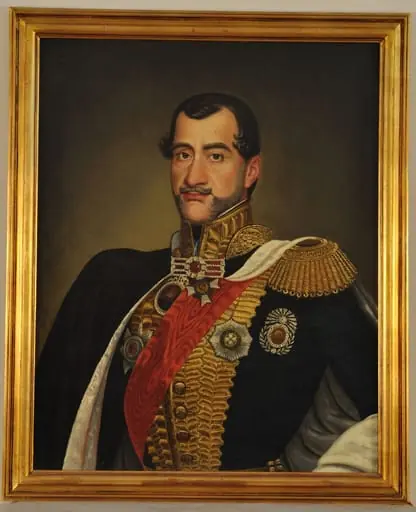 Alexandru Dimitrie Ghica
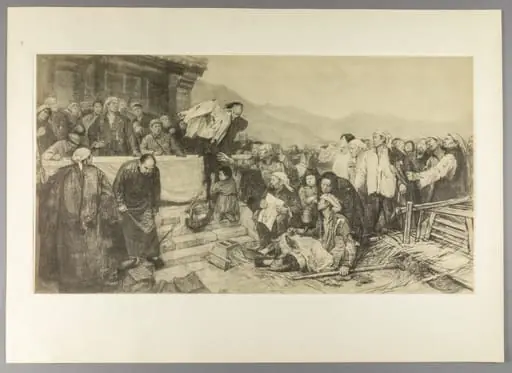 Reproducere după un desen cu titlul „Cămașa însângerată” realizată de Wang Che-kouo și datată în 1959. Exemplarul a fost oferit lui Nicolae Ceaușescu, secretar general al Partidului Comunist Român; șeful de stat al Republicii Socialiste România, ca parte a unui album ce conține un catalog quatrolingv (franceză, spaniolă, engleză, chineză) și alte 9 reproduceri după picturi cu semnificație istorică pentru mișcarea comunistă în RP China.
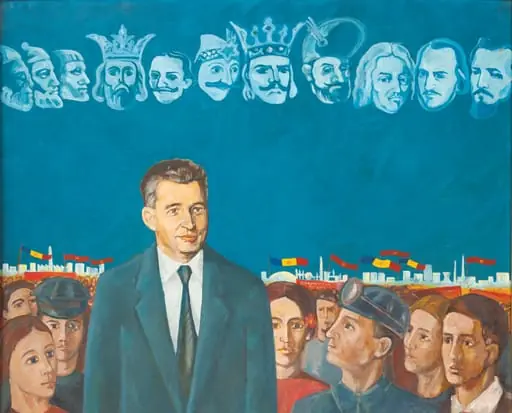 Tablou, ulei pe pânză, „Omagiu”, nesemnat. Nicolae Ceaușescu este prezentat în mijlocul oamenilor muncii vegheat de ”fantomele” eroilor neamului : Burebista, Decebal, Traian, Mircea cel Bătrân, Iancu de Hunedoara, Vlad Țepeș, Ștefan cel Mare, Mihai Viteazul, Dimitrie Cantemir, Nicolae Bălcescu, Alexandru Ioan Cuza (de la stânga la dreapta). Comandat și oferit de Comitetul Județean de Partid Tulcea, 22 ianuarie 1978.
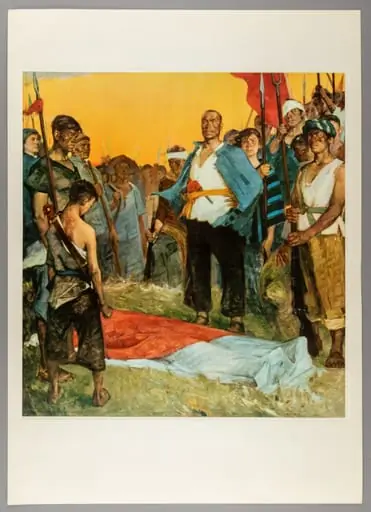 Reproducere după o pictură în ulei cu titlul „Noi continuăm lupta” realizată de Tsuan Chan-che și datată în 1961. Exemplarul a fost oferit lui Nicolae Ceaușescu, secretar general al Partidului Comunist Român; șeful de stat al Republicii Socialiste România, ca parte a unui album ce conține un catalog quatrolingv (franceză, spaniolă, engleză, chineză) și alte 9 reproduceri după picturi cu semnificație istorică pentru mișcarea comunistă în RP China.
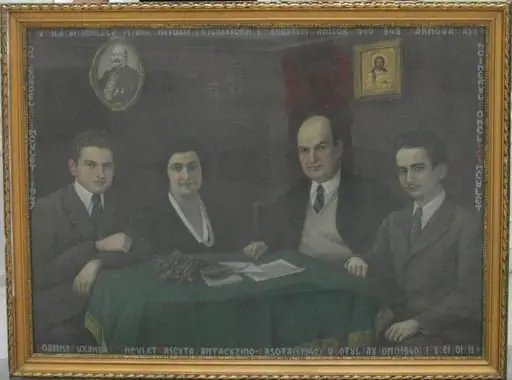 Familia Ion C Inculeț
Plan your visit
National Museum of Romanian History
- Website
- www.mnir.ro
What's on
- Editura MNIR prezentă la Bookfest 2026From 1 Jun 2026
- English AnunturiFrom 1 Jun 2026