Artwork
Untitled
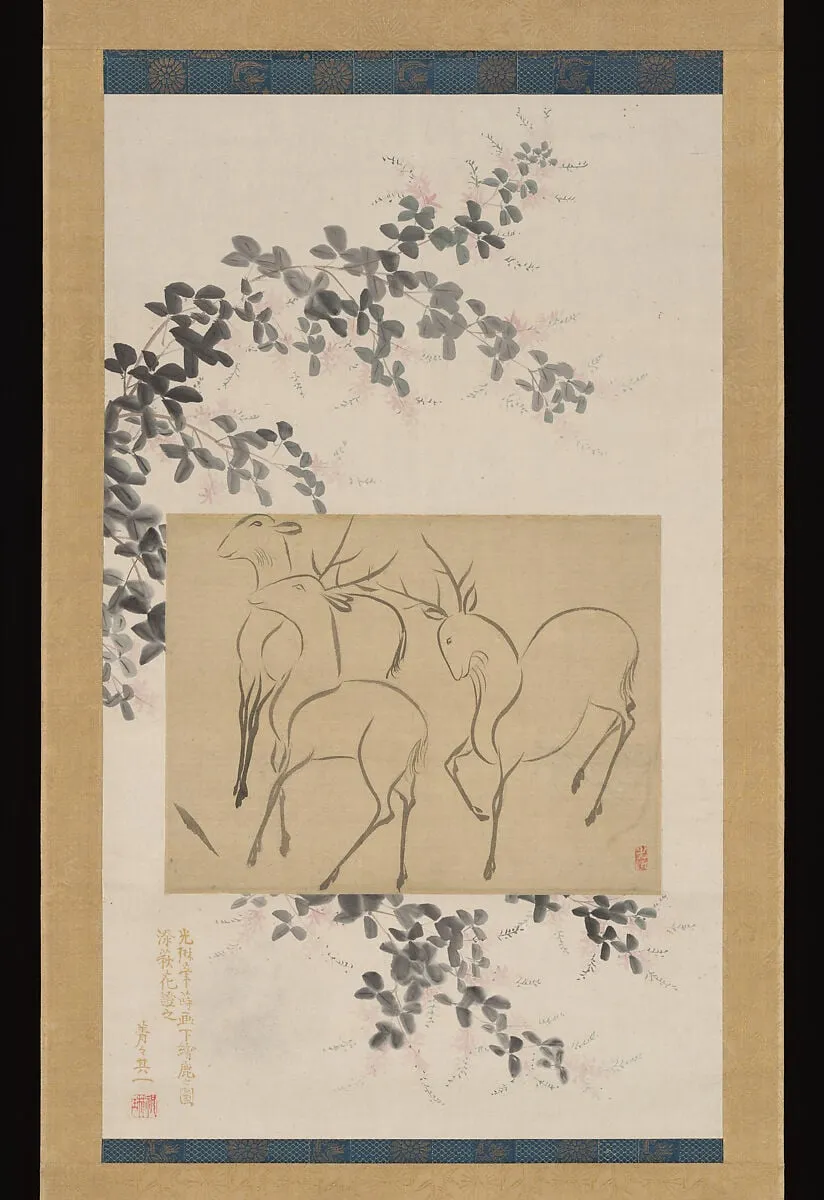
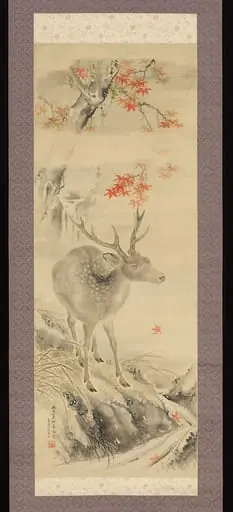
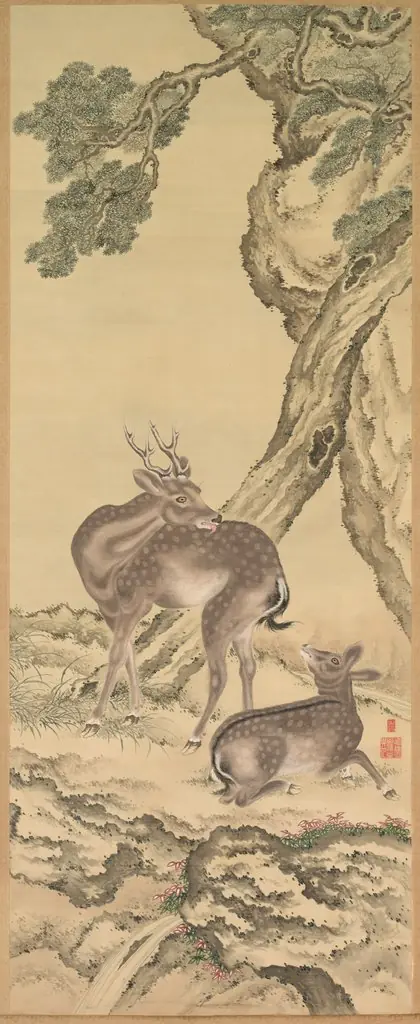
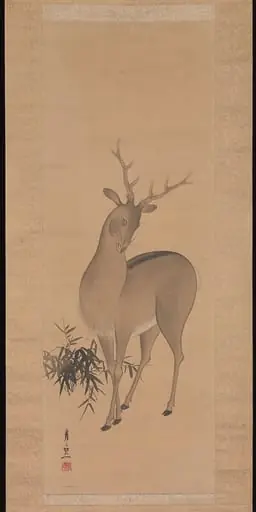
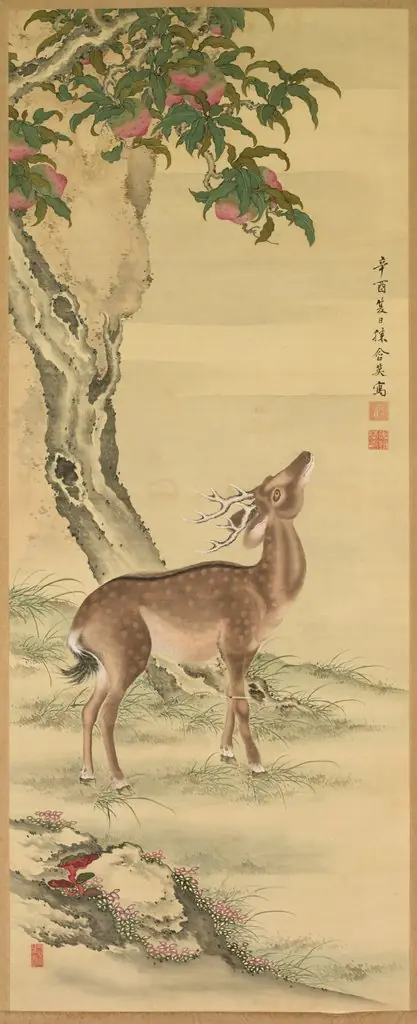
Untitled is an ink painting by the Baroque artist Suzuki Kiitsu|Ogata Kōrin. It dates from 1766 and is held in the collection of the Metropolitan Museum of Art. Created in 1766 by Suzuki Kiitsu, this hanging scroll presents a quiet woodland scene rendered with ink, color and gold pigment on paper.
About this work
Overview
Created in 1766 by Suzuki Kiitsu, this hanging scroll presents a quiet woodland scene rendered with ink, color and gold pigment on paper.
Created in 1766 by Suzuki Kiitsu, this hanging scroll presents a quiet woodland scene rendered with ink, color and gold pigment on paper. The composition centers on three deer positioned within a lightly suggested forest clearing, their forms defined by confident brushwork. The work exemplifies the restrained elegance typical of Edo‑period Japanese painting, inviting contemplation of nature’s subtle rhythms.
Subject & Meaning
The three deer, rendered with minimal detailing, convey a sense of tranquil coexistence within their environment. Their poised stance amid foliage suggests a moment of peaceful grazing, reflecting traditional Japanese reverence for wildlife as symbols of purity and the fleeting beauty of the natural world.
Technique & Style
Kiitsu employs bold, sweeping lines to outline the animals, while the surrounding leaves and branches receive finer, more intricate strokes, creating a visual hierarchy. The combination of ink, muted pigments and touches of gold pigment on paper adds a delicate luminosity, balancing the assertive line work with a soft, ethereal atmosphere.
History & Provenance
The scroll, dated to the mid‑18th century, is attributed to Suzuki Kiitsu, a prominent painter of the Rinpa school. Although the current institutional holder is not fully recorded in the source, the piece has been recognized as part of the artist’s oeuvre and has circulated among Japanese art collections since the Edo period.
Context
Produced during the later phase of the Rinpa movement, the painting reflects the school’s characteristic synthesis of decorative richness and naturalistic observation. Kiitsu’s approach merges the bold decorative motifs of earlier Rinpa masters with a more intimate, lyrical treatment of fauna, aligning with contemporary tastes for refined yet accessible works.
Artist & collection

Artist